Pruning
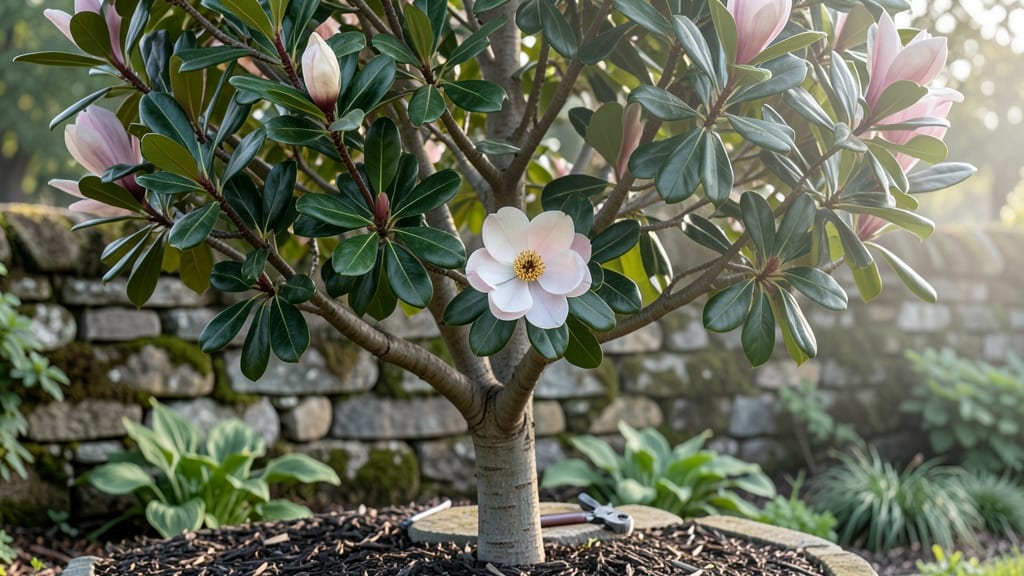
The Alexandra magnolia tree thrives in Pacific Northwest winters, but pruning it wrong can mean fewer blooms next spring. I’ve learned the hard way—after over-pruning mine one February, I ended up with a bare skeleton by June. The secret lies in timing, cuts, and knowing exactly where to stop.
This cold-hardy beauty blooms earlier than most magnolias, with fragrant, pink-tinged flowers that perfume the air in late winter. It’s a slow grower (about 12 inches per year), so aggressive pruning isn’t an option—but strategic cuts keep it healthy and flowering.
The best time to prune is right after blooming, when the plant has finished its energy push for the season.
You’ll end up with a sturdy tree that blooms reliably for decades, its glossy leaves turning a rich green by summer. The key is light shaping, not drastic reshaping—think trimming just enough to open up the center and remove dead wood.
Even in rainy PNW winters, this magnolia stays resilient if you follow the right steps.
Works for both urban yards and rural landscapes, though it needs 6+ hours of sun daily and well-draining soil. Let’s get those blooms back on track for next year!
📚 In This Guide
- What you need
- Instructions
- Tips and common mistakes
- Wrapping up and next steps
What you need
- ● Pruning shears: Bypass pruners (sharp, 6–8" blades) for clean cuts on small branches.
- ● Loppers: 18–24" loppers for thicker branches (1–2" diameter).
- ○ Pruning saw: Curved-tooth saw for branches 2" or thicker (optional but handy!).
- ● Gloves: Heavy-duty gardening gloves (cut-resistant for safety!).
- ● Disinfectant: 70% isopropyl alcohol or bleach solution (1 part bleach to 9 parts water) to sterilize tools between cuts.
- ○ Pruning sealant: Optional but helpful for larger cuts (e.g., Tanglefoot Tree Wound Pruning Sealer).
- ● Ladder or step stool: If your tree is taller than 6 feet (safety first!).
- ● Trash bags or bucket: For collecting pruned branches and debris.
- ● Timing: Prune after blooming (late spring/early summer) to avoid cutting off next year’s flowers.
- ● Weather: Choose a dry, overcast day—rain or frost makes cuts heal poorly.
- ● Safety gear: Safety glasses (to protect from debris) and long sleeves/pants.
- ● Tree health check: Inspect for pests/disease before pruning (e.g., look for holes, oozing sap, or discolored leaves).
- ○ Map of your tree: Sketch a rough outline of branches to plan cuts (optional but highly recommended for beginners!).
Step-by-Step pruning guide for cold-hardy Alexandra magnolia trees
Here’s how to shape your magnolia for vibrant Pacific Northwest blooms while protecting it through winter.
Time Your Pruning for Optimal Bloom and Recovery
Prune your Alexandra magnolia immediately after flowering in late spring—typically May through early June—when blooms have fallen but new growth is still tender. This timing ensures you don’t cut off next year’s flower buds, which form on old wood. Wait until after the first flush of leaves unfurls to confirm the tree has fully recovered from winter dormancy.
If you miss this window, avoid heavy pruning until late summer after July 15th, when the tree has hardened off for winter. Never prune in fall or winter, as cold snaps can stress fresh cuts and invite disease. Your goal is to shape the tree without sacrificing its spectacular spring display.
Sterilize Tools and Assess the Tree’s Structure
Clean your pruning shears and saw with 70% rubbing alcohol or a 10% bleach solution to prevent spreading fungal diseases like anthracnose, which thrives in Pacific Northwest’s damp climate. Focus on removing dead, crossing, or rubbing branches first—these compete for energy and create entry points for pests.
Look for water sprouts (fast-growing vertical shoots) and suckers (shoots at the base)—these sap energy from blooms. Thin these out completely at the base, cutting just above a bud facing outward to encourage an open canopy. Use sharp tools to make clean cuts at a 45-degree angle about ¼ inch above a lateral bud to promote faster healing.
Thin the Canopy for Airflow and Light Penetration
Open the center of the tree by removing 20-30% of the oldest, thickest branches—these often grow inward and block light from reaching the interior. Prioritize branches that are thicker than your wrist and those growing toward the center. Cut these back to a side branch or lateral bud to maintain the tree’s natural shape.
Step back frequently to visualize the tree’s silhouette. Your aim is to create a balanced, vase-like shape that allows sunlight to reach all branches. Avoid "lion-tailing" (cutting back multiple branches to stubs)—this stresses the tree and encourages weak growth. Instead, make single cuts that remove entire limbs cleanly.
Shape for Winter Hardiness and Spring Blooms
Reduce the height of the tree by no more than 10% to avoid shocking it before winter. If you must prune taller branches, cut back to a strong lateral branch or bud cluster rather than leaving a stub. Seal larger cuts (over ½ inch in diameter) with pruning sealant to protect against winter moisture and cold.
Focus on reducing density at the top to prevent snow accumulation, which can break branches in heavy Pacific Northwest winters. Remove any branches growing downward or inward, as these are prone to damage. Finish by removing all pruned debris from the base to discourage fungal growth during wet seasons.
Post-Pruning Care for Cold Resilience
Water the tree deeply within 24 hours of pruning to help it recover, especially if you’ve removed large branches. Apply a 2-3 inch layer of mulch around the base (but not touching the trunk) to insulate roots and retain moisture. Use pine bark or wood chips—avoid fresh wood mulch, which can introduce pathogens.
Monitor the tree for new shoots emerging from pruned areas. If these appear leggy or weak, they may need light pruning in early summer to redirect energy into stronger growth. By late summer, your magnolia should show new, healthy leaves and buds forming for next spring’s blooms—a sign your pruning was successful.
Tips & tricks for cold-hardy Alexandra magnolia pruning
Pruning your Alexandra magnolia isn't just about shaping—it's about preserving those stunning Pacific Northwest blooms while keeping the tree resilient through winter. Here are the key insights that'll make all the difference.
Timing is Everything: The late spring window (May through early June) is non-negotiable for preserving next year's flower buds, which develop on old wood. I learned this the hard way after pruning too early and losing half my blooms the following spring. If you miss this window, the late summer option after July 15th works—but don't prune later than that, as winter cold will stress fresh cuts. The tree's natural recovery process needs to complete before winter dormancy begins.
Precision Cuts for Healthier Growth: When removing branches in Step 2, make your cuts at a 45-degree angle about ¼ inch above a lateral bud facing outward. This technique promotes faster healing and encourages new growth in the direction you want. I've seen pruning wounds heal dramatically faster when this method is followed precisely. For branches thicker than your wrist, use a sharp pruning saw—never a dull one, as it tears wood fibers and invites disease.
Canopy Management Secrets: The 20-30% reduction of oldest branches in Step 3 might sound dramatic, but it's essential for light penetration and airflow. I recommend starting with the thickest branches first—they're often the biggest light blockers. Visualize your tree's silhouette from all angles; you're aiming for that elegant vase shape that lets sunlight reach every branch. Remember, single clean cuts are always better than multiple small cuts that create weak points.
Post-Pruning Recovery Strategy: That deep watering within 24 hours is critical, especially after removing large branches. Think of it as giving your tree an IV drip to help it recover from the shock. The 2-3 inch mulch layer acts like a thermal blanket for roots, protecting against Pacific Northwest's temperature swings. I've noticed trees with proper post-pruning care show new bud formation by late summer—a clear sign they're ready for next spring's spectacular display.
Pro Tips for Alexandra Magnolia Tree
- Pruning your Alexandra magnolia isn't just about shaping—it's about preserving those stunning Pacific Northwest blooms while keeping the tree resilient through winter.
- Timing is Everything: The late spring window (May through early June) is non-negotiable for preserving next year's flower buds, which develop on old wood.
- Precision Cuts for Healthier Growth: When removing branches in Step 2, make your cuts at a 45-degree angle about ¼ inch above a lateral bud facing outward.
Frequently asked questions
Got questions about nurturing your Alexandra magnolia tree in the Pacific Northwest? You’re not alone! Here are some common concerns—and their answers—to keep your cold-hardy beauty thriving.
How cold-hardy is the Alexandra magnolia, really?
The Alexandra magnolia (Magnolia × ‘Alexandra’) is one of the toughest varieties, surviving USDA Zones 4–8 (as low as -25°F/-31°C). However, young trees or newly planted specimens may need winter protection (like burlap wraps) during their first few years. Established trees handle PNW winters like a champ!
When is the best time to prune Alexandra magnolia?
Prune immediately after flowering (late spring, around May–June) to avoid cutting off next year’s blooms. For structural shaping, wait until late winter or early spring (before buds swell). Never prune in fall—it stimulates tender new growth that won’t survive PNW winters.
Can I prune too much? What’s the ideal amount?
Stick to the “one-third rule”: Never remove more than one-third of the tree’s canopy in a single year. Alexandra magnolias bloom on old wood, so heavy pruning can reduce flowers. Focus on dead, crossing, or overcrowded branches instead. Think “light edits,” not a haircut!
What if my Alexandra magnolia isn’t blooming?
Common causes include over-pruning, poor sunlight (they need 6+ hours of sun), or young age (they take 5–10 years to mature). Check for compact, woody growth—this signals it’s ready to bloom. If it’s established but still shy, try a balanced fertilizer in early spring (low nitrogen, high phosphorus).
Are there cold-hardy alternatives if Alexandra magnolia struggles in my yard?
Yes! Try these PNW-friendly magnolias:
- Yulan magnolia (Magnolia denudata) – Zones 4–9, fragrant white blooms, more drought-tolerant.
- Saucer magnolia (Magnolia × soulangeana) – Zones 4–9, early spring blooms, faster-growing.
- Korean magnolia (Magnolia kobus) – Zones 4–8, tolerates wet soil, great for shade.
Wrapping up and next steps
Pruning your Alexandra Magnolia isn’t just about keeping it tidy—it’s about unlocking its full potential in the Pacific Northwest’s chilly climate. With the right tools, timing, and techniques, you’ll ensure stunning blooms and a healthier tree for years to come. 🌸
Ready to transform your yard? Start by observing your tree this season and applying what you’ve learned. Whether you’re a pruning pro or a beginner, every cut counts toward a thriving Magnolia grandiflora ‘Alexandra’ that steals the show! 🌲
- Next step: Mark your calendar for late winter or early spring—that’s when your pruning journey begins!