Pruning
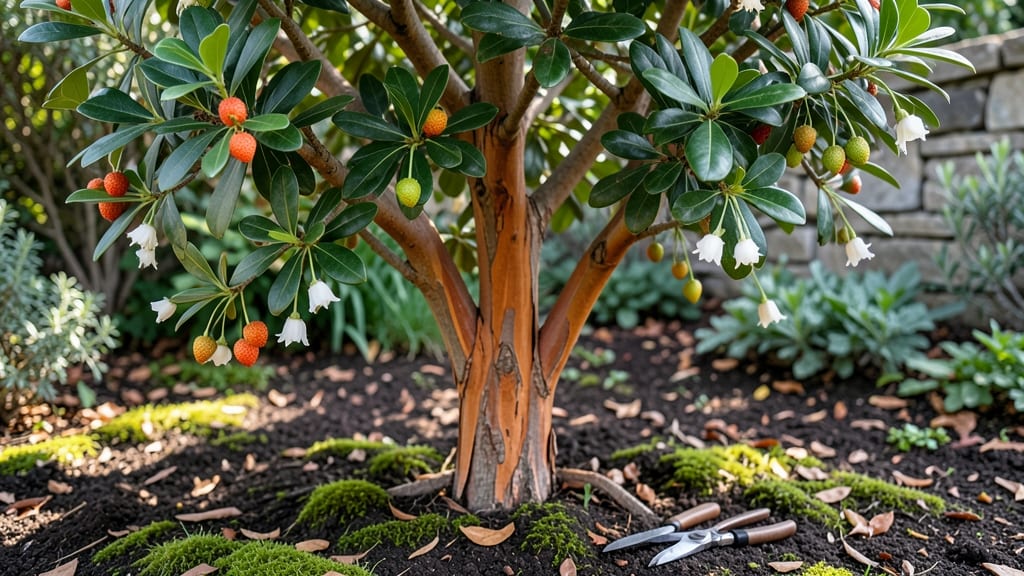
Pruning your strawberry tree (Arbutus unedo) isn’t just about shaping its graceful branches—it’s the secret to unlocking its year-round display of peeling bark and delicate flowers.
I’ve spent years watching mine transform from a scraggly shrub into a showstopper with just a few strategic cuts each season, and the results are worth every minute.
The key is working with nature, not against it. Strawberry trees bloom on both old and new wood, so you can prune anytime without fear of losing flowers—unlike many other shrubs.
Grab your shears and focus on removing dead wood, crossing branches, and thinning the center to let light reach the inner stems. It’s foolproof once you know the five simple cuts that keep your tree looking its best.
What you’ll end up with is a tree that bursts with rosy-red blooms in late fall, followed by edible (though tart) berries in winter—plus that stunning exfoliating bark that makes it a standout in any landscape.
The best part? These pruning techniques work whether you’re shaping a small patio tree or a 15-foot specimen in your yard.
Ready to give your strawberry tree the care it deserves? Let’s dive into the five cuts that will have it looking like a Mediterranean masterpiece in no time. The tools you need are basic—just shears, gloves, and a clear morning to work.
📚 In This Guide
- What you need
- Instructions
- Tips and common mistakes
- Wrapping up and next steps
What you need
- ● Pruning shears: Bypass pruners (sharp, 6–8" blades) for clean cuts on small branches.
- ● Loppers: 1 pair (for branches ½"–2" thick). Look for ergonomic handles to reduce hand fatigue.
- ● Pruning saw: 1 (for stubborn branches >2" thick). A bow saw or pruning saw with a curved blade works best.
- ● Disinfectant: 70% isopropyl alcohol or a pruning sealant (like Tanglefoot Pruning Seal) to prevent disease.
- ● Gloves: 1 pair of cut-resistant, breathable garden gloves (e.g., Fellex or Workrite).
- ○ Ladder (optional): A stable, extendable ladder (8–12 ft) if your tree is tall. Safety first!
- ● Heavy-duty trash bags: 2–3 (for collecting pruned branches and debris).
- ● Weather check: Prune on a dry, cloudy day (avoid midday heat or rain). Ideal temps: 50–70°F (10–21°C).
- ● Safety gear: Safety glasses (to protect from debris) and closed-toe shoes.
- ● Tree assessment: Inspect your strawberry tree for dead, diseased, or crossing branches before starting.
- ● Water & snacks: Hydration is key—bring a water bottle and light snacks for energy!
- ● Pruning paint: (e.g., Tree Wound Pruning Seal) for sealing large cuts >½" in diameter.
- ● Tree tie or zip ties: For temporarily securing branches if needed.
- ● Notebook & pen: To jot down notes on cuts made (helpful for tracking growth!).
- ● Compost bin: For repurposing small pruned branches as mulch.
How to prune a strawberry tree (arbutus unedo) for continuous flowering
This isn't just pruning—it's a year-round strategy to keep your arbutus covered in flowers.
Assess Growth Patterns in Late Winter
Start in late February or early March when the tree is still dormant but before new growth begins. Look for three types of branches: woody stems from last year, current season's growth that didn't mature, and dead or crossing branches. The key is identifying which branches carry the most flower buds—these are the ones you want to preserve.
Run your hand along each branch and feel for the small, rounded buds that will become flowers. These appear along last year's wood, not on new growth. Mark these branches with a small piece of twine or a flagging tape if you're unsure which to keep. This ensures you're not accidentally removing potential bloom stems.
Remove Dead and Crossing Branches
Use clean, sharp pruning shears to cut out any dead branches first—these are easy to spot as they're brown, brittle, and often have no leaves. Next, remove branches that cross or rub against others. These compete for energy and often lead to wounds that invite disease. Cut these back to the main stem or a healthy lateral branch.
Make your cuts at a 45-degree angle, about ¼ inch above a healthy bud or branch collar. Avoid leaving stubs, as these can rot and attract pests. If a branch is thicker than your wrist, use loppers instead of shears to avoid crushing the wood.
Thin Out Crowded Growth for Airflow
Now focus on the interior of the tree. Strawberry trees often grow with dense, inward-facing branches that block light and airflow. Selectively remove 10-20% of the oldest, thickest branches from the center to open up the canopy. This encourages sunlight to reach the inner buds, which is crucial for consistent flowering.
Prioritize branches that are thinner than a pencil—these are less likely to have flower buds and can be trimmed back to encourage new, more vigorous growth. Step back frequently to visualize the tree's shape. You're aiming for an open, vase-like structure that lets light penetrate to the core.
Encourage New Blooms with Strategic Cuts
After thinning, turn your attention to the outer branches. Cut back one-third of last year's growth on the strongest stems. This might sound drastic, but it triggers the tree to produce more flower buds along the remaining branches. Focus on branches that are thicker than your thumb—these have the energy reserves to recover quickly.
Make your cuts just above a leaf bud or a small lateral branch. Avoid cutting into old wood, as this won't produce new growth. If you're unsure where to cut, look for branches with multiple sets of leaves—these are ideal candidates for rejuvenation pruning.
Light Summer Maintenance for Ongoing Health
Once the initial pruning is done, shift to light maintenance throughout the summer. Remove any deadheading flowers as they fade to redirect the tree's energy into new blooms. If you notice suckers (small shoots growing at the base of the tree), trim these back immediately—they drain energy from the main structure.
In early fall, give the tree a final check. Prune any branches that grew too vigorously during the summer, cutting them back by half their length. This keeps the tree manageable and ensures it doesn't become top-heavy. Avoid heavy pruning in fall, as the tree needs time to harden off before winter.
Tips & tricks for pruning your strawberry tree for continuous blooms
Pruning your arbutus unedo isn't just about shaping—it's about creating the perfect conditions for year-round flowers. Here's what I've learned after years of working with these stunning trees.
Timing is Everything: The late February to early March window is critical because it's when the tree is fully dormant but just before new growth begins. I've seen trees pruned too early (December) struggle to recover, while those pruned too late (April) miss the optimal bloom trigger. If you miss this window, wait until late summer after flowering, but expect fewer blooms that season.
Bud Identification is Non-Negotiable: Those small, rounded buds along last year's wood are your goldmine for next year's flowers. I always run my thumb along branches to feel for them—if you can't find them, you're likely looking at new growth that won't bloom. Pro tip: Use a small piece of twine to flag branches with multiple buds—these are your keepers. This simple visual marker saves me from making costly mistakes every pruning season.
Cutting Technique Matters More Than You Think: The 45-degree angle and ¼-inch clearance above the bud might seem like minor details, but they're what separates healthy recovery from potential disease. I've seen too many pruning wounds left too close to the branch collar, leading to rot. For branches thicker than your wrist, loppers aren't just helpful—they're essential. The pressure from shears can actually crush the cambium layer, which is the tree's healing tissue.
Seasonal Maintenance Prevents Overwhelm: The light summer maintenance—deadheading and sucker control—is where most people fail. I've seen beautiful arbutus trees completely deflowered because suckers drained all their energy. Make this a monthly habit: just 10 minutes every month keeps your tree thriving. In early fall, that 50% reduction on vigorous branches might seem extreme, but it's what prevents your tree from becoming top-heavy and vulnerable to winter storms.
Pro Tips for Strawberry Tree Arbutus Unedo
- Pruning your arbutus unedo isn't just about shaping—it's about creating the perfect conditions for year-round flowers...
- Timing is Everything: The late February to early March window is critical because it's when the tree is fully dormant...
- Bud Identification is Non-Negotiable: Those small, rounded buds along last year's wood are your goldmine for next yea...
Frequently asked questions
Got questions about pruning your Arbutus unedo (strawberry tree)?
Here are the most common ones—plus quick answers to keep your tree thriving year-round!
When is the best time to prune my strawberry tree?
Prune your Arbutus unedo in late winter or early spring (just before new growth starts) for best results. Light trimming can also happen in summer to shape the tree, but avoid heavy cuts then. Never prune in fall—it can stimulate tender growth that won’t survive winter frost.
How much can I cut back without harming the tree?
Strawberry trees are resilient! You can safely remove up to 25-30% of the foliage in one session. For older trees, never cut back more than 1/3 of the canopy in a single year. Focus on dead, diseased, or crossing branches first—they’re the top priorities!
Will pruning affect my strawberry tree’s fruit production?
Actually, yes—but in a good way! Pruning increases airflow and sunlight, which boosts fruit quality. Just avoid heavy cuts in fruit-bearing years (every 2-3 years). If you’re pruning for shape, do it after harvest (late fall/winter) to minimize impact.
What should I avoid when pruning my strawberry tree?
Skip these mistakes:
- Over-pruning—too many cuts can stress the tree.
- Cutting into old wood—Arbutus unedo flowers on new growth, so avoid pruning back to bare stems.
- Using dull tools—ragged cuts invite disease. Always use sharp, sterilized pruners!
- Ignoring dead branches—they drain energy and can spread rot.
Can I grow a strawberry tree in a container? How does pruning differ?
Yes! Arbutus unedo thrives in large containers (15+ gallons) with well-draining soil. Pruning is similar, but focus on root-bound roots—gently trim circling roots during repotting (every 2-3 years). Dwarf varieties need lighter pruning to maintain their compact shape.
Wrapping up and next steps
The strawberry tree (Arbutus unedo) is a stunning, low-maintenance plant that rewards patience with vibrant blooms and edible fruit—all with just a few strategic cuts! By mastering year-round pruning, you’ll keep your tree healthy, encourage lush growth, and enjoy its beauty (and tasty treats!) for decades. 🌿✨
Ready to transform your garden? Grab your pruners and start small—even one well-placed cut can make a difference. Next, explore our guide on seasonal care to keep your strawberry tree thriving all year long!