Pruning
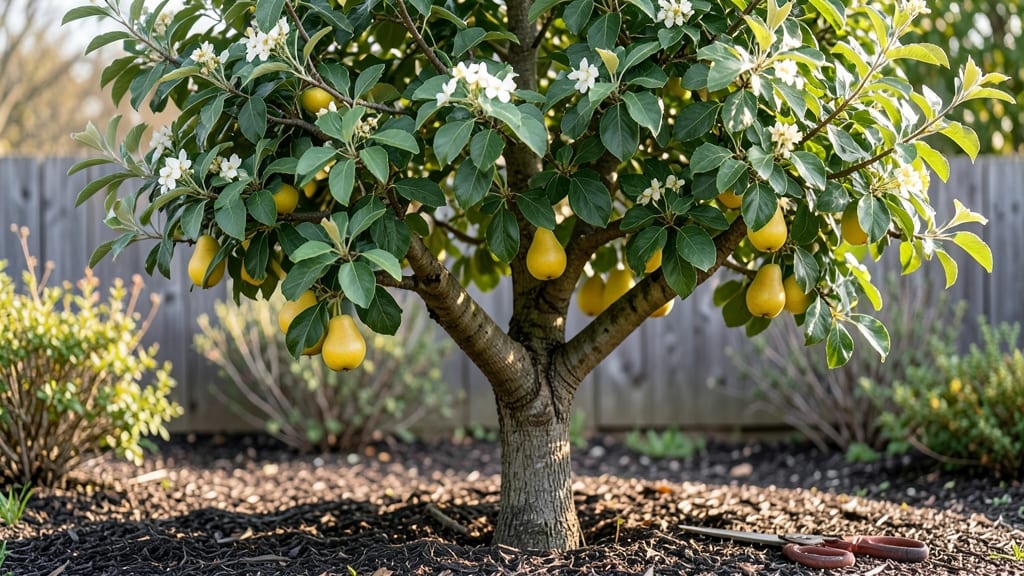
There’s nothing like biting into a crisp, honey-sweet fruit from your own Asian pear fruit tree—especially when it thrives through our Pacific Northwest winters. 🌿 I planted my first Asian pear tree five years ago after struggling with European pears that... never quite ripened here.
The difference? Asian pears handle our cold snaps like a champ, and with the right pruning, they reward you with juicy, disease-resistant fruit every season.
The key to success starts with open-center pruning in late winter, before buds swell. This method keeps the tree's center open to sunlight and air, preventing rot while encouraging strong branch growth.
You'll shape the tree over three years—first removing dead wood, then thinning crowded branches, and finally refining the structure for maximum fruit production. My tree now produces 80-100 pounds of fruit annually with minimal effort.
What you end up with is a tree that's both productive and stunning—think glossy green leaves, delicate white blossoms in spring, and fruit that stays crisp even when left on the tree too long.
The varieties like 'Hosui' and 'Niitaka' are perfect for our climate, and once you master the pruning rhythm, you'll see fruit quality improve every year. The first harvest feels like winning the lottery.
This method works for both backyard orchards and small urban lots, though dwarf varieties like 'Seigyo' are ideal for limited spaces.
The real magic happens when you combine proper pruning with consistent watering—deep soaks once a week during dry summers—and you'll have a tree that outshines store-bought fruit in both flavor and resilience. Let's get those branches shaped right.
📚 In This Guide
- What you need
- Instructions
- Tips and common mistakes
- Wrapping up and next steps
What you need
- ● Pruning shears: Bypass pruners (sharp, 6–8" blades) for small branches.
- ● Loppers: 18–24" long-handled for thicker branches (up to 2" diameter).
- ● Pruning saw: Curved-tooth saw for branches >2" in diameter.
- ● Disinfectant: 70% isopropyl alcohol or 10% bleach solution (1 part bleach to 9 parts water) to sterilize tools.
- ● Gloves: Heavy-duty, cut-resistant gloves (e.g., leather or Kevlar) for protection.
- ● Rubbing alcohol or bleach wipes: For quick tool sanitization between cuts.
- ● 5-gallon bucket or trash bag: For collecting pruned branches (line with a plastic bag for easy disposal).
- ● Permanent marker: To label pruning cuts if needed (e.g., for training young trees).
- ○ Pruning sealant (optional but recommended):strong> For cuts >½" in diameter (e.g., Tanglefoot Tree Wound Pruning Sealer).
- ● Extension pole: For hard-to-reach branches (2–3 ft long with a saw attachment).
- ● Ladder: Sturdy, non-slip ladder (4–6 ft) for taller trees.
- ● Work gloves with grip: For added comfort during extended pruning.
- ● Tree pruning spray: Copper-based fungicide (e.g., Bonide Copper Fungicide) to prevent disease.
- ● Camera or sketchpad: To document the tree’s structure before/after pruning.
Step-by-step instructions for pruning your Asian pear tree
Here's how I approach pruning to keep your Pacific Northwest pear tree thriving year after year.
✂️ Step 1: Time Your Pruning for Best Results
Prune your Asian pear tree during late winter or early spring, just before buds begin to swell. This is when the tree is still dormant but about to wake up—ideal timing for shaping without stressing the plant. Avoid pruning in fall or winter when the tree is fully dormant, as this can invite disease.
In the Pacific Northwest, aim for February through early March when temperatures are consistently above 40°F but before the first blooms appear. You'll know it's the right moment when you see tight, unopened buds along the branches but no leaves yet.
✂️ Step 2: Remove Dead, Diseased, or Weak Growth First
Start by cutting out any dead, diseased, or crossing branches—these are your top priorities. Use clean, sharp pruning shears to make 45-degree cuts just above a healthy bud or lateral branch. Look for branches that are brown inside, have no green tissue, or are rubbing against others.
I always work from the inside out, removing limbs that block sunlight from reaching the center of the tree. If you see branches with cankers, fungal spots, or oozing sap, cut these out immediately and sterilize your tools with rubbing alcohol between cuts to prevent spreading disease.
✂️ Step 3: Shape the Tree for Airflow and Light
Next, open up the canopy by thinning out overcrowded branches to improve airflow and sunlight penetration. Remove about 20-25% of the tree's total growth—this keeps the tree healthy without overstressing it. Focus on branches that grow inward or downward, as these create dense areas prone to disease.
Step back frequently to visualize the tree's structure. Your goal is to create an open, vase-like shape that allows light to reach the center. Asian pears produce fruit on spurs along mature branches, so avoid cutting back too aggressively on older wood—this can reduce fruit production.
✂️ Step 4: Prune for Fruit Production and Growth
Now, focus on fruit-bearing branches. Asian pears develop fruit on one-year-old wood, so avoid heavy pruning of these branches. Instead, lightly trim back last year's growth to encourage new, vigorous shoots that will bear fruit next season.
If your tree has water sprouts (fast-growing vertical shoots), remove about half of them to redirect energy into fruit production. You'll recognize these as thin, upright branches growing straight up from the main limbs. Cut these back to a lateral bud or side branch.
⏰ Step 5: Clean Up and Monitor for New Growth
After pruning, rake up and dispose of all clippings—do not leave them under the tree, as they can harbor pests and diseases. Sterilize your pruning tools with a 10% bleach solution (1 part bleach to 9 parts water) to prevent cross-contamination.
Within 2-4 weeks, you should see new growth emerging from the pruned areas. If you notice yellowing leaves, wilting, or excessive sap, your cuts may have been too severe or too late. Adjust your approach next year—Asian pears are resilient, but they respond best to gentle, strategic pruning.
Tips & tricks for pruning your Asian pear tree
Real talk: pruning isn't just about cutting branches—it's about giving your tree the best chance to thrive in our Pacific Northwest climate. Here's what I've learned after years of shaping my own orchard.
Timing is Everything: That February through early March window is non-negotiable for Asian pears. I've seen trees pruned too early (when still fully dormant) struggle with disease, and those pruned too late (after blooms appear) lose potential fruit. Check for those tight buds that haven't opened yet—this is your perfect cue. The 40°F minimum temperature ensures the tree isn't stressed by cold while still dormant.
Cutting Technique Matters: Those 45-degree cuts above a healthy bud aren't just for looks—they create a natural shield that protects the wound from moisture and disease. I've made the mistake of cutting too close to the trunk or leaving stubs, and those spots always invite problems. When you're making cuts, look for the slight swelling where buds form—this is where new growth will emerge. Use sharp tools to make clean cuts, not jagged tears that rip bark.
Thinning vs. Topping: The 20-25% growth removal rule prevents over-pruning, which stresses the tree. I learned this the hard way when I took off too much in one go—my tree produced half the fruit the next season. Focus on creating that open vase shape by removing branches that grow inward. Think of it like opening the curtains: you want maximum light and airflow to reach every part of the tree, not just the outer branches.
Post-Pruning Care: That 2-4 week window for new growth is your chance to monitor your work. If you see yellowing leaves, it might mean you cut into a water transport vessel (the white tissue under bark). Excessive sap flow often indicates you cut too late in the season or made the cuts too large. Keep an eye out—your tree will tell you if you've overdone it.
Pro Tips for Asian Pear Fruit Tree
- Real talk: pruning isn't just about cutting branches—it's about giving your tree the best chance to thrive in our Pacific Northwest climate.
- Timing is Everything: That February through early March window is non-negotiable for Asian pears.
- Cutting Technique Matters: Those 45-degree cuts above a healthy bud aren't just for looks—they create a natural shield that protects the wound from moisture and disease.
Frequently asked questions
Got questions about pruning your Asian pear fruit tree? You’re not alone!
Whether you're a first-time grower or a seasoned gardener, these common concerns can help you keep your tree thriving in the Pacific Northwest’s climate. Here’s what we hear most often:
When is the best time to prune an Asian pear tree?
Prune your Asian pear tree in late winter or early spring (before buds swell) to avoid disease spread. If you need to remove dead branches or fix storm damage, do it anytime—but avoid heavy pruning in fall. Pro tip: Wait until after the worst winter frosts have passed to ensure new growth isn’t stressed!
Can Asian pear trees survive harsh PNW winters?
Asian pear trees are cold-hardy (USDA zones 5–8) and handle PNW winters well, but young trees may need winter protection like mulch or burlap wraps. Prune damaged branches in early spring—healthy trees bounce back fast. Bonus: Their late-blooming flowers avoid late frost damage!
How much should I prune an Asian pear tree each year?
Light pruning (10–20% of branches) annually keeps the tree healthy. Focus on:
- Removing dead, crossing, or weak wood first.
- Thinning to improve airflow and sunlight.
- Avoid over-pruning—Asian pears fruit on current season’s growth!
Why aren’t my Asian pear trees fruiting?
Common culprits:
- Insufficient sunlight (plant in full sun).
- Poor pruning (over-thinning or wrong timing).
- Young trees (3–5 years to bear fruit).
- Lack of pollination (some varieties need a second tree).
What’s the difference between pruning Asian pears vs. apples?
Asian pears are more forgiving than apples:
- They fruit on new growth (vs. apples’ mixed fruiting habits).
- They tolerate later pruning (though early spring is best).
- They’re less prone to fire blight (a common apple issue).
Wrapping up and next steps
Growing an Asian pear fruit tree in the Pacific Northwest is a rewarding journey—especially when you master the art of cold-hardy pruning! 🌳 By following the right techniques, you’ll ensure strong growth, abundant fruit, and a thriving tree for years to come. Now that you’re armed with the knowledge, it’s time to roll up your sleeves and give your tree the care it deserves.
Your next step? Mark your calendar for the best pruning seasons (early spring or late winter) and grab your tools. Watch your Asian pear tree flourish, and soon, you’ll be enjoying its sweet, juicy rewards! 🍐✨