
Pruning
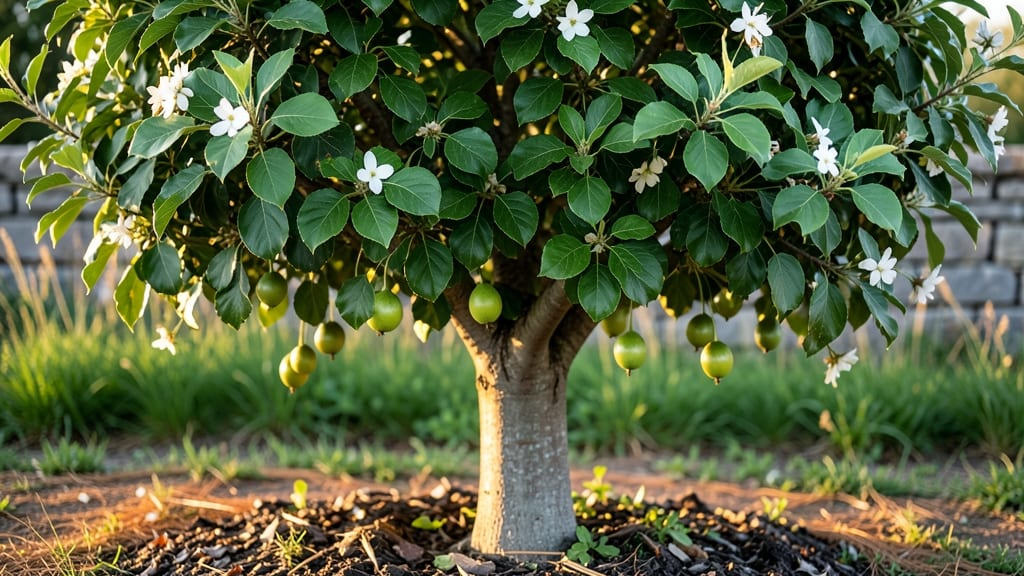
The Bradford pear tree size—reaching 25-40 feet tall with a 25-35-foot spread—makes it ideal for small yards, though pruning can keep it even more manageable. I learned this the hard way after my first tree nearly touched the neighbor’s fence before I even realized how fast it grows.
The key is understanding its growth habits early so you can shape it before it outgrows your space.
Bradford pears grow 2-3 feet per year in ideal conditions, so a young tree can double in size within a decade if left unchecked. That’s why spacing matters: plant it at least 30 feet from structures and other trees to avoid root competition.
The shallow root system means it spreads wide but doesn’t dig deep, so mulching helps keep roots cool and moisture consistent—especially in hot climates where growth accelerates.
With strategic pruning in late winter, you can maintain a neat, manageable shape while encouraging dense branching for better fruit production. I prune mine every 2-3 years to remove crossing branches and thin the canopy, which also reduces the risk of storm damage.
The result? A tree that stays proportional to your yard without sacrificing its stunning white spring blooms or edible (though seedy) fruit.
If your space is extra limited, consider dwarf varieties like ‘Little Gem’ or ‘Arboretum,’ which stay under 20 feet tall. But even a full-sized Bradford can work if you commit to annual pruning and monitor its growth.
The trade-off? Less frequent maintenance means a bigger tree over time—so plan accordingly before planting.
📚 In This Guide
- What you need
- Instructions
- Tips and common mistakes
- Wrapping up and next steps
What you need
- ● Pruning shears – Bypass shears (for clean cuts on small branches, 5–7 inches long)
- ● Loppers – Bypass or anvil type (for branches ¾–2 inches thick, 8–12 inches long)
- ● Pruning saw – Curved-tooth saw (for branches 2+ inches thick, 16–20 inches long)
- ● Extension pole – 10–15 feet long (to reach high branches safely)
- ● Gloves – Heavy-duty, cut-resistant (to protect hands from thorns and sharp edges)
- ● Disinfectant – 70% isopropyl alcohol or pruning sealant (to sterilize tools and prevent disease)
- ● Tarp or drop cloth – Medium-sized (6x8 feet) (to collect debris and protect the ground)
- ● Ladder – Sturdy, extendable (12–16 feet) (for safe access to higher branches)
- ○ Rope or harness – Optional but recommended (for securing the ladder or climbing safety)
- ● Hand pruners with ratchet – For effortless cutting of medium branches
- ● Tree wound dressing – Controversial but some swear by it (for sealing larger cuts)
- ● Work gloves with grip – For extra comfort during extended pruning
- ● Safety glasses – To shield eyes from debris
- ● Notebook & pen – To sketch your pruning plan or track progress
How to manage Bradford pear tree size for a controlled canopy
This tree thrives with the right pruning approach—here’s how to shape it for small spaces without sacrificing beauty.
Understand the Bradford Pear’s Natural Growth Pattern
The Bradford pear (Pyrus calleryana ‘Bradford’) typically matures at 30–40 feet tall with a 25–35-foot spread, but its vigorous growth can be tamed early. The key is recognizing its scaffold branches—the main limbs that form the tree’s framework—usually appearing in the first 3–5 years. These branches grow at a 45-degree angle from the trunk, and pruning them correctly will determine your tree’s ultimate size.
I always start by sketching the tree’s structure on paper, marking the scaffold branches and their growth direction. This helps visualize where future cuts will redirect energy. Bradford pears respond well to open-center pruning, which encourages a wider, more balanced canopy rather than a tall, narrow silhouette. If left unchecked, the tree will grow fast and upright, making it unsuitable for tight yards.
Prune for Height Control in the First 3 Years
During the tree’s first three growing seasons, focus on height reduction by selectively pruning the leader (the central upward-growing stem). Use clean, sharp pruners to make cuts just above a bud that faces outward—this encourages lateral branching. Remove no more than 25% of the tree’s foliage in any single year to avoid stress.
Here’s the trick: target the top 1–2 feet of the leader each year. For example, if the tree is 10 feet tall in Year 1, cut back the leader to 8 feet in late winter or early spring before new growth begins. This forces the tree to send out side branches, which will eventually form a wider canopy. Avoid heavy pruning in the fall, as the tree needs time to heal before winter dormancy.
Shape the Canopy for Width and Balance
Once the tree reaches 5–7 feet tall, shift focus to canopy thinning to improve airflow and sunlight penetration. Remove suckers (shoots growing from the base or trunk) immediately—they drain energy and create a messy appearance. For scaffold branches, prune back to a lateral bud that points in the direction you want growth to go (e.g., outward or slightly upward).
I like to step back and observe the tree’s silhouette from all angles. If one side looks sparse, select 2–3 branches on that side to shorten by one-third. Bradford pears are prone to dieback (sudden branch death), so always make cuts just outside the branch collar (the swollen area where the branch meets the trunk) to prevent infection. Use sterilized pruning tools to avoid spreading disease between cuts.
Maintain Size with Annual Structural Pruning
After the tree matures beyond 10 feet, annual structural pruning keeps it manageable. In late winter or early spring, before buds swell, remove:
- Dead, diseased, or crossing branches (these rub and create wounds).
- Water sprouts (fast-growing vertical shoots).
- Branches growing inward (they block light and create a dense, weak canopy).
For height control, never remove more than 20% of the canopy in a single year. Bradford pears recover well, but aggressive pruning can lead to suckering or weak regrowth. I mark my cuts with flagging tape (brightly colored tape) to track progress year over year. Over time, this method keeps the tree at a controlled 20–25 feet tall with a 15–20-foot spread, ideal for suburban lots.
Monitor and Adjust for Long-Term Success
Every 2–3 years, reassess the tree’s structure. If branches grow too long or develop weak crotches (where limbs meet the trunk at sharp angles), thin them out to reduce weight and prevent breakage. Bradford pears are fast growers, so regular pruning prevents them from outgrowing their space.
Watch for epicormic branching (small shoots along the trunk)—this is a sign the tree is stressed or overpruned. If you see it, reduce future cuts and focus on fertilizing with slow-release, balanced fertilizer (10-10-10 ratio) in early spring. Mulch the base with 3 inches of organic mulch (like shredded bark) to retain moisture and encourage root growth, which supports a healthier, more compact canopy.
Tips & tricks for managing Bradford pear tree size
Keeping a Bradford pear compact without stunting its growth takes precision and patience—here’s how to refine the approach for long-term success.
Timing is Everything: The three-year window for initial leader pruning (Step 2) is non-negotiable. Bradford pears establish their growth pattern early, so delaying cuts beyond this period risks creating a permanently tall, unmanageable silhouette. I’ve seen trees that grew 5 feet in a single season after skipping early pruning—now they’re 30-foot monsters with no easy fixes. Always prune the leader in late winter when the tree is dormant but before buds swell; this timing ensures clean cuts that heal properly before spring growth begins.
Visualize Before You Prune: Sketching the tree’s structure (as mentioned in Step 1) isn’t just a suggestion—it’s a game-changer. I’ve made the mistake of eyeballing cuts without a plan, only to realize later that branches were growing in unintended directions. Use a simple pencil-and-paper sketch to map scaffold branches and mark where you’ll make cuts. This helps you visualize how energy will redirect after pruning, ensuring a balanced, open canopy rather than a lopsided one. Think of it as your tree’s blueprint.
Branch Collar Matters More Than You Think: When pruning scaffold branches in Step 3, cutting just outside the branch collar (the swollen area where the branch meets the trunk) isn’t just technical jargon—it’s critical for the tree’s health. I learned this the hard way after accidentally cutting into the collar on a Bradford pear, which led to dieback in that branch. Always make your cuts at a slight angle, about 1/8 inch outside the collar, to preserve the tree’s natural healing response. Sterilize your pruners between cuts with rubbing alcohol to prevent spreading disease.
Flagging Tape is Your Secret Weapon: Marking cuts with brightly colored flagging tape (Step 4) might seem like overkill, but it’s one of the most practical tools for long-term management. I’ve used this method for years, and it’s saved me countless headaches. The tape helps you track which branches you’ve pruned and why, making it easier to spot patterns or issues in subsequent years. It also serves as a visual reminder to avoid over-pruning—if you see too many flags on one side, you’ll know to focus on the other side next time.
Pro Tips for Bradford Pear Tree Size
- Keeping a Bradford pear compact without stunting its growth takes precision and patience—here’s how to refine the approach for long-term success.
- Timing is Everything: The three-year window for initial leader pruning (Step 2) is non-negotiable.
- Visualize Before You Prune: Sketching the tree’s structure (as mentioned in Step 1) isn’t just a suggestion—it’s a game-changer.
Frequently asked questions
Got questions about managing your Bradford pear tree’s size?
Here are the most common ones—plus clear, actionable answers to keep your tree thriving in small spaces.
How big does a Bradford pear tree typically grow?
A mature Bradford pear tree can reach 30–50 feet tall and spread 25–40 feet wide with an open, vase-shaped canopy. However, regular pruning (especially in youth) can keep it compact and manageable—ideal for urban or suburban yards. Dwarf varieties (like ‘Littleleaf’ cultivars) max out at 15–20 feet, making them perfect for tight spaces.
When is the best time to prune for size control?
Prune Bradford pears dormant season (late winter/early spring, before buds swell) to avoid disease spread. Light trimming can also happen in summer to shape growth, but avoid heavy cuts then—it stresses the tree. Never prune in fall; fungal risks spike with wet conditions.
What’s the best way to prune a Bradford pear to keep it small?
Use selective heading cuts to reduce vertical growth: trim 1/3 of the branch length just above an outward-facing bud. Remove water sprouts (fast-growing vertical shoots) immediately—they steal energy. For dense canopies, thin out 20% of branches annually to improve airflow and sunlight penetration.
Are there smaller alternatives to Bradford pears?
Yes! Consider these space-saving options:
- ‘Cleveland Select’ pear: 20–30 ft tall, disease-resistant, and more compact.
- Callery pear (e.g., ‘Aristocrat’): 25–35 ft but with tighter growth habits.
- Dwarf flowering pear (e.g., ‘Peggy Clarke’): 12–15 ft, fragrant blooms, and minimal mess.
- Ornamental cherry (like ‘Okame’): 15–20 ft, with stunning spring flowers.
Pro tip: Check your local nursery for grafted dwarf varieties—they’re genetically smaller!
Why does my Bradford pear have weak, leggy growth?
Leggy growth usually means over-shading or poor pruning practices. Fix it by:
- Pruning to open the canopy (remove inward-growing branches).
- Ensuring 6+ hours of sunlight daily—Bradford pears thrive in full sun.
- Avoiding top-heavy cuts (never remove >25% of foliage in one season).
- Fertilizing with balanced 10-10-10 in early spring if soil is poor.
If the issue persists, test for nutrient deficiencies (e.g., iron chlorosis) or root competition from nearby plants.
Wrapping up and next steps
Choosing a Bradford pear tree for your small space is a fantastic way to enjoy beauty without sacrificing room—just remember, its compact canopy (typically 25-35 feet) still needs thoughtful pruning to keep it manageable.
With the right tools, timing, and techniques, you’ll master its growth and create a stunning focal point that fits your landscape perfectly.
Ready to transform your yard? Grab your pruners and start shaping! 🌿 For even more tips, explore our pruning guide for small trees or connect with local arborists to tailor your approach.