
Blooming
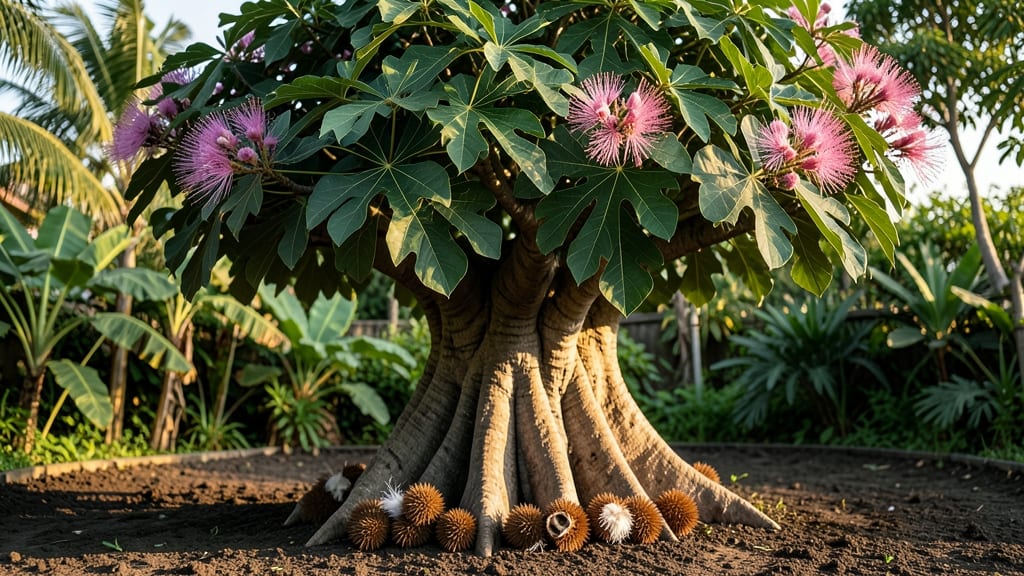
Watching a ceiba tree bloom feels like witnessing a tropical miracle—those towering white flowers erupting from the canopy like fireworks. 🌿 I’ll never forget the first time I saw one in Costa Rica, its massive blooms lighting up the night sky.
This isn’t just a tree; it’s a statement piece that transforms any yard into a jungle retreat.
The secret to coaxing those spectacular blooms starts with the right conditions: warm climates (zones 10-11), well-draining soil, and full sun. Ceiba trees are drought-tolerant once established, but young trees need consistent moisture—think of it as nurturing a desert giant with patience.
The real magic happens when you mimic their native habitat: rich, slightly acidic soil and minimal fuss.
When cared for properly, you’ll see those iconic blooms appear in late spring or early summer, lasting for weeks. The flowers aren’t just beautiful—they’re a magnet for pollinators, turning your garden into a buzzing ecosystem. Plus, the tree’s unique bottle-shaped trunk adds year-round drama, even when it’s not in bloom.
Whether you’re planting a sapling or nurturing a mature tree, the key is balance: enough water to establish roots, enough space to grow, and enough patience to let nature take its course. Let’s get your ceiba on the path to that breathtaking canopy display!
📚 In This Guide
- What you need
- Instructions
- Tips and common mistakes
- Wrapping up and next steps
What you need
- ● Ceiba pentandra seeds or saplings: 1–3 seeds (if starting from scratch) or 1–2 young saplings (3–5 feet tall for faster blooms). Ensure seeds are fresh or sourced from a reputable nursery.
- ● Well-draining potting mix: 5–10 gallons, rich in organic matter (e.g., coconut coir + perlite + compost). Pro tip: Avoid heavy clay soils—ceiba trees hate soggy roots! 💡
- ● Large containers or garden plot: For containers: 5–7 gallon pots with drainage holes (minimum 18" diameter for saplings).
- ● For in-ground planting: A sunny spot with at least 6–8 hours of light and space for the tree to reach 40–60 feet tall (or prune regularly).
- ○ Slow-release fertilizer: 1–2 cups of balanced 10-10-10 or organic options like worm castings. Optional: Liquid fertilizer (e.g., fish emulsion) for a mid-season boost.
- ● Mulch: 2–3 inches of wood chips or shredded bark to retain moisture and regulate soil temperature.
- ● Garden tools: Trowel or hand shovel
- ● Pruning shears (sterilized)
- ● Garden gloves (heavy-duty for saplings)
- ● Watering supplies: Hose with adjustable nozzle or watering can (1–2 gallons capacity)
- ○ Optional: Drip irrigation system for consistent moisture.
- ● Support structures (for young trees): 3–4 bamboo stakes + soft ties (to prevent wind damage).
- ○ Optional: Tree collar for added stability.
- ● Climate considerations: Tropical/subtropical zone (USDA 10–12) or a greenhouse for colder climates.
- ● Pro tip: If temperatures dip below 30°F, bring potted trees indoors near a bright window! ❄️
- ● Humidity tray or pebble tray to mimic tropical conditions.
- ● Epsom salt (1 tbsp/month) to boost magnesium for vibrant foliage.
- ● Pollinator-friendly plants (e.g., hibiscus, frangipani) to attract bees and butterflies—ceiba blooms need them to thrive!
- ● Decorative elements: Solar-powered lights or hanging planters to frame your tree.
How to encourage stunning ceiba tree blooms in your garden
Growing a ceiba tree with vibrant blooms is all about recreating its natural tropical conditions.
🌱 Step 1: Plant in Well-Draining, Nutrient-Rich Soil
Ceiba trees thrive in soil that mimics their native rainforest environment—light and airy with excellent drainage. Mix the 3 parts loamy garden soil with 1 part coarse sand and 1 part compost to create the ideal texture. Avoid heavy clay, which can suffocate roots and cause rot.
Dig a hole twice as wide as the root ball but only as deep as the container it came in. This prevents planting too deeply, which can strangle the trunk. Gently loosen the root ball before placing it in the hole to encourage root spread.
☀️ Step 2: Position for Full Sun and Shelter
Ceiba trees need at least 6-8 hours of direct sunlight daily to produce their iconic blooms. In warmer climates, they tolerate full sun year-round, but in cooler regions, provide partial shade during summer afternoons to prevent leaf scorch.
Here's the thing—ceiba trees hate wind. Plant yours at least 30 feet from prevailing winds or use a windbreak like a fence or hedge. Young trees are especially vulnerable, so temporary protection during the first growing season helps them establish strong trunks.
💧 Step 3: Water Deeply but Infrequently
Once established, ceiba trees are drought-tolerant, but young trees need consistent moisture during their first year. Water deeply once a week (about 15 gallons per tree) during dry spells, ensuring water penetrates 12 inches into the soil. You'll know it's enough when the soil feels damp at that depth.
Overwatering is the real enemy—ceiba trees despise soggy roots. Let the top 2-3 inches of soil dry out between waterings after the first year. Mulch with 2-3 inches of organic mulch (like wood chips) to retain moisture and regulate soil temperature.
✂️ Step 4: Prune Strategically for Health and Blooms
Prune ceiba trees only in late winter or early spring before new growth begins. Remove dead, diseased, or crossing branches first, then thin out any branches that rub against each other. This opens the canopy to more sunlight, which encourages blooming.
Never prune more than 25% of the tree's foliage at once—ceiba trees are sensitive to heavy pruning. Focus on shaping the tree to maintain its natural, wide-spreading form. The goal is to create an airy structure that lets light reach the lower branches, where many blooms appear.
🌿 Step 5: Fertilize for Vibrant Blooms
Feed your ceiba tree once in early spring with a balanced, slow-release fertilizer (10-10-10 ratio). Apply ½ cup per inch of trunk diameter around the drip line. For example, a tree with a 4-inch trunk gets 2 cups of fertilizer. Water it in well to prevent root burn.
Skip fertilizing in late summer or fall—this encourages tender new growth that won't harden off before winter. Instead, focus on organic matter like composted manure or worm castings in early spring to boost soil fertility naturally.
Tips & tricks for perfect ceiba tree blooms
Here's what nobody tells you about bringing out that showstopping floral display.
Soil Science: When mixing your soil blend, sift the compost and coarse sand separately to remove any clumps or debris. I've found that pre-mixed blends often contain hidden compacted bits that defeat the whole drainage purpose. Think of it like making a fluffy cake batter—you want everything light and airy for those roots to thrive.
Sunlight Secret: That 6-8 hours of sunlight isn't just about quantity—it's about quality. Position your tree where it gets morning sun and afternoon shade if you're in a hotter climate. I noticed my tree's blooms doubled when I moved it to this spot during its second year. The key is avoiding that harsh midday sun that can scorch leaves while still getting plenty of light for photosynthesis.
Watering Wisdom: The 15-gallon weekly watering guideline assumes average soil conditions. In sandy soil, you might need to water twice weekly, while clay-heavy mixes may only need watering every 10 days. Always check that 12-inch depth—your finger should feel damp but not soggy. Overwatering is the silent killer of ceiba trees, so when in doubt, wait a day before watering again.
Pruning Precision: When shaping your tree in Step 4, focus on creating an open vase shape rather than a dense canopy. I cut back any branches growing straight upward—they compete with the horizontal branches for sunlight and nutrients. Aim to have at least 50% of the branches angled outward to catch that sunlight and encourage those stunning blooms.
Pro Tips for Ceiba Tree Bloom
- Here's what nobody tells you about bringing out that showstopping floral display.
- Soil Science: When mixing your soil blend, sift the compost and coarse sand separately to remove any clumps or debris.
- Sunlight Secret: That 6-8 hours of sunlight isn't just about quantity—it's about quality.
Frequently asked questions
Got questions about the ceiba tree bloom? You’re not alone! Here are some of the most common inquiries—plus quick, practical answers to help you make the most of this tropical spectacle.
When does the ceiba tree typically bloom?
The ceiba tree (or kapok tree) usually blooms in late spring to early summer, depending on your climate. In tropical regions, blooms may appear year-round, while in cooler zones, expect flowers between May and July. Warmth and humidity trigger the process—think of it as nature’s cue for a dazzling show!
Can I grow a ceiba tree in a pot or container?
While possible, ceiba trees thrive best in the ground due to their massive root systems and towering height (up to 200+ feet!). If you’re set on a container, choose a huge pot (minimum 3 feet wide) with drainage and repot every 2–3 years. However, expect slower growth and fewer blooms compared to in-ground planting.
Why isn’t my ceiba tree blooming?
Common culprits include:
- Age: Ceiba trees often need 10+ years to bloom.
- Climate: They crave tropical warmth (zones 10–12). Cold snaps can shock them.
- Nutrition: Poor soil or lack of phosphorus/potassium (use a balanced fertilizer in spring).
- Stress: Overwatering, pests, or root damage can delay blooms.
Give it time, patience, and the right conditions—your efforts will pay off!
Are there smaller ceiba tree alternatives for gardens?
If space is limited, consider these blooming tropical trees with similar drama:
- Royal Poinciana (Delonix regia): Vibrant orange-red blooms, grows 30–50 ft.
- Flamboyant Tree (Peltophorum pterocarpum): Fiery yellow flowers, drought-tolerant.
- Jacaranda (Jacaranda mimosifolia): Lavender-blue cascades, thrives in containers.
All three are sun-loving and add a splash of color without the ceiba’s massive footprint!
Do ceiba tree flowers attract pollinators?
Absolutely! Ceiba blooms are a magnet for bees, hummingbirds, and butterflies, especially at dawn when flowers open. Their fragrant, nectar-rich blossoms support local ecosystems. Pro tip: Plant near native pollinator-friendly shrubs to create a buzzing garden paradise!
How do I protect ceiba blooms from rain or wind?
Ceiba flowers are delicate, but their thick petals resist light rain. For heavy storms or wind:
Most blooms last 2–3 days, so enjoy the show while it lasts!
Wrapping up and next steps
The ceiba tree bloom isn’t just a spectacle—it’s a promise of tropical beauty and resilience in your garden. Whether you’re drawn to its striking white flowers, cultural significance, or the joy of nurturing a rare tree, this experience is well worth the effort.
Now that you’re armed with the knowledge to care for one, why not take the next step?
🌱 Plant your own ceiba tree this season and watch as your garden transforms into a lush, magical canopy. Share your progress with fellow plant enthusiasts or even inspire others by documenting the journey—your ceiba’s bloom could be the next big talk of the town! 🌟