
Pruning
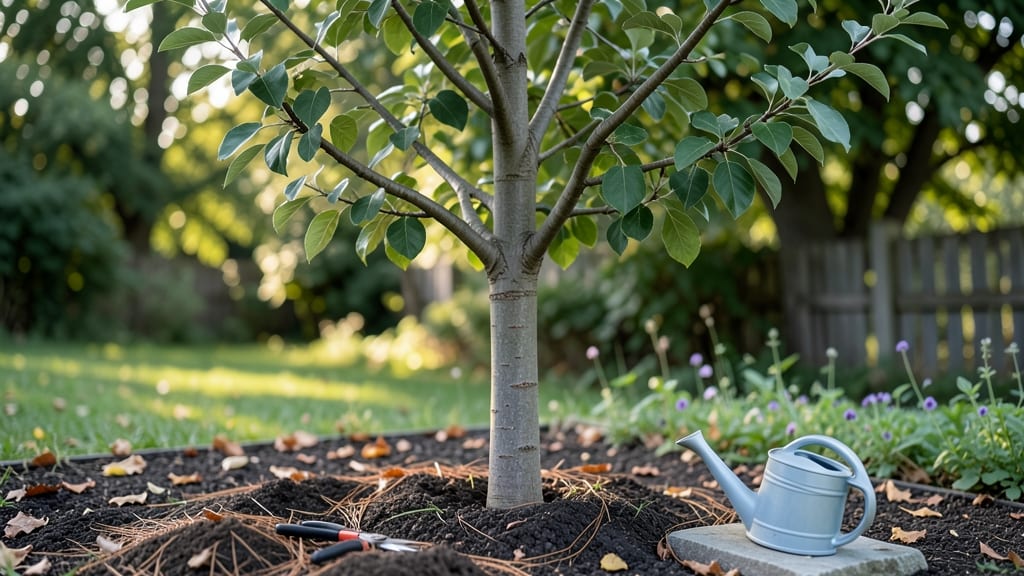
Cleveland pear tree bark cracking under winter’s grip isn’t just unsightly—it’s a cry for help from your tree. 🌳 I’ve seen these trees go from sturdy to stressed when bark splits or peels, leaving them vulnerable to silver leaf fungus or borers.
The good news? Smart winter pruning can strengthen their resilience before cold sets in.
Look for vertical splits, peeling patches, or blackened streaks—these are red flags. Cracked bark lets in moisture and pests, while fungal spots appear as silvery sheen or dark stains.
Pruning isn’t just about shaping; it’s about removing weak spots and encouraging fresh, cold-resistant growth. Start with clean, sharp tools and work on dry days to prevent spreading disease.
You’ll end up with a tree that bounces back stronger each spring, with smoother bark and fewer entry points for pests. Focus on thinning out crowded branches first—this improves airflow and sunlight penetration, two key defenses against winter stress.
For severe cases, a professional arborist can assess deeper damage you might miss.
This method works year-round, but winter is the best time to prune before new growth begins. The key is patience: don’t over-prune, and always cut back to healthy wood. Your Cleveland pear will thank you with years of sturdy, productive branches and fewer winter struggles.
📚 In This Guide
- What you need
- Instructions
- Tips and common mistakes
- Wrapping up and next steps
What you need
- ● Pruning shears: Sharp, bypass-style shears (for cuts up to ¾ inch thick). Quantity: 1 pair (or 2 if working on a large tree).
- ● Loppers: Heavy-duty, long-handled loppers (for thicker branches, 1–2 inches). Quantity: 1 pair.
- ● Pruning saw: Curved-tooth saw for branches >2 inches. Quantity: 1.
- ● Rubbing alcohol (70% isopropyl): For sterilizing tools between cuts. Quantity: Small bottle.
- ○ Pruning sealant: Optional but recommended for large cuts (>1 inch) to prevent disease. Quantity: 1 small tube.
- ● Gloves: Cut-resistant gloves to protect hands. Quantity: 1 pair.
- ● Ladder or step stool: Sturdy, non-slip ladder for higher branches. Quantity: As needed.
- ● Heavy-duty trash bags: For collecting debris. Quantity: 2–3 bags.
- ○ Marking twine or flags: To tag branches for removal (optional but helpful). Quantity: Small roll.
- ● Timing: Prune late winter or early spring (before buds swell) for cold-resistant growth.
- ● Weather: Choose a dry, calm day (avoid frost or rain).
- ● Safety first: Wear closed-toe shoes and avoid overreaching!
- ● Tool prep: Sharpen blades and disinfect tools with rubbing alcohol to prevent bacterial/fungal spread.
Step-by-step guide for pruning Cleveland pear trees in winter
Cold-hardy Cleveland pears thrive with strategic winter pruning—here’s how to do it right.
⏰ Step 1: Time Your Pruning for Dormancy
Prune your Cleveland pear tree late winter to early spring, just as buds begin to swell but before new growth starts. This timing—February to March in most climates—ensures you remove dead wood while avoiding the risk of late-season frost damage to fresh cuts. I always check the forecast for a stretch of dry, above-freezing days before grabbing my tools.
Real talk: If you miss this window, don’t panic. You can still prune through early April, but avoid heavy cuts after buds break. The tree’s energy shifts to growth when leaves appear, and open wounds heal slower then. Look for tight, plump buds as your cue—they signal the tree’s about to wake up.
✂️ Step 2: Remove Dead, Diseased, and Crossing Branches
Start by cutting out any dead, broken, or diseased branches—these are easy to spot as they’re bare, cracked, or oozing sap. Use clean, sharp pruners to make 45-degree cuts just outside the branch collar (the swollen area where the branch meets the trunk). I like to disinfect my tools with rubbing alcohol between cuts to prevent spreading disease.
Next, remove crossing or rubbing branches—these create weak points where bark gets damaged. Look for branches growing toward each other or rubbing against the trunk. Cut back to the branch collar, and don’t leave stubs. The goal is to open the canopy for better airflow and sunlight penetration. You’ll see smoother branch angles after this step, which means fewer future problems.
☀️ Step 3: Thin the Canopy for Light and Airflow
Cleveland pears need good airflow to prevent fungal diseases like fire blight. Step back and look for branches that block light from reaching the center of the tree. Remove up to 25% of the canopy by selectively thinning—focus on branches growing inward or downward. Cut these back to a side branch or bud facing outward.
Here’s the thing—don’t overdo it. You want to maintain the tree’s natural shape while improving light access. Aim for a balanced, open structure where sunlight can reach all branches. If you’re unsure, start with the smallest branches first. You can always remove more later if needed, but you can’t undo over-pruning.
🌱 Step 4: Shape for Cold Resistance and Fruit Production
Cleveland pears benefit from an open-center or modified central leader shape. This form helps snow and ice slide off branches in winter, reducing breakage. Prune to encourage strong scaffolding branches—these are the main limbs that form the tree’s structure. Cut back any weak, competing leaders (vertical shoots growing straight up from the same point).
For fruit production, focus on last year’s growth. These branches produce the most fruit, so avoid cutting them back heavily. Instead, prune to remove excess fruit clusters—leave about 6-8 inches of branch with 3-5 buds per cluster. This ensures the tree doesn’t get overloaded with fruit, which can stress it in cold winters. You’ll see healthier, more vigorous growth next season if you balance fruit load and branch strength.
💧 Step 5: Clean Up and Protect the Tree
After pruning, remove all debris from the ground beneath the tree. This includes fallen branches, leaves, and clippings—these can harbor pests and diseases over winter. I rake up everything and dispose of it in the trash (not the compost bin). Next, apply a thin layer of mulch (about 2-3 inches deep) around the base, keeping it 6 inches away from the trunk to prevent rot.
Finally, consider wrapping the trunk with tree guard or burlap if your winters are extremely harsh (below 0°F). This protects against sunscald (damage from winter sun on frozen bark) and rodent chewing. Step back and admire your work—the tree’s ready to face winter with fewer weak spots and more energy for spring growth.
Tips & tricks for perfect Cleveland pear tree pruning
Winter pruning transforms your Cleveland pear tree into a resilient powerhouse—here's how to avoid common mistakes and get it right the first time.
Timing is Everything: The February to March window isn't just ideal—it's critical for cold resistance. I've seen trees stressed by late pruning when buds start swelling, so mark your calendar for when those tight, plump buds appear. If you're in a warmer climate where buds swell earlier, shift your timing slightly later. The goal is to catch the tree just waking up but before it's fully active.
Tool Prep Makes All the Difference: Before you make a single cut, disinfect your pruners with rubbing alcohol between branches—especially when moving from diseased to healthy wood. I keep a small spray bottle of 70% isopropyl alcohol in my tool bag for quick cleanups. Also, make sure your blades are sharp; dull tools crush rather than cleanly cut, creating larger wounds that heal poorly in cold weather.
Visual Cues for Perfect Cuts: When removing branches in Step 2, look for the branch collar—the swollen ridge where the branch meets the trunk. Your cut should be just outside this collar at a 45-degree angle. I like to imagine a line from the branch collar down to the trunk—this helps me visualize where to cut. Never leave stubs, as they invite rot and disease, especially in cold climates where wounds take longer to heal.
Canopy Balance Secret: That 25% thinning target in Step 3 might seem arbitrary, but it's based on how much light your tree actually needs. Step back and look at your tree from all angles—you're aiming for sunlight to reach the center without over-thinning. I often start by removing the smallest branches first (they're easier to cut and less impactful), then work my way up to larger branches if needed. Think of it like sculpting: you're refining the tree's natural shape rather than drastically changing it.
Pro Tips for Cleveland Pear Tree Bark
- Winter pruning transforms your Cleveland pear tree into a resilient powerhouse—here's how to avoid common mistakes and get it right the first time.
- Timing is Everything: The February to March window isn't just ideal—it's critical for cold resistance.
- Tool Prep Makes All the Difference: Before you make a single cut, disinfect your pruners with rubbing alcohol between branches—especially when moving from diseased to healthy wood.
Frequently asked questions
Got questions about pruning Cleveland Pear Tree bark in winter? You're not alone!
Here are answers to the most common concerns to help you tackle the job with confidence.
When is the absolute best time to prune Cleveland Pear trees in cold climates?
The ideal window is late winter—after the worst cold snaps but before buds swell (typically February to early March). This balances dormancy protection with early-season growth stimulation. Avoid pruning in extreme cold (<10°F) or during active sap flow (spring).
How do I know if I’ve pruned too late? Signs my tree is stressed?
Watch for excessive weeping sap, yellowing leaves, or stunted growth post-pruning. If buds swell but don’t break, you pruned too late. For Cleveland Pears, wait until 50% of buds show color before cutting—this signals safety. Thin cuts (not jagged) also reduce shock.
Can I use regular pruners, or do I need special tools for Cleveland Pear bark?
Standard bypass pruners work for branches <1.5” thick. For thicker limbs, use loppers or a pruning saw. Clean tools with rubbing alcohol between cuts to prevent bacterial spread (like silver leaf disease). Avoid dull blades—they tear bark, inviting pests. Sharp tools = cleaner wounds.
What if my Cleveland Pear’s bark looks peeling or cracked after pruning? Is that normal?
Mild peeling is normal as the tree heals, but deep cracks or oozing sap signal stress. Apply pruning sealant (optional for Cleveland Pears) to large cuts >2” in diameter. Monitor for blackened bark (fungus) or sawdust-like frass (borers)—treat with copper fungicide or insecticide if needed.
Are there alternative pruning methods if I miss the winter window?
Yes! Summer pruning (June–July) is your backup—focus on removing water sprouts and thinning the canopy. Avoid heavy cuts, as summer growth is more vulnerable. Never prune in fall (invites disease) or during drought. If you must prune in spring, do it early (before leaf-out) and keep cuts minimal.
Wrapping up and next steps
Mastering the art of pruning your Cleveland Pear Tree isn’t just about keeping it healthy—it’s about unlocking its full potential for cold-resistant, winter-proof growth. With the right tools, timing, and techniques, you’ll ensure your tree thrives even in the harshest seasons. 🌳❄️
Ready to take action? Grab your pruners and schedule your next pruning session—whether it’s a light trim in late winter or a more strategic cut in early spring. Your tree (and your future harvests!) will thank you.