
Pruning
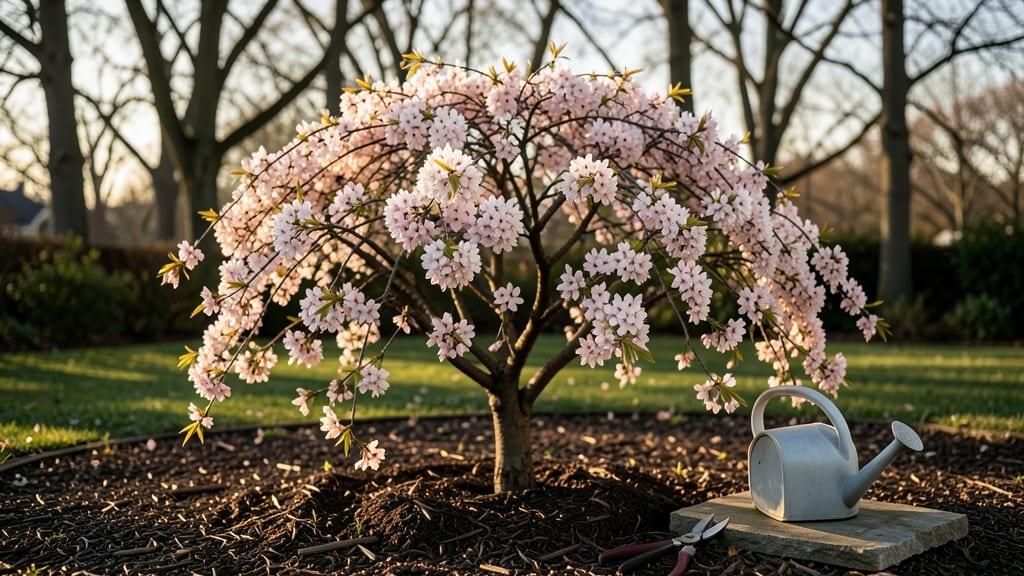
The dwarf Snow Fountain weeping cherry tree brings the drama of a full-size cherry to tiny spaces—without the mess of petals or the pruning headaches. Its silvery bark peels like delicate paper in winter, cascading branches spill fragrant white blooms in spring, and the foliage turns soft pink in fall.
Honestly, I've never seen a tree this versatile in such a small package.
This isn't just a pretty face—it thrives in containers, small yards, or as a dramatic focal point near patios. Pair it with hostas for shade contrast or boxwoods to frame its weeping habit.
The best part? It stays under 8 feet tall, so you can place it almost anywhere without sacrificing impact. Even in urban settings, it transforms a dull corner into a showstopper.
You'll love how it softens hard edges while adding seasonal interest. The spring blooms attract pollinators, the summer foliage provides lush texture, and the winter bark adds architectural intrigue. It's the kind of tree that makes neighbors pause and ask, "What is that?"—then spend 10 minutes admiring it.
Perfect for low-maintenance landscapes, modern gardens, or even as a striking container specimen. The minimal pruning requirement means more time enjoying it and less time fussing. Let's talk placement and pairing ideas that make this tree the star of your outdoor space.
📚 In This Guide
- What you need
- Instructions
- Tips and common mistakes
- Wrapping up and next steps
What you need
- ● A dwarf snow fountain weeping cherry tree (look for Prunus serrulata ‘Snow Fountain’ or similar cultivars, typically 8–12 feet tall at maturity but dwarf varieties stay under 6 feet).
- ● Well-draining soil (amend with compost or organic matter if your soil is heavy clay or sandy).
- ● Organic mulch (2–3 inches of shredded bark, pine needles, or wood chips to retain moisture and suppress weeds).
- ● Slow-release fertilizer (balanced 10-10-10 or acidic fertilizer like 8-3-9 for cherry trees).
- ● Watering can or hose with a gentle spray nozzle (cherry trees hate soggy roots!).
- ● Garden gloves (to protect your hands from thorns and rough bark).
- ● Hand pruners (bypass pruners for clean cuts, sharpened and sanitized with rubbing alcohol).
- ● Loppers (for thicker branches, if your tree grows larger over time).
- ● Trowel or spade (for planting or amending soil).
- ● Measuring tape (to ensure proper spacing—plant 10–15 feet from structures or other trees).
- ● Tree stakes or garden twine (if planting in windy areas to support young trees temporarily).
- ● Pest control spray (neem oil or horticultural oil for early prevention of aphids or spider mites).
- ● Tree collar or guard (to protect the trunk from lawnmowers or string trimmers).
- ● Drip irrigation system (for consistent moisture, especially in hot climates).
How to plant and maintain a dwarf Snow Fountain weeping cherry tree
This graceful tree thrives with thoughtful placement and seasonal care—here’s how to keep it stunning for decades.
🪴 Step 1: Choose the Perfect Planting Location
Select a spot with full sun exposure—at least 6 hours of direct sunlight daily—where the tree will have room to spread its 8-12 foot canopy without obstruction. The Dwarf Snow Fountain grows best in well-draining soil with a slightly acidic to neutral pH (6.0–7.0). Avoid low-lying areas where water pools, as soggy roots lead to root rot and weak growth.
Test your soil’s drainage by digging a 12-inch hole—if water doesn’t drain within 30 minutes, amend the soil with 2–3 inches of compost or sand to improve aeration. Mulch the base with 2–3 inches of organic mulch (like shredded bark) once planted, keeping it 6 inches away from the trunk to prevent moisture buildup.
🌱 Step 2: Plant with Care for Long-Term Stability
Dig a hole twice as wide as the tree’s root ball but no deeper—planting too deep suffocates roots and stunts growth. Gently remove the tree from its container and loosen any circling roots with your fingers. Place it in the hole so the top of the root ball sits level with the surrounding soil—never bury the trunk deeper than its original position.
Backfill the hole with native soil, tamping lightly every 2 inches to eliminate air pockets. Water deeply to settle the soil, then add a 1-inch layer of mulch around the base. Avoid heavy pruning at planting—only remove any broken branches or dead wood. The tree’s natural weeping shape will develop over time with minimal intervention.
☀️ Step 3: Water and Fertilize for Year-Round Health
Water deeply once a week during the first growing season, ensuring moisture reaches 12 inches down—stick your finger into the soil to check. Once established (after 2–3 years), the tree tolerates drought better but still needs 1 inch of water weekly during dry spells. Overwatering causes root rot, so always let the top 2 inches of soil dry out before watering again.
Fertilize in early spring (before buds swell) with a balanced, slow-release fertilizer (10-10-10 or similar). Apply half the recommended dose the first year to avoid overstimulating new roots. Skip fall fertilization—let the tree rest as winter approaches. Prune only to remove dead, diseased, or crossing branches in late winter; never cut into old wood, as weeping cherries heal poorly.
✂️ Step 4: Protect and Prune for Seasonal Beauty
In late winter or early spring, inspect the tree for damaged branches from winter storms or heavy snow. Use sterilized pruners to make clean cuts just outside the branch collar—never leave stubs. The Dwarf Snow Fountain naturally sheds spent blossoms, so minimal pruning keeps its elegant form. Avoid heavy pruning, as it reduces flowering and weakens the tree’s structure.
Watch for aphids or scale insects on new growth—spray with neem oil if you spot sticky residue on leaves. The tree’s white bark and pink blossoms make it a standout, but its disease resistance (compared to other cherries) means fewer chemical interventions. Mulch annually in early spring to retain moisture and regulate soil temperature, adding 1–2 inches each year.
Tips & tricks for perfect dwarf Snow Fountain weeping cherry tree care
Transforming your yard into a stunning landscape starts with these essential insights for nurturing your weeping cherry tree.
Location Precision: While the instructions emphasize full sun, I’ve found that morning sun with afternoon shade in hot climates can prevent leaf scorch while still delivering vibrant blooms. The 6 hours of sunlight should ideally be spread across the day rather than concentrated in peak afternoon heat—this mimics the tree’s natural habitat in temperate zones.
Soil Preparation Insight: When testing your 12-inch hole for drainage, I recommend adding a 1-inch layer of coarse sand mixed into the bottom of the hole before planting. This creates a natural drainage layer that prevents water from pooling around the roots during the critical first year. The 2-3 inches of compost mentioned should be worked into the native soil, not just placed at the bottom.
Planting Depth Secret: The instructions correctly emphasize planting at the same depth as the root ball, but I’ve seen many gardeners struggle with this visual cue. Use a reference point: the top of the root ball should align with the surrounding soil level—this is typically where the soil meets the trunk at the base. A simple trick is to draw a line on the pot before removing the tree to create a visual reference.
Watering Strategy: During the first growing season, I’ve found that watering deeply once a week works best when done in the early morning. This timing allows water to penetrate deeply before evaporating in the heat. For the first 2-3 years, consider using a soaker hose placed near the drip line to ensure even moisture distribution without wetting the foliage, which can promote fungal issues.
Pro Tips for Dwarf Snow Fountain Weeping Cherry Tree
- Transforming your yard into a stunning landscape starts with these essential insights for nurturing your weeping cherry tree.
- Location Precision: While the instructions emphasize full sun, I’ve found that morning sun with afternoon shade in hot climates can prevent leaf scorch while still delivering vibrant blooms.
- Soil Preparation Insight: When testing your 12-inch hole for drainage, I recommend adding a 1-inch layer of coarse sand mixed into the bottom of the hole before planting.
Frequently asked questions
Got questions about your dwarf Snow Fountain weeping cherry tree? You’re not alone!
Here are answers to the most common concerns—from pruning to placement—to keep your tree thriving with ease.
What’s the best climate for a dwarf Snow Fountain weeping cherry tree?
This tree thrives in USDA Zones 5-8, handling cold winters and hot summers with grace. It tolerates light frost but prefers full sun (6+ hours/day) and well-drained soil. In colder zones, mulch the base in winter to protect roots.
How often should I prune a dwarf Snow Fountain weeping cherry?
Prune once a year in late winter or early spring (before buds swell) to shape and remove dead branches. Dwarf varieties need minimal pruning—just trim to maintain its weeping form and encourage air flow. Avoid heavy cuts; focus on light shaping to preserve its delicate silhouette.
Can I grow this tree in a container? Yes—but with care!
Use a large pot (15+ gallons) with drainage holes and well-draining potting mix. Repot every 2-3 years and fertilize lightly in spring. Place it in full sun and water when the top inch of soil dries. Containers dry out faster, so monitor moisture closely.
Why are my leaves yellowing or curling?
Yellow leaves often signal overwatering or poor drainage, while curling can mean underwatering or pest stress (like spider mites). Check soil moisture and inspect undersides of leaves for pests. Adjust watering and treat pests with neem oil if needed.
Will this tree bloom reliably every year?
With proper care, yes! Dwarf Snow Fountain cherries bloom spring to early summer, producing pink-white flowers followed by small, ornamental fruit. For best blooms, ensure it gets full sun and balanced fertilization (avoid heavy nitrogen). Older trees may bloom more prolifically.
Wrapping up and next steps
The Dwarf Snow Fountain weeping cherry tree is a dream for gardeners who crave beauty with ease—its delicate blooms, lush foliage, and minimal pruning needs make it a standout choice. Whether you’re a novice or a seasoned gardener, this tree delivers year-round elegance while saving you time and effort.
Ready to transform your space? Start by selecting the perfect spot—one with well-draining soil and partial sun—and watch your garden flourish with graceful, low-maintenance charm! 🌸✨