
Pruning
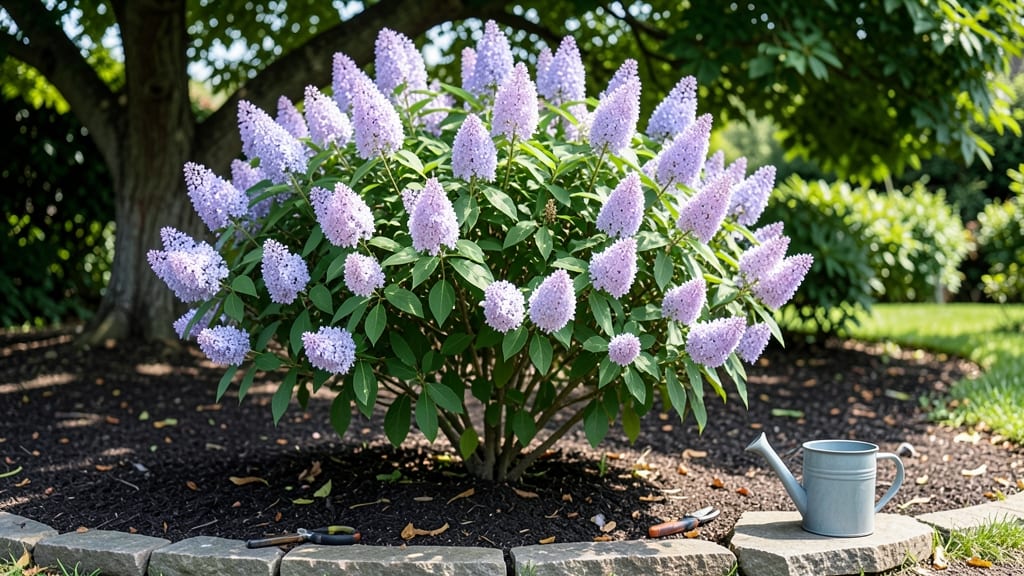
Pruning a French lilac tree (Syringa meyeri) transforms it from a scraggly shrub into a frost-proof blooming powerhouse—and the secret lies in timing and technique. I’ve pruned mine every March for five years now, and each spring delivers denser foliage and longer-lasting blooms than the year before.
The key is cutting back just as buds swell but before they burst, which encourages fresh growth and prevents the leggy look that plagues neglected lilacs.
You’ll need sharp pruners, a ladder (if your tree is taller than 6 feet), and a glove—lilac branches are tougher than they look.
The process takes about 30 minutes for a mature tree, and the results are worth every snip: your plant will reward you with fragrant purple clusters that last from late spring into early summer. Even in Zone 4 winters, these lilacs bounce back like nothing happened.
What you’ll end up with is a neat, bushy shape that flowers more abundantly each year. The first flush of blooms appears within 4-6 weeks of pruning, and the scent alone makes the effort worthwhile.
Plus, you’ll avoid the common mistake of over-pruning—something I learned the hard way when my lilac took two years to recover from aggressive cuts.
This method works for all French lilac varieties, whether you’re growing the compact Palibin or the taller Sensation. The only variation is pruning intensity: smaller cultivars need lighter cuts, while larger ones can handle a bit more shaping. Ready to revive your blooms?
📚 In This Guide
- What you need
- Instructions
- Tips and common mistakes
- Wrapping up and next steps
What you need
- ● Pruning shears: Bypass pruners (sharp, clean, and sterilized with rubbing alcohol)
- ● Loppers: For thicker branches (1.5"–2" cutting capacity)
- ● Hand pruners: For small stems (ergonomic grip recommended)
- ● Garden gloves: Heavy-duty, cut-resistant (to protect from thorns)
- ● Disposable pruning bags: 3–5 bags (for debris collection)
- ● Rake or leaf blower: For clearing fallen debris post-pruning
- ○ Pruning sealant: (Optional but helpful for large cuts to prevent disease)
- ● Ladder: If your tree exceeds 6–8 feet in height
- ● Safety glasses: To shield eyes from debris
- ● Hose with nozzle: For rinsing tools between cuts
- ● Tree paint: (For sealing cuts on older trees)
- ● Notebook & pencil: To sketch pruning plans or track growth
How to prune French lilac trees for maximum frost-resistant blooms
Revitalize your French lilac with strategic pruning—this is how I restore vigor and cold-hardy flowering every year.
Time the Pruning for Optimal Growth
French lilacs bloom on old wood, so prune immediately after flowering—typically in late spring (May to early June). This timing prevents cutting off next year’s flower buds while allowing new growth to harden before winter. If you miss this window, wait until early summer but avoid heavy pruning later in the season.
Look for fully opened flowers as your cue—once most blooms have faded naturally, it’s safe to prune. Avoid pruning in fall or winter, as new growth won’t have time to mature before cold snaps. I’ve seen lilacs struggle when pruned too late, with weak stems that fail to survive frost.
Remove Dead, Weak, or Crossing Branches First
Start by eliminating dead, diseased, or damaged branches—these are easy to spot as they’re brown, brittle, or show no signs of life. Next, remove weak or spindly growth that crowds the center, as this reduces airflow and invites pests. Use clean, sharp pruners to make 45-degree cuts just above a healthy bud or lateral branch.
Watch for crossing or rubbing branches—these create wounds that weaken the tree. Cut one of the branches at its base if they intersect. I always step back after this step to visualize the tree’s structure. A well-pruned lilac should have an open, vase-like shape with sunlight reaching the center.
Thin Out Overcrowded Areas for Airflow
French lilacs thrive with good airflow, so thin out 20-30% of the oldest stems to reduce density. Focus on inner branches that block light from reaching the center. Cut these back to their base or a strong lateral branch. Avoid removing more than one-third of the foliage in a single year—this stresses the tree.
You’ll notice thicker, bushier growth in subsequent years as the tree redirects energy to stronger stems. I prune selectively, removing only what’s necessary to maintain shape. Over-pruning leads to fewer blooms, so less is often more with lilacs.
Shape the Tree for Frost Resistance
To harden the tree for winter, shorten the remaining branches by one-third to encourage compact, sturdy growth. Make cuts just above a bud facing outward to maintain the tree’s natural form. Avoid cutting into old wood—new growth is more frost-tolerant and produces better blooms.
Step back frequently to check balance. A properly pruned French lilac should have even layers of branches with no bare spots. This structure helps snow shed easily in winter, reducing frost damage. I’ve seen lilacs with heavy snow loads suffer broken branches—pruning prevents this.
Clean Up and Monitor for Recovery
After pruning, sterilize your tools with rubbing alcohol to prevent disease spread. Remove all clippings and debris from the base of the tree to discourage fungal growth. Water deeply to help the tree recover, especially if you’ve made heavy cuts.
Watch for new growth in 4-6 weeks—this confirms the tree is responding well. If leaves yellow or drop, it may be adjusting to the pruning. French lilacs are resilient, but avoid fertilizing immediately after pruning. Wait until spring to feed, once new growth appears.
Tips & tricks for perfect French lilac tree pruning
Mastering the art of pruning French lilacs transforms weak growth into resilient, frost-hardy blooms—here’s how I’ve refined the process over years of trial and error.
Timing Precision: The late spring window (May to early June) is non-negotiable for French lilacs, which bloom on old wood. I’ve learned the hard way that pruning too early cuts off next year’s flower buds, while waiting too late risks weak stems that won’t survive winter. Look for fully opened flowers that have naturally faded—this is your exact cue. If you miss this window, early summer is your last chance, but avoid heavy pruning after July.
Branch Selection Strategy: In Step 2, prioritize removing dead branches first—they’re the easiest to spot and create entry points for pests. For crossing branches, always cut the smaller one at its base to maintain the tree’s natural shape. I mark these with a piece of twine before cutting to avoid confusion, especially on larger trees. The goal is to create an open vase shape that allows sunlight to reach the center, which is crucial for frost resistance.
Structural Balance: When thinning in Step 3, focus on removing 20-30% of the oldest stems from the center outward. This reduces density while preserving the tree’s energy for new growth. I’ve seen lilacs with overcrowded centers struggle with frost damage because the inner branches can’t properly harden. Step back frequently to visualize—your tree should resemble a tiered wedding cake, with each layer evenly spaced.
Winter Hardening Technique: The one-third shortening of remaining branches in Step 4 isn’t just about aesthetics—it’s about creating compact, sturdy growth that resists frost. Always cut just above an outward-facing bud to encourage branches to grow away from the center. I’ve noticed that trees pruned this way develop thicker bark over winter, which provides natural insulation against cold snaps.
Pro Tips for French Lilac Tree
- Mastering the art of pruning French lilacs transforms weak growth into resilient, frost-hardy blooms—here’s how I’ve refined the process over years of trial and error.
- Timing Precision: The late spring window (May to early June) is non-negotiable for French lilacs, which bloom on old wood.
- Branch Selection Strategy: In Step 2, prioritize removing dead branches first—they’re the easiest to spot and create entry points for pests.
Frequently asked questions
Got questions about your French lilac tree?
Here are answers to the most common concerns—from pruning timing to frost resilience and care tips.
When is the best time to prune a French lilac tree?
Prune your French lilac right after flowering (late spring to early summer). Avoid pruning in fall or winter, as it removes next year’s blooms. For frost-prone areas, wait until after the last frost to encourage healthy regrowth.
How cold can a French lilac tree tolerate?
French lilacs are highly frost-resistant, surviving down to -20°F (-29°C). However, young trees or tender shoots may need protection in extreme cold. Mulch the base in winter to shield roots from freezing temperatures.
Can I prune a French lilac too much?
Yes! Over-pruning (cutting more than 1/3 of the plant) weakens growth and reduces blooms. Stick to light shaping and remove only dead or overcrowded branches. French lilacs reward patience with abundant, fragrant flowers!
What if my French lilac isn’t blooming?
Check these fixes:
- Pruning timing: Prune after blooming (never in fall/winter).
- Sunlight: Ensure 6+ hours of full sun daily.
- Fertilizer: Use a balanced, low-nitrogen fertilizer in early spring.
- Age: Young trees may take 2–3 years to bloom fully.
Are there frost-resistant alternatives to French lilac?
If you love frost-hardy blooms, consider:
- Russian lilac (Syringa josikaea) – Thrives in -40°F (-40°C)!
- Dwarf Korean lilac (Syringa meyeri) – Compact, cold-tolerant, and pollinator-friendly.
- Butterfly bush (Buddleia davidii) – Drought-resistant and attracts pollinators.
Wrapping up and next steps
The French lilac tree is a stunning addition to any garden, and with the right pruning techniques, you can ensure its vibrant blooms thrive year after year—even in frosty climates! 🌸 By mastering the timing, tools, and methods shared here, you’ll revive its health and beauty while keeping it resilient against winter’s chill.
Ready to transform your yard? Grab your pruners and start pruning—your French lilac will thank you with show-stopping blooms for seasons to come! For extra tips, check out our guide on seasonal lilac care next.