Pruning
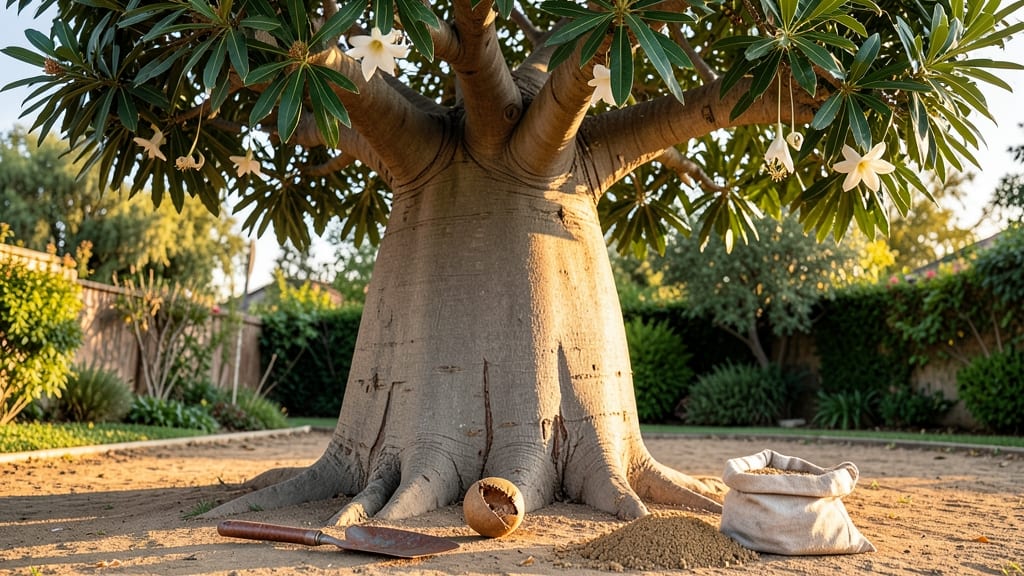
The baobab tree fruit you harvest year-round starts with a single seedling that could live for centuries. 🌿 I planted mine in my drought-prone yard five years ago, and now it produces powdery, citrusy fruit that tastes like a mix of lemon and honey—plus, it needs almost no pruning to thrive.
The key lies in mimicking its native African savanna conditions, where it survives on minimal care but rewards patient gardeners with a harvest that lasts.
This tree isn’t for impatient gardeners—it grows slowly but becomes a stunning centerpiece with its thick trunk and leathery leaves. You’ll need well-draining soil, full sun, and only occasional watering once established, making it perfect for hot, dry climates.
The fruit itself is packed with vitamin C and fiber, and the powdered seed is used in everything from smoothies to traditional medicines. That first harvest might take 5-10 years, but the wait is worth it for something so uniquely resilient.
What makes this tree special is how little it demands in return. A single pruning session every few years keeps it healthy, and the fruit ripens sporadically but consistently—no need for seasonal harvests like other trees.
Once mature, it can produce 50-100 pounds of fruit annually, enough to share with neighbors or turn into supplements. The real magic? It keeps growing, feeding, and providing shade for generations, turning your yard into a living legacy.
Fair warning: baobabs aren’t for small spaces. They need plenty of room to spread their roots and branches, so plan for a mature size of 30-50 feet tall and wide.
But if you have the space, this tree becomes the heart of your garden—a living monument that gives back more than it takes. Ready to plant one that’ll outlive you?
📚 In This Guide
- What you need
- Instructions
- Tips and common mistakes
- Wrapping up and next steps
What you need
- ● Pruning shears – Bypass type, 7-10 inches (for small branches). 1-2 pairs recommended.
- ● Lopping shears – For thicker branches (1-2 inches). 1 pair.
- ● Pole saw – Extendable, 8-12 feet (baobabs can grow tall!). 1 unit.
- ● Pruning saw – For large, woody branches (3+ inches). 1 unit.
- ● Work gloves – Heavy-duty, cut-resistant. 2 pairs (one for each hand).
- ● Ladder or lift – Sturdy, 20+ feet tall (baobabs are giants!). 1 unit.
- ● Disinfectant (70% isopropyl alcohol or pruning sealant) – To sterilize tools. Small bottle.
- ● Heavy-duty trash bags – For debris removal. 5-10 bags.
- ● Water spray bottle – To clean tools between cuts. 1 unit.
- ● Harvesting basket or net – For collecting fallen fruit.
- ● Safety goggles – To protect from debris.
- ● First-aid kit – For minor cuts or scrapes.
- ● Tree fruit picker (long-handled) – For hard-to-reach baobab pods.
- ● Marking spray or flags – To tag branches for future reference.
How to cultivate a fruit-bearing baobab tree with minimal maintenance
Here’s the straightforward approach to growing a baobab tree that produces fruit reliably—without constant pruning.
🌱 Step 1: Select the Right Location and Soil
The baobab thrives in full sun—at least 6-8 hours daily—and well-draining soil. I always choose a spot with sandy or loamy soil that mimics its native African habitat. If your soil is heavy clay, mix in 2-3 inches of coarse sand or compost to improve drainage. Baobabs hate soggy roots, so avoid low-lying areas where water pools.
Test your soil’s drainage by digging a 12-inch hole, filling it with water, and timing how long it takes to drain. If it’s still wet after 2 hours, amend the soil further. The tree’s roots need oxygen, and waterlogged conditions lead to root rot—something you definitely want to avoid.
☀️ Step 2: Plant at the Correct Depth and Spacing
Baobabs grow slow but tall, so plant your 4-inch container seedling in a hole twice as wide as the root ball but only as deep as the container. Press the soil lightly around the roots to eliminate air pockets, then water deeply to settle everything. The key here is not to bury the trunk too deep—it can cause the tree to suffocate.
Space multiple trees 30-50 feet apart if planting more than one. Baobabs have wide-spreading canopies, and crowding leads to competition for sunlight and nutrients. If you’re growing in a container, use a large pot (at least 24 inches deep) with drainage holes—just know it’ll need repotting every 3-5 years as the roots expand.
💧 Step 3: Water Deeply but Infrequently
Once established, baobabs are drought-tolerant, but young trees need deep watering every 2-3 weeks during dry spells. Water the root zone (not the leaves) to encourage deep root growth. You’ll know it’s time to water again when the top 6 inches of soil feel dry. Overwatering is the biggest mistake—baobabs store water in their trunks, so they’re adapted to survive long dry periods.
After the first year, reduce watering to once a month unless your area experiences extreme heat. Mulch around the base with 2-3 inches of organic mulch (like wood chips) to retain moisture and regulate soil temperature. Just keep the mulch 6 inches away from the trunk to prevent rot.
✂️ Step 4: Prune Only When Necessary
Baobabs rarely need pruning, but if you spot dead, diseased, or crossing branches, remove them in late winter or early spring before new growth begins. Use sterilized pruning shears to make clean cuts just above a bud or branch collar. Avoid heavy pruning—it stresses the tree and can reduce fruit production.
If your baobab develops low-hanging branches that interfere with walking or other plants, trim them back to the main trunk. Just remember: baobabs grow slowly, so pruning changes happen gradually. Never remove more than 20% of the canopy in one season—this tree is built for longevity, not quick shaping.
🍎 Step 5: Harvest Fruit at Peak Ripeness
Baobab fruit ripens year-round in warm climates, but the best flavor comes in late summer or early fall. The pods turn brown and leathery when ready—don’t wait until they split open on their own. Use a sharp knife to carefully cut the pod from the branch, then let it dry in a shady, well-ventilated area for 2-3 weeks before processing.
Once dry, crack open the pod to reveal the white, powdery seed pulp inside. This is the part you’ll use for baking, smoothies, or teas. Store the dried pulp in an airtight container away from moisture—it keeps for up to a year. If you’re lucky, a mature baobab can produce 50-100 pounds of fruit annually, making it a rewarding long-term investment.
Tips & tricks for perfect baobab tree fruit harvest
Here's what I've learned after years of growing baobabs—these little details make all the difference for a thriving, fruit-bearing tree.
Sunlight Strategy: While 6-8 hours of sun is the minimum, I've found that baobabs actually perform best with full sun exposure year-round. If you're in a region with cooler winters, consider planting near a south-facing wall or fence to maximize winter sunlight. The more sun, the faster the tree matures and the more fruit it produces. Just watch for afternoon shade in extreme heat—young trees can get sunburned if suddenly exposed to intense afternoon rays.
Soil Test Hack: That 2-hour drainage test in Step 1 is your best friend. If your soil drains too quickly (under 30 minutes), mix in 20% compost by volume to help retain moisture without compacting. For slow-draining soils, add 30% coarse sand or perlite instead. I've seen baobabs fail completely in poorly drained soil—this simple test prevents that heartbreak. The ideal drainage rate is 1-2 hours for that perfect balance.
Container Growing Tip: If you're growing in containers, don't skimp on size. A 24-inch pot is the absolute minimum, but I recommend 30-inch diameter for better stability and root growth. Use a pot with at least 4 drainage holes and elevate it slightly to prevent water pooling. Remember, you'll need to repot every 3-5 years, so plan for that long-term commitment from the start.
Fruit Ripeness Secret: Those 2-3 weeks of drying before processing are crucial for flavor and texture. I hang my pods in a mesh bag in a well-ventilated area to prevent mold. You'll know they're ready when the pods make a hollow sound when tapped—this indicates the seed pulp is fully dehydrated. Store dried pods in paper bags (not plastic) to allow for moisture exchange while keeping pests out.
Pro Tips for Fruit Baobab Tree
- Here's what I've learned after years of growing baobabs—these little details make all the difference for a thriving, fruit-bearing tree.
- Sunlight Strategy: While 6-8 hours of sun is the minimum, I've found that baobabs actually perform best with full sun exposure year-round.
- Soil Test Hack: That 2-hour drainage test in Step 1 is your best friend.
Frequently asked questions
Got questions about growing and harvesting baobab fruit? You’re not alone! Here are some of the most common queries—and their straightforward answers—to help you get the most out of your baobab tree.
How long does it take for a baobab tree to produce fruit?
A baobab tree typically takes 5 to 10 years to mature enough to produce fruit, depending on growing conditions. Patience is key—young trees focus on root and trunk development before flowering. In ideal climates (like arid or semi-arid regions), some varieties may bear fruit earlier, but don’t expect a harvest before the tree is at least 10 feet tall.
Do I need to prune my baobab tree to encourage fruit production?
Baobab trees are naturally low-maintenance, and minimal pruning is usually enough. Focus on removing dead, diseased, or crossing branches to improve airflow. Avoid heavy pruning—baobabs thrive with their iconic, sprawling shape. Light trimming in late winter or early spring can promote new growth, but over-pruning may stress the tree and reduce fruit yield.
Can I eat baobab fruit fresh, or is it only used for powder?
Baobab fruit is not typically eaten fresh—it’s tough, fibrous, and contains hard seeds. Instead, the white pulp inside the seed pod is dried and ground into a nutrient-rich powder. The powder is used in smoothies, baked goods, and as a dietary supplement. If you’re craving fresh baobab flavor, look for pre-processed powder or dried slices in specialty stores!
What’s the best time of year to harvest baobab fruit?
Harvest baobab fruit when the pods turn brown and dry on the tree, usually between late fall and early winter (varies by region). Avoid harvesting green pods—they won’t ripen off the tree. Once dry, the pods split open naturally, revealing the edible pulp. If you miss the natural drop, gently twist the pods to detach them without damaging the tree.
What are some alternatives if my baobab tree isn’t producing fruit?
If your baobab tree isn’t fruiting after 10+ years, consider these troubleshooting steps:
- Check the climate: Baobabs thrive in hot, dry conditions with full sun. If your tree is in a cooler or shaded area, it may struggle.
- Soil health: Ensure well-draining, slightly alkaline soil. Amend with compost if needed.
- Pollination: Baobabs rely on bats, birds, or wind. If your tree is isolated, hand-pollination (using a small brush) may help.
- Patience: Some baobabs take decades to fruit—consider planting a second tree to improve cross-pollination.
If all else fails, baobab trees are stunning ornamentals even without fruit!
Wrapping up and next steps
The baobab tree fruit is a true gift of nature—packed with nutrition, easy to harvest year-round, and surprisingly low-maintenance with minimal pruning. Whether you're growing one for its superfood benefits or its stunning presence, this resilient tree rewards patience with abundance. 🌱
Ready to start your own baobab journey? Begin by researching local climate conditions or connecting with a nursery to source a sapling. With the right care, you’ll soon be enjoying its delicious, nutrient-rich fruit for years to come!