
Pruning
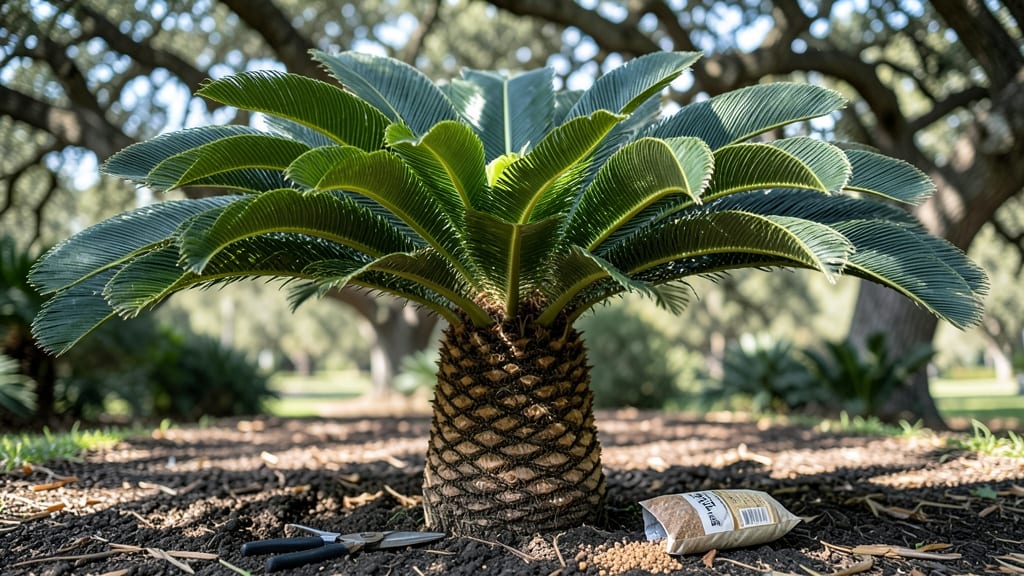
A full-grown sago palm tree turns Pacific Northwest gardens into tropical escapes without the fuss. 🌿 Its striking, architectural form—reaching 15-20 feet with spiky blue-green fronds—adds drama while thriving in zones 8-11, where most palms fail.
This isn’t your typical high-maintenance tropical plant; it’s the rugged, drought-tolerant workhorse that loves heat but handles coastal winds like a champ.
The real magic happens when you let it take center stage. Use it as a bold focal point near patios or entryways, where its layered trunk and feathery fronds create instant visual interest.
In smaller spaces, plant it as a solitary statement surrounded by low-growing succulents or ornamental grasses to highlight its height without overwhelming the area. Even in urban courtyards, it brings that "I vacationed in Bali" vibe—without the jet lag.
What you’ll love most is how effortless it is. Once established, it needs minimal watering and zero fussing—just occasional pruning to remove dead fronds and keep its shape tidy.
Pair it with drought-loving companions like agave, yucca, or bougainvillea for a low-maintenance, high-impact tropical garden that actually survives PNW summers. The best part? It’s deer-resistant, so you won’t lose it to local wildlife.
Whether you’re designing a modern courtyard, a Mediterranean-style retreat, or just adding a little drama to your backyard, this palm delivers year-round structure and that "I’m living my best life" energy—without the upkeep of a fussy fern. Ready to make it your garden’s star?
📚 In This Guide
- What you need
- Instructions
- Tips and common mistakes
- Wrapping up and next steps
What you need
- ● Pruning shears or hand pruners: Sharp, bypass-style shears (4-6" blade) for clean cuts on smaller fronds.
- ● Loppers: Heavy-duty, bypass or anvil type (20-24" blade) for thicker stems or larger fronds.
- ● Pruning saw: Curved-tooth saw (12-18" blade) for stubborn, oversized branches.
- ● Extension pole: 3-5 ft telescoping pole with a pruner attachment for high-reaching fronds.
- ● Heavy-duty gloves: Garden gloves with cut resistance (e.g., Mechanix or similar) to protect from sharp fronds.
- ● Safety glasses: ANSI-rated goggles to shield eyes from debris.
- ● Disposable pruning bags: Mesh or heavy-duty plastic (5-10 gallon capacity) for collecting debris.
- ○ Disinfectant (optional but recommended): 70% isopropyl alcohol or 10% bleach solution to sterilize tools between cuts.
- ● Rope or harness system: For tall sago palms (10+ ft)—use a 3-point safety harness and sturdy ladder or scaffolding.
- ● Hose with nozzle: For rinsing tools or cleaning sap off blades.
- ● Lubricant: WD-40 or silicone spray to keep pruners sawing smoothly.
- ● Marking spray: Bright paint or chalk to outline cuts for precision.
- ● Compost bin or mulch: To repurpose healthy fronds as organic matter.
- ● First-aid kit: For minor cuts or sap irritation (sago palms can be mildly toxic if ingested).
Step-by-step guide to establishing a mature sago palm in the Pacific Northwest
Here’s how to transform a full-grown sago palm into a thriving focal point for your PNW landscape.
🪴 Step 1: Select the Perfect Planting Location
The sago palm (Cycas revoluta) thrives in USDA Hardiness Zones 8-11, but with winter protection, it can survive Zone 7’s mild winters—like those in the Pacific Northwest. Choose a spot with partial shade to full sun (at least 6 hours of morning sunlight), sheltered from harsh winds that can desiccate its fronds. The PNW’s damp winters mean soggy soil is a real risk, so avoid low-lying areas where water pools.
I always dig a hole twice as wide as the root ball but no deeper—sago palms hate being buried too deeply, which can rot the trunk. Amend the native soil with 2-3 inches of coarse sand or grit to improve drainage, especially if your yard has heavy clay. The goal is to mimic the palm’s natural preference for well-draining, slightly acidic soil (pH 5.5-6.5).
🌱 Step 2: Plant with Care to Preserve Root Integrity
Remove the sago palm from its container and gently loosen the root ball if it’s tightly bound. Place the plant in the hole so the top of the root ball sits at ground level—never mound soil against the trunk, as this can cause rot. The PNW’s wet winters mean sago palms often suffer from trunk rot if planted too deeply. Backfill with the amended soil, tamping lightly to eliminate air pockets but avoiding compaction.
Water deeply right after planting to settle the soil, but avoid creating a soggy basin. Mulch the base with 2-3 inches of pine bark or wood chips, keeping the mulch 6 inches away from the trunk to prevent moisture buildup. This mimics the palm’s natural habitat while protecting roots from temperature swings—a critical step in the PNW’s unpredictable climate.
☀️ Step 3: Adjust Care for Seasonal PNW Conditions
Sago palms are drought-tolerant once established, but the PNW’s rainy winters can drown them if left unchecked. Water once every 2-3 weeks during the growing season (spring to fall), letting the soil dry out between waterings. In winter, reduce watering to once a month unless your region experiences a dry spell. Overwatering is the #1 killer of sago palms in the Pacific Northwest—watch for yellowing fronds, a sure sign of root rot.
Fertilize lightly in early spring with a balanced, slow-release palm fertilizer (10-10-10 or similar). Too much nitrogen leads to weak, floppy fronds, while phosphorus and potassium help the plant recover from winter stress. I’ve found that sago palms in the PNW respond well to half-strength applications—they’re used to nutrient-poor soils in their native Japan.
✂️ Step 4: Prune and Protect for Long-Term Health
Remove dead or yellowing fronds at the base with clean, sharp pruners, cutting just above the point where the frond meets the trunk. Never leave stubs—they invite pests and disease. In the PNW, where winters can dip below 20°F, wrap the trunk in burlap or frost cloth during cold snaps to prevent freeze damage. The sago palm’s trunk is surprisingly sensitive to cold, and cracks can become entry points for fungal infections.
Watch for scale insects or spider mites, which thrive in the PNW’s dry summer air. Treat infestations early with neem oil or horticultural oil, applying in the evening to avoid burning the fronds. A healthy sago palm in the Pacific Northwest should show new fronds emerging in early spring and maintain a deep green, glossy appearance—a sign it’s thriving despite the climate challenges.
Tips & tricks for perfect sago palm establishment in the PNW
These insights will help you navigate the quirks of growing a sago palm in our region's challenging climate.
Site Selection Nuance: While the instructions emphasize 6 hours of morning sunlight, I've found that in the PNW's cooler summers, afternoon sun can actually stress the plant. If your location gets intense afternoon heat, consider a spot with morning sun and afternoon shade to prevent frond scorch. The key is balancing light exposure with temperature—sago palms appreciate gentle sunlight rather than harsh afternoon rays.
Soil Amendment Strategy: The recommended 2-3 inches of coarse sand or grit is perfect for breaking up clay soils common in the Pacific Northwest. For even better results, mix in a handful of perlite or pumice into the amended soil. These materials create air pockets that improve drainage while still retaining enough moisture for the roots. I've seen sago palms planted in unamended clay soil develop root rot within months—don't skip this step, especially in our wet winters.
Winter Protection Pro Tip: When wrapping your sago palm's trunk in burlap or frost cloth during cold snaps below 20°F, leave the top third of the trunk uncovered. This prevents moisture buildup that can lead to fungal infections. I also recommend securing the wrap with twine rather than staples, as metal can damage the sensitive trunk over time. Think of it like dressing your palm for winter—warm enough to protect but not so tight it causes problems.
Seasonal Watering Insight: The 2-3 week watering schedule during growing season works well, but I've noticed that sago palms in the PNW actually benefit from slightly less frequent watering. Let the top 2-3 inches of soil dry out completely between waterings—you'll know it's time when the soil feels dry 2 inches down. This mimics the plant's natural drought tolerance and prevents the root rot that plagues so many Pacific Northwest gardens.
Pro Tips for Full Grown Sago Palm Tree
- These insights will help you navigate the quirks of growing a sago palm in our region's challenging climate.
- Site Selection Nuance: While the instructions emphasize 6 hours of morning sunlight, I've found that in the PNW's cooler summers, afternoon sun can actually stress the plant.
- Soil Amendment Strategy: The recommended 2-3 inches of coarse sand or grit is perfect for breaking up clay soils common in the Pacific Northwest.
Frequently asked questions
Got questions about growing or maintaining a full-grown sago palm tree in the Pacific Northwest? You’re not alone! Here are answers to the most common concerns—from pruning to winter prep.
How fast does a sago palm grow to full maturity?
A sago palm (Cycas revoluta) grows slowly—expect about 6–12 inches per year in ideal conditions. It typically reaches full maturity (10–15 feet tall) in 10–20 years, though growth slows significantly after 10 years. Patience is key! Pro tip: Fertilize lightly in spring to encourage steady (but not aggressive) growth.
Can sago palms survive PNW winters?
Yes! Sago palms are hardy to USDA Zone 8, but the Pacific Northwest’s wet, chilly winters can stress them. In colder microclimates (below 15°F), wrap the trunk with burlap or frost cloth and mulch heavily. Avoid soggy soil—root rot is a bigger threat than frost. Watch for: Yellowing fronds in winter (normal) vs. brown, crispy fronds (overwatering or freeze damage).
When and how should I prune a full-grown sago palm?
Prune only to remove dead or damaged fronds—never cut healthy ones! The best time is late winter or early spring (before new growth starts). Use sterilized pruners or a saw for thick stems, and seal cuts with pruning sealant to prevent disease. Avoid: Pruning in fall (stimulates tender new growth before winter).
What’s a good alternative if sago palms aren’t hardy enough?
If your PNW zone is too cold, try these cold-tolerant palm-like plants:
- Windmill palm (Trachycarpus fortunei): Hardy to Zone 6, faster-growing, and more drought-resistant.
- Dwarf palmetto (Sabal minor): Thrives in Zones 7–10, compact, and handles humidity.
- Japanese holly (Ilex crenata): Non-palm but offers year-round structure and glossy foliage.
Why are my sago palm’s fronds turning yellow/brown?
Yellow fronds often signal overwatering or poor drainage, while brown tips usually mean underwatering or salt buildup (from tap water). Check for:
- Soil moisture: Stick your finger 2 inches deep—water only if dry.
- Drainage: Sagos hate soggy roots; amend soil with perlite or sand if needed.
- Sun exposure: Too much direct sun can scorch fronds (especially in summer).
If the issue persists, test soil pH (ideal: 6.0–7.0) and adjust with lime or sulfur.
Wrapping up and next steps
Growing a full-grown sago palm tree in the Pacific Northwest is a rewarding way to add tropical flair to your landscape—even in cooler climates! 🌿 With the right care, pruning, and protection, this hardy plant thrives as a stunning vertical focal point.
Whether you’re trimming for aesthetics, safety, or health, remember: patience and consistency are key.
Ready to see your sago palm flourish? Start small—schedule your next pruning session or research seasonal care tips to keep it looking its best year-round. Your future jungle vibes await! 🌟