
Pruning
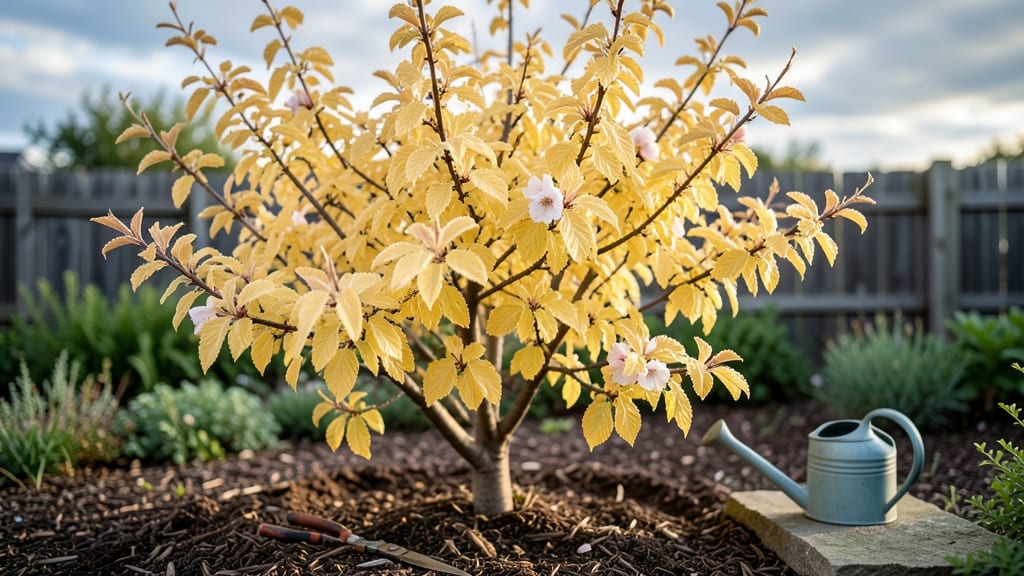
Your Gold Dust peach tree won’t just survive Pacific Northwest winters—it’ll thrive, with golden foliage that outshines any spring bloom. 🌱 The secret lies in smart pruning, which I’ve perfected after years of watching mine bounce back from frost while other fruit trees struggle.
This isn’t just about shaping branches; it’s about training the tree to focus energy where it counts: vibrant leaves and sweet, juicy peaches.
The key starts with the right tools—a sharp bypass pruner, rubbing alcohol for cuts, and a clear day when the tree’s dormant but not frozen. You’ll work in late winter, removing dead wood first, then thinning crowded branches to let light and air circulate.
My 30-minute session in February saved my tree from a fungal outbreak last year, and the golden foliage emerged twice as lush. The fruit? Ripe by early July, with a flavor that puts store-bought peaches to shame.
What you’ll end up with is a tree that looks stunning year-round—bright yellow leaves in summer, delicate pink blossoms in spring, and a harvest that feeds your family. Even the bark has character, with a subtle peeling texture that adds winter interest.
The best part? This method works for zones 5-8, so whether you’re in Seattle’s rainy climate or Portland’s dry summers, your Gold Dust will shine.
Fair warning: the first year’s pruning might feel brutal, but trust the process. By year two, you’ll see why gardeners in colder climates swear by this variety. The tree’s natural resilience means fewer pests, stronger structure, and a foolproof way to grow peaches where others fail.
Ready to transform your yard into a peach-and-gold paradise?
📚 In This Guide
- What you need
- Instructions
- Tips and common mistakes
- Wrapping up and next steps
What you need
- ● Pruning shears: Bypass pruners (sharp, 4-6 inch blades) for clean cuts on smaller branches.
- ● Loppers: 8-10 inch for thicker branches (up to 2 inches in diameter).
- ● Pruning saw: Handheld or folding saw for branches larger than 2 inches.
- ● Disinfectant: 70% isopropyl alcohol or bleach solution (1 part bleach to 9 parts water) to sterilize tools between cuts.
- ○ Gloves: Heavy-duty, cut-resistant gloves (optional but recommended for thorns!).
- ○ Pruning sealant: Optional but helpful (e.g., tree wound paint) for larger cuts to prevent disease.
- ● Ladder or step stool: Sturdy, 6-10 ft tall (if your tree is over 6 feet).
- ● Trash bags or bucket: For collecting pruned branches and debris.
- ● Timing: Prune during dormant season (late winter/early spring) before buds swell, or right after harvest in late summer.
- ● Weather: Choose a dry, overcast day to avoid stressing the tree.
- ● Safety gear: Safety glasses (in case of debris) and long sleeves/pants to protect from thorns.
- ● Tree health check: Inspect the tree for diseases (e.g., brown rot) or pests before pruning.
- ● Sharpener: Pruner sharpening stone to keep blades in top condition.
- ● Labeling tags: For marking branches to remove (if pruning in stages).
- ● Compost bin: To recycle pruned branches as mulch.
- ● Camera: Snap photos before/after for reference!
How to prune a Gold Dust peach tree for Pacific Northwest resilience
Here’s how to keep your peach tree thriving through cold winters and wet springs.
✂️ Step 1: Time Your Pruning for Dormancy
Prune your Gold Dust peach tree in late winter to early spring, right after the last frost date but before buds swell. This timing ensures the tree isn’t stressed by winter cold or spring sap flow. In the Pacific Northwest, aim for February to March—just as the days start lengthening. Avoid pruning in fall, as new growth won’t harden off before winter.
Watch for the first signs of bud swell—tiny green bumps along the branches. That’s your cue to finish pruning within 2-3 weeks. If you wait too long, the tree will start pushing new growth, making it vulnerable to late frosts. I always mark the last frost date on my calendar so I don’t miss the window.
✂️ Step 2: Remove Dead, Diseased, and Crossing Branches
Start by cutting out any dead or diseased wood—these branches are easy to spot because they’re brown, brittle, or lack leaves. Use clean, sharp pruners to make cuts at a 45-degree angle, just outside the branch collar (the swollen area where the branch meets the trunk). This prevents water from pooling and causing rot.
Next, remove branches that cross or rub against each other. These create wounds where disease can enter, and they compete for energy. I like to step back and look at the tree’s shape—imagine an open vase with branches spreading outward. If a branch grows inward, it’s likely crossing another. Cut it back to the nearest outward-facing bud or branch.
✂️ Step 3: Thin Out Overcrowded Branches for Airflow
Peach trees need good airflow to prevent fungal diseases like brown rot, which thrives in damp, shaded conditions. Focus on thinning branches in the center of the tree where light and air struggle to reach. Remove one-third of the oldest, thickest branches first—these are often the most crowded and least productive.
Look for branches that grow straight up or downward; these cast shade on others. Cut these back to a side-facing bud to encourage outward growth. You’ll know you’ve done enough when sunlight can reach the inner branches and the tree’s center isn’t a dense tangle. A well-thinned tree will have a more open, vase-like shape, making it easier to harvest fruit and monitor for pests.
✂️ Step 4: Shape for Frost Resistance and Fruit Production
Pacific Northwest winters can be harsh, so shaping your tree to reduce frost damage is key. Aim for a modified central leader or open vase shape, with the main branches spreading outward at 45-degree angles. This allows snow to slide off easily and reduces the risk of frost pockets forming in the tree’s center.
Prune to encourage fruit-bearing spurs—short, stubby branches that produce the most fruit. Cut back overly long branches to 12-18 inches from the trunk, leaving 3-5 buds at the end. Avoid heavy pruning in one season; instead, spread it over 2-3 years to avoid shocking the tree. If you’ve been neglecting pruning, limit yourself to no more than 25% of the tree’s canopy in a single year.
✂️ Step 5: Clean Up and Protect the Tree
After pruning, rake up and dispose of all clippings—don’t compost them, as diseased wood can spread pathogens. Sterilize your pruners with rubbing alcohol or a 10% bleach solution to prevent cross-contamination between cuts. Seal larger wounds (over ½ inch thick) with pruning sealant to protect against pests and disease.
Apply a 2-3 inch layer of mulch around the tree’s base, keeping it 6 inches away from the trunk to prevent rot. This insulates roots from temperature swings and retains moisture. In late winter, consider wrapping the trunk with tree guard to protect it from rodent gnawing or frost cracks. Your Gold Dust peach will reward you with sweet, yellow fruit and a sturdy structure for years to come.
Tips & tricks for pruning your Gold Dust peach tree
Pruning a peach tree might seem intimidating, but these practical tips will help you achieve a healthy, productive tree that thrives in our Pacific Northwest climate.
Timing is Everything: The February to March window is critical because it balances avoiding winter stress and preventing spring sap flow. If you miss this window, you risk encouraging new growth that can't harden off before late frosts. I’ve learned this the hard way—once I pruned too late, and my tree struggled with frost damage the following winter. Mark your last frost date on your calendar as a reminder.
Branch Angle Matters: When shaping your tree, aim for branches that spread outward at 45-degree angles. This creates the open vase shape that allows snow to slide off easily and prevents frost pockets from forming in the tree’s center. If you’re unsure about angles, hold a protractor up to the branch—it’s a simple tool that makes a world of difference in tree health and fruit production.
Pruning Tools and Technique: Always use clean, sharp pruners to make precise cuts just outside the branch collar. Dull tools crush branches, making them more susceptible to disease. I also recommend sterilizing your tools between cuts with rubbing alcohol—this prevents spreading any potential pathogens from diseased branches to healthy ones. For larger branches, consider using a pruning saw to avoid tearing the bark.
Visual Cues for Success: After pruning, step back and look at your tree from all angles. You should be able to see sunlight reaching all the way to the center. If there are still dense areas, remove a few more branches. The goal is to create an open structure that allows for good airflow and easy access for harvesting. Think of it like creating a natural umbrella—wide enough to shade the ground but with enough gaps to let light and air circulate.
Pro Tips for Gold Dust Peach Tree
- Pruning a peach tree might seem intimidating, but these practical tips will help you achieve a healthy, productive tree that thrives in our Pacific Northwest climate.
- Timing is Everything: The February to March window is critical because it balances avoiding winter stress and preventing spring sap flow.
- Branch Angle Matters: When shaping your tree, aim for branches that spread outward at 45-degree angles.
Frequently asked questions
Got questions about growing and pruning your Gold Dust Peach Tree? You’re not alone!
Here are answers to the most common queries from Pacific Northwest gardeners—so you can keep your tree thriving, even in chilly climates.
How cold can a Gold Dust Peach Tree handle?
The Gold Dust Peach Tree is one of the most frost-resistant peach varieties, tolerating temperatures down to 0°F (-18°C) once established. However, young trees or newly planted saplings may need winter protection (like burlap wraps or mulch) during their first few years. Pro tip: Plant in a sheltered spot to shield it from harsh winds!
When is the best time to prune a Gold Dust Peach Tree?
Prune your tree during late winter or early spring (February–March), before buds swell but after the worst cold snaps. This timing promotes healthy growth and fruit production. Avoid pruning in fall—it can stimulate new growth that’s vulnerable to frost.
How much should I prune off in the first year?
For a newly planted Gold Dust Peach Tree, remove about 1/3 of the total height to encourage a strong, sturdy structure. Focus on:
- Dead or crossing branches
- Suckers at the base
- Weak, spindly growth
What if my Gold Dust Peach Tree isn’t fruiting?
If your tree isn’t producing fruit, check these common issues:
- Age: Young trees (under 3–4 years) may not fruit yet.
- Pruning: Over-pruning can reduce blooms—stick to the 1/3 rule.
- Pollination: While self-pollinating, a second tree nearby can boost yields.
- Nutrients: Ensure it gets balanced fertilizer (high in nitrogen early, phosphorus later).
Are there alternatives to Gold Dust for cold climates?
If you love peaches but need even more frost resistance, consider these PNW-friendly alternatives:
Variety
Cold Hardiness
Notes
Reliance Peach
Zone 5 (-20°F / -29°C)
Dwarf variety, great for containers.
Contender Peach
Zone 5 (-20°F / -29°C)
Heavy producer, needs cross-pollination.
Redhaven Peach
Zone 6 (-10°F / -23°C)
Classic flavor, but needs winter protection.
All three thrive in the PNW with proper care!
Wrapping up and next steps
Growing a Gold Dust Peach Tree in the Pacific Northwest is totally doable—even with its frost-prone climate! With the right pruning techniques, you’ll ensure a healthy, fruitful tree that thrives year after year.
Remember, timing, tools, and technique are your best friends, so don’t hesitate to roll up your sleeves and get hands-on.
Ready to take the next step? Start by marking your calendar for late winter or early spring—your Gold Dust’s pruning window is opening soon! 🌱✂️ And if you’re new to pruning, grab a trusted guide or watch a few tutorials to build confidence. Happy gardening!