Pruning
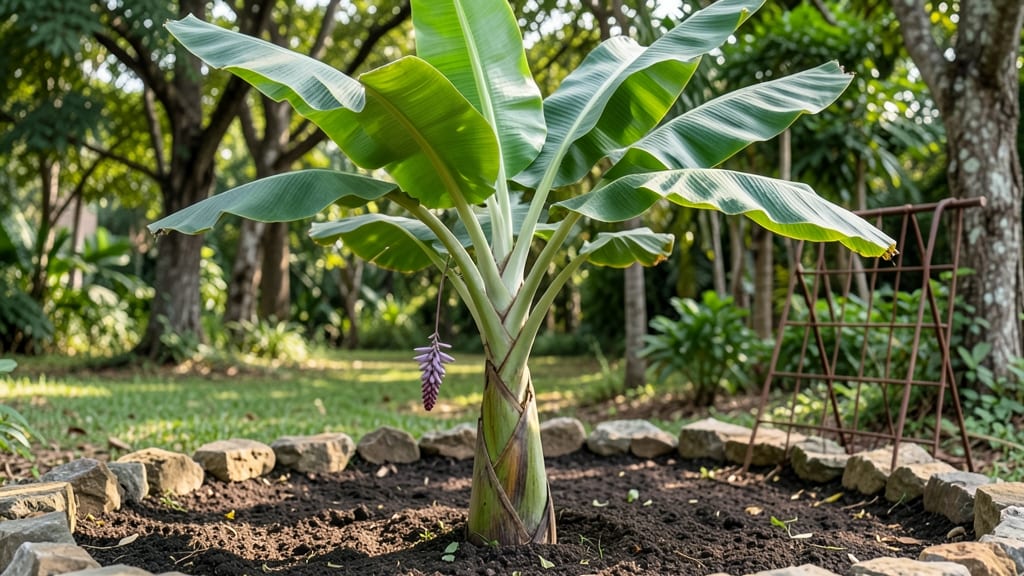
Your Grand Nain banana tree can produce fruit year-round with the right pruning approach—it’s all about timing and technique. 🌿 I’ve learned that aggressive trimming in late winter or early spring (when growth slows) keeps the plant compact, encourages new shoots, and prevents the classic "one big stalk, no fruit" mistake.
The key is cutting back old, unproductive stems while leaving the strongest new growth to carry on.
The process is simpler than it sounds: start by removing any dead or diseased leaves, then trim back old pseudostems (the thick, woody stems) to about 6 inches from the ground. Leave 2-3 of the healthiest, youngest shoots—they’ll become your next harvesters.
You’ll notice within weeks that new leaves unfurl faster, and by summer, you’re looking at a bushier plant with multiple fruiting stalks instead of just one.
What you’ll end up with is a banana tree that looks lush year-round and actually produces fruit consistently—not just the occasional bunch. The pruned plant also handles heat better, resists pests more effectively, and recovers faster from storms.
Plus, you’ll save space in your garden, which is a bonus if you’re growing other tropical plants nearby.
This method works for both container-grown and in-ground Grand Nain trees, though potted plants need slightly more frequent trimming to control size. The only real downside? You’ll need to be patient—it takes about 9-12 months for pruned shoots to mature enough to fruit again.
But the payoff is worth it: a tree that keeps giving instead of just looking pretty.
📚 In This Guide
- What you need
- Instructions
- Tips and common mistakes
- Wrapping up and next steps
What you need
- ● Pruning shears: Sharp, bypass-style shears (4–6" blade) for clean cuts—sterilize with rubbing alcohol before and after use.
- ● Pruning saw: Heavy-duty curved-tooth saw (for thick pseudostems >1.5" diameter).
- ● Gloves: Thick, cut-resistant gardening gloves (banana sap can irritate skin!).
- ● Disinfectant: 1-part bleach to 9 parts water (or 70% isopropyl alcohol) for tools.
- ● Rake or broom: For clearing debris from the base after pruning.
- ● Compost bin or mulch: To repurpose pruned pseudostems and leaves.
- ● Hose with nozzle: To rinse sap off tools/gloves post-pruning.
- ● Plant food: Balanced 10-10-10 fertilizer (apply 2–3 weeks after pruning for a growth boost).
- ● Staking material: Bamboo stakes + twine (if your tree needs support post-trimming).
- ● Camera: Snap progress pics—your future self will thank you! 📸
- ● ☑️ Timing: Prune in early spring (before new shoots emerge) or late fall (after harvest). Avoid pruning during flowering/fruiting.
- ● ☑️ Weather: Choose a dry, overcast day (humidity slows healing).
- ● ☑️ Safety: Wear long sleeves/pants—banana sap can cause skin irritation.
- ● ☑️ Tree health: Only prune if the tree is mature (3+ years old) and shows signs of overgrowth (e.g., crowded pseudostems).
Step-by-Step guide to pruning your Grand Nain banana tree
Here’s how to keep your banana tree thriving with simple, seasonal trimming—no green thumb required.
🌿 Step 1: Identify and Remove Dead or Damaged Fronds
Start by inspecting your banana tree for any fronds that are completely brown, yellowed, or torn. These are dead and won’t produce new growth. Use clean, sharp pruners to cut them at the base, just above a healthy node or where the frond meets the trunk. This prevents pests and diseases from settling in.
I like to do this step first because it clears out the clutter and lets me see the tree’s structure more clearly. If you’re unsure whether a frond is dead, gently tug on it—if it comes away easily, it’s ready to go. Never leave dead fronds hanging; they drain energy from the plant.
✂️ Step 2: Trim Back Overgrown or Weak Growth
Next, look for fronds that are still green but growing weakly or in the wrong direction. These might be crowding the center of the plant or growing too close to the ground. Cut them back to about 6-12 inches from the base, leaving a clean, angled cut just above a bud or node. This encourages new, stronger growth to emerge.
Real talk: If you see fronds leaning heavily to one side, your tree might be reaching for light. This is a sign it needs more sun. Trim back the leggy growth and move the tree closer to a bright, indirect light source (like a south-facing window) to balance it out.
☀️ Step 3: Prune for Better Airflow and Sunlight
Banana trees need good airflow to stay healthy, so thin out any dense or overlapping fronds. Focus on removing the ones that are blocking light from reaching the center of the plant. Aim to leave at least 12 inches of space between fronds so air can circulate freely.
Here’s the thing—if your tree is in a pot, pruning for airflow is even more critical. Stagnant air can lead to fungal issues, especially in humid climates. After trimming, give the tree a gentle shake to help the remaining fronds settle into place and fill any gaps.
🌱 Step 4: Encourage New Growth with Strategic Cuts
Once you’ve removed the dead and weak fronds, look for the healthiest, youngest fronds—these are your tree’s future. If any of them are growing too close together, trim one back slightly to give the other room to thrive. This step is all about balance: you want your banana tree to have 3-5 strong, evenly spaced fronds at any given time.
Don’t skip this (I learned the hard way). Overcrowding stresses the plant, and it’ll focus energy on competing fronds instead of producing bananas. After pruning, water the tree deeply to help it recover and encourage new shoots to emerge from the base.
⏰ Step 5: Seasonal Maintenance for Year-Round Blooms
Prune your Grand Nain banana tree every 3-4 months to keep it in check. In spring, focus on removing old fronds and shaping the tree. In summer, trim back any leggy growth that’s stretching for light. In fall and winter, reduce pruning to just removing dead fronds—this gives the tree a chance to rest and store energy for the next growing season.
Watch for new growth emerging from the base of the tree after pruning—that’s your signal everything is working. If you’re growing bananas in a cooler climate, you might need to prune less aggressively in winter, but always keep an eye out for dead or dying fronds.
Tips & tricks for perfect Grand Nain banana tree pruning
Let me save you the headache I went through when my first banana tree looked like a tangled mess after pruning.
Tool Prep: Sterilize your pruners with rubbing alcohol before and after each use. I can't stress this enough—banana trees are prone to fungal infections, and dirty tools spread disease faster than you'd think. After pruning, wipe down the blades with a damp cloth to prevent rust, especially if you're working with a large tree that'll take multiple cuts.
Visual Cue for Healthy Cuts: When trimming in Step 2, make your cuts just above a visible bud or node—the little bumps along the stem where new growth emerges. If you're unsure where the nodes are, look for the small raised areas that look like tiny circles or lines. These are your growth points, and cutting above them gives your tree the best chance to recover quickly.
Seasonal Adjustments: The 3-4 month pruning schedule in Step 5 works best in warm climates, but if you're in a cooler zone, extend this to every 4-5 months during winter. Watch for new growth as your guide—if your tree isn't showing signs of recovery after 6-8 weeks, it's time to prune again. In cold climates, reduce winter pruning to just removing dead fronds to protect the tree's energy reserves.
Post-Pruning Care: After finishing all your cuts, give your tree a deep watering that reaches at least 12 inches into the soil. I like to add a balanced fertilizer (10-10-10 ratio) to the water to help the tree recover. This is especially important after heavy pruning when the tree needs to redirect energy to new growth rather than maintaining old fronds.
Pro Tips for Grand Nain Banana Tree
- Let me save you the headache I went through when my first banana tree looked like a tangled mess after pruning.
- Tool Prep: Sterilize your pruners with rubbing alcohol before and after each use. I can't stress this enough—banana t...
- Visual Cue for Healthy Cuts: When trimming in Step 2, make your cuts just above a visible bud or node—the little bump...
Frequently asked questions
When is the best time to prune a Grand Nain banana tree?
The ideal time to prune is after harvest or during the dormant season (late fall/winter in most climates). Avoid pruning during flowering or fruiting—this can stress the plant and reduce yields. For tropical zones, prune when new shoots appear to encourage regrowth. Pro tip: Always use sterilized tools to prevent disease!
How often should I prune my Grand Nain banana tree?
Prune once a year for maintenance, but remove dead or diseased leaves as needed year-round. If your tree is overgrown or producing weak fruit, prune every 6–12 months. Focus on selective trimming—never cut more than 1/3 of the foliage at once to avoid shocking the plant.
Will pruning my Grand Nain banana tree increase fruit production?
Yes! Strategic pruning redirects energy to new growth and fruit production. By removing old or damaged leaves, you improve air circulation, reducing pests/diseases. However, over-pruning can backfire—stick to targeted cuts (e.g., removing sucker competition) for best results.
What should I do if my banana tree turns yellow or wilts after pruning?
Yellowing or wilting can signal stress or fungal/bacterial infections. If pruning was recent, the plant may recover in 2–4 weeks with proper care. For severe cases:
- Check for root rot (smelly, mushy roots).
- Adjust watering—overwatering is a common culprit.
- Apply balanced fertilizer (e.g., 10-10-10) to support recovery.
Can I grow a Grand Nain banana tree in containers? How does pruning differ?
Grand Nains thrive in large containers (15+ gallons) with drainage. Pruning rules stay the same, but container-grown trees need more frequent trimming due to limited space. Focus on:
Winterize potted trees by moving them indoors or to a sheltered area.
Wrapping up and next steps
Growing a thriving Grand Nain banana tree is all about balance—pruning at the right times, using the right tools, and listening to your plant’s needs.
With the strategies shared here, you’re now equipped to revive blooms year-round, boost fruit production, and keep your tree healthy and vibrant. Don’t stop here! Grab your pruning shears, mark your calendar for those key seasonal checks, and watch your banana tree flourish like never before. 🌱✨
🌟 Next Steps:
- Schedule your first pruning session—spring is ideal, but don’t wait!
- Monitor your tree’s growth and adjust your routine as needed.
- Share your progress (and banana bounty!) with fellow gardeners—you’ve got this!