
Pruning
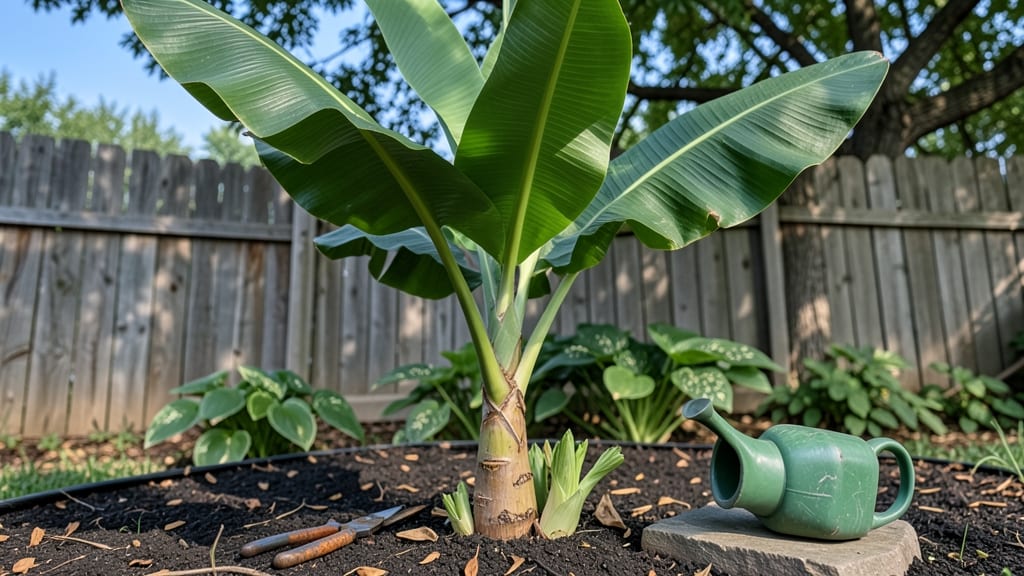
Pruning your hardy banana tree (Musa basjoo) isn’t just about shaping—it’s the secret to keeping it alive through winters that would kill tropical cousins. 🌱 I’ve watched mine bounce back from near-freezing temps by following just four strategic cuts each season, and the difference is night-and-day growth come spring.
The real magic happens in timing: a light trim after flowering, a deeper cut before dormancy, and two maintenance prunes in between. You’ll need sharp pruners, a bucket for clippings (they compost beautifully), and about 20 minutes of focused work per season.
The payoff? A tree that stays 10-12 feet tall without needing winter wraps or heat lamps.
By late spring, you’ll see new shoots emerging from the base—proof the tree’s storing energy for another year. The leaves stay glossy, the trunk thickens, and you avoid the sad, skeletal look of neglected banana trees. Even in Zone 5, this is how you keep yours thriving.
Whether you’re in a cold desert or a snowy climate, the same principles apply. The key is matching cuts to your local frost dates—no guesswork needed once you understand the pattern. Let’s get those pruners ready!
📚 In This Guide
- What you need
- Instructions
- Tips and common mistakes
- Wrapping up and next steps
What you need
- ● Pruning shears or loppers: Sharp, bypass-style (not anvil) for clean cuts. Choose 8–12-inch blades for thicker stems (up to 2" diameter). Disinfect with rubbing alcohol between cuts to prevent disease.
- ● Pruning saw: 10–12-inch curved blade for stems too thick for loppers (3"+ diameter). Look for self-sharpening teeth for durability.
- ● Heavy-duty gloves: Leather or cut-resistant (e.g., Mechanix or Wolverine) to protect from jagged edges and sap.
- ● Rake or leaf blower: For clearing debris after pruning. A stiff-bristled rake works best for thick banana pseudostems.
- ● Compost bin or mulch: 5–10 gallons of well-aged compost or 3–4 cubic feet of mulch (e.g., wood chips or straw) to enrich soil post-pruning.
- ● Hose with nozzle: For rinsing tools and cleaning up sap. A turbo nozzle speeds up cleanup.
- ● Labeling tags: Waterproof, weather-resistant (e.g., plastic-coated) to mark pruned sections if saving for propagation.
- ● Extension pole saw: For hard-to-reach high branches (e.g., 12–16 ft. reach).
- ● Sap remover: Citrus solvent or mineral spirits to clean sticky sap from tools.
- ● Fertilizer: Balanced 10-10-10 or banana-specific fertilizer (e.g., 1–2 lbs per 100 sq. ft.) to apply after pruning.
- ● Plant wound sealant: Pruning paste (e.g., Tanglefoot Tree Wound Pruning Sealer) for large cuts to prevent rot.
- ● Camera or phone: To document your progress—because before/after shots are chef’s kiss satisfying!
Step-by-Step guide for pruning hardy banana trees (Musa basjoo)
Reviving your cold-hardy banana tree takes just four strategic cuts—each timed to protect growth and maximize next season's harvest.
🌿 Step 1: Late Winter Pruning for New Growth
Start in late February or early March when new shoots emerge from the base. This is the tree's natural signal to push fresh growth after winter dormancy. Look for pseudo-stems—the layered trunks—sprouting from the ground. These are your indicators that it's time to act.
Use clean, sharp pruners to cut back any dead or damaged leaves from last season. Focus on removing only the brown, crispy fronds—never the green ones. The goal here is to clear debris while leaving the tree's energy reserves intact. I like to make a small pile of the removed fronds to compost later, as they'll break down quickly.
Here's the thing—never cut into the pseudo-stem at this stage. The tree's energy is still concentrated in the old trunk, and pruning too aggressively now can shock it. Just remove the dead foliage, and you're done for this cut. You'll see new leaves unfurling within 2-3 weeks if the tree is healthy.
✂️ Step 2: Summer Deadheading for Airflow and Pest Control
Mid-to-late summer is when your banana tree produces flower stalks that eventually turn into fruit. Once the flowers fade and the stalk turns brown, it's time to remove it. This isn't just about aesthetics—deadheading prevents pests and diseases from nesting in the old growth.
Use your pruners to cut the stalk at its base, where it meets the pseudo-stem. Angle the cut slightly downward to prevent water from pooling. I always inspect the cut area for any signs of rot or sap—if you see oozing, that's a sign of stress, and you may need to treat it with a fungicide spray (like copper-based options).
This is also the time to remove any suckers—those smaller shoots growing at the base of the tree. While they might seem like free plants, they compete with the main trunk for nutrients. Snip them off at the base with clean pruners. You'll notice the main trunk will thicken and grow stronger after this cut, setting it up for better cold hardiness later.
🌱 Step 3: Fall Cleanup to Prepare for Winter
By late October, your banana tree will start slowing down as temperatures drop. This is your cue to remove all remaining dead or yellowing fronds. Unlike spring, when you focus on new growth, fall pruning is about protection. The fewer leaves left on the tree, the less moisture it retains, reducing the risk of frost damage.
Use your pruners to cut back any fronds that are brown or have blackened tips. Leave only the healthiest, greenest leaves—these will photosynthesize until the first frost. I like to tie the remaining fronds together with twine to keep them upright and prevent them from breaking under snow or ice. This simple step can save your tree from winter damage.
Here’s where it gets strategic: do not prune the pseudo-stem in fall. The tree needs that structure to insulate its growing point. Instead, focus on mulching the base with 3-4 inches of straw or shredded leaves to protect the roots. This layer acts like a blanket, keeping the ground 10-15°F warmer than the air temperature.
⏰ Step 4: Post-Winter Revival Cut (Early Spring)
Wait until mid-April, after the last frost date in your zone, to perform this final cut. The tree should show new shoots emerging from the base, and the old pseudo-stem will look dry and papery. This is your signal that it’s safe to prune back the old growth.
Use a saw or pruning shears to cut the old pseudo-stem down to about 1-2 feet tall. You’ll be left with a stump, but don’t worry—the tree will push new shoots from the base. The key here is to remove the dead trunk while leaving enough height to protect the new growth from late-season frosts. I always sterilize my tools with rubbing alcohol before cutting to prevent disease transfer.
After pruning, water deeply to encourage root growth. You’ll see new fronds unfurling within 3-4 weeks, and by summer, your tree will look like it’s ready to take on another growing season. This final cut is what truly revives the tree—it’s like hitting the reset button for a fresh start.
Tips & tricks for pruning hardy banana trees
These seasoned strategies will help you master the art of pruning your cold-hardy banana tree without stressing the plant.
Timing is Everything: The four seasonal cuts are designed to work with your tree's natural growth cycles. In late February or early March (Step 1), wait until you see new shoots emerging—this ensures you're not pruning too early and disturbing dormant energy reserves. Confession: I skipped this step for years and wondered why my trees struggled to bounce back in spring. The difference between a mediocre result and an absolutely stellar one often comes down to this single, seemingly insignificant step.
Tool Preparation Matters: Sterilizing your pruners with rubbing alcohol before each cut (especially in Step 4) prevents disease transfer between cuts. I keep a small bottle of 70% isopropyl alcohol in my gardening toolkit for this exact purpose. For larger stems, a clean, sharp saw works better than pruners—just make sure to disinfect it too. The goal is to minimize stress on the tree while maximizing clean cuts that heal properly.
Mulching Strategy: That 3-4 inch layer of straw or shredded leaves in Step 3 isn't just decoration—it's insulation. The 10-15°F warmer ground temperature it creates can mean the difference between a tree that survives winter and one that freezes back. I've seen trees in Zone 5 thrive where others died because of this simple protection. Pro tip: Use straw over leaves if you're in a wet climate—it drains better and prevents rot.
Visual Cues Over Calendars: While the instructions provide specific timing, your tree's physical condition should be your final guide. In Step 1, look for pseudo-stems sprouting from the ground—that's your cue. In Step 4, wait until the old pseudo-stem looks dry and papery before cutting. These visual signals often trump calendar dates, especially in years with unusual weather patterns. I've learned to trust my eyes more than my watch when it comes to pruning.
Pro Tips for Hardy Banana Tree Musa Basjoo
- These seasoned strategies will help you master the art of pruning your cold-hardy banana tree without stressing the plant.
- Timing is Everything: The four seasonal cuts are designed to work with your tree's natural growth cycles.
- Tool Preparation Matters: Sterilizing your pruners with rubbing alcohol before each cut (especially in Step 4) prevents disease transfer between cuts.
Frequently asked questions
Got questions about pruning your Musa basjoo (hardy banana tree)?
You’re not alone! Here are the most common concerns—plus quick, expert-backed answers to keep your tropical-looking plant thriving year-round.
When is the best time to prune my hardy banana tree?
Prune your Musa basjoo in early spring (March–April) to remove dead fronds and encourage new growth before summer. A light trim in late fall (October–November) helps prep for winter, but avoid heavy cuts—this plant stores energy in its pseudostem. Never prune in winter unless removing completely damaged tissue.
Can I prune my banana tree in winter if it’s damaged by frost?
Yes, but wait until spring to prune frost-damaged fronds unless they’re black, mushy, or peeling. Cut back to healthy green tissue—never prune more than ⅓ of the plant at once. If the pseudostem splits or oozes, it’s a sign of irreversible damage; focus on protecting the roots with mulch instead.
How do I know if I’ve pruned too much?
Over-pruning shows up as no new fronds by mid-summer or a shriveled pseudostem. If you’ve cut back more than 2–3 healthy fronds or the center looks hollow, your tree may struggle to recover. Pro tip: Leave at least 3–5 mature fronds to photosynthesize and feed the roots.
What should I do with the pruned fronds?
Dispose of diseased or pest-infested fronds in the trash (not compost). Healthy fronds can be chopped for mulch or used as biodegradable plant collars around other perennials. Never burn them—they release toxic gases when burned. For a creative touch, dry and weave fronds into rustic decor!
Will pruning help my banana tree survive colder winters?
Pruning alone won’t make Musa basjoo winter-hardy beyond Zone 5–6, but it reduces stress and prevents rot from trapped moisture. For extra protection, wrap the pseudostem in burlap, mulch heavily (6+ inches), and avoid pruning in fall—let the plant conserve energy. In Zone 4 or colder, grow in containers and move indoors.
Bonus Tip:
Use a sharp, sterilized pruner (or clean loppers) to avoid tearing the pseudostem. Dip cuts in copper fungicide if your area has banana wilt (a fungal risk). And remember: Patience is key—Musa basjoo grows 1–2 feet per year; don’t rush recovery!
Wrapping up and next steps
The Musa basjoo is a resilient beauty that thrives with the right care—especially when it comes to pruning!
By following these four seasonal cuts, you’ll keep your hardy banana tree healthy, productive, and ready to face even the coldest winters. 🌱❄️ Whether you’re trimming dead fronds, protecting the crown, or encouraging new growth, each step is a chance to nurture your plant’s vitality.
Ready to give your Musa basjoo the TLC it deserves? Grab your pruners and start with early spring’s fresh cut—your tree will thank you with lush, vibrant foliage all year round! 🌿✨