
How To
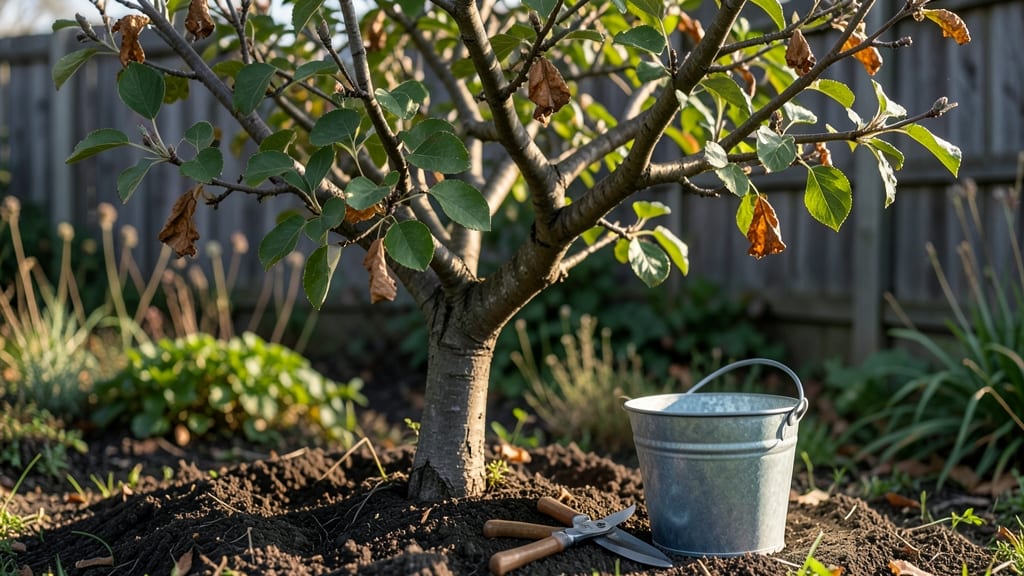
Pruning apple trees in late winter gives your tree the strongest start for next year's harvest. 🌱 I’ve pruned my own apple trees for over a decade, and the difference between a neglected tree and one properly pruned is like night and day—more fruit, healthier growth, and fewer disease problems.
The key is timing and technique: cut back dead or crossing branches first, then shape the tree to let sunlight reach the center, and finally thin out some fruit-bearing branches to improve size and quality.
With just a few hours and the right tools, you’ll transform your apple tree into a productive, disease-resistant powerhouse.
📚 In This Guide
- What you need
- Instructions
- Tips and common mistakes
- Wrapping up and next steps
What you need
- ● Pruning shears (bypass pruners) – Sharp, clean blades (10-12” length) for cuts up to ½” thick. Pro tip: 💡 Oil blades after use to prevent rust!
- ● Lopping shears – For branches ¾”–2” thick (18–24” long handles for leverage).
- ● Pruning saw – For thick branches (>2” diameter). Choose a bow saw or pruning saw with a fine-tooth blade.
- ● Gloves – Heavy-duty, cut-resistant gloves (e.g., mechanics’ gloves or pruning gloves) to protect against thorns and splinters.
- ● Disinfectant – 70% isopropyl alcohol or a pruning sealant (e.g., Tanglefoot Pruning Seal) to sterilize tools and wounds.
- ● Ladder or step stool – Sturdy and tall enough to reach all branches safely. ⚠️ Safety first: Use a harness if working >10’ high!
- ● Heavy-duty trash bags – For collecting pruned branches (1–2 bags, depending on tree size).
- ● Sharpie or marker – To label branches if making delayed cuts (e.g., for disease management).
- ● Pole saw – Extendable saw for high branches (16–20’ reach).
- ● Tree wound paint – Controversial but some gardeners use it on large cuts (>2” diameter).
- ● Work boots with ankle support – For stability on uneven ground.
- ● Sunscreen & hat – If pruning on a sunny day (apple orchards can be hot!).
- ● Camera or sketchbook – To document the tree’s structure before/after pruning.
- ● Check the weather forecast—prune on a dry, calm day (avoid rain for 24 hours before/after).
- ● Know your tree’s age and variety—young trees need different pruning than mature ones!
- ● Review your local pruning guidelines—some regions have specific seasonal rules (e.g., avoid heavy pruning in late summer).
Step-by-step guide for pruning apple trees seasonally
Keep your apple tree thriving with this simple seasonal approach.
✂️ Step 1: Late Winter Dormant Pruning (Best Time)
This is the most critical pruning time—do it when the tree is fully dormant but before buds swell, typically between late January and early March. You'll know it's time when the ground is still frozen at night but thaws during the day. Start by removing any dead, diseased, or crossing branches first—they're easy to spot since they lack leaves or have dark, shriveled bark.
Next, look for branches growing inward or rubbing against others. These compete for sunlight and nutrients, weakening the tree. Use sharp pruning shears to make clean cuts just outside the branch collar (the swollen area where the branch meets the trunk). Avoid leaving stubs—this invites rot and disease. For larger branches over ½ inch thick, use a pruning saw and make the cut on the underside of the branch to prevent bark from tearing.
Here's the thing—don't remove more than 25% of the tree's canopy in one season. You're shaping the tree's structure, not defoliating it. Focus on opening up the center to improve airflow and sunlight penetration. This prevents fungal diseases like apple scab that thrive in damp, shaded conditions. After pruning, sterilize your tools with rubbing alcohol to prevent spreading any lingering pathogens between cuts.
☀️ Step 2: Summer Light Pruning (Mid-June to July)
This isn't about heavy cutting—just light maintenance to keep the tree healthy between seasons. Look for suckers (shoots growing from the base or trunk) and water sprouts (fast-growing vertical shoots). These steal energy from fruit production. Snip them off at the base with clean shears. You'll notice these most easily in late June to early July when new growth is most vigorous.
Also check for any branches that have produced poor-quality fruit or show signs of disease (yellowing leaves, black spots, or oozing sap). Remove these immediately to prevent spread. For summer pruning, you can work with the tree even when it's fruiting—just avoid cutting branches that are currently bearing heavy fruit loads. The goal here is to redirect the tree's energy toward stronger growth and better fruit next season.
Real talk: Summer pruning is often overlooked, but it's where you catch problems early. If you see a branch with mildew or curled leaves, don't wait until winter—prune it out now. The tree will thank you with healthier foliage and better fruit set next year. Just avoid heavy pruning during this period, as it stresses the tree when it's already working hard to produce fruit.
✂️ Step 3: Post-Harvest Cleanup (Fall)
After apples are harvested in late September to October, do a final walk-through to remove any remaining fruit mummies (dried-up apples that harbor disease) and fallen leaves. Rake them up and dispose of them in the trash—not the compost pile—since they can spread fungal spores. This is your last chance to prevent overwintering pests and diseases that would otherwise survive in leaf litter.
Next, take a close look at the tree's structure. You're not doing major cuts now, but you might notice branches that grew too vigorously this summer. These can be lightly trimmed back by up to ⅓ of their length to encourage a more balanced shape. Focus on branches that are growing too close together or those that block sunlight from reaching the center of the tree. The goal is to create an open vase shape that allows air to circulate freely.
Don't skip this step—fall cleanup is about setting the tree up for winter dormancy. Before the first frost, apply a 3-inch layer of mulch around the base (but not touching the trunk) to insulate roots. This helps protect against temperature swings that can damage young trees. If you notice any wounds from summer pruning that haven't healed, seal them with pruning sealant to prevent moisture from getting in during winter rains.
Tips & tricks for perfect apple tree pruning
Here's what nobody tells you about keeping your apple tree healthy year after year.
Tool Prep Matters: Before you start pruning in late January, sharpen your pruning shears and sterilize them with rubbing alcohol. Dull blades tear bark instead of making clean cuts, which invites disease. I always test my tools on a scrap piece of bark first to ensure they're sharp enough. For branches over ½ inch thick, use a pruning saw—it gives you better control and prevents the blade from slipping.
Seasonal Timing Secret: The late January to early March window for winter pruning is non-negotiable for disease prevention. Cold temperatures keep fungal spores dormant, so you're not spreading them through fresh cuts. If you prune too early when branches are still frozen or too late when buds are swelling, you risk encouraging disease. I mark my calendar with the first frost date and schedule pruning two weeks after that—this gives me a reliable window to work with.
Visual Cues for Summer Pruning: When doing light summer maintenance in late June to July, look for water sprouts that grow straight up like vertical arrows. These are easy to spot because they lack leaves or have sparse foliage. Also watch for branches with leaves that have dark spots or yellowing edges—these are clear signs of disease. The key is to remove these problem areas immediately rather than waiting for winter, when the tree is already stressed from fruit production.
Fall Cleanup Strategy: After harvest, focus on removing all fruit mummies and fallen leaves, even if they look harmless. These can harbor fungal spores that survive winter and reinfect your tree next spring. I use a heavy-duty trash bag to collect all debris and dispose of it in yard waste—not compost—since compost heat can actually activate dormant spores. This one step makes a huge difference in preventing apple scab year after year.
Pro Tips for Prune Apple Tree
- Here's what nobody tells you about keeping your apple tree healthy year after year.
- Tool Prep Matters: Before you start pruning in late January, sharpen your pruning shears and sterilize them with rubbing alcohol.
- Seasonal Timing Secret: The late January to early March window for winter pruning is non-negotiable for disease prevention.
Frequently asked questions
Got questions about pruning apple trees? You’re not alone! Here are answers to the most common concerns to help you prune like a pro—without the guesswork.
When is the best time to prune an apple tree?
The ideal times are late winter (before buds swell) or early spring, but you can also prune in summer (after harvest) to remove suckers or water sprouts. Avoid heavy pruning in fall—it invites disease. For young trees, focus on shaping in early spring, while mature trees benefit from light pruning in both seasons.
Can I prune an apple tree in summer?
Yes! Summer pruning is great for corrective work, like removing dead wood, crossing branches, or water sprouts. Just avoid heavy cuts—stick to thinning out dense growth. Prune on a dry day to reduce disease risk, and always use clean, sharp tools. Summer pruning won’t harm your tree if done carefully.
What if I prune at the wrong time?
Pruning at the wrong time (like late fall or winter in cold climates) can stress the tree, making it vulnerable to frost damage or disease. If you’ve already pruned too late, don’t panic! Focus on light maintenance next season—remove only dead or diseased branches. Over time, your tree will recover, especially with proper care like watering and mulching.
How much can I cut off an apple tree at once?
Never remove more than 25% of the tree’s canopy in a single session—this prevents shock and promotes healthy regrowth. For young trees, aim for 10-15% per year to encourage strong structure. Mature trees can handle slightly more, but prioritize thinning out (removing whole branches) over heading back (cutting back to a bud).
Will pruning reduce my apple harvest?
Not if done right! Pruning actually boosts fruit quality by improving airflow and sunlight penetration. Thinning branches helps the tree focus energy on larger, sweeter apples. However, over-pruning or poor cuts can reduce yields temporarily. Follow the 3-season approach in this guide, and you’ll see better fruit production—and fewer disease issues—in no time!
Wrapping up and next steps
Pruning your apple tree is a rewarding way to ensure healthy growth, abundant fruit, and long-term vitality—and you’ve got all the tools to succeed! Remember, timing matters: late winter for major cuts, summer for shaping, and fall for cleanup.
With patience and practice, your tree will thank you with juicy apples and a stunning shape.
Ready to take the next step? Grab your pruners, mark your calendar for dormant season, and start small—even a few strategic cuts make a difference! 🌳✨