
Pruning
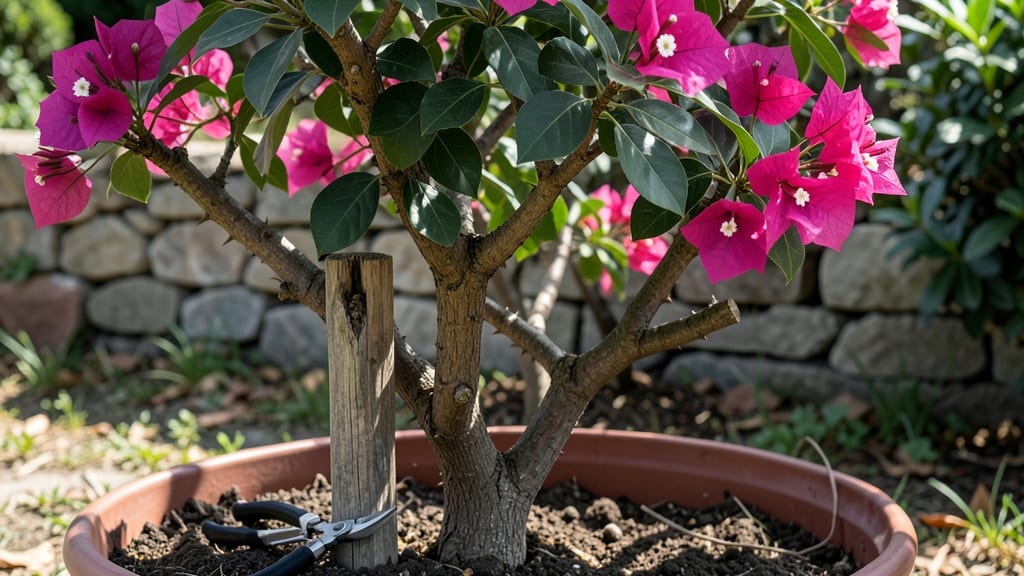
Pruning bougainvillea into a tree shape transforms it from a sprawling vine into a stunning, blooming focal point that steals every season’s show. 🌿 I’ve turned my wild, tangled vines into structured trees with vibrant purple blooms that last year-round—and the secret lies in timing, technique, and a little patience.
The key is knowing exactly where to cut, when to shape, and how to encourage that strong central trunk without sacrificing those showstopping flowers.
You’ll need sharp bypass pruners, heavy-duty gloves, and a clear vision of your tree’s future shape—think of it like sculpting a living work of art.
The best time to prune is right after the last frost in early spring, when new growth is just waking up, or in late winter before buds swell. This timing ensures your cuts encourage lush regrowth without sacrificing next season’s blooms.
Most gardeners over-prune, but bougainvillea thrives on bold cuts—just avoid hacking into old, woody stems.
By the time summer rolls around, your carefully pruned bougainvillea will burst with vibrant blooms along every branch, creating a tree-like silhouette that’s both elegant and full of life.
The secret is to train one strong central trunk early, then shape the canopy evenly to let sunlight reach all the blooming stems. With the right aftercare—consistent watering, balanced fertilizer, and occasional shaping cuts—your tree will keep blooming like clockwork, turning heads in your yard.
This method works for both container-grown bougainvillea and in-ground plants, making it perfect for patios, courtyard trees, or even large pots. Whether you’re starting fresh or rescuing an overgrown vine, the same principles apply—just adjust the scale.
Let’s get those pruners out and shape your bougainvillea into the statement tree it was always meant to be.
📚 In This Guide
- What you need
- Instructions
- Tips and common mistakes
- Wrapping up and next steps
What you need
- ● Pruning shears – Sharp, bypass-style shears (4–6 inches) for clean cuts on small stems.
- ● Loppers – For thicker branches (8–12 inches), with a long handle for reach.
- ○ Hand pruners or felco pruners – For precision cuts on delicate stems (optional but helpful).
- ● Gloves – Heavy-duty gardening gloves to protect against thorns and rough bark.
- ● Disinfectant (rubbing alcohol or pruning spray) – To sterilize tools between cuts and prevent disease.
- ● Rope or twine (1/4-inch width) – For securing branches during training (about 10–15 feet).
- ● Stakes or bamboo poles – 3–4 stakes (1–2 feet tall) to support the main trunk.
- ● Plant ties or soft cloth strips – To gently bind branches to stakes without damaging them.
- ● Ladder or step stool – If your bougainvillea is taller than 6 feet (safety first!).
- ● Horticultural sealant – To coat larger cuts and prevent sap loss or infection.
- ● Spray bottle with water – Keeps cuts moist and reduces stress on the plant.
- ● Notebook & pen – To sketch your vision or track pruning progress.
- ● Safety glasses – Protects eyes from debris, especially when working overhead.
Step-by-Step instructions for sculpting bougainvillea into a tree shape
Here’s how to transform wild bougainvillea vines into a structured, tree-like specimen with a strong trunk and lush canopy.
🌿 Step 1: Identify and Select the Main Trunk
Start by examining your bougainvillea’s growth habit. Look for a thick, sturdy stem—this will become your tree trunk. If no dominant stem exists, choose the thickest vine and prune all competing stems back to 6-8 inches from the base. This forces energy into one central leader.
Use clean, sharp pruners to make your cut at a 45-degree angle just above a leaf node or bud. Avoid leaving stubs—this prevents disease and encourages healthier regrowth. If your plant has multiple thick stems, select the one with the most upward growth and prune the others back hard.
Here’s the thing—bougainvillea responds aggressively to pruning. Expect new shoots to emerge within 2-3 weeks from the cut points. These will form the lower branches of your tree shape.
✂️ Step 2: Shape the Trunk and Lower Canopy
Once your main trunk is established, focus on creating a tapering silhouette. Prune any side branches growing within the first 12-18 inches of the trunk, cutting them back to 2-3 inches above a bud. This encourages a thicker, more defined trunk over time.
For the lower canopy, leave 3-4 main branches spaced evenly around the trunk. These will form the first tier of your tree. Prune back any competing branches to half their length, making cuts just above a leaf node. This ensures the remaining branches grow stronger and bushier.
Real talk: bougainvillea blooms on new growth, so pruning stimulates more flowers. After shaping, water deeply to help the plant recover. You’ll see fresh growth and buds forming within 4-6 weeks—that’s your signal everything’s working.
☀️ Step 3: Develop the Upper Canopy for Balance
Now, focus on the upper canopy to create a rounded, tree-like silhouette. Select 3-5 strong, upward-growing branches near the top of the plant and prune all other branches back to 4-6 inches. This directs energy into the branches you want to keep.
For each remaining branch, cut back the tips by one-third to encourage bushier growth. Make your cuts just above a leaf node or bud. Avoid pruning too much at once—bougainvillea can handle aggressive pruning, but gradual shaping yields better results.
Watch for new shoots emerging from the pruned areas. These will fill out the canopy over time. If any branch grows too leggy (stretching toward light), prune it back further to promote compact growth. You’ll notice a fuller, more balanced shape within 2-3 months.
🌱 Step 4: Maintain Year-Round with Strategic Pruning
Bougainvillea blooms on new growth, so light pruning every 6-8 weeks keeps it flowering year-round. Focus on trimming back overgrown branches to 6-12 inches to maintain shape and encourage fresh blooms.
In late winter or early spring, give your tree a light haircut—prune back any dead or weak branches and shape the canopy as needed. This is also the time to remove any suckers (shoots growing from the base) to keep energy focused on your tree structure.
Don’t skip this (I learned the hard way). If you let bougainvillea grow wild, it’ll revert to a vine. Consistent pruning keeps it sculpted and blooming. With patience, your bougainvillea will develop a strong trunk, defined layers, and a lush canopy—just like a miniature tree.
Tips & tricks for sculpting bougainvillea into a tree shape
Transforming bougainvillea into a tree shape takes patience, but these insider tricks will help you avoid common pitfalls and achieve that perfect miniature tree look.
Pruning Angles Matter: When you make those critical cuts at a 45-degree angle in Step 1, you're not just following instructions—you're creating a natural-looking taper that mimics how trees grow. The angle prevents water from pooling on the cut, which reduces rot risk. I've seen too many plants develop fungal issues because people made flat cuts. Think of it like whittling wood: the angle guides how the plant will regrow.
Bud Awareness is Everything: Every cut should end just above a leaf node or bud. This isn't arbitrary—it's where the plant's growth hormones are most concentrated. In Step 2, when you're pruning side branches to 2-3 inches above a bud, you're ensuring new growth will emerge in exactly the right place to form your lower canopy. I always mark potential bud locations with a pencil before cutting to avoid accidental mistakes.
Gradual Shaping Wins: The instructions mention pruning back tips by one-third in Step 3, but here's what nobody tells you—bougainvillea responds best to incremental changes. If you're starting with a very overgrown plant, consider doing the upper canopy shaping in two sessions, two weeks apart. This prevents shock and gives you time to evaluate which branches are thriving. I've seen plants recover beautifully from gradual pruning that would have struggled with aggressive shaping all at once.
Seasonal Timing Secret: While the instructions focus on the process, timing matters too. For best results, do your initial heavy pruning in late winter or early spring when the plant is just starting its growth cycle. This gives you the full 4-6 weeks to see new growth before summer heat arrives. In warmer climates, you can prune year-round, but always water deeply after pruning to help the plant recover.
Pro Tips for Prune Bougainvillea Into A Tree
- Transforming bougainvillea into a tree shape takes patience, but these insider tricks will help you avoid common pitfalls and achieve that perfect miniature tree look.
- Pruning Angles Matter: When you make those critical cuts at a 45-degree angle in Step 1, you're not just following instructions—you're creating a natural-looking taper that mimics how trees grow.
- Bud Awareness is Everything: Every cut should end just above a leaf node or bud.
Frequently asked questions
Got questions about transforming your bougainvillea into a stunning tree shape?
Here are answers to the most common ones—because even pros need a little guidance now and then!
When is the best time of year to prune bougainvillea into a tree?
The ideal window is late winter to early spring (just before new growth starts) in warmer climates. In cooler zones, wait until after the last frost. Avoid pruning during heavy blooming season—you’ll sacrifice those gorgeous flowers! Light shaping can happen year-round, but major structural cuts should wait for dormancy.
How do I know if I’m cutting too much off my bougainvillea?
Bougainvillea is tough and can bounce back from bold pruning, but aim to remove no more than 1/3 of the plant’s total foliage in one session. Look for healthy green stems—these are your best candidates for cuts. If you see dry, woody branches, trim them back to the next live bud. Over-pruning can stress the plant, so start conservatively!
Will pruning into a tree shape reduce my bougainvillea’s flowers?
Not if done right! Bougainvillea blooms on new wood, so strategic pruning (like cutting just above a leaf node) encourages fresh growth—and more flowers. Avoid shearing (which creates weak growth) and focus on shaping by trimming back to specific branches. With patience, your tree-shaped bougainvillea will reward you with year-round blooms!
What should I do if my bougainvillea doesn’t bloom after pruning?
No blooms? Check these fixes:
- Light: Bougainvillea thrives in full sun (6+ hours daily). Move it to a sunnier spot if needed.
- Water: Overwatering stresses the plant. Let soil dry out between waterings.
- Fertilizer: Use a low-nitrogen, high-phosphorus fertilizer (like 5-10-10) to encourage blooms.
- Pruning: If you cut too late in the season, new growth may not have time to flower. Plan ahead!
Can I prune bougainvillea into a tree shape in a container?
Container-grown bougainvillea follows the same pruning rules but with a few tweaks:
- Use well-draining soil (like cactus mix) to prevent root rot.
- Prune lightly more often to control size—containers limit root spread.
- Fertilize monthly during growing season for compact, bushy growth.
- Rotate the pot quarter-turns weekly for even sunlight exposure.
Wrapping up and next steps
Pruning your bougainvillea into a tree shape isn’t just about aesthetics—it’s a rewarding way to encourage lush, year-round blooms and maintain a healthy plant. With the right tools, timing, and technique, you’ll transform tangled vines into a stunning, structured centerpiece for your garden. 🌿✨
Now that you’re armed with the know-how, roll up your sleeves and give it a try! Start small, stay patient, and soon you’ll be showcasing a showstopping bougainvillea tree that turns heads. Need inspiration? Snap a photo of your progress and share it—your green thumb is about to shine!