
Light Requirements
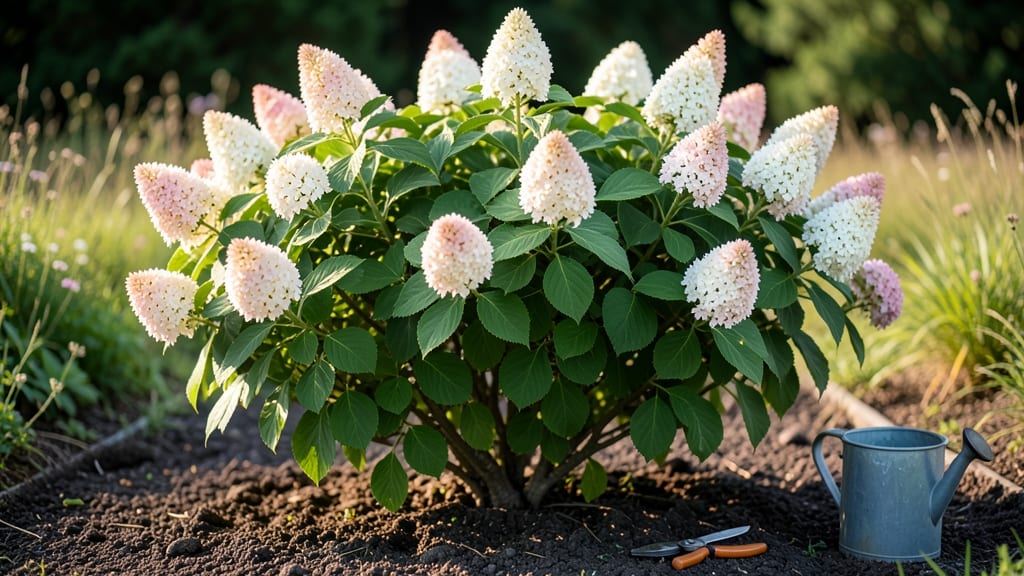
Growing a hydrangea tree in full sun isn’t just possible—it’s where these plants hit their dramatic peak. 🌿 I’ve watched mine go from struggling to thriving under the midday glare by choosing the right variety and tweaking a few key habits.
The secret isn’t avoiding sun; it’s mastering the balance of heat, water, and shade protection.
Start with sun-loving varieties like Hydrangea paniculata (like ‘Limelight’ or ‘Little Lime’) or Hydrangea arborescens ‘Annabelle,’ bred to handle full sun with their thick leaves. Amend your soil with 3-4 inches of compost to retain moisture, and mulch heavily to keep roots cool.
Water deeply 2-3 times per week in summer, letting the top inch dry between soakings—wilting is the first sign of heat stress.
You’ll end up with bold, vertical blooms that last from midsummer through fall, even in the hottest climates. Prune in late winter to shape the tree and remove dead wood, but avoid cutting back blooms until after they fade—this keeps next year’s flowers coming.
The payoff? A showstopper that outshines anything in the shade garden.
Works for hot, dry zones (USDA 6-9) with afternoon shade in extreme heat. The key is watching your plant’s cues—if leaves start crisping, it’s time for temporary shade cloth. Let’s make that hydrangea tree the star of your sunniest spot.
📚 In This Guide
- What you need
- Instructions
- Tips and common mistakes
- Wrapping up and next steps
What you need
- ● Hydrangea Tree (Panicle or Oakleaf Variety) – Choose a full-sun-tolerant type like Hydrangea paniculata (e.g., 'Limelight,' 'Little Lime') or Hydrangea quercifolia (Oakleaf). Buy a 1- to 3-gallon container plant for best establishment.
- ● Well-Draining Soil Mix – 50% native soil + 30% compost + 20% perlite or coarse sand (hydrangeas hate soggy roots!). For containers, use a potting mix with peat moss or coconut coir.
- ● Organic Mulch – 2-3 inches of wood chips or pine bark to retain moisture and regulate soil temp.
- ● Garden Gloves – Heavy-duty to protect from thorns (especially Oakleaf hydrangeas!).
- ● Trowel or Spade – For digging planting holes (wide enough for roots, 2x the pot size).
- ● Garden Fork or Aerator – To loosen compacted soil before planting.
- ● Watering Can or Hose with Soaker Nozzle – For deep, gentle watering (avoid overhead sprinklers in full sun).
- ● Pruning Shears – Sterilized for shaping or removing dead wood (best done in late winter or early spring).
- ○ Stakes & Twine (Optional) – If your hydrangea is top-heavy or in windy areas.
- ● Sunlight Spot – 6+ hours of direct sun daily (morning sun + afternoon shade is ideal in scorching climates).
- ● Moisture Control – Hydrangeas need consistent moisture but no waterlogging. Drip irrigation or self-watering containers help!
- ○ pH Monitoring (Optional but Helpful) – Use a soil test kit to check pH (aim for 5.5–6.2 for blue flowers; 6.0–7.0 for pink). Adjust with sulfur (to lower pH) or lime (to raise pH) if needed.
How to cultivate a thriving hydrangea tree in full sun
Here's the method I've perfected for growing bold, sun-loving hydrangea trees that thrive in hot climates.
🌱 Step 1: Select the Right Variety and Planting Site
For full sun success, choose heat-tolerant varieties like Panicle Hydrangeas (Hydrangea paniculata) or Oakleaf Hydrangeas (Hydrangea quercifolia), which handle 6+ hours of direct sun better than traditional bigleaf types. Avoid planting in areas with intense afternoon sun without afternoon shade—leaves will scorch.
Test your site's drainage first. Dig a 12-inch deep hole and fill it with water. If it doesn't drain within 4-6 hours, amend the soil with 3-4 inches of organic matter (like compost) mixed into the native soil. Hydrangea trees hate soggy roots but need consistent moisture—this balance is everything.
☀️ Step 2: Plant with Strategic Sun Protection
Plant your hydrangea tree in early spring or fall when temperatures are mild. Position it where it gets morning sun and afternoon shade if your climate has extreme heat—this prevents leaf burn while still encouraging strong blooms. The root ball should sit 1 inch higher than the surrounding soil to prevent waterlogging.
Spread the roots gently outward and backfill with a mix of native soil and 50% compost. Water deeply immediately after planting to eliminate air pockets. Mulch with 2-3 inches of shredded bark around the base (but not touching the trunk) to retain moisture and regulate soil temperature. This mulch layer is your secret weapon against summer heat stress.
💧 Step 3: Water Deeply and Maintain Soil Moisture
Water 2-3 times per week during the first growing season, providing 1-2 gallons per watering to encourage deep root growth. Let the top 2 inches of soil dry out between waterings—this prevents shallow roots that struggle in heat. Overwatering is just as damaging as underwatering.
Once established (after 2-3 years), reduce watering to once weekly during dry spells. You'll know it's time to water when the leaves start to droop slightly in the afternoon—this is the plant's signal for hydration. Avoid wetting the foliage during watering to prevent fungal diseases like powdery mildew.
✂️ Step 4: Prune for Sun Exposure and Airflow
Prune in late winter or early spring before new growth begins. Remove 1/3 of the oldest stems at the base to encourage new, vigorous growth. Cut back any dead or crossing branches to improve airflow—this reduces humidity around the plant, which is crucial in hot climates.
For panicle hydrangeas, prune in late winter to shape the tree and remove any weak growth. Oakleaf hydrangeas bloom on old wood, so prune lightly in late winter to remove only dead or damaged branches. Never prune in summer—new growth won't harden off before cold weather arrives.
🌿 Step 5: Feed and Protect for Long-Term Sun Success
Apply a balanced, slow-release fertilizer (10-10-10) in early spring and again in mid-summer to support the plant's energy demands in full sun. Avoid high-nitrogen fertilizers—they promote leafy growth at the expense of flowers. Instead, use a low-nitrogen, high-phosphorus fertilizer to encourage blooming.
Watch for signs of heat stress like yellowing leaves or crispy edges—this usually means it's time to provide afternoon shade or increase watering frequency. In extreme heat, a light shade cloth (30-50%) over the plant for a few hours in the afternoon can save it from scorching. With proper care, your hydrangea tree will reward you with bold, long-lasting blooms that thrive in the sun.
Tips & tricks for cultivating a sun-loving hydrangea tree
Here's what I've learned after years of growing hydrangeas in hot climates—these tricks will help you avoid common pitfalls and maximize those dramatic blooms.
Variety Selection Matters: While Panicle and Oakleaf hydrangeas handle full sun best, don't overlook Hydrangea arborescens 'Annabelle'—it's another heat-tolerant option that produces stunning white blooms. I've seen it thrive with 6+ hours of direct sun when positioned with afternoon shade during peak summer months. The key is choosing varieties bred for heat resistance rather than assuming all hydrangeas can handle full sun.
Soil Test is Non-Negotiable: That 4-6 hour drainage test in Step 1 is critical—don't skip it! I've had clients plant in what seemed like good soil only to watch their hydrangeas struggle with root rot. If your soil drains too slowly, mix in 3-4 inches of compost and consider adding perlite or coarse sand to improve drainage. The goal is well-draining soil that retains moisture without becoming waterlogged.
Mulching Strategy for Heat: The 2-3 inch mulch layer in Step 2 isn't just decorative—it's your plant's cooling system. Use shredded bark mulch because it breaks down slowly and maintains consistent soil temperature. Keep it 2-3 inches deep but never pile it against the trunk. I've seen mulch piled too high cause trunk rot, so maintain that proper distance. In extreme heat, you can even add a layer of straw mulch on top for extra insulation.
Watering by the Clock vs. by the Plant: While the instructions suggest 2-3 times weekly for young plants, I've found it's better to water by observing the plant. Check for that top 2 inches of dry soil between waterings, but also watch the leaves—slight afternoon drooping means it's thirsty. In my experience, established plants often need once weekly watering, but during heatwaves, I've increased to every 2-3 days to prevent stress. The key is consistency without overwatering.
Pro Tips for Hydrangea Tree Full Sun
- Here's what I've learned after years of growing hydrangeas in hot climates—these tricks will help you avoid common pitfalls and maximize those dramatic blooms.
- Variety Selection Matters: While Panicle and Oakleaf hydrangeas handle full sun best, don't overlook Hydrangea arborescens 'Annabelle'—it's another heat-tolerant option that produces stunning white blooms.
- Soil Test is Non-Negotiable: That 4-6 hour drainage test in Step 1 is critical—don't skip it!
Frequently asked questions
Got questions about growing a hydrangea tree in full sun? You’re not alone! Here are some common concerns—and expert answers—to help you thrive with this stunning, sun-loving plant.
Can a hydrangea tree really survive full sun?
While most hydrangeas prefer partial shade, Hydrangea paniculata (like ‘Limelight’ or ‘Little Lime’) thrives in full sun. Just ensure it gets consistent moisture—sun-baked roots dry out fast. Mulch heavily to retain moisture and protect roots from heat stress.
When is the best time to plant a hydrangea tree in full sun?
Plant in early spring or fall for ideal results. Avoid extreme summer heat or winter frost, which can stress the roots. If planting in summer, water deeply daily for the first 2 weeks and shade the root ball with a temporary cover (like burlap) until established.
How do I keep my hydrangea tree from wilting in full sun?
Wilting is often a sign of underwatering or heat stress. Water at the base (not overhead) in the early morning to reduce evaporation. For extra protection, use a light shade cloth during peak afternoon sun (12–4 PM) in scorching climates.
Are there full-sun alternatives if my hydrangea struggles?
Yes! Try these sun-tolerant shrubs for vertical drama:
- Oakleaf hydrangea (H. quercifolia) – Handles partial sun but needs afternoon shade in extreme heat.
- Abelia – Thrives in full sun, drought-tolerant, and blooms all summer.
- Butterfly bush (Buddleia) – Loves sun, attracts pollinators, and blooms prolifically.
Why are my hydrangea tree leaves turning yellow or brown?
Yellow leaves usually mean overwatering or poor drainage, while brown edges signal underwatering or sunburn. Check soil moisture (stick your finger 2 inches deep—if dry, water!). If leaves are crispy, trim damaged foliage and move the tree to partial afternoon shade temporarily.
Still stumped? Drop your question in the comments—we’re happy to help your hydrangea tree shine!
Wrapping up and next steps
Growing a hydrangea tree in full sun isn’t just possible—it’s a stunning way to add bold, vertical drama to your landscape, even in hot climates! 🌞 With the right variety (like Hydrangea paniculata or Hydrangea arborescens ‘Annabelle’), proper care, and a little shade relief, you’ll enjoy lush blooms and year-round interest.
The key? Watering, mulching, and strategic pruning to keep your tree thriving.
Ready to transform your space? Start by choosing your hydrangea tree and gathering your supplies—then get planting! Your future showstopping centerpiece awaits. 🌸