
Pruning
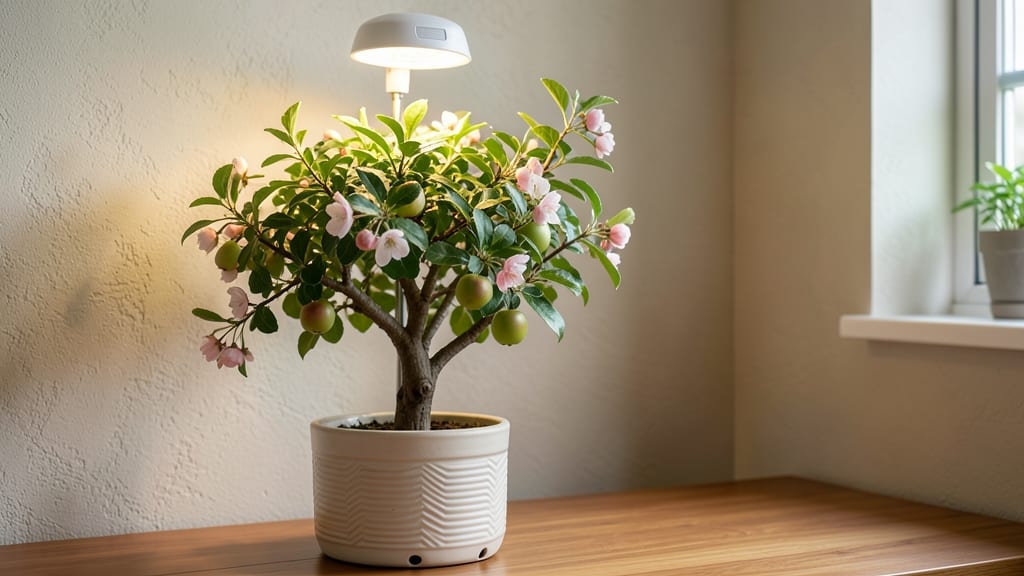
Growing an indoor apple tree from dwarf varieties means fresh fruit in your kitchen year-round—no orchard required. The key isn’t just picking the right tree (like the compact ‘Columnar’ or ‘Dwarf Fuji’), but mimicking the outdoor conditions they crave.
I’ve watched my own tree produce tiny apples indoors, and the secret lies in light, temperature, and a little extra care during pollination.
You’ll need a sunny south-facing window or a grow light for 12-16 hours daily, well-draining potting mix, and a pot with drainage holes. Dwarf varieties stay small (6-10 feet tall), but they still need regular pruning to shape them and encourage fruit production.
The biggest challenge? Pollination—hand-pollinating with a soft brush or buying self-pollinating varieties solves this.
With the right setup, you’ll harvest tiny but sweet apples in 3-5 years, with blossoms appearing in spring and fruit ripening by fall. The scent of blossoms in winter is worth every effort, and the pride of slicing homegrown apples for pie?
Unmatched. Just avoid overwatering (root rot is a silent killer) and keep the tree away from drafts.
This works best in zones 5-9 as a seasonal indoor project, but with a grow light and careful monitoring, even apartment dwellers can grow fruit trees. Start small, stay patient, and soon you’ll have a tree that’s as much a conversation piece as it is a kitchen staple.
📚 In This Guide
- What you need
- Instructions
- Tips and common mistakes
- Wrapping up and next steps
What you need
- ● Dwarf apple tree: Choose a cold-hardy, self-pollinating variety like ‘Columnar’ or ‘Liberty’ (available at nurseries or online). Size: 3–5 ft tall (potted).
- ● Pot: 15–20 gallon container with drainage holes. Material: Terracotta or fabric (breathable).
- ○ Well-draining potting mix: 1 part peat moss, 1 part perlite, and 1 part compost. Optional: Add slow-release fertilizer (10-10-10).
- ● Pruning tools: Bypass pruners (sharp, clean)
- ● Small hand saw (for thicker branches)
- ● Grow lights: Full-spectrum LED (12–16 hrs/day). Wattage: 20W–40W per plant.
- ● Spray bottle: For misting leaves (16 oz).
- ○ Support stake: 4–6 ft tall (optional but helpful for columnar varieties).
- ● Humidifier or pebble tray (to boost humidity).
- ● Pollination tool (soft paintbrush) for cross-pollination.
- ● Tree training clips (for shaping young branches).
- ● Soil moisture meter (to avoid over/under-watering).
- ● Organic mulch (e.g., straw) for winter protection.
Step-by-step guide to cultivating a thriving indoor apple tree
Here’s how to nurture a dwarf apple tree indoors for fresh fruit year-round.
Select the Right Dwarf Variety and Pot
Choose a cold-hardy dwarf variety like ‘Columnar’ or ‘Columnar Delicious,’ bred for small spaces. These trees stay under 6 feet tall but still produce fruit. A 15-gallon container with drainage holes is ideal—apple trees hate soggy roots. I use a pot slightly larger than the root ball to encourage steady growth without overwhelming the tree.
Fill the pot with well-draining potting mix (avoid garden soil—it compacts and suffocates roots). Mix in 20% perlite to improve aeration. The soil should feel like a damp sponge when squeezed—if water drips out, it’s too wet. Place a 3-inch layer of gravel at the bottom to prevent root rot from trapped moisture.
Position for Optimal Light and Temperature
Apple trees need 6-8 hours of direct sunlight daily—a south-facing window works, but most homes don’t get enough light there. Supplement with a full-spectrum LED grow light placed 12-18 inches above the tree. Keep the light on for 14-16 hours per day to mimic spring/summer conditions.
Maintain temperatures between 60-75°F during the day and 50-60°F at night to mimic seasonal changes. If your home runs warmer, open a window near the tree for airflow. Cold drafts below 50°F can shock the tree, causing leaf drop or stunted growth.
Water and Fertilize for Consistent Growth
Water deeply once a week, letting 2 inches of soil dry out between waterings. Stick your finger 2 inches into the soil—if it feels dry, it’s time to water. Overwatering is the fastest way to kill an indoor apple tree, so always check the pot’s weight (a dry pot feels light).
Feed the tree every 4-6 weeks with a balanced, slow-release fertilizer (10-10-10 ratio). In spring and summer, switch to a high-phosphorus fertilizer (5-10-5) to encourage flowering and fruiting. Reduce feeding in fall and winter—too much fertilizer then leads to weak growth and fewer blooms.
Prune and Train for Shape and Fruit Production
Prune in late winter or early spring before new growth starts. Remove dead, crossing, or inward-growing branches first—these compete for energy and block light. Cut back overly long branches by one-third to encourage bushier growth. Use clean, sharp pruners to avoid tearing bark, which invites disease.
Train the tree by tying the main branches to stakes or a small trellis to prevent them from bending under fruit weight. This also helps shape the tree into a manageable form. After pruning, spray the cuts with pruning sealant to protect the tree from pests and rot.
Pollinate and Care for Fruit Development
Most dwarf apple trees are self-pollinating, but you can improve fruit set by gently shaking the branches daily to release pollen. If you have two trees, cross-pollination increases yield. Thin fruit when they’re the size of a marble, leaving 6-8 inches between apples to prevent overcrowding and improve size.
Watch for aphids or spider mites, common indoor pests. Wipe leaves with a mild soapy water solution weekly as a preventative measure. If fruit starts to drop prematurely, it’s often due to low humidity—place a humidifier nearby or mist the tree lightly in the morning. Harvest apples when they’re fully colored and slightly soft to the touch—usually 8-12 months after flowering.
Tips & tricks for perfect indoor apple tree cultivation
Growing fruit indoors comes with unique challenges—here’s how to maximize your dwarf apple tree’s potential without common pitfalls.
Lighting Strategy: The 6-8 hours of sunlight requirement is non-negotiable, but most homes can’t provide enough natural light. Position your tree near the brightest window first, then supplement with a full-spectrum LED grow light positioned 12-18 inches above. I’ve found that rotating the tree quarter-turns daily prevents uneven growth toward the light source. For best results, place the light on a timer set to 14-16 hours—this mimics summer daylight and triggers consistent flowering.
Soil Science: That 20% perlite in your potting mix isn’t just for aeration—it’s the secret to preventing root rot in containers. I’ve learned the hard way that skipping this step leads to compacted soil that suffocates roots. After planting, press down gently but firmly to eliminate air pockets, then water thoroughly. The soil should drain completely within 10-15 minutes—if it pools, your drainage layer needs adjustment.
Temperature Management: Maintaining those 60-75°F daytime and 50-60°F nighttime ranges is easier said than done in most homes. If your apartment runs warmer, place a small fan near the tree to create airflow without direct drafts. For cooler climates, consider a small space heater with a thermostat during winter months—just keep it away from the tree. I’ve seen trees stressed by sudden temperature swings, so gradual adjustments work best.
Pruning Precision: When you’re cutting back those overly long branches by one-third in Step 4, make your cuts just above a bud or lateral branch at a 45-degree angle. This technique promotes faster healing and better regrowth. I always sterilize my pruners with rubbing alcohol between cuts to prevent spreading disease—this small step makes a huge difference in tree health over time.
Pro Tips for Indoor Apple Tree
- Growing fruit indoors comes with unique challenges—here’s how to maximize your dwarf apple tree’s potential without common pitfalls.
- Lighting Strategy: The 6-8 hours of sunlight requirement is non-negotiable, but most homes can’t provide enough natural light.
- Soil Science: That 20% perlite in your potting mix isn’t just for aeration—it’s the secret to preventing root rot in containers.
Frequently asked questions
Got questions about growing an indoor apple tree? You’re not alone! Here are answers to the most common concerns—from pruning to harvest timing—so you can enjoy homegrown apples year-round.
What’s the best dwarf apple tree variety for indoors?
Opt for self-pollinating varieties like ‘Dorsett Golden’, ‘Liberty’, or ‘GoldRush’. These thrive in pots, produce fruit, and require minimal space. Avoid columnar types—they’re harder to pollinate indoors.
How long does it take for an indoor apple tree to bear fruit?
Patience is key! Most dwarf apple trees take 3–5 years to bear fruit indoors, depending on care. Provide 12+ hours of light daily (grow lights help) and consistent pruning to speed up fruiting.
Can I grow an apple tree from a seed indoors?
Yes, but expect unpredictable results. Seed-grown trees may take 8+ years to fruit and won’t match store-bought varieties. For faster, reliable fruit, buy a grafted dwarf sapling instead.
Why aren’t my indoor apple tree’s leaves turning green?
Yellow or pale leaves often signal light deficiency or overwatering. Move your tree near a south-facing window or use a full-spectrum LED grow light. Let the top inch of soil dry between waterings.
How do I pollinate an indoor apple tree if there are no bees?
Use a soft paintbrush to transfer pollen between flowers on the same tree (if self-pollinating) or between compatible trees. Do this early in the morning when flowers are open. For extra help, try a handheld pollination spray.
When and how should I prune my indoor apple tree?
Prune after harvest (late fall/winter) to shape the tree and remove dead branches. Use sterilized shears to make clean cuts at a 45-degree angle. Avoid heavy pruning—keep 20–30% of the canopy to maintain fruit production.
Wrapping up and next steps
Growing an indoor apple tree is a rewarding journey that brings fresh fruit and natural beauty into your home—no matter the season! 🍏 With the right dwarf variety, proper pruning, and a little patience, you’ll enjoy homegrown apples year-round.
Start small, stay consistent with care, and soon you’ll be harvesting your own crisp, delicious fruit.
Ready to take the next step? Pick your favorite dwarf apple variety, gather your tools, and begin your indoor orchard adventure today! 🌱