
Pruning
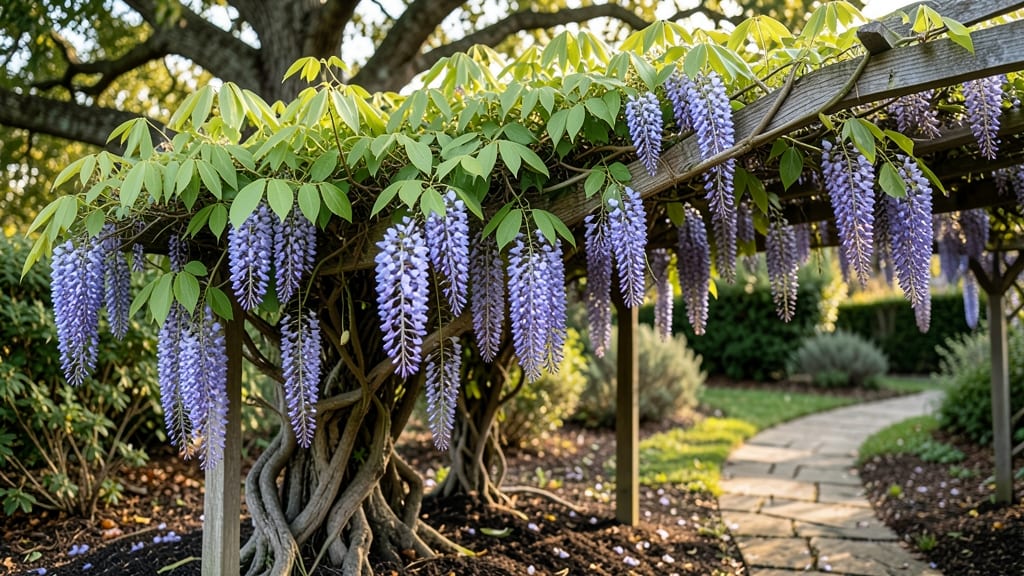
The Kentucky wisteria tree thrives when you prune it right—this frost-resistant beauty rewards you with vibrant purple blooms every spring if you handle its vigorous growth correctly. 🌿 I learned the hard way that skipping winter pruning leads to tangled vines and... fewer flowers, but once I mastered the timing and cuts, my tree now bursts into color earlier than ever.
The secret lies in two pruning sessions a year: a light cleanup in late winter before buds swell, then a heavier trim after flowering to shape the plant. You’ll need sharp pruners, gloves (those thorns are no joke), and a sturdy ladder—this isn’t a one-person job for mature vines.
Even in Zone 5, my Kentucky wisteria survives winters unscathed when pruned this way.
What you’ll end up with is a neat, productive tree that flowers reliably and stays manageable in your landscape. The fragrant blooms attract hummingbirds, and the glossy leaves add year-round interest. With proper pruning, you’ll avoid the tangled mess many gardeners struggle with—and enjoy that showstopping spring display.
Works for both young plants and established trees, though larger specimens need more aggressive shaping. The key is patience—don’t rush the process, and you’ll have a Kentucky wisteria that’s both beautiful and well-behaved. Ready to transform those wild vines into a garden star?
📚 In This Guide
- What you need
- Instructions
- Tips and common mistakes
- Wrapping up and next steps
What you need
- ● Pruning shears – Bypass pruners (for clean cuts on ½"–1" branches). Quantity: 1 pair (sharp and sterilized!)
- ● Loppers – For thicker branches (1"–2"). Quantity: 1 pair (with a ratcheting mechanism for leverage).
- ● Pruning saw – For branches 2" or larger. Quantity: 1 (with a fine-tooth blade).
- ● Gloves – Heavy-duty, cut-resistant (wisteria thorns are no joke!). Quantity: 1 pair.
- ● Disinfectant – 70% isopropyl alcohol or horticultural spray (to prevent disease spread). Quantity: Small bottle.
- ● Rubbing alcohol or bleach solution – 1 part bleach to 9 parts water (for tool sterilization).
- ○ Pruning sealant – Optional but helpful for sealing large cuts (e.g., tree wound pruning paste).
- ● Ladder or step stool – Sturdy and tall enough to reach the highest branches safely. Height: 6–12 ft (depending on tree size).
- ● Tarp or drop cloth – To catch debris (wisteria sheds a lot!). Size: 4’x6’ or larger.
- ● Trash bags – Heavy-duty for hauling away pruned branches. Quantity: 2–3.
- ● Timing: Prune in late winter or early spring (before new growth starts) for frost-resistant results.
- ● Weather: Choose a dry, calm day (avoid wind or rain to prevent sap bleeding).
- ● Safety gear: Safety glasses (to shield from debris) and long sleeves/pants (thorn protection!).
- ● Tree health check: Inspect for diseases (e.g., wisteria blight) or pests before pruning.
- ● Local regulations: Check if your area requires permit for large-scale pruning (some cities do!).
- ● Extension pole saw – For high branches without a ladder.
- ● Garden hose – To rinse tools between cuts (keeps them clean!).
- ● Notebook & pen – To sketch a pruning plan before you start.
- ● Compost bin – To repurpose small prunings as mulch.
Step-by-Step pruning guide for Kentucky wisteria trees
Master this seasonal approach to keep your wisteria thriving through every frost.
✂️ Step 1: Late Winter Pruning (Before Bud Break)
Start in late January or February when the tree is still dormant—you’ll see no leaves or buds. This is the most critical time to shape your Kentucky wisteria, as it encourages strong, frost-resistant growth. Grab your pruning shears and cut back last year’s growth by one-third, focusing on removing weak, crossing, or dead branches first.
Here’s the thing—wisteria grows aggressively, so don’t be shy with the cuts. Aim to open up the center of the tree to improve airflow, which reduces disease risk. Look for branches growing inward or rubbing against others; these are prime candidates for removal. You’ll notice the tree’s natural structure more clearly once you’ve thinned out the clutter.
After trimming, step back and assess the shape. A well-pruned wisteria should have an open, vase-like form with branches evenly spaced. If you’re unsure, remember: less is more in late winter. Over-pruning now can stress the tree and delay spring blooms.
🌿 Step 2: Post-Bloom Summer Maintenance (June-July)
Once your wisteria has finished flowering—typically in late May or June—shift to light maintenance. This is when you’ll focus on deadheading spent blooms and light shaping to encourage bushier growth. Use your hand pruners to trim back any branches that have finished blooming, cutting just above a leaf node or bud.
Real talk: This step is often overlooked, but it’s key for keeping your wisteria healthy and productive. Without it, the tree directs energy into seed production instead of next year’s flowers. You’ll see new shoots forming along the branches you’ve trimmed—this is your tree’s way of telling you it’s happy and ready for more growth.
While you’re at it, keep an eye out for any suckers or water sprouts—those are the fast-growing, weak shoots that pop up at the base or along the trunk. Snip them off at the base to redirect the tree’s energy into stronger, more established branches. A little effort now saves big headaches later.
⏰ Step 3: Late Summer to Early Fall (September-October)
As summer winds down and temperatures cool, your Kentucky wisteria will start preparing for dormancy. This is the time to remove any remaining dead or diseased wood and give the tree a final shape adjustment. Use sterilized pruning shears to make clean cuts, and dispose of any infected branches immediately to prevent spreading disease.
Here’s where it gets fun—you can also lightly prune to encourage next year’s blooms. Cut back some of the longer branches by about 10-15% to promote branching and a fuller canopy. Avoid heavy pruning now, though; the tree needs time to harden off before winter. You’ll know you’re on the right track if the branches look balanced and the tree’s structure is more open than dense.
This is also the time to apply a balanced fertilizer if your soil is nutrient-poor. A light feeding now helps the tree store up energy for spring. Water deeply after pruning to help the cuts heal and reduce stress on the tree.
☀️ Step 4: Winter Protection (November-March)
Once frost arrives, your Kentucky wisteria will enter dormancy, but that doesn’t mean you’re done. If you’re in a Zone 5 or colder, wrap the base of the tree with burlap or tree guard to protect it from rodents and frost heave. For young trees or those in exposed areas, consider mulching with 2-3 inches of shredded bark to insulate the roots.
Don’t overdo it—too much mulch can suffocate the roots. Instead, focus on keeping the area around the tree dry and weed-free. Check occasionally during winter thaws to ensure the mulch isn’t compacting or holding excess moisture. If you notice any branches that look damaged by ice or snow, prune them out in late winter once the tree is fully dormant.
This is also the time to plan your spring strategy. Take a moment to sketch out your tree’s shape and note any areas that need attention. A little preparation now means smoother pruning later. Your wisteria will thank you with stronger growth and even more stunning blooms next spring.
Tips & tricks for perfect Kentucky wisteria pruning
These seasonal strategies will help your wisteria survive frost and flourish for years to come.
Tool Prep: Sterilize your pruning shears with rubbing alcohol before Step 1 to prevent spreading disease between cuts. I learned this the hard way after seeing fungal spots appear on new growth—always clean tools between trees! For larger branches, use a pruning saw with a fine-tooth blade to make clean cuts without tearing the bark.
Visual Cues for Pruning: In Step 1, look for branches that cross or rub against others—they create wounds that invite pests and disease. Also watch for branches growing straight up from the trunk (called "water sprouts")—these compete with your main structure. Cut them at the base to redirect the tree's energy where you want it.
Seasonal Timing Secret: The late May-June window for deadheading is critical because wisteria flowers on old wood. If you prune too early, you risk removing next year's blooms before they've formed. Wait until you see 70-80% of the flowers have faded before making your cuts—this ensures you're only trimming spent growth.
Winter Protection Hack: For Zone 5 and colder climates, create a simple tree guard using hardware cloth wrapped around the trunk. This protects against voles and rabbits that might nibble at the bark during winter dormancy. I've also found that wrapping the base with burlap (as mentioned in Step 4) helps insulate against temperature swings that can stress the tree.
Pro Tips for Kentucky Wisteria Tree
- These seasonal strategies will help your wisteria survive frost and flourish for years to come.
- Tool Prep: Sterilize your pruning shears with rubbing alcohol before Step 1 to prevent spreading disease between cuts.
- Visual Cues for Pruning: In Step 1, look for branches that cross or rub against others—they create wounds that invite pests and disease.
Frequently asked questions
Got questions about nurturing your Kentucky Wisteria Tree? Here are some of the most common ones—plus straightforward answers to keep your vine thriving!
How cold can Kentucky Wisteria tolerate before frost damage?
Kentucky Wisteria is one of the hardiest varieties, surviving temperatures as low as -20°F (-29°C). However, young plants or newly pruned vines may need winter protection (like burlap wraps) in extreme freezes. Established vines are tougher and often bounce back with minimal damage!
When is the best time to prune Kentucky Wisteria?
Prune in late winter or early spring (before buds swell) for best results. This encourages vigorous growth and prevents disease. Avoid heavy pruning in fall—it can stimulate tender new growth that won’t survive winter. Pro tip: If you must prune in summer, do it after flowering to avoid cutting off next year’s blooms!
Can I grow Kentucky Wisteria in containers?
While possible, it’s not ideal—wisteria grows aggressively (up to 30+ feet!) and needs strong support. Containers limit root growth and require frequent watering. If you’re set on it, choose a large, sturdy pot (15+ gallons) and prune ruthlessly to control size. Consider a trellis or arbor for vertical growth instead!
Why isn’t my Kentucky Wisteria flowering this year?
Common culprits: over-pruning, poor sunlight (needs 6+ hours/day), or young age (wisteria often takes 3–5 years to bloom). Ensure it’s well-fed with phosphorus-rich fertilizer (like 10-10-10) in early spring. If it’s been years with no flowers, check for disease or root stress—adjust care accordingly.
How do I control its aggressive spread?
Kentucky Wisteria is fast-growing and invasive—use these tactics:
- Prune regularly: Cut back 1/3 of old wood yearly to redirect energy.
- Root barriers: Install deep (2–3 ft) barriers to prevent underground creep.
- Train on a trellis: Guide growth vertically to limit ground spread.
- Avoid overwatering: Wet soil encourages rapid, unchecked growth.
Wrapping up and next steps
Transforming your Kentucky Wisteria tree into a frost-resistant, year-round beauty is totally within reach! With the right tools, timing, and techniques, you’ll enjoy lush blooms and sturdy growth—no matter the season. 🌿✨
Ready to take the next step? Grab your pruners, mark your calendar for late winter or early spring, and start shaping your wisteria with confidence. Every trim brings you closer to a thriving, resilient tree—so roll up your sleeves and get pruning!