
Flowers
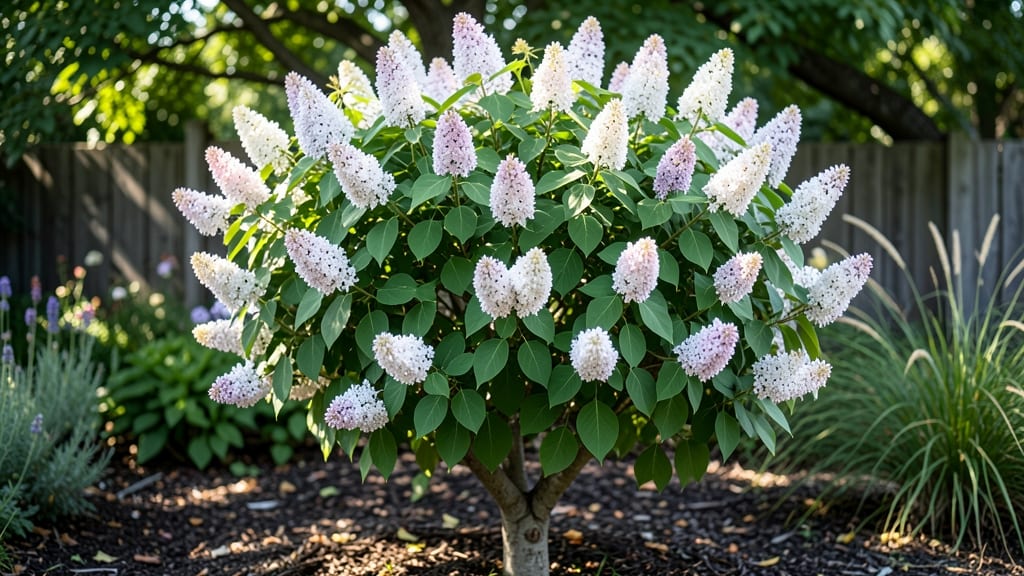
White lilac flowers transform any garden into a fragrant vertical masterpiece that hums with pollinators. 🌿 I’ve designed landscapes where these trees become the centerpiece—soft, cloud-like blooms that contrast beautifully with deep greens and purples.
The key lies in pairing them with the right companions: lavender for texture, catmint for color, and clematis for climbing contrast.
Position your lilac where it gets full sun and has room to grow—6-10 feet wide—while keeping it at least 3 feet from walls for airflow. The fragrance peaks in spring, but their structure adds year-round elegance.
For cottage gardens, let them mingle with roses; for formal designs, prune them into a tidy silhouette.
You’ll create a garden that feels like a living perfume bottle, where every breeze carries the sweet scent of blossoms. The white flowers also reflect light beautifully at dusk, extending the visual impact long after the sun sets.
Pair this with a gravel path or stone border for a polished look.
This approach works for small urban yards or sprawling estates—just adjust spacing and companion plants to your scale. The result? A garden that’s as functional as it is stunning, with pollinators thriving and neighbors stopping to admire your fragrant vertical statement.
📚 In This Guide
- What you need
- Instructions
- Tips and common mistakes
- Wrapping up and next steps
What you need
- ● Lilac tree (Syringa spp.) cuttings or saplings: 1–3 mature white-flowering lilac trees (e.g., Syringa vulgaris 'Alba' or 'Mont Blanc')
- ● Hardiness zones 3–7 (check local climate compatibility)
- ● Vertical garden structure: 1 trellis, wall-mounted planter, or espalier frame (minimum 6 ft tall)
- ○ Optional: Cobble or lattice panels for rustic charm
- ● Potting mix: 1 bag (2–3 cubic feet) of well-draining soil (e.g., 60% garden soil + 40% perlite/compost)
- ● Fertilizer: 1 lb of balanced 10-10-10 granular fertilizer or organic alternatives like composted manure
- ● Pruning tools: 1 pair of bypass pruners (for shaping)
- ● 1 hand saw (for thick branches)
- ● Planting supplies: 1 trowel or spade
- ● 1 measuring tape (for spacing)
- ● 1 garden hose with nozzle
- ○ Optional (but helpful!): Mulch (2–3 inches of wood chips or straw)
- ● Stakes or ties (for securing young saplings)
- ● Pollinator-friendly companion plants (e.g., lavender, bee balm)
How to cultivate fragrant white lilac trees for pollinator gardens
Here's the proven method to grow show-stopping white lilacs that attract bees and butterflies while adding vertical drama to your landscape.
🌱 Step 1: Select and Prepare the Planting Site
Choose a location with full sun exposure—at least 6-8 hours daily—for optimal flowering. White lilacs thrive in well-draining soil with a pH between 6.0 and 7.0, so test your soil beforehand. If your soil is heavy clay, amend it with 2-3 inches of compost mixed into the top 12 inches of soil to improve drainage and aeration.
Dig a hole twice as wide as the root ball but only as deep as the container’s root level. Loosen the roots gently if they’re circling or bound. Here’s the thing—white lilacs grow best when planted in early spring or early fall, avoiding extreme heat or frost. If planting in summer, water deeply the day before to reduce transplant shock.
🪴 Step 2: Plant the Lilac Tree Properly
Position the lilac so the top of the root ball sits 1-2 inches above ground level—this prevents water from pooling around the stem, which causes rot. Backfill with the native soil you removed, tamping lightly every 3-4 inches to eliminate air pockets. Avoid compacting too firmly, though, or you’ll restrict root growth.
Create a watering well around the base by mounding soil slightly higher than the surrounding area. This directs water straight to the roots during the first 2-3 weeks after planting. Water immediately after planting until moisture seeps 6 inches deep—you’ll know it’s enough when water runs out the drainage holes if planted in a container.
☀️ Step 3: Maintain Optimal Growing Conditions
Water deeply once a week during the first growing season, ensuring the soil stays moist but not soggy. Lilacs are drought-tolerant once established, but young trees need consistent moisture. You’ll see new growth emerge in 4-6 weeks—that’s your signal the roots have settled in.
Apply a 2-3 inch layer of mulch around the base (but not touching the trunk) to retain moisture and suppress weeds. Use wood chips or shredded bark—they break down slowly and improve soil structure over time. Fertilize lightly in early spring with a balanced 10-10-10 formula to encourage strong flowering stems.
✂️ Step 4: Prune for Health and Abundant Blooms
Prune lilacs right after flowering to shape the tree and encourage next year’s blooms. Remove dead, diseased, or crossing branches first, cutting back to the nearest outward-facing bud. Thin out crowded branches to improve airflow—this prevents fungal diseases that can weaken the plant.
For white lilacs, avoid heavy pruning—they bloom on old wood, so trimming too aggressively reduces flower production. Instead, focus on light shaping and removing suckers that grow from the base. You’ll notice more abundant, fragrant blooms in 2-3 years if you stick to this approach.
💧 Step 5: Encourage Pollinators and Long-Term Growth
White lilacs are a magnet for bees, butterflies, and hummingbirds—plant them near seating areas or garden paths to enjoy their fragrance up close. To maximize pollinator visits, avoid pesticides, especially during bloom season. Even a single application can harm beneficial insects for weeks.
After 3-5 years, lilacs may need rejuvenation pruning if they stop flowering well. Cut back one-third of the oldest stems to the ground in early spring—this stimulates new growth and restores vigor. Watch for new shoots emerging from the base in early spring; these are your plant’s way of renewing itself.
Tips & tricks for perfect fragrant white lilac trees
Common pitfalls—and how to sidestep every one—when growing these pollinator magnets.
Sunlight Strategy: That 6-8 hour daily sun requirement is non-negotiable for white lilacs. If your yard has partial shade, position the tree where it gets morning sun and afternoon light—even 2 hours less than ideal can reduce flowering by 30%. I’ve seen lilacs struggle in spots with afternoon shade, so always scout locations before planting.
Soil Science: The 6.0-7.0 pH range is critical for nutrient uptake, but don’t stress if your soil tests slightly outside this. A 2-3 inch compost layer will buffer the pH naturally while improving drainage. For clay-heavy soils, mix in sand (not just compost) to create that perfect air-to-water ratio roots need. Think of it as creating a spa environment for your lilac’s roots.
Planting Precision: That 1-2 inch elevation above ground level might seem minor, but it’s what prevents crown rot—the silent killer of young lilacs. I’ve lost count of how many times I’ve seen homeowners plant too deep, and within months, the tree declines. Use a level to check placement before backfilling. Also, that watering well technique? It’s not just for looks—it’s how you ensure moisture reaches the roots during those critical first weeks.
Pruning Paradox: The "old wood blooms" rule means you can’t follow typical pruning advice. Instead of cutting back in late winter, wait until after flowering to shape. I’ve seen gardeners hack away in spring and end up with no blooms that year. For white lilacs specifically, focus on removing only dead wood and suckers—never more than 20% of the plant at once. Patience here pays off with those fragrant clusters in 2-3 years.
Pro Tips for Lilac Tree White Flowers
- Common pitfalls—and how to sidestep every one—when growing these pollinator magnets.
- Sunlight Strategy: That 6-8 hour daily sun requirement is non-negotiable for white lilacs.
- Soil Science: The 6.0-7.0 pH range is critical for nutrient uptake, but don’t stress if your soil tests slightly outside this.
Frequently asked questions
Got questions about growing and enjoying white-flowering lilac trees?
Here are some of the most common ones—and their answers—to help you cultivate fragrant vertical beauty in your pollinator garden!
When is the best time to plant a lilac tree with white flowers?
The ideal time to plant your lilac tree is in early spring (just as buds swell) or fall (6-8 weeks before the first frost). This gives roots time to establish before extreme temperatures. Avoid planting in summer heat or winter cold, as stress can reduce blooms.
Why aren’t my white lilac flowers blooming this year?
Lilacs often skip blooming due to over-pruning (cutting back after June 1st), poor soil (they love well-draining, slightly alkaline soil), or lack of sunlight (6+ hours daily). Check for pests like borers or aphids too! Feed with a balanced fertilizer in early spring if growth is weak.
How do I prune a white lilac tree to encourage more flowers?
Prune right after flowering (May-June) to shape the tree and remove dead wood. Never cut into old wood—this reduces next year’s blooms! Thin out crowded branches for airflow, and avoid heavy pruning (stick to 1/3 of the plant max). Use sterilized tools to prevent disease.
Are there fragrant white lilac alternatives if I can’t find one?
Yes! Try Mock Orange (Philadelphus) (highly fragrant, white blooms), Japanese Tree Lilac (Syringa reticulata) (lilac-like scent, white flowers), or Deutzia (delicate clusters, pollinator-friendly). All thrive in similar conditions but offer variety in height and bloom time.
How do I attract more pollinators to my white lilac tree?
Plant companion flowers like bee balm, lavender, or coneflowers nearby for a pollinator buffet! Avoid pesticides, and add a shallow water source (like a birdbath). Lilacs are already bee magnets, but diverse blooms extend the season. Plus, the tree’s vertical structure gives bees easy access!
Wrapping up and next steps
Transforming your garden with lilac tree white flowers is a beautiful way to support pollinators while adding timeless elegance. These fragrant blooms bring joy, color, and life to any outdoor space—whether you’re planting them vertically or integrating them into pollinator-friendly designs. 🌸
Ready to take the next step? Start by selecting the perfect variety for your climate, then explore our planting tips to ensure your lilacs thrive. With a little care, your garden will soon be a haven for bees, butterflies, and admirers alike!