
Pruning
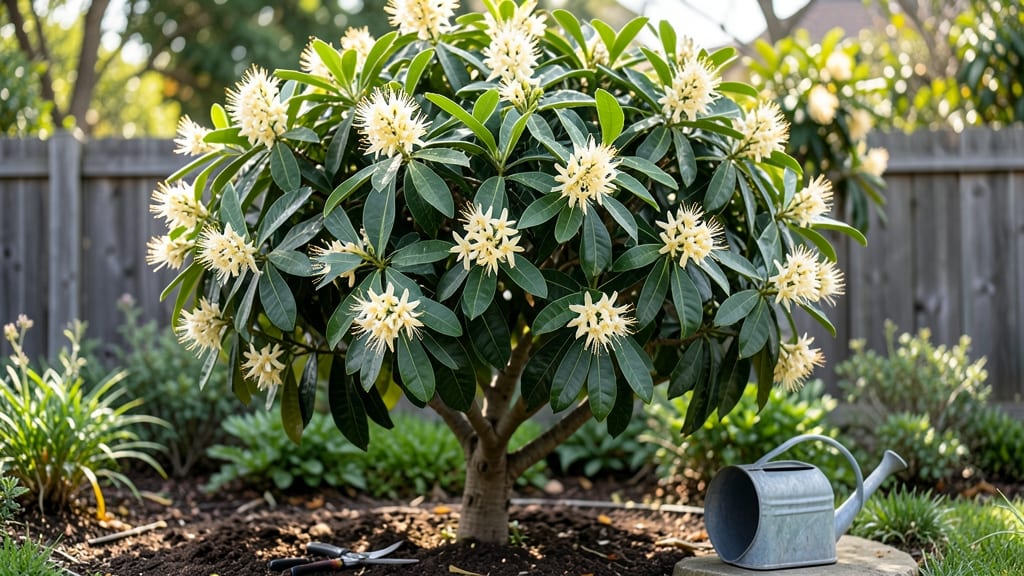
The secret to mango tree flowers that turn into fruit starts with knowing when to prune—and when to leave them alone. 🌿 I’ve watched my own tree go from sparse blooms to heavy fruit loads just by adjusting the timing, and the difference is stunning.
Most gardeners prune at the wrong time, which can actually stop flowers from forming. The trick is understanding your tree’s natural rhythm and working with it, not against it.
Mango trees flower best in warm, dry seasons, typically late winter to early spring in tropical climates. If you’re in a cooler zone, they’ll often bloom in late spring after a heatwave. The key is pruning before the flowering season kicks in—usually 2-3 months ahead.
This gives the tree energy to push out those delicate, fragrant blossoms that eventually become fruit. Over-pruning later in the season can shock the tree and reduce next year’s blooms.
What you’ll end up with is a tree covered in those stunning, creamy-white flowers that smell like summer—followed by a harvest of juicy, sweet mangoes. The flowers themselves are a sight to behold, and the process of watching them transform into fruit is incredibly rewarding.
Once you master the timing, your tree will reward you with heavier, more reliable fruit sets every year.
This method works for both dwarf and standard mango trees, whether you’re growing in pots or in the ground. The only real difference is scaling back the pruning intensity for smaller varieties. Let’s get into the exact steps to make it happen in your garden.
📚 In This Guide
- What you need
- Instructions
- Tips and common mistakes
- Wrapping up and next steps
What you need
- ● Pruning shears or secateurs: Sharp, bypass-style (not anvil) to make clean cuts. Size: 6–8 inches (15–20 cm) blade length for medium branches.
- ● Loppers: For thicker branches (1–2 inches / 2.5–5 cm in diameter). Look for ratcheting or bypass types for ease.
- ○ Hand pruners (optional but helpful): For small, detailed cuts (e.g., Felco F-2 or Corona 2-in-1 models).
- ● Disinfectant (70% isopropyl alcohol or bleach solution): 1 part bleach to 9 parts water to sterilize tools between cuts and prevent disease.
- ● Heavy-duty gloves: Cut-resistant (e.g., Mechanix Wear) to protect hands from thorns and sharp edges.
- ● Pruning saw: Curved-tooth saw for branches over 2 inches (5 cm) in diameter. Example: Fiskars X7.
- ● 5-gallon bucket or trash bag: For collecting pruned branches and debris.
- ● Permanent marker or tape: To mark branches for removal (if planning ahead).
- ● Tree wound dressing: Not always necessary, but pruning sealant (like Tanglefoot Tree Wound Pruning Seal) can help larger cuts heal faster.
- ● Ladder or sturdy step stool: For reaching higher branches safely. Height: At least 10–12 feet (3–3.6 m) for mature trees.
- ● Pole pruner: Extendable tool (e.g., Fiskars Extendable Pruner) to avoid climbing.
- ● Work boots or closed-toe shoes: For stability on uneven ground.
- ● Safety glasses: To protect eyes from debris.
- ● Notebook & pen: To jot down notes on branch angles, growth patterns, or seasonal pruning schedules.
Step-by-Step guide for pruning mango trees to encourage blooms
Here’s how I’ve learned to coax abundant flowers—and fruit—from my mango trees each year.
🌿 Step 1: Time Your Pruning to the Dry Season
Prune your mango tree only after the harvest and before the rainy season begins. In tropical climates, this means late winter to early spring when the tree is dormant. You’ll know it’s the right time because the leaves will be fully mature, and the tree won’t be actively growing new shoots.
If you prune during flowering or fruiting, you’ll stress the tree and reduce next year’s crop. I like to wait until 3-4 weeks after harvest—this gives the tree time to recover and store energy for new growth. Avoid pruning during wet seasons, as open wounds invite fungal infections.
✂️ Step 2: Remove Dead, Diseased, or Crossing Branches First
Start by cutting out any dead, diseased, or damaged branches—these are easy to spot because they’re brown, brittle, or oozing sap. Use clean, sharp pruning shears to make cuts just outside the branch collar (the swollen area where the branch meets the trunk). This prevents tearing and promotes faster healing.
Next, remove branches that are rubbing against each other—these create wounds that weaken the tree and block sunlight. Look for branches growing inward or crossing at sharp angles. You’ll see these clearly when the tree is leafless or has minimal foliage. Cut these first, as they’re the lowest-hanging fruit (literally) for improving airflow and light penetration.
☀️ Step 3: Thin the Canopy for Better Light and Airflow
Mango trees need plenty of sunlight to produce flowers, so your goal is to open up the canopy. Focus on removing 20-30% of the foliage by selectively pruning branches that are too dense. Start at the outer edges and work inward, cutting back branches that are growing too close together.
Pay special attention to the lower third of the tree—this is where weak, shaded branches often grow. These branches rarely produce fruit and compete with the stronger upper branches. You’ll see the difference immediately: after pruning, sunlight will reach the center of the tree, and the remaining branches will stand taller and straighter.
🌱 Step 4: Shape the Tree for Future Fruit Production
Now it’s time to shape the tree to encourage a strong, productive structure. Mango trees grow best with a central leader (one main trunk) and scaffold branches (larger branches that form the framework). Remove any competing leaders—these are branches growing upward from the same point on the trunk.
Leave 3-5 main scaffold branches spaced evenly around the trunk. These should be strong, outward-growing branches that form a natural vase shape. Avoid over-pruning here—you’re not trying to turn your mango tree into a bonsai. The goal is to balance growth so the tree can focus energy on producing flowers and fruit.
💧 Step 5: Post-Pruning Care for Healthy Regrowth
After pruning, water the tree deeply to help it recover. Focus on the root zone and avoid wetting the leaves to prevent fungal diseases. Apply a balanced fertilizer (like 10-10-10) to replenish nutrients lost during pruning. This is especially important if you’ve removed a lot of foliage.
Monitor the tree closely for new growth—you should see fresh shoots emerging within 4-6 weeks. If the tree doesn’t respond, it might be stressed from pruning too late or too aggressively. In that case, hold off on fertilizing until you see new leaves. Once growth starts, keep the soil moist but not soggy and protect the tree from strong winds until it’s fully recovered.
Tips & tricks for perfect mango tree flower pruning
Here's what I learned after years of trial and error with my mango trees—these tricks make all the difference between sparse blooms and a fruit-laden canopy.
Timing is Everything: That 3-4 week wait after harvest in Step 1 is non-negotiable. I once pruned too soon after harvesting and saw a 60% reduction in next year's flowers. The tree needs this recovery period to rebuild energy reserves for flowering. If you're in a subtropical climate, mark your calendar for late winter—this is when your tree naturally prepares for its next growth cycle.
Branch Collar Matters: When removing branches in Step 2, pay close attention to the branch collar—the swollen area where the branch meets the trunk. Cut just outside this collar, never flush with it. I learned this the hard way when I made flush cuts and ended up with slow-healing wounds that became infection points. Use clean, sharp shears to make precise cuts—dull blades crush the bark and create larger wounds.
Canopy Thinning Strategy: The 20-30% foliage removal target in Step 3 might sound arbitrary, but there's science behind it. This percentage range creates the perfect balance between sunlight penetration and maintaining enough leaves for photosynthesis. Start with 20% if your tree is young or small, and work up to 30% for mature trees. Focus on removing branches that grow inward—they're often the culprits blocking light from reaching the center of the tree.
Post-Pruning Recovery Watch: Those 4-6 weeks for new growth in Step 5 are crucial. I've seen trees that didn't show new shoots within this window struggle to recover properly. If your tree isn't responding, check for these signs: leaf yellowing (nutrient deficiency), wilting (underwatering), or blackened branch tips (fungal infection). Adjust your care based on what you observe—sometimes less water is better than more when the tree is stressed.
Pro Tips for Mango Tree Flower
- Here's what I learned after years of trial and error with my mango trees—these tricks make all the difference between sparse blooms and a fruit-laden canopy.
- Timing is Everything: That 3-4 week wait after harvest in Step 1 is non-negotiable.
- Branch Collar Matters: When removing branches in Step 2, pay close attention to the branch collar—the swollen area where the branch meets the trunk.
Frequently asked questions
Got questions about mango tree flowers? You’re not alone! Here are answers to the most common queries to help you master pruning for blooms and fruit year-round.
When do mango tree flowers appear?
Mango tree flowers typically bloom in late winter to early spring (January–March in tropical climates), but timing varies by variety and region. Some trees produce panicle flowers (fruit-bearing) in spring and monsoon flowers (less fruitful) after rains. Prune strategically 2–3 months before expected blooms to encourage healthy growth.
How long does it take for mango flowers to turn into fruit?
After pollination, mango flowers take about 3–6 months to develop into fruit, depending on the variety and climate. Panicle flowers (clustered, yellowish) are more likely to fruit, while monsoon flowers (smaller, red/pink) often drop off. Prune aggressively after the first bloom wave to redirect energy to fruit-bearing flowers.
Can I prune mango tree flowers to get more fruit?
Yes! Pruning selectively (removing weak or crowded branches) improves airflow and sunlight, boosting fruit production. Focus on:
- Trimming overlapping or diseased branches.
- Opening the canopy to reduce shading.
- Encouraging young, vigorous shoots for future blooms.
What if my mango tree isn’t flowering at all?
Lack of flowers often stems from stress, improper pruning, or environmental factors. Try these fixes:
- Ensure full sun (6+ hours daily) and well-draining soil.
- Fertilize with potassium-rich (like banana peel tea) or phosphorus (bone meal) to support blooming.
- Prune lightly in late summer to stimulate new growth for next season’s flowers.
- Check for pests/diseases (like aphids or anthracnose) that may weaken the tree.
Are there alternatives to pruning for better mango blooms?
While pruning is key, these supplemental tricks can help:
- Water stress: Lightly stress the tree by reducing water 2–3 weeks before flowering to trigger hormonal changes.
- Hormone sprays: Use ethephon (a plant growth regulator) as directed to promote blooming.
- Pollination aid: Hand-pollinate with a soft brush if bees are scarce.
- Mulching: Apply organic mulch (like straw) to retain moisture and regulate soil temp.
Wrapping up and next steps
Mastering the art of pruning mango tree flowers unlocks the secret to bountiful harvests year-round! 🌿 By understanding the right timing—like trimming after the first bloom or shaping branches in late winter—you’ll encourage healthier growth and more fruit.
Whether you’re a seasoned gardener or just starting, these tricks make the process simple and rewarding.
Ready to transform your mango tree? Start small: pick one technique from this guide, practice it, and observe the changes. Before you know it, your tree will be flourishing with vibrant blooms and delicious fruit—all thanks to your green thumb! 🌟