Pruning
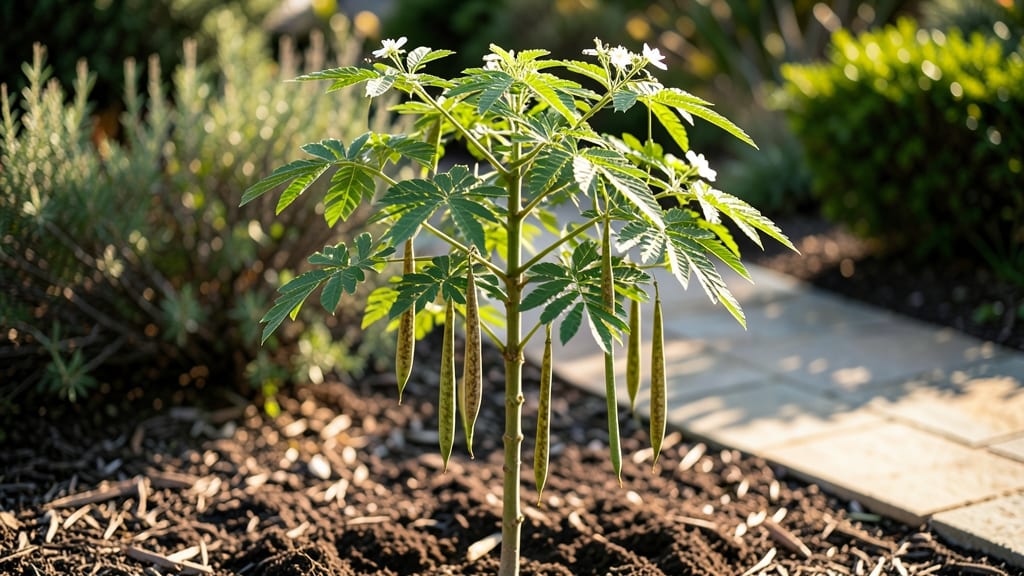
The cultivation of a moringa tree delivers one of the fastest harvests in the garden—ready to pick in just 6-8 weeks. 🌱 I’ve watched these nutrient-packed trees shoot up like weeds in my subtropical climate, and the secret isn’t complicated: they thrive on neglect, not coddling.
The key is matching their tropical roots to your conditions, whether you’re in a warm zone or container-gardening indoors.
You’ll need minimal supplies: fast-draining soil, a sunny spot (or grow lights), and a pot at least 12 inches deep if growing indoors. Moringa seeds germinate in 3-7 days, and seedlings grow 2-3 feet tall in their first month—faster than most vegetables.
The real magic happens when you prune strategically to encourage bushier growth and more leaves, which pack 7x the vitamin C of oranges and 4x the calcium of cow’s milk.
By harvest time, you’ll have a continuous supply of tender leaves to chop into smoothies, stir-fries, or soups. The trees keep producing for years, and each pruning session gives you fresh greens while shaping the plant.
Even in cooler climates, container-grown moringa can thrive on a sunny windowsill or under grow lights, making it the ultimate superfood for small spaces.
Fair warning: these trees grow too fast if left unchecked, but that’s why they’re perfect for beginners—no green thumb required. The biggest mistake is overwatering, which rots the roots, but otherwise, they’re nearly foolproof. Let’s get those seeds sprouting!
📚 In This Guide
- What you need
- Instructions
- Tips and common mistakes
- Wrapping up and next steps
What you need
- ● Moringa seeds – 10–50 seeds (organic, non-GMO preferred)
- ● Well-draining soil – 2–3 cubic feet of sandy loam (pH 6.0–7.5) or cactus/succulent mix
- ● Containers or nursery beds – 5–10 small pots (4–6 inches deep) for seedlings
- ● OR a 12-inch-deep nursery bed (if planting directly)
- ● Watering can or hose with a gentle spray nozzle
- ● Fertilizer – Balanced 10-10-10 or 5-10-10 NPK fertilizer (for seedlings)
- ○ Compost or worm castings (optional but recommended)
- ● Pruning shears – Sharp, sterilized (for trimming mature trees)
- ● Mulch – Straw or wood chips (to retain moisture)
- ● Sunlight access – Full sun (6+ hours daily) or bright indirect light
- ● Seedling heat mat (if starting indoors in cool climates)
- ● pH testing kit (to monitor soil acidity)
- ● Drip irrigation system (for large-scale cultivation)
- ● Garden gloves (to protect hands during planting/pruning)
- ● Shade cloth (for young seedlings in hot climates)
Step-by-step guide to growing moringa trees from seed
Here's how to cultivate these nutrient-dense trees quickly—no green thumb required.
🌱 Step 1: Prepare Seeds for Fast Germination
Moringa seeds germinate quickly when prepped correctly. Soak them in warm water for 12-24 hours until they swell noticeably. This softens the hard outer shell and kickstarts growth. I like to use a small bowl of room-temperature water—just enough to cover the seeds completely.
After soaking, drain the water and let the seeds sit in a damp paper towel for another 12 hours. This keeps them moist without risking rot. You'll know they're ready when tiny white roots appear—this usually happens within 6-12 hours of the towel stage. Handle them gently; moringa seeds are delicate once they start sprouting.
🪴 Step 2: Plant in Well-Draining Soil Mix
Use a lightweight potting mix (equal parts peat moss, perlite, and coconut coir works well) to prevent waterlogging. Fill small pots (3-4 inches deep) with the mix, leaving ½ inch of space at the top. Moringa trees hate soggy roots, so drainage is critical—add a layer of small gravel at the bottom if your container lacks holes.
Plant each seed ½ inch deep, spacing them 1-2 inches apart in the pot. Press the soil lightly around the seeds to ensure good contact, but don’t compact it. Water gently until the soil feels evenly moist—not soggy, not dry. Place the pots in a warm spot (75-85°F) with bright, indirect light (a south-facing window or grow light works). Germination happens fast—within 3-7 days—so keep the soil consistently damp during this time.
☀️ Step 3: Provide Optimal Light and Airflow
Once seedlings emerge, move them to full sun (6+ hours daily) immediately. Moringa trees grow aggressively toward light, so rotate the pots quarter-turns weekly to prevent leaning. If using artificial light, position a grow bulb 4-6 inches above the seedlings and keep it on for 14-16 hours daily. You’ll see new leaves appear within 7-10 days—that’s your signal they’re thriving.
Thin seedlings to one per pot when they reach 2-3 inches tall, keeping the strongest one. Avoid disturbing roots—gently slide the seedling out with a spoon if needed. After thinning, water only when the top inch of soil feels dry, and always water at the base to prevent fungal issues. Airflow is key: place a small fan on low 3-4 inches away to strengthen stems and reduce disease risk.
✂️ Step 4: Prune and Harvest for Continuous Growth
Moringa trees grow fast—up to 10 feet in a year—so prune regularly to encourage bushier growth. Pinch back the top 2-3 inches of new growth when stems reach 12-18 inches tall. This triggers lateral branches, giving you more leaves for harvest. Use clean, sharp scissors to avoid tearing stems, and always cut just above a leaf node.
Harvest leaves when they’re young and tender—typically 4-6 weeks after planting. Cut entire branches (not individual leaves) to stimulate new growth. You’ll get multiple harvests per year if you prune consistently. Dry leaves in the sun for 2-3 hours or at 110°F for 1 hour to preserve nutrients. Store in an airtight container away from light.
Tips & tricks for perfect moringa tree cultivation
Here's what nobody tells you about growing moringa trees—these tricks will help you avoid common pitfalls and maximize your harvest.
Seed Preparation: The 12-24 hour soak is non-negotiable for breaking moringa seeds' tough shells, but don't rush the process. I've seen seeds that weren't soaked long enough fail to germinate entirely. Use room-temperature water—not hot—and change it halfway through if it gets cloudy. For faster results, place your soaking bowl in a warm spot like near a sunny window or on top of a refrigerator. The seeds should swell noticeably before moving to the damp paper towel stage.
Soil Mix Strategy: That lightweight potting mix (equal parts peat moss, perlite, and coconut coir) is your secret weapon against root rot. If you don't have all three ingredients, you can substitute perlite with vermiculite or even coarse sand in a pinch. The key is maintaining that airy texture—moringa roots need oxygen just as much as water. Pro tip: Mix in a handful of worm castings at planting time for an instant nutrient boost that young seedlings will devour.
Light Transition: Moving seedlings from bright indirect light to full sun is where most people make mistakes. Don't rush this transition—gradually increase their sun exposure over 3-4 days. I start with 2 hours of direct sun on day one, then add an hour each subsequent day. This hardening-off period prevents sunburn on delicate young leaves. Once they're fully acclimated, you'll notice their leaves darken and thicken noticeably within a week.
Pruning Insight: When pruning those top 2-3 inches of growth at 12-18 inches tall, you're not just shaping the plant—you're triggering a biological response. This pinching technique forces the tree to produce auxin hormones that stimulate lateral bud growth. For maximum bushiness, prune every 4-6 weeks throughout the growing season. Just be patient—the first harvest after pruning might take 2-3 weeks, but subsequent harvests will come faster as the plant establishes more branches.
Pro Tips for Moringa Tree Cultivation
- Here's what nobody tells you about growing moringa trees—these tricks will help you avoid common pitfalls and maximiz...
- Seed Preparation: The 12-24 hour soak is non-negotiable for breaking moringa seeds' tough shells, but don't rush the ...
- Soil Mix Strategy: That lightweight potting mix (equal parts peat moss, perlite, and coconut coir) is your secret wea...
Frequently asked questions
Got questions about growing your own moringa tree?
You’re not alone! Here are some of the most common queries—and answers—to help you cultivate this nutrient-packed superfood with confidence.
How long does it take for a moringa tree to grow and produce leaves?
A moringa tree grows fast—expect seedlings to reach harvestable height (around 2–3 feet) in just 6–8 weeks. Leaves can be picked as early as 2–3 months after planting, but full production peaks at 6–12 months. Prune regularly to encourage bushier growth and more leaves!
What’s the best climate for growing moringa trees?
Moringa thrives in tropical and subtropical climates (USDA Zones 9–11) with warm temperatures (70–90°F) and full sun (6+ hours daily). While it tolerates light frost, prolonged cold (<40°F) can stunt growth. In cooler regions, grow moringa in containers and bring them indoors during winter.
Can I grow moringa indoors, or is it strictly an outdoor plant?
Moringa adapts well to indoor growing with a south-facing window or grow lights (12–16 hours/day). Use a well-draining pot (10+ inches deep) and a light, sandy soil mix. Just keep an eye on humidity—dry indoor air may require occasional misting.
What pests or diseases should I watch for, and how do I treat them?
Moringa is generally pest-resistant, but watch for aphids, whiteflies, or spider mites (common in dry conditions). Treat with neem oil or insecticidal soap. Overwatering can cause root rot, so ensure well-draining soil and avoid soggy roots. Yellowing leaves? Check for nutrient deficiencies (e.g., nitrogen) and fertilize with a balanced organic mix.
How often should I harvest moringa leaves, and does it harm the tree?
Harvest leaves every 2–4 weeks by pinching off young, tender shoots (avoid stripping the whole plant). This encourages bushier growth! Never take more than 25–30% of the foliage at once—over-harvesting can stress the tree. Morning harvests yield the most nutrients!
Wrapping up and next steps
Cultivating a moringa tree is a rewarding journey that yields one of nature’s most nutrient-packed superfoods—fast! 🌱 From selecting the right seeds to mastering pruning and harvesting, every step unlocks the tree’s incredible potential.
Whether you’re growing for personal health, sustainable farming, or even a side hustle, the key is patience, consistency, and a little green thumb love.
Ready to take the next step? Start small—plant a few seeds in your backyard or garden, and watch your moringa tree thrive. Need help? Explore our pruning guide or connect with local farming communities for tips. Your future harvest (and healthier lifestyle!) is just a seed away. 🌟