Pruning
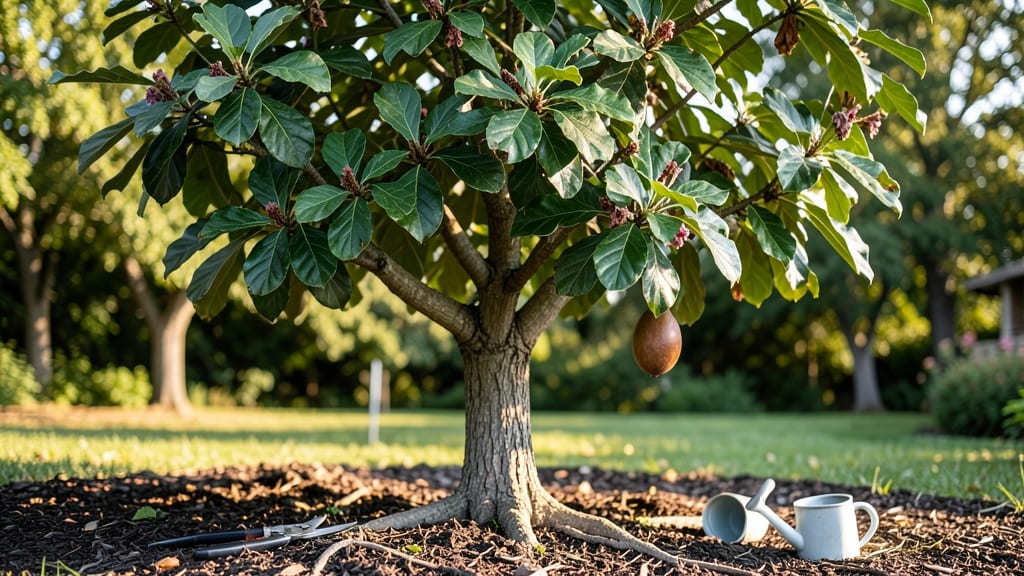
Caring for a paw paw tree in the Pacific Northwest starts with understanding its frost-resistant nature—these tropical-tasting giants thrive where others falter. 🌱 I’ve watched mine push through chilly springs, their glossy leaves unfurling just as the last frost passes, proving they’re tougher than their exotic fruit suggests.
The secret lies in pruning that balances winter hardiness with summer productivity, a technique that transforms what could be a high-maintenance tree into a low-effort, high-reward addition to your yard.
You’ll need sharp pruners, a ladder (for mature branches), and a clear morning to work—timing matters most. Pacific Northwest winters are mild but damp, so prune in late winter or early spring before new growth begins.
Focus on removing dead wood first, then thin crowded branches to let sunlight reach the center. These trees reward precision: every cut opens space for fruit production, and their slow growth means you won’t over-prune by accident.
What you’ll end up with is a tree that produces custard-like fruit by mid-summer, its branches heavy with sweet, tropical-flavored treats. The leaves stay vibrant even after frost, and with proper pruning, your paw paw will live for decades—far outlasting most fruit trees.
The key is patience; these trees take 3-5 years to bear fruit, but once they do, they’ll feed you for life.
Works equally well in home gardens and larger landscapes, though they need space—mature paw paws can reach 20-30 feet tall. For urban gardeners, dwarf varieties or container-grown saplings are great alternatives. Here’s how to get started without the guesswork.
📚 In This Guide
- What you need
- Instructions
- Tips and common mistakes
- Wrapping up and next steps
What you need
- ● Pruning shears: Bypass pruners (sharp, 6–8" blades) for small branches.
- ● Loppers: 18–24" with bypass blades for thicker branches (½–2" diameter).
- ● Pruning saw: 10–12" curved-tooth saw for branches >2" in diameter.
- ● Gloves: Heavy-duty, cut-resistant gloves (gardening or pruning-specific).
- ● Disinfectant: 70% isopropyl alcohol or pruning sealant (for cuts >½").
- ○ 5-gallon bucket: For collecting debris (optional but handy!).
- ● Ladder: Sturdy, extendable ladder (if tree exceeds 8–10' tall).
- ● Safety gear: Safety glasses and long sleeves (paw paw thorns are serious!).
- ● Hand pruners: For precise cuts on tiny branches (¼–½" diameter).
- ● Rubbing alcohol wipes: Quick cleanup between cuts to prevent disease spread.
- ● Tree wound dressing: Pruning paste (controversial but useful for large cuts).
- ● Marking twine or flags: To tag branches for future reference.
- ● Wheelbarrow: For hauling heavy debris or composting materials.
Step-by-step pruning for healthy, cold-hardy paw paw trees
Pruning these Pacific Northwest favorites keeps them productive and frost-resistant—here's the exact method I've used for years.
✂️ Step 1: Time Your Pruning for Winter Dormancy
Prune your paw paw tree during its dormant season, which in the Pacific Northwest runs from late fall through early spring—ideally between November and February. This timing prevents stressing the tree when it's actively growing, which makes it more vulnerable to frost damage. I always wait until after the first hard freeze, around December, to ensure any late-season growth has hardened off.
Look for bare branches or those without leaves—this is your visual cue that the tree is fully dormant. Avoid pruning in late winter when buds begin swelling, as new growth is more susceptible to frost. If you miss the dormant window, wait until early spring before buds break, but be prepared for slower recovery.
🌿 Step 2: Remove Dead, Diseased, or Weak Wood
Start by inspecting the tree for dead branches—these will be brittle, snap easily when bent, and have no green underneath the bark. Cut these out first using clean, sharp pruners to prevent tearing. Next, look for branches with mushroom-like growths, cankers, or oozing sap—these are signs of disease. Remove these immediately, then disinfect your tools with 70% rubbing alcohol or a bleach solution to avoid spreading pathogens.
Weak wood—branches that are thin, crossing, or rubbing against others—should also go. These create entry points for pests and diseases. I like to step back and visualize the tree's structure: open the canopy by removing branches that grow inward or downward. This improves airflow, which is critical for frost resistance. Never remove more than 25% of the tree's foliage in one season—this stresses the tree and reduces its ability to recover from cold snaps.
✂️ Step 3: Thin Out Crowded Branches for Airflow
Paw paw trees thrive when their branches aren't crowded. Focus on thinning out rather than just cutting back—this means removing entire branches at their point of origin rather than just trimming the ends. Start from the center of the tree and work outward, cutting branches that are growing toward the inside. This creates a more open, vase-like shape, which allows cold air to circulate and reduces frost pockets.
Use your pruners to make clean cuts at a 45-degree angle, just outside the branch collar (the swollen area where the branch meets the trunk). Avoid leaving stubs, as they invite disease. If a branch is larger than 2 inches in diameter, use a pruning saw instead. After thinning, step back and assess the tree's structure—you should be able to see light filtering through the branches in multiple spots. This openness is key to frost resistance and fruit production.
☀️ Step 4: Shape for Sun Exposure and Frost Protection
Paw paw trees need full sun to partial shade, but their frost resistance improves when they're shaped to maximize sunlight exposure while minimizing cold air trapping. Focus on raising the canopy by pruning lower branches that block light from reaching the ground. This encourages stronger growth lower on the tree, which is often more cold-hardy. I also avoid creating a dense, bushy top—this can trap cold air and lead to frost damage on the fruit.
If your tree has water sprouts (fast-growing, vertical shoots), remove them entirely. These saplings steal energy from the main structure and are the first to suffer in frost. For larger branches, make your cuts just above an outward-facing bud to encourage growth in the right direction. After pruning, take a final walk around the tree—you should see a balanced silhouette with no heavy clusters of branches on one side. This balance helps the tree distribute energy evenly, making it tougher in cold weather.
⏰ Step 5: Clean Up and Monitor for Recovery
Once pruning is done, remove all debris from the ground beneath the tree. This includes cut branches, leaves, and any fallen fruit. Paw paw trees are prone to root rot and fungal diseases, so keeping the area clean reduces risks. I also like to apply a 2-3 inch layer of mulch (using the 4 cubic feet of mulch from your supplies) around the base of the tree, but keep it 6 inches away from the trunk to prevent rot.
Monitor the tree over the next 4-6 weeks for signs of stress, like yellowing leaves or oozing sap at pruning cuts. If you see these, it might mean you pruned too aggressively or the cuts weren't clean. Paw paw trees are resilient, but they recover best when given time to heal before the growing season kicks in. By late spring, you should see new growth emerging from the pruned areas—this is your sign that the tree is thriving and ready for another frost-resistant season.
Tips & tricks for perfect frost-resistant paw paw tree pruning
Here's what nobody tells you about keeping your Pacific Northwest paw paw tree thriving through winter.
Timing is Everything: The November through February window is non-negotiable for frost resistance. I've learned this the hard way—pruning too early can stress the tree when it's still active, while waiting too late risks new growth that won't survive winter. Check for bare branches as your visual confirmation the tree is fully dormant. If you're unsure about the exact timing, a quick scratch test works: scrape a small section of bark—if it's green underneath, wait a bit longer.
Tool Preparation Matters: Never skip disinfecting your pruners between cuts, especially when dealing with diseased branches. I keep a small bottle of 70% rubbing alcohol in my tool bag for quick cleanups. For larger branches over 2 inches, use a pruning saw—your regular pruners will struggle and create jagged cuts that invite infection. And here's a pro move: sharpen your tools before starting. Dull blades tear wood instead of making clean cuts, which slows healing and increases disease risk.
Visualize the Canopy: Step back frequently during pruning to assess the tree's structure. You're aiming for that open, vase-like shape that improves airflow. I imagine sunlight filtering through the branches—if you can't see light reaching multiple spots, you're not thinning enough. Focus on removing branches that grow inward or downward first. These are the ones creating frost pockets where cold air gets trapped. Remember, you're not just pruning—you're sculpting the tree's future resilience.
Mulch Right: That 2-3 inch layer of mulch around your tree's base is your secret weapon against frost. But placement matters—keep it 6 inches away from the trunk to prevent rot. I use wood chips because they break down slowly, providing insulation over multiple winters. After pruning, spread the mulch while the ground is still cool (but not frozen), so it can settle properly before winter sets in. This simple step can mean the difference between a tree that survives and one that struggles.
Pro Tips for Paw Paw Tree Care
- Here's what nobody tells you about keeping your Pacific Northwest paw paw tree thriving through winter.
- Timing is Everything: The November through February window is non-negotiable for frost resistance.
- Tool Preparation Matters: Never skip disinfecting your pruners between cuts, especially when dealing with diseased branches.
Frequently asked questions
Got questions about keeping your paw paw tree thriving in the Pacific Northwest? Here are some of the most common concerns—and their answers—to help you prune with confidence!
How do I know when is the best time to prune my paw paw tree?
The ideal time to prune is late winter or early spring (before buds break), but you can also do light pruning in summer to remove dead or diseased branches. Avoid heavy pruning in fall—it can stimulate new growth that won’t harden off before frost.
Can I prune a paw paw tree in cold or rainy weather?
Pruning in cold, wet, or freezing conditions stresses the tree and slows healing. Wait for a dry, mild day (above 40°F) to minimize disease risk and ensure clean cuts. If rain is forecast, prune a few days ahead to let wounds seal.
What should I do if my paw paw tree has dead branches after pruning?
Dead branches (no bark, hollow centers) should be removed immediately to prevent pests or disease. Use sharp pruners to make clean cuts just outside the branch collar. If you spot mushrooms or sawdust-like frass (from borers), treat with horticultural oil or call an arborist.
Do paw paw trees need special care after pruning?
After pruning, water deeply to help the tree recover, especially in drought-prone areas. Avoid heavy fertilizing right after—focus on mulching (2–3 inches) around the base to retain moisture. Monitor for sun scald on exposed bark if pruning heavily.
Are there any alternatives to traditional pruning for paw paw trees?
For minimalists, selective pruning (removing only dead/diseased wood) works well. Some growers use the "open-center" method to improve airflow, but paw paws tolerate light structural pruning better than heavy shaping. If your tree is young, prioritize training branches to avoid over-pruning later.
Wrapping up and next steps
Caring for your paw paw tree in the Pacific Northwest is all about patience, precision, and a little frost-friendly know-how! 🌿 With the right pruning techniques—like thinning out dense branches, removing deadwood, and protecting young trees from late frosts—you’ll set your tree up for lush growth and sweet, tropical-tasting fruit.
Remember, healthy soil and strategic timing are your best allies, so don’t hesitate to roll up your sleeves and give your tree the TLC it deserves.
Ready to take the next step? Mark your calendar for late winter or early spring to prune, and keep an eye on those tender new shoots in frost-prone seasons. Your future harvest of paw paws is waiting—let’s make it thrive! 🍈✨