
Pruning
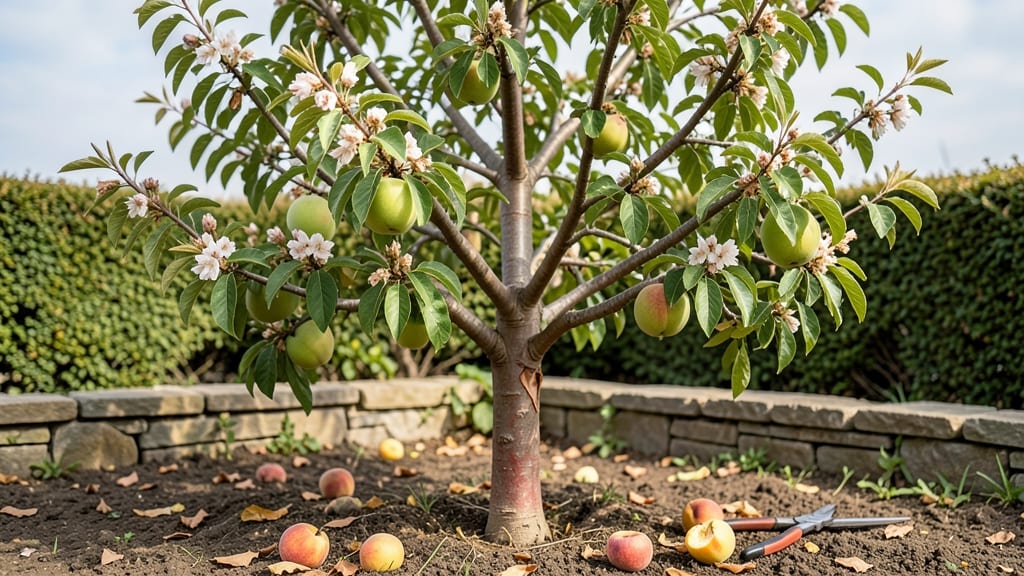
Caring for peach trees in the Pacific Northwest means mastering frost-resistant pruning that keeps fruit production strong year after year. I learned the hard way—my first tree nearly died after a late spring freeze because I didn’t account for our region’s unpredictable weather patterns.
The key is shaping the tree to maximize sunlight exposure while protecting tender wood from cold snaps.
You’ll need basic pruning tools—a sharp bypass pruner, loppers for thicker branches, and rubber gloves to handle sap. Focus on open-center pruning to improve airflow and sunlight penetration, which is critical for fruit development.
Start pruning in late winter (February-March) when the tree is still dormant but before buds swell—this timing helps avoid frost damage to fresh cuts.
What you’ll achieve is a strong, productive tree that recovers quickly from winter and delivers sweeter fruit. The right cuts encourage new growth where it matters most, and you’ll notice fewer split fruits after heavy rains.
By summer, your tree will look like it’s thriving instead of struggling through another PNW winter.
This method works for both young trees and established ones, though younger trees need more aggressive shaping. The same principles apply whether you’re dealing with a backyard tree or a larger orchard—just scale the tools and time accordingly. Let’s get those branches trimmed right!
📚 In This Guide
- What you need
- Instructions
- Tips and common mistakes
- Wrapping up and next steps
What you need
- ● Pruning shears: Bypass pruners (sharp, clean, and sterilized with rubbing alcohol 🧴). Size: 6–8" blades for small branches.
- ● Loppers: 1 pair (for branches ½–2" thick). Look for ratcheting or bypass types for precision.
- ● Pruning saw: 1 handheld saw (for branches 2"+ thick). Type: Curved-tooth for clean cuts.
- ● Gloves: Heavy-duty, cut-resistant gloves (to protect from thorns and sap 🛡️).
- ● Disinfectant: 70% isopropyl alcohol or bleach solution (1 part bleach to 9 parts water) for sterilizing tools.
- ○ Sealing wax: Pruning sealant (optional but helpful for large cuts to prevent disease).
- ● Frost cloth: Lightweight frost protection fabric (for young trees or late frosts 🥶). Size: Enough to drape over the canopy.
- ● Tree wrap: Paper or plastic wrap (to protect bark from sun scald in winter).
- ● Mulch: Wood chips or straw (2–3" layer around the base, keep 6" away from trunk).
- ● Watering can or hose: For post-pruning hydration (especially after dry spells).
- ● Know your peach tree variety—some PNW favorites include ‘Redhaven’ or ‘Suncrest’ (frost-hardy!).
- ● Check the last frost date in your area (prune after dormancy but before buds swell!).
- ● Review your tree’s growth habit—open-centered vs. vase-shaped affects pruning strategy.
Step-by-step pruning guide for Pacific Northwest peach trees
Here's how to shape your tree for cold resilience and abundant fruit.
Time Your Pruning for Frost Resistance
Prune your peach tree during late winter or early spring, ideally between January and February in the Pacific Northwest. This timing ensures the tree has time to heal wounds before the growing season begins. Avoid pruning in fall, as new growth won't harden off before winter frost arrives.
Look for dormant buds—these appear as small, plump swellings along the branches. When you see them, it's your cue that the tree is ready. If you prune too early, you risk exposing the tree to late frosts that can damage tender new growth. If you wait too late, you may encourage vigorous spring growth that won't have time to mature before winter.
Remove Dead, Diseased, or Weak Branches First
Start by identifying and cutting out any branches that are dead, diseased, or crossing each other. Use clean, sharp pruning shears to make cuts at a 45-degree angle, about ¼ inch above a bud or branch collar. This prevents water from pooling and reduces the risk of rot or infection.
Dead branches are easy to spot—they're brittle, have no leaves, and snap when you bend them. Diseased branches often have dark spots, oozing sap, or unusual growths. Weak branches may bend easily or show signs of poor attachment. Remove these first to improve airflow and sunlight penetration, which is critical for preventing fungal diseases common in the Pacific Northwest's damp climate.
Thin the Canopy for Sunlight and Airflow
Next, focus on thinning the tree's canopy to allow sunlight to reach the center. Remove branches that grow inward or rub against each other, as these create wounds and reduce fruit quality. Aim to keep the tree open and vase-shaped, with 6-8 main scaffold branches evenly spaced along the trunk.
Look for branches that are growing too close together or blocking sunlight from the center of the tree. These branches compete for resources and can lead to poor fruit development. Thin out about 20-30% of the branches to create an open structure. This not only improves fruit production but also helps the tree recover more quickly from frost damage by reducing moisture retention in dense foliage.
Shape the Tree for Cold Hardiness
Encourage a strong, low center of gravity by pruning branches that grow too high or too low. Keep the lowest branches within 4-5 feet of the ground to protect the tree from wind damage and make harvesting easier. Avoid "lion's tailing," where you leave only a few small branches at the top—this weakens the tree's structure and reduces frost resilience.
Pay attention to the tree's natural shape and prune to maintain a balanced, upright form. In the Pacific Northwest, where frost can be a challenge, a well-shaped tree with a strong trunk and sturdy branches is better equipped to withstand cold snaps. If you notice any branches that are growing too vigorously, you can lightly prune them back to encourage a more compact, frost-resistant structure.
Clean Up and Protect Wounds
After pruning, clean your tools with rubbing alcohol to prevent the spread of disease. Remove all pruned branches and debris from the area to reduce the risk of fungal infections. Apply a wound sealant (like pruning paint) only if the cuts are larger than ½ inch in diameter—smaller cuts will heal naturally and sealant can sometimes trap moisture.
Inspect the tree for any signs of pests or disease, such as holes, sawdust-like frass, or unusual spots on the leaves. If you notice anything, address it immediately with appropriate treatments. Finally, mulch around the base of the tree with 2-3 inches of organic mulch to protect the roots from temperature fluctuations and retain moisture. This step is especially important in the Pacific Northwest, where winter frosts can be severe.
Tips & tricks for perfect Pacific Northwest peach tree pruning
Here's what nobody tells you about pruning peach trees in our damp, frost-prone climate—these tricks make all the difference. Between us, I've watched too many trees struggle because of small oversights.
Timing is Everything: The January-February window isn't just arbitrary—it's when your tree's natural defenses are strongest. I've seen trees pruned in March develop frost damage on new growth because they didn't have time to harden off. If you miss this window, wait until early spring when you see those plump dormant buds swelling, but don't delay past bud break or you'll encourage weak growth that won't survive winter.
Branch Angle Matters More Than You Think: That 45-degree angle isn't just for looks—it's about water runoff. I learned this the hard way after seeing rot develop on branches cut too flat. When making cuts, imagine the angle would let rainwater slide right off. And always cut just above a bud or branch collar—this is where new growth will emerge strongest. The quarter-inch clearance gives the tree room to heal properly without the cut sealing over too quickly.
Thinning Creates Magic: The 20-30% thinning target might seem aggressive, but trust me on this. I've seen trees with dense canopies struggle with fungal issues year after year in our wet climate. Focus on removing branches that cross or grow inward—these are the ones creating wounds and blocking sunlight. After thinning, you should be able to see sunlight reaching the center of the tree. This open structure isn't just about fruit quality; it's about survival during our cold, wet winters.
Frost-Proofing Your Tree: That 4-5 foot height for lowest branches isn't arbitrary—it's about protecting against wind damage and making harvesting easier after frost events. I've seen peach trees with branches too high get snapped in winter storms. And watch out for "lion's tailing"—that top-heavy look might seem dramatic, but it actually weakens the tree's structure. A balanced, upright form with branches evenly spaced along the trunk is your best defense against Pacific Northwest frosts.
Pro Tips for Peach Tree Care
- Here's what nobody tells you about pruning peach trees in our damp, frost-prone climate—these tricks make all the difference.
- Timing is Everything: The January-February window isn't just arbitrary—it's when your tree's natural defenses are strongest.
- Branch Angle Matters More Than You Think: That 45-degree angle isn't just for looks—it's about water runoff.
Frequently asked questions
Got questions about keeping your peach tree thriving in the Pacific Northwest’s chilly climate? Here are answers to the most common concerns—from frost prep to pruning hacks—so you can grow sweet, resilient fruit year after year.
How do I protect my peach tree from late spring frosts in the PNW?
Use frost cloth or row covers when temperatures dip below 28°F, especially during blossom time. Water tree trunks before frost to create insulating ice layers. For young trees, wrap trunks in burlap or bubble wrap to shield against cold snaps. Pro tip: Plant frost-sensitive varieties like ‘Redhaven’ in sheltered microclimates (e.g., south-facing slopes).
When is the best time to prune a peach tree in the PNW?
Prune late winter or early spring (February–March) when the tree is dormant but before buds swell. This timing minimizes frost damage and disease risk. Avoid pruning in fall—it can stimulate new growth that’s vulnerable to winter cold. Key: Focus on open-center shaping to improve airflow and sunlight penetration.
How much should I cut back a peach tree’s branches each year?
Aim to remove 15–25% of the tree’s canopy annually to maintain health and fruit production. For mature trees, prioritize:
- Dead, diseased, or crossing branches (cut at the branch collar).
- Suckers growing from the base (remove entirely).
- Water sprouts (vertical shoots) to redirect energy to fruit-bearing wood.
Why aren’t my peach tree’s fruits ripening fully in the PNW?
Peaches need 200–500 chill hours (below 45°F) to set fruit properly. If your tree isn’t ripening well, it may lack sufficient winter cold. Try:
- Planting low-chill varieties like ‘Sanguine’ (150–300 hours).
- Thinning fruit early to reduce competition for energy.
- Ensuring full sun (6+ hours/day) and consistent watering (1–2 inches/week).
Can I grow a peach tree in containers in the PNW?
Yes! Use a large pot (20+ gallons) with drainage holes and a well-draining mix (50% soil, 30% compost, 20% perlite). Choose dwarf varieties like ‘Bonanza’ or ‘Contender.’ Move pots to a garage or insulated shelter during winter (below 20°F). Tip: Container trees need frequent watering—check soil moisture weekly.
Wrapping up and next steps
Caring for a peach tree in the Pacific Northwest—especially with frost-prone winters—is all about timing, technique, and patience. 🌱 By mastering the right pruning strategies, you’ll ensure your tree thrives, produces bountiful fruit, and stands strong against chilly weather.
Now that you’re armed with the know-how, it’s time to roll up your sleeves and give your peach tree the love it deserves!
Ready to take the next step? Mark your calendar for late winter or early spring, grab your tools, and start pruning with confidence. Your future harvests will thank you—one juicy peach at a time! 🍑✨