
Pruning
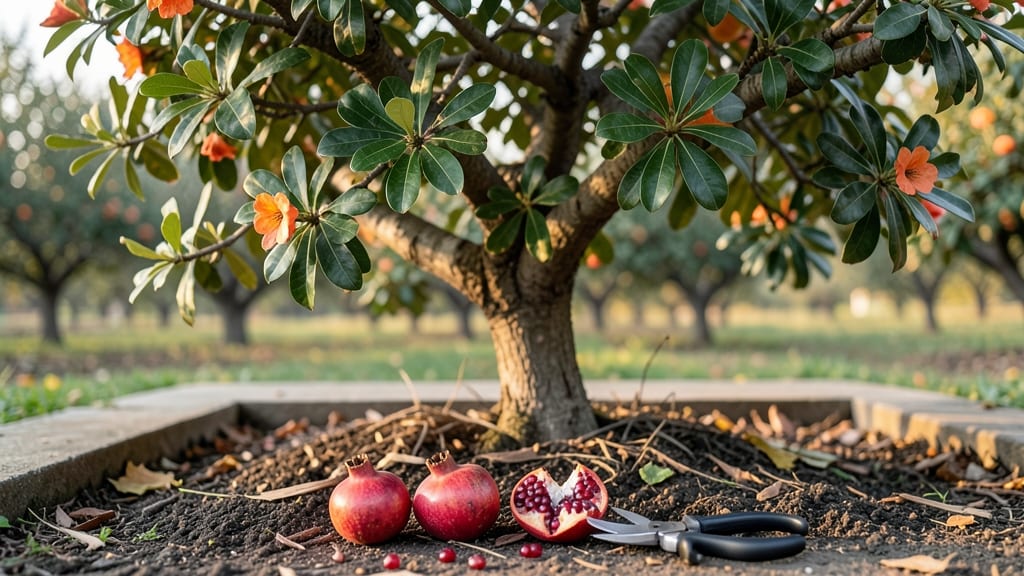
Pomegranate fruit on a tree starts with a single bloom that turns into a heavy, jewel-toned orb by fall—if you prune right. 🌿 I’ve watched my tree go from bare branches to bursting with fruit just by making a few strategic cuts each year, and the difference is staggering.
The key isn’t just when to prune, but how—thinning crowded growth and opening the canopy to sunlight lets more flowers set fruit next season.
Here’s the thing—pomegranates fruit on new wood, meaning last year’s growth produces this year’s harvest. That’s why early spring pruning (before buds swell) is critical: you’re shaping the framework for next fall’s crop.
Too much pruning now = fewer blooms later; too little = crowded branches that shade out fruit. The goal is sunlight reaching every limb, so every flower has a chance to turn into a ruby-studded prize.
By late summer, you’ll spot the first hard, golf-ball-sized fruits forming. That’s when you start watching for color change—from green to pinkish-red—and slight softness when squeezed (like a ripe avocado).
One wrong move now—like overwatering—can split the skin, but a well-pruned tree with consistent care delivers harvests from September through November, sometimes even into winter if you’re in a mild climate.
This method works whether you’re growing a dwarf tree in a pot or a full-sized variety in the ground. The same principles apply: prune for light, water deeply but infrequently, and feed with citrus-specific fertilizer. Your tree will reward you with years of heavy, disease-resistant fruit—no fancy tricks required.
📚 In This Guide
- What you need
- Instructions
- Tips and common mistakes
- Wrapping up and next steps
What you need
- ● Pomegranate tree: A healthy, disease-free Punica granatum variety (e.g., 'Wonderful,' 'Eversweet,' or 'Ambrosia'). Choose a mature tree (3+ years old) for best results.
- ● Pruning shears: Bypass pruners (sharp, 6–8" blades) for clean cuts on small branches. Loppers (18–24" handles) for thicker branches (1–2" diameter).
- ● Pruning saw: A folding pruning saw with a fine-toothed blade for branches >2" in diameter.
- ● Disinfectant: 70% isopropyl alcohol or a 10% bleach solution (1 part bleach to 9 parts water) to sterilize tools between cuts.
- ● Gloves: Heavy-duty gardening gloves (nitrile-coated for thorn protection).
- ● Rubbing alcohol or hand sanitizer: For cleaning hands after pruning.
- ○ Pruning sealant (optional): Tree wound paint (e.g., Tanglefoot Tree Wound Pruning Seal) for cuts >½" in diameter.
- ● Best pruning season: Late winter/early spring (just before buds swell) for structural pruning. Light pruning can also be done after harvest (fall/winter).
- ● Weather conditions: Prune on a dry, overcast day to reduce stress on the tree. Avoid pruning during frost or extreme heat.
- ● Tree health check: Inspect for pests (aphids, scale) or diseases (powdery mildew). Treat with neem oil or copper fungicide if needed.
- ● Sunlight & water access: Ensure your tree gets 6+ hours of sunlight daily and is watered deeply 1–2 times per week (adjust for drought).
- ● 💡 Label your cuts: Use a permanent marker to mark branches slated for removal before making cuts—helps avoid mistakes!
- ● 🔥 Sharpen your tools: Dull blades tear bark, inviting disease. Hone shears/loppers with a file or sharpening stone before each session.
- ● 🌡️ Prune for airflow: Aim to open the canopy by 30–50% to reduce humidity and fungal risks.
Step-by-Step pruning for a prolific pomegranate tree
Here's how to coax your tree into heavy fruit production all year long.
✂️ Step 1: Understand the Right Time to Prune
Pomegranates need pruning twice a year—once in late winter (before buds swell) and again in early summer (after flowering). Winter pruning shapes the tree and removes dead wood, while summer pruning opens the canopy to sunlight and air. I always prune on a dry, sunny morning when the tree is fully dormant in winter or just after fruit sets in summer.
Real talk: If you miss the winter window, don't panic. Just wait until summer and focus on opening up the center. The key is to never prune when the tree is stressed—like during extreme heat or drought. You'll know it's the right time when you see fresh green growth starting in spring or when new flowers appear after summer pruning.
✂️ Step 2: Remove Dead, Sick, or Crossing Branches First
Start by cutting out any dead, diseased, or damaged branches—these are easy to spot because they're brown, brittle, or have no leaves. Next, remove branches that cross or rub against each other (they'll create wounds that invite pests). I use clean, sharp pruners and make cuts at a 45-degree angle, about ¼ inch above a bud that faces outward.
Here's the thing—pomegranates are tough, but they hate crowded branches. If you see two branches growing toward each other, the weaker one (usually the smaller or older) goes. This ensures the remaining branches get plenty of sunlight and air circulation, which means bigger fruit and fewer problems with rot or pests.
✂️ Step 3: Thin Out Overly Dense Growth in Winter
In late winter, focus on thinning out the center of the tree to let light reach the inner branches. Aim to remove 20-30% of the total growth
You'll see strong, healthy branches have thick, green bark and multiple buds. Thin these out so the remaining branches are spaced 6-12 inches apart. This opens up the tree and encourages more fruit production. If you're unsure which branches to cut, imagine sunlight streaming through the center—you want the tree to look like a loose, airy dome. After flowering but before fruit sets, give the tree a second pruning to open up the canopy. Focus on cutting back any branches that are shading the center or growing too close together. Summer pruning helps the remaining branches develop thicker wood, which is crucial for supporting heavy fruit loads. Make cuts just above a leaf node or bud, and avoid cutting into the main trunk. This is the moment that matters: After summer pruning, you'll notice more sunlight hitting the inner branches. That's when the tree starts putting energy into fruit development instead of just foliage. If you see branches with small, green fruit after pruning, you're on the right track—those will grow into full-sized pomegranates with proper care. To maximize fruit, always leave 3-5 strong branches per main limb and avoid cutting back more than ⅓ of the tree's total growth in any one season. Pomegranates fruit on 1-2 year old wood, so avoid heavy pruning of older branches unless they're dead or diseased. Instead, focus on shaping the tree to encourage new growth in the right places. Watch for water sprouts—those are the fast-growing, vertical shoots that pop up after pruning. These are great for fruiting, but they need support. If they're too long, trim them back by ⅓ to encourage bushier growth. You'll see new branches forming within a few weeks, and those will be the spots where next year's fruit sets.☀️ Step 4: Lighten the Canopy in Early Summer
🌿 Step 5: Encourage Fruit Production With Strategic Cuts
Tips & tricks for perfect pomegranate tree pruning
These simple strategies will transform your pomegranate tree into a fruit-bearing powerhouse with minimal effort.
Timing is Everything: The twice-yearly pruning schedule in Step 1 is non-negotiable for fruit production. Late winter pruning (before buds swell) removes winter damage while summer pruning (after flowering) prevents overcrowding. I've seen trees miss entire harvests because they pruned at the wrong time—always check for those fresh green growth signals before cutting. The early summer window is especially critical because it's when the tree shifts energy from flowers to fruit development.
Branch Selection Strategy: When thinning in Step 3, focus on creating an open center rather than just cutting back branches. Aim for a "loose dome" shape where sunlight can reach all branches. I learned this the hard way after years of dense centers that produced small, sour fruit. Healthy branches should have thick green bark and multiple buds—these are your fruit producers. If you're unsure which branches to keep, imagine sunlight streaming through the center like morning rays.
Tool Maintenance Matters: Clean, sharp pruners are your best friend for making precise cuts at the 45-degree angle mentioned in Step 2. I disinfect my tools with rubbing alcohol between cuts to prevent spreading disease. Dull blades tear bark, creating wounds that invite pests. For larger branches, use loppers or a pruning saw—never make cuts larger than what your tools can handle cleanly. This attention to detail makes all the difference in tree health and fruit quality.
Pro Tips for Pomegranate Fruit On Tree
- These simple strategies will transform your pomegranate tree into a fruit-bearing powerhouse with minimal effort.
- Timing is Everything: The twice-yearly pruning schedule in Step 1 is non-negotiable for fruit production.
- Branch Selection Strategy: When thinning in Step 3, focus on creating an open center rather than just cutting back branches.
Frequently asked questions
Got questions about growing pomegranates?
You’re not alone! Here are answers to the most common queries about nurturing Punica granatum trees and maximizing your harvest year-round.
How often should I prune my pomegranate tree?
Prune your pomegranate tree once a year, ideally in late winter or early spring (before new growth starts). Light trimming to shape and remove dead branches can happen year-round, but avoid heavy cuts during fruiting season (summer/fall). Focus on open-canopy pruning to improve airflow and sunlight exposure—key for fruit development!
When can I expect fruit to appear after planting?
Patience is key! Pomegranate trees typically take 2–3 years to bear fruit after planting, though some dwarf varieties may fruit sooner. Young trees need full sun (6+ hours/day), well-draining soil, and consistent watering to encourage blooms. Pro tip: Fertilize with citrus/pomegranate-specific feed in early spring to boost productivity.
Why aren’t my pomegranates ripening?
Unripened pomegranates often stem from environmental stress. Check for:
- Insufficient sunlight: Move trees to sunnier spots if possible.
- Overwatering: Let soil dry between waterings (they’re drought-tolerant!).
- Nutrient deficiency: Yellow leaves? Add iron or magnesium.
- Pests/disease: Inspect for aphids or fungal spots (treat with neem oil).
Ripening takes 4–6 months—color change (from green to deep red) is your cue!
Can pomegranate trees survive cold winters?
Most pomegranate varieties thrive in USDA Zones 7–11, but younger trees or cold snaps (<20°F/-7°C) may need protection. Pro tip: Wrap the trunk with burlap, mulch the base, and avoid pruning late in the season. Dwarf varieties (like ‘Wonderful’) are hardier—ideal for cooler climates!
What’s a good alternative if my tree isn’t fruiting?
If your pomegranate tree remains barren, try these fixes:
- Cross-pollination: Plant a second variety nearby (some are self-pollinating, but two trees often boost yields).
- Hand-pollinate: Use a soft brush to transfer pollen between flowers on the same tree.
- Adjust care: Increase potassium (banana peel tea works!) and ensure 6+ hours of direct sun.
Or consider ornamental varieties like ‘Eversweet’—they’re stunning even without fruit!
Wrapping up and next steps
Growing pomegranates with a year-round harvest is absolutely achievable when you master the art of pruning! By following the right techniques—like selective cuts, seasonal timing, and proper tool use—you’ll encourage healthier growth, bigger fruit, and a tree that rewards you with vibrant blooms and juicy gems. 🌱
Ready to take your pomegranate tree to the next level? Start by observing your tree’s growth and adjusting your pruning schedule based on its unique needs. With patience and practice, you’ll soon enjoy a bountiful harvest that lasts well beyond the typical season!