
Trees
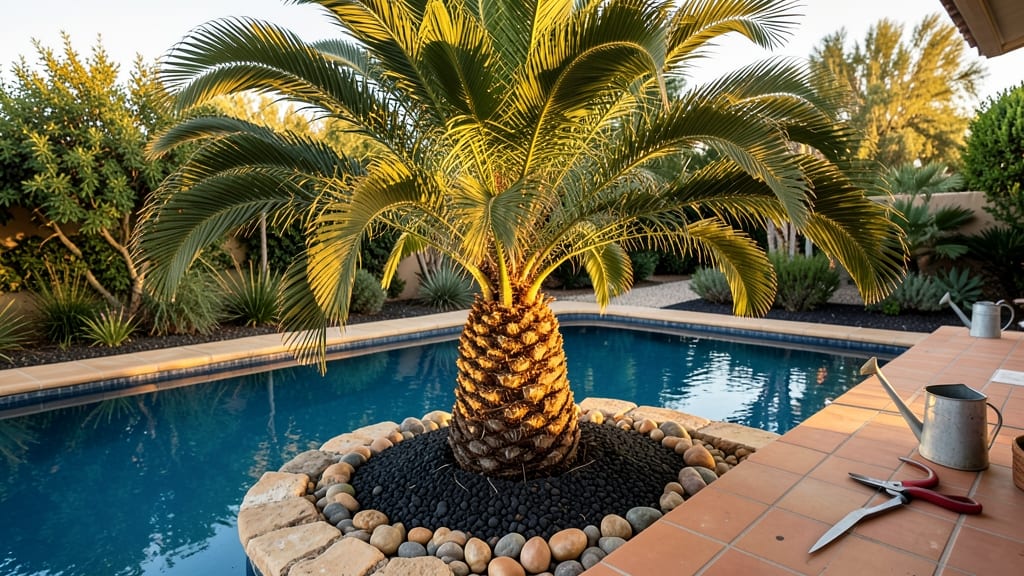
Pool palm trees aren’t just plants—they’re the centerpiece that turns your backyard into a sun-drenched escape. 🌴 I’ve designed poolside gardens where these tropical stars frame the water, shade the patio, and create that vibrant resort feel without the travel.
The key starts with choosing the right varieties for your climate, because not all palms play well in every zone.
My go-to species for pool areas are the Mexican fan palm (drought-tolerant and compact) or windmill palm (tough as nails and perfect for coastal spots). Spacing matters too—aim for 10-15 feet apart so they don’t crowd the pool deck while still making a statement.
Pair them with low-maintenance ground covers like mondograss or creeping thyme to tie everything together.
What you’ll end up with is a space that feels like a luxury retreat—lush, breezy, and effortlessly stylish. The palms sway in the wind, their fronds catching sunlight like nature’s chandeliers, while the pool reflects their green and gold hues.
Plus, they grow fast enough to see real impact within a year.
Works in any backyard, from small urban patios to sprawling estates. Here’s how to pick, place, and care for them without the drama. Let’s get your poolside oasis started!
📚 In This Guide
- What you need
- Instructions
- Tips and common mistakes
- Wrapping up and next steps
What you need
- ● Palm Tree Seedlings: Choose pool-friendly varieties like Pygmy Date Palm (Phoenix roebelenii), Dwarf Palmetto (Sabal minor), or Mediterranean Fan Palm (Chamaerops humilis). Quantity: 1–3 trees (depending on space).
- ● Planting Hole: Dig a hole twice as wide and just as deep as the root ball. Pro tip: Loosen the soil at the bottom for better drainage!
- ● High-Quality Potting Soil or Native Soil Mix: 3–5 bags (2–3 cubic feet each) amended with compost (1 bag) for nutrient-rich growth.
- ● Slow-Release Fertilizer: 10-10-10 or palm-specific fertilizer (follow package rates for young trees).
- ● Mulch: 2–3 cubic feet of pine bark or wood chips (keep 6 inches away from the trunk to prevent rot).
- ● Watering Can or Hose with Nozzle: For deep watering (1–2 gallons per tree, 2–3 times per week for the first month).
- ○ Staking Supplies (Optional but Recommended for Young Trees): 3 bamboo stakes (2–3 feet tall).
- ● Soft plant ties or garden twine (to avoid trunk damage).
- ● Pruning Tools: Bypass pruners (for small fronds).
- ● Loppers or handsaw (for larger, dead fronds).
- ● Sterilizing solution (rubbing alcohol or bleach water) to prevent disease.
- ● Palm Tree Food: Liquid fertilizer (like Miracle-Gro for Palms) for a mid-season boost.
- ● Root Stimulator: Mycorrhizal fungi or rooting hormone to encourage strong growth.
- ● Drip Irrigation System: Automates watering and saves time (great for poolside convenience!).
- ● Decorative Stones or Ground Cover: Landscape fabric or gravel to suppress weeds and enhance aesthetics.
- ● Safety Gear: Gloves, long sleeves, and sunglasses (palm fronds can be spiky!).
- ● Sunlight Check: Ensure your palm gets 6+ hours of direct sun (most varieties thrive in full sun).
- ● Space & Clearance: Measure 10+ feet around the tree for mature growth (avoid overhead power lines!).
- ● Drainage Test: If planting in a pool-adjacent area, ensure the soil drains well (palms hate soggy roots!).
- ● Local Climate: Verify your palm’s hardiness zone compatibility (e.g., Pygmy Date Palms love zones 9–11).
- ● Permits (If Applicable): Check local regulations—some areas require approval for large trees near pools.
Step-by-Step guide to planting pool palms for maximum impact
Here’s how to turn your backyard into a lush tropical retreat with these statement-making plants.
🌱 Step 1: Choose the Right Palm Variety for Your Climate
Not all palms thrive near pools. For humid, coastal climates, go with Mexican fan palms or sabal palms—they handle salt spray and wind. In hot, dry areas, California fan palms or pindo palms are drought-tolerant and low-maintenance. Check your USDA hardiness zone before buying—most pool palms need zones 9-11 for winter survival.
I always dig into the palm’s mature height and spread—some varieties like coconut palms can grow 60+ feet tall and need 30+ feet of space. Measure your yard before purchasing. Smaller options like pygmy date palms work well for tight spaces but won’t give that grand tropical vibe.
🪴 Step 2: Pick the Perfect Planting Spot Near the Pool
Palms need full sun—at least 6-8 hours daily—to avoid leggy growth and weak fronds. Face them toward the south or west to maximize light exposure. Keep them at least 10 feet away from the pool edge to prevent root interference with plumbing or decking. If your pool area gets strong afternoon sun, opt for shade-tolerant varieties like windmill palms instead.
Check the soil drainage before planting. Palms hate soggy roots—if your yard stays wet after rain, amend the soil with 1-2 inches of coarse sand or plant in a raised bed. I’ve seen palms drown in poorly drained soil, even in hot climates. A simple percolation test (dig a hole, fill with water, see how fast it drains) tells you everything you need to know.
☀️ Step 3: Plant with Proper Spacing and Support
Dig a hole twice as wide as the palm’s root ball but no deeper—planting too deep suffocates roots. Loosen the roots gently if they’re circling (a common issue with nursery plants). Place the palm in the hole, backfill with native soil, and water deeply to settle it in. For young palms, add a stake for support—tie the trunk loosely with soft plant ties to prevent wind damage.
Space palms 15-25 feet apart depending on the variety. Crowding leads to competition for nutrients and water, which weakens growth. If you’re planting near a pool’s edge, leave extra space for future frond spread—some palms double in size every 5-7 years. Mulch with 2-3 inches of organic mulch (like pine bark) to retain moisture and regulate soil temperature.
💧 Step 4: Water and Fertilize for Lush Growth
Newly planted palms need deep watering 2-3 times per week for the first month, then taper to once a week once established. Overwatering is worse than underwatering—yellowing fronds are a red flag. Let the soil dry out 2-3 inches deep between waterings. In hot climates, water early in the morning to reduce evaporation.
Fertilize every 2-3 months with a palm-specific fertilizer (high in potassium and magnesium). I use a slow-release granular fertilizer in spring and fall to avoid burning roots. Avoid high-nitrogen fertilizers—they promote leafy growth at the expense of trunk strength. If your palm’s fronds turn yellow or brown, it’s usually a sign of over- or under-fertilizing or nutrient deficiency.
✂️ Step 5: Prune and Maintain for Long-Term Health
Remove dead or yellow fronds at the base with clean, sharp pruners—never leave stubs. Prune only when fronds are completely brown (green fronds still provide energy to the palm). For safety, wear gloves and eye protection—palm fronds have sharp spines. I schedule pruning in early spring before new growth begins.
Watch for pests like palm weevils or spider mites—they’re attracted to stressed palms. Treat infestations immediately with neem oil or insecticidal soap. If your palm’s trunk softens or oozes sap, it’s likely a weevil infestation, and the palm may need removal to prevent spreading. Regular mulching and deep watering keep palms strong and resistant to pests.
Tips & tricks for perfect pool palm trees
Here's what I've learned from years of transforming backyards into tropical escapes—these tricks will help your palms thrive and make your pool area the envy of the neighborhood.
Climate Matching: When selecting palms in Step 1, pay attention to leaf shape—fan palms like Mexican or California varieties handle wind better near pools, while feather palms like pindo palms need more shelter. I've seen windmill palms survive in coastal areas where other varieties would struggle, thanks to their natural wind resistance. The key is matching leaf structure to your local weather patterns.
Sunlight Strategy: For the critical 6-8 hours of sunlight in Step 2, position your palms to catch morning sun and afternoon shade if needed. I always check my pool area's sun exposure by observing shadows at noon—this helps determine if you need shade-tolerant varieties. Remember, palms facing west get the most intense afternoon sun, which can scorch leaves if they're not acclimated.
Planting Depth Secret: In Step 3, that "no deeper" rule about planting holes is crucial—roots need oxygen to breathe. I've seen palms planted too deep develop root rot within months. If you're unsure, use a reference point: the top of the root ball should sit just above ground level. For extra insurance, mix some perlite into the backfill soil to improve drainage right at the planting site.
Watering Wisdom: The 2-3 times per week watering schedule in Step 4 works best when you water deeply—aim for about 1-2 gallons per watering session for mature palms. I use a soaker hose for new plants to ensure water reaches the root zone without wetting the fronds. The early morning watering tip is especially important in hot climates where evaporation rates can be extreme.
Pro Tips for Pool Palm Trees
- Here's what I've learned from years of transforming backyards into tropical escapes—these tricks will help your palms thrive and make your pool area the envy of the neighborhood.
- Climate Matching: When selecting palms in Step 1, pay attention to leaf shape—fan palms like Mexican or California varieties handle wind better near pools, while feather palms like pindo palms need more shelter.
- Sunlight Strategy: For the critical 6-8 hours of sunlight in Step 2, position your palms to catch morning sun and afternoon shade if needed.
Frequently asked questions
Got questions about adding pool palm trees to your space? You’re not alone! Here are some of the most common queries—plus quick, practical answers to help you dive in with confidence.
What are the best palm tree varieties for small pools or tight spaces?
If space is limited, opt for dwarf or slow-growing varieties like the Pygmy Date Palm or Dwarf Palmetto. These stay compact (under 10 feet tall) while still delivering that tropical vibe. For larger pools, Canary Island Date Palms or Mexican Fan Palms offer drama without overwhelming your yard.
How long does it take for a palm tree to mature near a pool?
Most palm trees grow 1–3 feet per year, so a 10-foot specimen could take 3–5 years to reach maturity. Patience pays off—young palms need time to establish roots and withstand poolside conditions (like reflected heat or occasional splashes). Consider container-grown trees for faster results!
Do palm trees near pools need special watering?
Yes! Poolside palms may dry out faster due to evaporation and reflected heat. Water deeply 2–3 times per week (more in extreme heat) and mulch around the base to retain moisture. Avoid overhead sprinklers—they can encourage fungal issues. Pro tip: Drip irrigation is ideal for consistent hydration.
Will palm trees damage pool surfaces or filters?
Most palms are non-invasive, but shed leaves, fruit, or roots can clog filters or scratch surfaces. To prevent drama:
- Choose cleaner varieties like Windmill Palms (low debris).
- Install a leaf net over skimmers.
- Trim regularly to minimize mess.
Bonus: Some homeowners use root barriers if planting near pool edges.
Can palm trees survive in cold climates near pools?
Most tropical palms won’t survive freezing temps, but hardy varieties like Needle Palms or Mediterranean Fan Palms tolerate down to 15°F. For colder zones:
- Plant in containers for winter moves.
- Use burlap wraps or frost cloths.
- Consider indoor palms (like Areca) as alternatives.
Pro tip: Poolside heat can actually extend a palm’s growing season—just monitor for stress signs!
Wrapping up and next steps
Transforming your space with pool palm trees isn’t just about aesthetics—it’s about creating a vibrant, tropical escape that feels like a dream.
Whether you’re drawn to the classic Palm Beach or the bold Mexican Fan Palm, these trees bring drama, shade, and a touch of paradise to any backyard. 🌴✨
Ready to dive in? Start by sketching your vision—measure your space, research the best varieties for your climate, and gather your tools. Then, roll up your sleeves and plant with confidence! Your future self (and your guests) will thank you for the lush, inviting oasis you’re building today.