Container Gardens
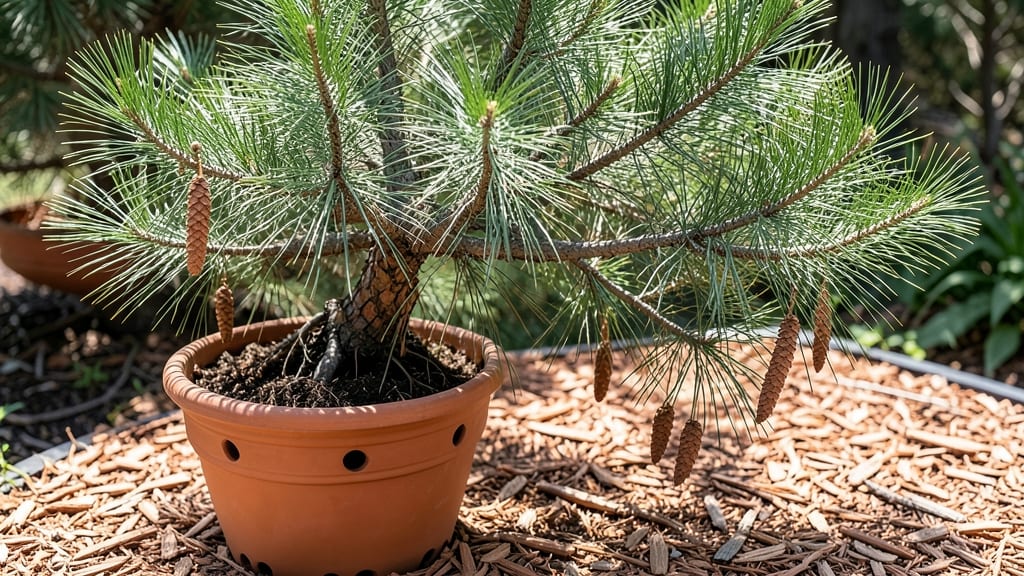
Growing potted pine trees turns even the tiniest balcony into a year-round forest. 🌲 I’ve kept dwarf pines thriving in 15-gallon pots for over five years—through blizzards, droughts, and city heat—by choosing the right species and giving them what they truly need.
The secret isn’t complicated: it’s about replicating their natural habitat in a container, with one critical tweak that most gardeners miss.
Start with frost-resistant varieties like mugo or Scotch pine—they handle temperature swings better than most evergreens. Your pot needs at least three drainage holes (no excuses) and a well-aerated soil mix that mimics rocky forest soil.
Overwatering kills more potted pines than winter cold, so let the top inch dry out between waterings. A slow-release fertilizer in early spring jumpstarts growth without burning roots, and that’s where most beginners go wrong.
By summer, you’ll have a tree that stays green when neighbor’s plants crisp in the heat. Needle drop slows dramatically, and with proper pruning (just snip dead branches in late winter), your pine will keep its shape for decades.
The best part? These trees outlive most annuals—some even outgrow their pots, which is actually a good sign if you’ve been doing it right.
Works for patios, rooftops, or even indoor winter displays (with extra light). The key is adjusting care as seasons shift—more water in summer, less in winter, and always keeping those roots from circling. Let’s get yours growing strong from day one.
📚 In This Guide
- What you need
- Instructions
- Tips and common mistakes
- Wrapping up and next steps
What you need
- ● Potted pine tree seedlings: Choose dwarf pine varieties like Pinus mugo or Pinus sylvestris (1–3 plants, depending on pot size). Look for healthy, well-rooted 1–3 gallon containers.
- ● Containers: Minimum size: 12–15 inches deep and wide (for small pines) or 18+ inches for larger varieties.
- ● Material: Terracotta (breathable) or plastic (retains moisture). Ensure drainage holes are present!
- ● High-quality potting mix: 1–2 bags of well-draining, acidic soil (pH 4.5–6.0). Mix in 50% peat moss or pine bark + 30% perlite/sand + 20% compost.
- ● Drainage layer: Small gravel, pumice, or broken pottery shards (1–2 inches at the container’s base).
- ● Fertilizer: Slow-release acid-loving plant fertilizer (e.g., Osmocote or Miracle-Gro Azalea/Camellia) or liquid fish emulsion (diluted to half-strength).
- ● Watering can: With a rose attachment for gentle, deep watering.
- ● Pruning shears: Sharp, sterilized shears (for shaping or removing dead branches).
- ● Mulch: Pine bark mulch or pine needles (1–2 inches thick) to retain moisture and acidity.
- ● Container saucers: To catch runoff and protect surfaces (especially for terracotta pots).
- ● Moisture meter: To monitor soil dryness (pines prefer slightly moist, not soggy, soil).
- ● Windbreaks: Bamboo stakes or mesh screens if your space is exposed to harsh winds.
- ● Decorative accents: Stones, moss, or mini figurines to enhance your container’s aesthetic!
- ● Winter protection: Burlap wraps or frost cloths for young pines in Zone 5 or colder.
Step-by-step instructions for growing potted pine trees
Here's how to nurture these hardy evergreens into thriving small-space centerpieces.
🪴 Step 1: Choose the Right Containers and Drainage
Select containers with drainage holes—pines hate soggy roots. I recommend 12-18 inch deep pots for 4-6 foot mature height trees. Terra cotta works best because it breathes and prevents root rot. If using plastic, add 3-4 extra drainage holes along the sides to compensate.
Line the bottom with 2-3 inches of gravel or pumice—this creates an air pocket that prevents waterlogging. The gravel layer should sit above the drainage holes, not block them. This is the single most important step for keeping potted pines healthy long-term.
🌱 Step 2: Prepare the Frost-Resistant Soil Mix
Use a blend of 50% peat moss or coconut coir, 30% pine bark fines, and 20% perlite or coarse sand. This mix stays loose enough for roots to breathe while retaining enough moisture. Avoid garden soil—it compacts and suffocates roots.
I always add 1 cup of slow-release fertilizer per 1 cubic foot of mix to give young pines a nutrient boost. Mix everything thoroughly until you see no distinct layers. The texture should feel like damp crumbly cake—not sticky or dry.
☀️ Step 3: Plant and Position for Year-Round Sun
Remove the pine from its nursery pot and gently loosen the root ball if it's tightly bound. Place it in the center of your container and fill around the roots with your prepared mix, pressing lightly to eliminate air pockets. Leave 1 inch of space between the soil surface and pot rim for watering.
Pines need full sun (6+ hours daily) to stay vibrant and frost-resistant. In winter, move containers to sheltered south-facing spots where they receive reflected light. If your space gets heavy winter shade, supplement with a grow light for 4-6 hours daily to prevent needle drop.
💧 Step 4: Water Deeply and Establish a Routine
Water thoroughly until it drains from the bottom, then wait until the top 2 inches of soil feel dry before watering again. Overwatering is the #1 killer of potted pines—yellow needles often signal root rot. I use a moisture meter to check; aim for 40-60% moisture in the root zone.
During the first growing season, I fertilize monthly with half-strength balanced liquid fertilizer (10-10-10). After the first year, switch to slow-release granules in early spring. Never fertilize in winter—pines go dormant and don't need extra nutrients when growth slows.
✂️ Step 5: Prune and Protect Through Seasons
Shape your pine in late winter by removing dead or crossing branches with clean, sharp pruners. Never cut more than 1/3 of the branch length at once—this stresses the tree. I also lightly trim new growth in summer to encourage bushier form, but only if the tree looks leggy.
For frost protection, wrap young pines in burlap during hard freezes (below 20°F). Mature pines handle frost better but still appreciate mulch around the base to insulate roots. In summer, watch for spider mites—spray with neem oil if you see webbing between needles.
Tips & tricks for perfect potted pine trees
Here's what I've learned from years of growing potted pines that thrive year after year.
Container Depth Matters: The 12-18 inch depth recommendation isn't arbitrary—it gives roots room to establish while preventing waterlogging. For smaller trees (under 4 feet), you can use 10-12 inch pots, but avoid shallow containers that dry out too quickly. I've seen pines struggle in decorative pots without proper depth, so always check the drainage holes align with the gravel layer you'll add.
Soil Mix Secrets: That 50-30-20 ratio of peat moss/coconut coir, pine bark fines, and perlite/sand creates the perfect balance. The pine bark fines are crucial—they hold moisture while allowing airflow. Pro tip: Sterilize your mix by baking it in the oven at 200°F for 30 minutes before planting to kill any pathogens that could harm your pine.
Sunlight Strategy: The 6+ hours of daily sun requirement is non-negotiable for vibrant growth. If your space gets less than that, supplement with a grow light—even LED bulbs designed for plants work well. I place mine 12-18 inches above the tree for 4-6 hours daily in winter, and I've seen amazing results with just this extra light.
Watering Wisdom: That 40-60% moisture range in the root zone is perfect—it keeps roots hydrated without drowning them. I use a moisture meter to check because visual cues can be deceiving. Remember, pines are drought-tolerant once established, so it's better to underwater slightly than overwater. The top 2 inches dry test works well, but combine it with the moisture meter for accuracy.
Pro Tips for Potted Pine Trees
- Here's what I've learned from years of growing potted pines that thrive year after year.
- Container Depth Matters: The 12-18 inch depth recommendation isn't arbitrary—it gives roots room to establish while preventing waterlogging.
- Soil Mix Secrets: That 50-30-20 ratio of peat moss/coconut coir, pine bark fines, and perlite/sand creates the perfect balance.
Frequently asked questions
Got questions about keeping your potted pine trees thriving? You’re not alone! Here are answers to the most common concerns—from care tips to troubleshooting—so you can enjoy your frost-resistant evergreens with confidence.
How cold can potted pine trees tolerate before needing protection?
Most potted pine varieties, like Pinus mugo or Pinus sylvestris, handle temperatures down to 10–15°F (-12 to -9°C) without issues. However, younger trees or shallow-rooted varieties may need burlap wraps or frost cloth when temps drop below 20°F (-6°C). Grouping pots together also helps insulate roots.
Can I keep a potted pine tree outdoors year-round, or should I move it indoors?
Potted pines thrive outdoors year-round in mild climates (Zones 4–7), but they need winter prep: move to a sheltered spot, mulch the soil, and water sparingly. For harsh winters (Zone 3 or below), overwinter indoors near a bright window—just avoid heat vents, which dry out soil.
How often should I water a potted pine tree?
Water when the top 1–2 inches of soil feel dry (check with your finger!). Pines hate soggy roots, so ensure pots have drainage holes. In summer, water every 5–7 days; in winter, reduce to every 2–3 weeks. Mulch helps retain moisture and regulate temperature.
What’s the best soil mix for potted pine trees?
Use a well-draining mix like:
- 60% peat-free potting soil or cactus/succulent mix
- 30% perlite or pumice (for aeration)
- 10% sand or orchid bark (to prevent compaction)
Why are the needles on my potted pine turning brown?
Brown needles usually signal overwatering, underwatering, or stress. Check these fixes:
Too wet? Let soil dry out and improve drainage.
Too dry? Water deeply and mulch to retain moisture.
Sunburn? Move to partial shade if in hot afternoon sun.
Pests? Inspect for spider mites or aphids; treat with neem oil if needed.
Older needles naturally brown and drop—focus on new growth.Are there dwarf pine varieties that stay small in pots?
Try these space-saving options:
Variety
Mature Height
Notes
Pinus mugo ‘Mops’
2–3 ft
Round, mounded shape; great for borders.
Pinus sylvestris ‘Blue Rug’
1–2 ft
Low-growing, silvery-blue needles; drought-tolerant.
Pinus thunbergii ‘Thunderhead’
4–6 ft
Upright but slow-growing; cold-hardy to Zone 4.
Wrapping up and next steps
Potted pine trees bring timeless beauty and resilience to small spaces, proving that evergreens don’t need a sprawling yard to thrive! 🌲 Whether you’re drawn to their frost-resistant charm or their ability to elevate curb appeal, these trees offer year-round greenery with minimal fuss.
With the right care—like proper soil, sunlight, and seasonal prep—your potted pine will flourish for years, turning even a tiny balcony or patio into a lush retreat.
Ready to transform your space? Start by choosing the perfect pine variety for your climate, then gather your supplies and follow the steps to plant with confidence. Your green oasis awaits—go ahead and get growing! 🌱