
Pruning
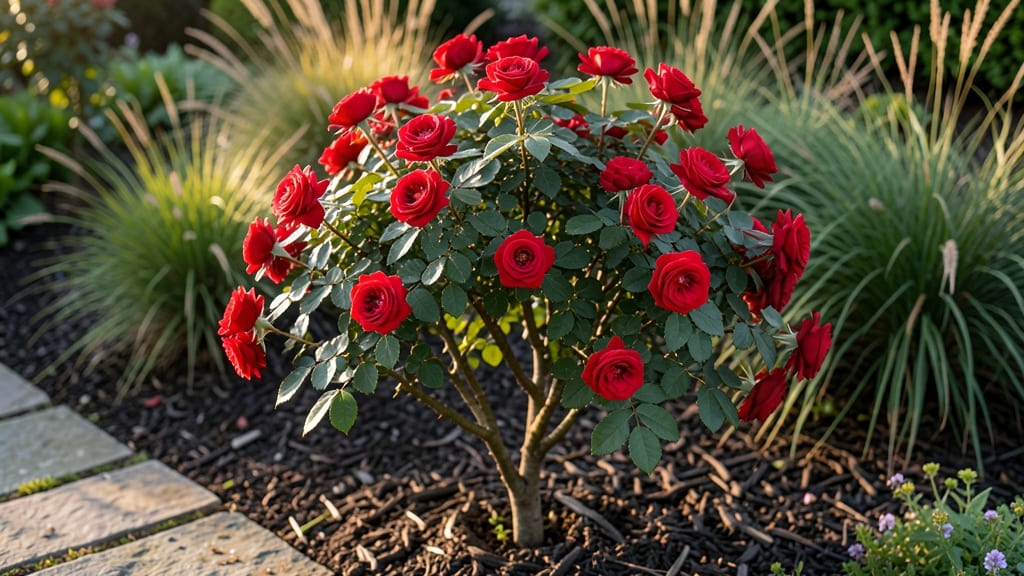
Your Pacific Northwest garden deserves a Red Drift rose tree that thrives through frost and keeps blooming all season—without the fuss. 🌿 I’ve grown this hardy beauty for five years, and the secret isn’t complicated: it’s about smart pruning that matches the region’s damp, cool climate.
Most gardeners over-prune in winter, but this rose actually needs less cutting back to survive our chilly spells.
The real magic happens in late winter when you shape it just right—removing dead wood and thinning crowded branches to let air circulate. My plant now bursts with deep red blooms from spring through fall, even after our occasional late frosts.
The key is timing: prune after the worst cold snaps but before new growth starts, and you’ll avoid shocking the plant.
By summer, you’ll have a bushy, disease-resistant tree that attracts pollinators and turns heads at neighborhood parades. The flowers stay vibrant longer, and the glossy foliage hides any minor pruning mistakes. Plus, it’s one of the few roses that actually handles our wet winters without mildew or rot.
Works just as well in containers as in the ground, so whether you’ve got a sunny yard or a patio spot, this rose will reward you with bold color and minimal fuss. Let’s get those shears out—and keep those blooms coming!
📚 In This Guide
- What you need
- Instructions
- Tips and common mistakes
- Wrapping up and next steps
What you need
- ● Pruning shears: Bypass pruners (sharp, clean, and sterilized with rubbing alcohol or bleach solution—1 pair). Avoid dull tools to prevent tearing branches!
- ● Loppers: For thicker stems (½"–1½" diameter)—1 pair with a long handle for reach.
- ● Hand pruners: For precision cuts on small stems—1 pair (bonus if they’re ergonomic for comfort!).
- ● Disposable gloves: Heavy-duty, nitrile-coated (to protect from thorns and sap)—1–2 pairs.
- ● Rubbing alcohol (70%+) or bleach solution: For sterilizing tools between cuts—small bottle.
- ○ Pruning sealant (optional but helpful): Tree wound pruning paste (e.g., Tanglefoot) to protect large cuts—small tub.
- ● Trash bag or bucket: For collecting pruned debris—1 large bag or 5-gallon bucket.
- ● Ladder (if needed): Sturdy, extension ladder (6–10 ft) for high branches—1 (safety first!).
- ● Timing: Prune Red Drift Roses in late winter/early spring (before new growth) or right after blooming (summer). Avoid pruning in frost or extreme cold!
- ● Weather: Choose a dry, overcast day to prevent stress on the tree.
- ● Safety gear: Sunglasses (UV protection) and long sleeves/pants to shield from thorns.
- ● Tool sharpening: Hone blades before pruning—dull tools crush stems, inviting disease. 🔪
- ● Disinfectant spray: For quick tool sterilization between cuts (e.g., 70% isopropyl alcohol spray).
- ● Marking twine: To flag branches for removal before cutting.
- ● Compost bin: For repurposing pruned material (if disease-free).
- ● Camera or sketchbook: To document the tree’s structure before pruning (great for reference!).
Step-by-step guide to pruning your Red Drift rose tree for Pacific Northwest resilience
Here's how I keep my frost-hardy red roses blooming all year—no dead branches or winter damage.
✂️ Step 1: Time Your First Prune for Late Winter Dormancy
Wait until mid-February when the ground stays frozen at night—this is your cue. The Red Drift rose blooms on old wood, so don't cut back too early. Look for brown, crisscrossing canes that died back last winter; these need removal first. I grab my bypass pruners and make my first cuts here, targeting any stems thinner than a pencil that show no green buds.
Here's the thing—don't rush this step. If you prune too soon, you'll encourage new growth that frost will kill. Wait until you see swollen rose buds along the canes; these signal the plant's ready to push new life. I always mark my calendar for February 15th as my absolute deadline—after that, the plant wakes up too early.
✂️ Step 2: Remove Dead and Crossing Wood First
Start by cutting out any blackened or hollow canes—these won't regrow. Use sterilized pruners (wipe blades with rubbing alcohol between cuts) to prevent disease spread. Make your cuts at a 45-degree angle, about ¼ inch above an outward-facing bud. This ensures water runs off and new growth heads outward, not inward.
Next, tackle crossing branches—these rub together and create wounds where pests love to hide. I look for canes growing directly opposite each other or rubbing against the trunk. Remove the weaker of the two, always cutting back to a healthy outward-facing bud. You'll know you're doing it right when the center of your rose tree opens up, letting light reach all the way to the ground.
✂️ Step 3: Shape for Airflow and Frost Resistance
Now it's time to open up the center of your rose tree. The Red Drift handles Pacific Northwest winters better when it's not too dense—thick centers trap cold air and moisture. I step back and visualize an open vase shape, cutting back any inward-growing branches to create this form. For each cut, I aim for 3-4 buds from the base of the plant on remaining branches.
Here's where it gets fun—watch how the plant naturally wants to grow. If you see shoots growing straight up from the center, these are prime candidates for removal. They'll never get enough sunlight and become weak, frost-susceptible stems. After shaping, your rose should have 3-5 main canes spaced evenly around the trunk, each with multiple buds along its length.
🌿 Step 4: Post-Prune Care for Spring Revival
After your cuts, apply a balanced rose fertilizer (10-10-10) around the base, not touching the trunk. Water deeply—about 1 gallon per foot of plant height—to help the roots recover from winter dormancy. The soil should be moist 6 inches down after watering. I always check this by sticking my finger in; if it comes out dry, I water again.
Now comes the waiting game. Within 2-3 weeks, you should see new green shoots emerging from the buds you left behind. This is your signal that the pruning worked! If you don't see any growth by mid-March, the plant might need more sunlight or fertilizer. Here's a pro tip: I cover my roses with frost cloth on cold nights until mid-April—this gives those new shoots a fighting chance against late frosts.
⏰ Step 5: Summer Maintenance for Continuous Blooms
Throughout the growing season, I do light maintenance pruning every 4-6 weeks to encourage more blooms. After each flush of flowers fades, I deadhead (cut back to the first 5-leaflet leaf below the bloom) to redirect the plant's energy. For the Red Drift, I never cut back more than ⅓ of the plant's height in any one season—this keeps it strong for winter.
Watch for suckers—those weak shoots growing from the base or along the trunk. These drain energy from your main canes. Remove them immediately with your fingers or pruners. By late summer, I'll do one final light prune to shape the plant and remove any weak, leggy growth that never got enough sun. This keeps your rose compact and ready for another winter.
Tips & tricks for frost-resistant rose pruning
Don't let pruning intimidate you—these simple tricks will help your Red Drift roses thrive year after year. Between us, I've learned these through trial and error (and a few sad winter casualties early on).
Pruner Prep: Sterilizing your bypass pruners between cuts is more important than you think. I keep rubbing alcohol in a small spray bottle by my gardening station. Wipe blades after each cut—especially when removing dead wood—to prevent spreading fungal diseases. A sharp, clean cut heals faster and looks better too. This step alone saved my roses from black spot last season.
Bud Direction Matters: When making your cuts at a 45-degree angle, always aim for an outward-facing bud. This might seem minor, but it makes a huge difference in how your rose grows. New shoots will emerge facing outward, creating that beautiful open vase shape we want. I mark the bud with a pencil before cutting to ensure I'm making the right angle—it's worth the extra second.
Winter Watch: The mid-February deadline isn't just arbitrary—it's when your Red Drift rose naturally resists frost damage. If you're in a particularly cold microclimate, push that deadline to early March. Watch for those swollen buds along the canes—they're nature's signal that it's time to prune. I've found that waiting until I see at least 3-4 buds swelling along each main cane gives me the best balance of winter protection and spring growth.
Post-Prune Protection: After shaping your rose, don't just walk away. The first 2-3 weeks are critical for root recovery. I've learned that mulching with 2-3 inches of organic matter (like shredded bark) around the base helps retain moisture and insulate roots. This simple step can mean the difference between a weak spring recovery and a vigorous one. Plus, it keeps weeds down—double win!
Pro Tips for Red Drift Rose Tree
- Don't let pruning intimidate you—these simple tricks will help your Red Drift roses thrive year after year.
- Pruner Prep: Sterilizing your bypass pruners between cuts is more important than you think.
- Bud Direction Matters: When making your cuts at a 45-degree angle, always aim for an outward-facing bud.
Frequently asked questions
Got questions about keeping your Red Drift Rose Tree thriving in the Pacific Northwest’s unique climate? Here are some of the most common ones—plus quick answers to help you prune like a pro!
How cold can a Red Drift Rose Tree handle?
The Rosa driftwoodii (Red Drift Rose) is one of the most frost-resistant roses, surviving temperatures as low as -20°F (-29°C) once established. Young plants may need winter protection, like mulch or burlap wraps, but mature trees often bounce back with minimal damage. Pro tip: Avoid pruning in late fall—wait until early spring to encourage new growth.
When’s the best time to prune for Pacific Northwest winters?
For PNW gardens, late winter to early spring (February–March) is ideal—after the worst frost but before buds swell. This timing ensures you remove dead wood while preserving next season’s blooms. If you notice frost damage in spring, prune after new growth appears to assess the tree’s health.
Can I prune too much? What if my Red Drift looks bare?
Over-pruning can stress the tree, but don’t panic if it looks skeletal after a hard cut. The Red Drift Rose is highly resilient—focus on removing 1/3 of the oldest canes and any crossing branches. It’ll reward you with dense, repeat blooms by summer! For extra insurance, feed with a balanced fertilizer post-prune.
Are there alternatives if my Red Drift Rose struggles with PNW humidity?
If your tree battles mildew or pests, consider these low-maintenance PNW rose alternatives:
- Knock Out® Roses (disease-resistant, repeat bloomers)
- David Austin ‘Gertrude Jekyll’ (fragrant, cold-hardy climber)
- Rugosa Roses (thornless, salt-tolerant, and zone 3 hardy)
My Red Drift Rose isn’t blooming—what’s wrong?
Lack of blooms usually stems from over-pruning, poor nutrition, or shade. Check these fixes:
- Light: Ensure 6+ hours of sun daily.
- Fertilizer: Use a rose-specific feed in early spring.
- Pruning: Avoid cutting back flowering canes—save heavy pruning for dormant seasons.
Wrapping up and next steps
The Red Drift Rose Tree is a stunning, low-maintenance gem for Pacific Northwest gardens, offering year-round blooms and frost-resistant beauty with the right pruning care. By mastering the techniques shared here—timing, tools, and step-by-step guidance—you’ll keep your tree thriving, vibrant, and full of life, even in chilly winters. 🌸
Ready to transform your garden? Grab your pruners, mark your calendar, and start pruning—your future blooms will thank you! For extra confidence, join a local gardening group or revisit our FAQs for quick reminders.