Pruning
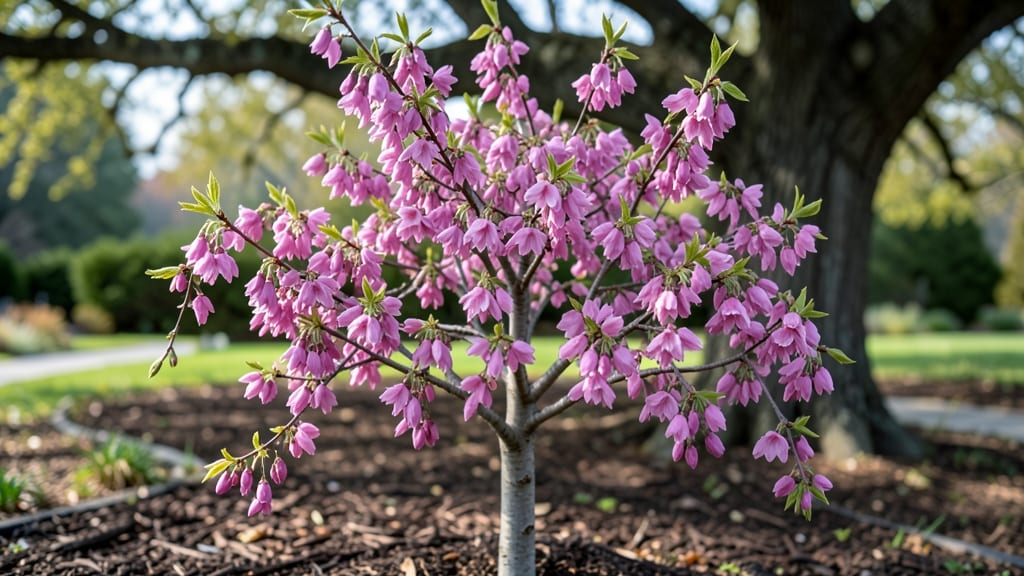
Your Pacific Northwest redbud tree care starts with understanding its delicate balance between vibrant blooms and rugged resilience. I’ve watched mine transform from a bare-branched winter skeleton to a canopy of pink blossoms by late March—proof that the right pruning keeps it thriving in our damp, mild climate.
The key isn’t just timing but recognizing when to encourage air flow or coax more flowers.
You’ll need sharp pruning shears, a ladder (for mature trees), and a clear day to assess branches. Redbuds bloom on old wood, so avoid heavy cuts in late winter—just remove dead wood and shape lightly after flowering.
Pacific Northwest’s rainy springs mean fungal risks, so sterilize tools between cuts. Most pruning happens in late winter or early spring, but light shaping after blooms helps maintain that iconic, rounded silhouette.
What you’ll end up with is a tree that bursts into color every spring, with fewer disease issues and stronger structure. The blooms arrive earlier than most trees, giving you weeks of pink beauty before summer foliage takes over.
Even in our wet climate, redbuds stay healthy when pruned correctly—no more leggy branches or sparse flowers.
This method works for both young trees and established ones, though younger redbuds need less aggressive pruning. If you’re in zones 5-8, the same principles apply—just adjust timing slightly for frost dates. Let’s get those branches looking their best for next spring’s show.
📚 In This Guide
- What you need
- Instructions
- Tips and common mistakes
- Wrapping up and next steps
What you need
- ● Pruning shears: Bypass pruners (sharp, 6–8" blades) for small branches (1/4"–3/4" diameter). Quantity: 1 pair.
- ● Loppers: For medium branches (3/4"–2" diameter). Quantity: 1 pair (with a 6–8" cutting head).
- ● Pruning saw: Curved-tooth saw for thick branches (2"–4" diameter). Quantity: 1 (foldable for portability).
- ● Gloves: Heavy-duty leather or nitrile-coated gloves (cut-resistant, size medium/large). Quantity: 1 pair.
- ● Disinfectant: 70% isopropyl alcohol or bleach solution (1 part bleach to 9 parts water) to sterilize tools between cuts. Quantity: Small spray bottle or wipe.
- ● Rubbing alcohol or hand sanitizer: For cleaning tools mid-pruning. Quantity: Travel-sized bottle.
- ● Trash bags: Heavy-duty bags (13-gallon) for debris. Quantity: 2–3 bags.
- ● Safety gear: Safety glasses (ANSI-rated) and ear protection (if using a chainsaw for large branches). Quantity: 1 set each.
- ● Extension pole: 6–10 ft telescoping pole for high branches (attach pruners/loppers). Quantity: 1.
- ● Chainsaw: Only for very thick branches (>4" diameter). Quantity: 1 (with safety features).
- ○ Tree wound dressing: Pruning sealant (optional; research shows mixed benefits for redbuds). Quantity: Small jar.
- ● Notebook & pen: To sketch pruning plans or track growth. Quantity: 1.
- ● Knee pads: For comfort during ground-level pruning. Quantity: 1 pair.
- ● Knowledge of redbud tree anatomy (e.g., distinguishing between water sprouts, dead wood, and live branches).
- ● Check local pruning regulations (e.g., PNW urban areas may require permits for large trees).
- ● Confirm the tree’s age and health—young redbuds (<10 years) need lighter pruning than mature ones.
- ● Schedule pruning for late winter/early spring (before bud break) or summer (after flowering).
Step-by-Step guide for pruning redbud trees in the Pacific Northwest
Here's how I keep my redbuds thriving year-round with minimal fuss.
✂️ Step 1: Prune in Late Winter Before Bud Break
Time your first cut between late January and early March, just as the ground thaws but before those signature pink buds swell. This timing prevents bleeding sap and gives the tree energy to focus on spring growth. Grab your bypass pruners and start by removing any dead, diseased, or crossing branches—these are the easiest to spot against the winter-bare tree.
Look for branches that rub against each other or grow inward; these will compete for sunlight and weaken the tree's structure. Cut back to the branch collar (that swollen area where the branch meets the trunk) to prevent unsightly stubs. I like to make clean cuts at a 45-degree angle just outside the branch collar—this helps water run off and reduces disease risk. If a branch is larger than ½ inch thick, use your loppers for a smoother cut.
☀️ Step 2: Thin the Canopy in Early Summer
After the spring flush of leaves, wait until mid-June to early July to thin the canopy. This is when the tree has had time to recover from winter pruning and won’t be stressed by additional cuts. Focus on removing branches that block light from reaching the center of the tree—redbuds need good airflow to prevent fungal issues like powdery mildew, which thrives in the Pacific Northwest’s damp summers.
Target branches that grow straight up or downward; these create a "bottlebrush" shape that’s unstable in windy coastal areas. Aim to remove no more than 25% of the foliage in one session—this keeps the tree healthy without shocking it. If you’re unsure whether a branch is dead, scratch the bark with your fingernail. Green underneath? It’s alive. Brown and dry? Prune it out.
⏰ Step 3: Light Maintenance in Fall and Winter
Fall is for cleanup, not major pruning. After the leaves drop in October or November, remove any suckers (those vigorous shoots sprouting from the base or roots) and water sprouts. Use your hand pruners to snap them off at ground level—this prevents them from draining energy from the main tree. Avoid heavy pruning now; the tree is already preparing for dormancy, and late cuts can stimulate new growth that won’t harden off before winter.
In winter (December–February), do a quick visual check for storm damage or deadwood. Redbuds are tough, but Pacific Northwest winds can snap branches during winter storms. If you find broken limbs, prune them back to the branch collar immediately—this prevents pests from moving into the wound. Keep your tools clean and sharp to make clean cuts that heal faster. A little maintenance now means fewer surprises when spring blooms arrive.
Tips & tricks for pruning redbud trees in the Pacific Northwest
Here's what I've learned after years of keeping my redbuds healthy and blooming beautifully.
Timing is Everything: The late January to early March window is critical for Step 1 because that's when redbuds are still dormant but about to burst into growth. If you prune too early, you risk frost damage to fresh cuts, and if you wait too late, you'll stimulate new growth that won't harden off before winter. I've seen trees stressed by late pruning—don't make that mistake! The goal is to give your tree a head start on spring without disturbing its natural rhythm.
The Branch Collar Technique: When you're cutting back in Step 1, pay close attention to that swollen area where branches meet the trunk—the branch collar. This isn't just some random bump; it's the tree's natural healing zone. Cutting too close to the collar (or worse, leaving a stub) creates perfect entry points for diseases. I've seen too many trees develop cankers from improper cuts. Make that clean 45-degree cut just outside the collar, and your tree will thank you with faster healing and fewer infections.
Summer Canopy Secrets: During the mid-June to early July thinning in Step 2, focus on creating an open center rather than just removing random branches. Redbuds naturally grow in a vase shape, but we want to encourage that airflow so those signature pink blooms stay dry and healthy. I like to visualize sunlight streaming through the center—if you can see light reaching the trunk, you're doing it right. This open structure also lets you admire those stunning spring flowers without fighting branches in your way.
Tool Maintenance Matters: Your pruners and loppers are your most important tools, especially when dealing with branches larger than ½ inch thick. After each use, clean them with rubbing alcohol and store them in a dry place. I've ruined perfectly good tools by leaving them out in damp Pacific Northwest air—rust happens fast! Sharp tools make clean cuts that heal better, so take 5 minutes after each pruning session to wipe them down and oil the blades. Your future self (and your tree) will appreciate it.
Pro Tips for Redbud Tree Care
- Here's what I've learned after years of keeping my redbuds healthy and blooming beautifully.
- Timing is Everything: The late January to early March window is critical for Step 1 because that's when redbuds are still dormant but about to burst into growth.
- The Branch Collar Technique: When you're cutting back in Step 1, pay close attention to that swollen area where branches meet the trunk—the branch collar.
Frequently asked questions
When is the best time to prune a redbud tree in the PNW?
The ideal window is late winter to early spring (February–March), just before new growth starts. This timing promotes healthy blooms and minimizes stress. Avoid pruning in fall or during wet seasons to prevent disease. Pro tip: If you must prune in summer, do it after flowering to avoid cutting off next year’s blossoms!
How do I protect my redbud tree from PNW’s harsh winters?
Redbuds are generally cold-hardy, but young trees or those in microclimates with heavy frost may need extra care. Mulch the root zone with 3–4 inches of organic mulch (like wood chips) in late fall to insulate roots. Water deeply before the ground freezes, and avoid pruning in winter to prevent frost damage. Bonus: Eastern redbuds (like ‘Forest Pansy’) tolerate temps down to -25°F!
Why are my redbud leaves turning yellow or spotted?
Yellowing leaves often signal nutrient deficiencies (like iron or nitrogen) or fungal issues (e.g., powdery mildew). Check for:
- Overwatering (yellow leaves + soggy soil = root rot risk).
- Pests like aphids or Japanese beetles (look for chewed edges or sticky residue).
- Environmental stress (e.g., poor drainage or compacted soil).
Solution: Test soil pH (redbuds prefer 6.0–7.0), fertilize lightly in early spring, and treat pests with neem oil or insecticidal soap.
Can I prune a redbud tree too much? What’s the rule of thumb?
Yes! Redbuds are light pruners—never remove more than 25% of the canopy at once. Focus on:
- Dead, diseased, or crossing branches (“thinning cuts” to improve airflow).
- Suckers or watersprouts (remove at the base to redirect energy).
- Avoid “lion tailing” (cutting back to stubs)—always prune to a bud or branch collar.
Remember: Redbuds bloom on last year’s growth, so prune after flowers fade to preserve next year’s blossoms!
Are there redbud tree alternatives for shadier PNW yards?
If your yard gets less than 4–6 hours of sun daily, consider these shade-tolerant alternatives:
Tree
Sun Needs
Bonus Features
Serviceberry (Amelanchier)
Part shade
Edible berries, stunning fall color
Dogwood (Cornus)
Part shade
Showy spring blooms, low-maintenance
Oregon Grape Holly (Mahonia)
Shade to part sun
Evergreen, drought-tolerant, wildlife-friendly
Note: Some redbud cultivars (like Cercis canadensis ‘Lavender Twist’) tolerate more shade than others—check labels before buying!
Wrapping up and next steps
Caring for your redbud tree in the Pacific Northwest is all about balance—pruning at the right times, protecting it from pests, and giving it the love it deserves.
With the right tools, techniques, and a little patience, your tree will thrive for years, gracing your landscape with vibrant blooms and lush foliage. 🌸
Ready to take the next step? Schedule a pruning session this spring or fall, and watch your redbud flourish! For extra support, consult a local arborist or join a gardening community to share tips and success stories.