
Pruning
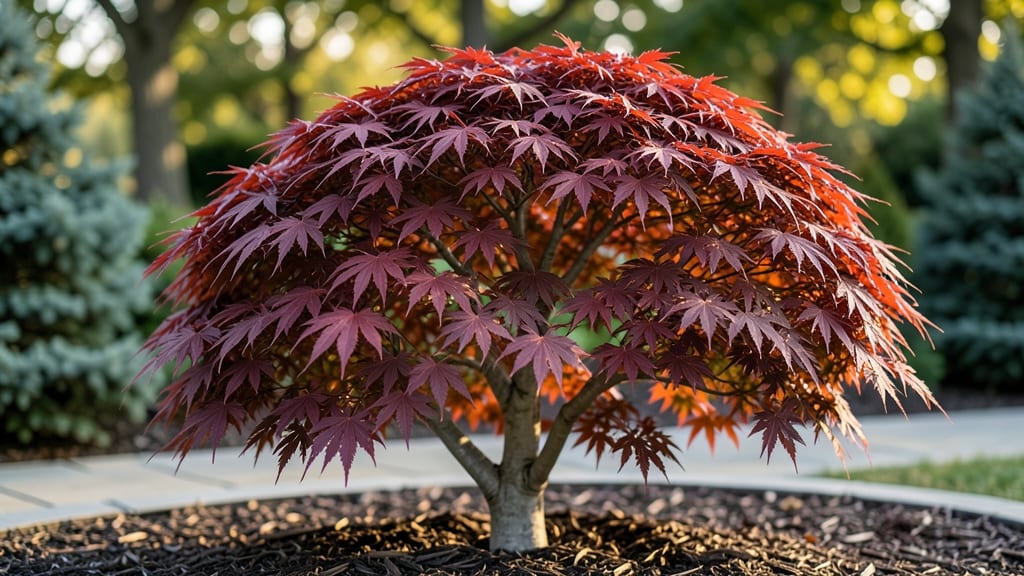
Your scarlet maple tree's vibrant red leaves won't just stop at stunning color—proper pruning unlocks its full potential year after year.
I learned the hard way that timing matters more than technique when shaping these delicate canopies, and now my 'Bloodgood' maple thrives with three strategic cuts that keep it healthy and showstopping.
The secret isn't aggressive trimming—it's understanding when to step in. Late winter's the prime time to shape the tree's framework, while summer pruning controls growth and fall cuts prepare for winter's chill.
You'll need sharp pruners, a ladder for higher branches, and maybe a friend to spot you (trust me, this isn't a solo job for big trees).
What you'll end up with is a tree that stays compact yet full, with leaves that deepen in color each season. The branches develop strength without becoming woody, and you'll avoid that sad, bare look many maples get from improper pruning.
Even better? Your tree will resist disease better and produce those signature red leaves earlier in the year.
This works for all scarlet maples, whether you've got a mature specimen or just planted a young 'Bloodgood'. The same principles apply—just adjust the scale. Here's how to make those three cuts work magic for your tree's health and beauty.
📚 In This Guide
- What you need
- Instructions
- Tips and common mistakes
- Wrapping up and next steps
What you need
- ● Pruning shears: Bypass pruners (for cuts up to ½ inch in diameter) – 1 pair (look for sharp, stainless-steel blades).
- ● Loppers: For branches ½ to 2 inches thick – 1 pair (with a long handle for reach).
- ● Pruning saw: For larger branches (2+ inches) – 1 saw (bow or folding saw with a fine-tooth blade).
- ● Gloves: Heavy-duty, cut-resistant gloves – 1 pair (to protect from thorns and sap).
- ● Ladder or step stool: Sturdy and tall enough to reach the tree’s canopy – 1 unit (ensure it’s stable on uneven ground).
- ● Disinfectant (70% isopropyl alcohol or bleach solution): To clean tools between cuts – small bottle or spray (prevents disease spread).
- ● Heavy-duty trash bags: For collecting debris – 2-3 bags (or a tarp if working on a large scale).
- ● Rag or paper towels: For wiping sap off tools – 5-10 sheets.
- ● Pole pruner: Extends reach for high branches without a ladder – 1 unit (great for mature trees).
- ● Tree wound dressing: Pruning sealant (controversial but useful for large cuts) – small tub.
- ● Safety glasses: Protects eyes from debris – 1 pair.
- ● Work boots: With ankle support for stability on uneven terrain.
- ● Notebook & pen: To sketch a pruning plan or note branch locations.
How to prune a scarlet maple tree for year-round health
Here's the seasonal approach I've used for decades to keep these stunning trees vibrant.
✂️ Step 1: Late Winter Cleanup (Dormant Season)
This is the most critical time to prune your scarlet maple. When the tree is fully dormant—typically between mid-February and early March—but before new buds begin to swell, make your first cuts. The tree's energy is stored, so it won't bleed sap excessively, and you'll promote strong spring growth.
Start by removing any dead, diseased, or crossing branches first. These are easy to spot—they'll be brittle, discolored, or growing in ways that create friction with other branches. Use sharp pruning shears for branches up to ½ inch thick and a pruning saw for anything larger. Make clean cuts just outside the branch collar where it meets the trunk.
Next, look for water sprouts—those fast-growing, upright shoots that appear along the trunk or branches. These compete with your tree's main structure for nutrients. Snip them off at their base. You'll know you're doing well when you've opened up the tree's center to allow better airflow and sunlight penetration.
✂️ Step 2: Late Spring Growth Adjustment
About 6-8 weeks after your late winter pruning, when the tree has finished its initial flush of growth but before summer heat sets in, do a light maintenance cut. This is where you refine the shape and encourage a balanced canopy. Look for branches that are growing too vigorously in one direction or creating an uneven silhouette.
For scarlet maples, I focus on thinning out rather than just cutting back. This means removing entire branches rather than just trimming the ends. Aim to reduce the density of the canopy by about 15-20% to prevent overcrowding. You'll see healthier foliage and better color display in fall when you've achieved this balance.
Watch for sucker growth at the base of the tree. These are shoots that emerge from the roots or trunk. While they might seem harmless, they divert energy from your main tree. Remove them completely at the base with a clean cut. This is also a good time to check for any signs of pests or disease—early intervention makes all the difference.
✂️ Step 3: Summer Light Maintenance
During the summer months, your scarlet maple should only need minimal pruning—just enough to keep it looking its best. Focus on removing any damaged leaves or small branches caused by storms, pests, or disease. Use your pruning shears to make clean cuts just above a leaf node or bud.
If you notice any branches that are rubbing against each other, address them now before they create wounds that could invite disease. Also, keep an eye out for overly long branches that are growing into power lines, sidewalks, or neighboring properties. These should be trimmed back to a safe length, but avoid heavy pruning—you don't want to stress the tree during its peak growing season.
Here's the thing—scarlet maples are particularly sensitive to heavy summer pruning. If you find yourself tempted to do more, resist the urge. Instead, mark any problem areas with flagging tape and address them during the dormant season next year. This approach keeps your tree healthy and minimizes stress.
Tips & tricks for perfect scarlet maple tree pruning
These practical insights will help you maintain your scarlet maple's health and beauty through every season.
Timing is Everything: The mid-February to early March window for Step 1 is non-negotiable. This dormant period ensures your tree isn't actively growing, which minimizes stress and sap bleeding. I've seen many well-meaning gardeners prune too early—when buds are still swollen—and end up with weak new growth. Check your local frost dates to pinpoint the exact window, but never prune after buds begin to swell.
Cutting Technique Matters: When removing branches in Step 1, always make your cuts just outside the branch collar—the swollen area where the branch meets the trunk. This is where the tree naturally heals itself. I've made the mistake of cutting too close to the trunk, which creates unsightly wounds that take years to heal. For branches over ½ inch thick, use a pruning saw and make the cut at a slight angle to help water run off.
Thinning vs. Topping: In Step 2, resist the temptation to simply cut back the ends of branches. Scarlet maples thrive when you thin out the canopy by removing entire branches—this improves airflow and sunlight penetration. I learned this the hard way when I topped a young maple, which led to weak, leggy growth. Aim for that 15-20% reduction in density, and you'll see a dramatic improvement in fall color and overall tree health.
Summer Pruning Strategy: During Step 3, focus only on removing damaged branches and those growing into structures. Mark any problem areas with flagging tape for later attention—this prevents over-pruning during the tree's active growing season. I've seen summer pruning mistakes where gardeners removed too much foliage, which stressed the tree and reduced its ability to photosynthesize effectively.
Pro Tips for Scarlet Maple Tree
- These practical insights will help you maintain your scarlet maple's health and beauty through every season.
- Timing is Everything: The mid-February to early March window for Step 1 is non-negotiable.
- Cutting Technique Matters: When removing branches in Step 1, always make your cuts just outside the branch collar—the swollen area where the branch meets the trunk.
Frequently asked questions
Got questions about keeping your scarlet maple tree healthy and vibrant? Here are some of the most common queries—plus straightforward answers to help you prune with confidence!
When is the best time to prune a scarlet maple?
The ideal time to prune is late winter or early spring (just before buds swell) to minimize stress and disease risk. Avoid heavy pruning in fall—it can encourage tender new growth vulnerable to frost. Light maintenance (removing dead branches) can be done year-round, but never prune during extreme heat or drought.
How much can I trim without harming the tree?
For young scarlet maples, remove no more than 25% of the canopy per year. Mature trees can handle up to 30%, but avoid over-pruning—it weakens the tree and reduces foliage. Focus on structural shaping and dead/diseased wood removal first. If unsure, err on the side of caution!
What should I do if my scarlet maple has yellow leaves after pruning?
Yellow leaves post-pruning often signal stress—likely from over-trimming or improper cuts. Check for clean cuts (no jagged edges) and ensure you’re not removing too many branches at once. If the issue persists, test soil pH (scarlet maples prefer slightly acidic soil, 6.0–7.0) or check for pests like aphids.
Can I prune a scarlet maple in summer for better fall color?
While scarlet maples do put on a stunning show in fall, avoid heavy pruning during summer. Light trimming (like removing suckers or crossing branches) is fine, but major cuts can reduce next year’s vibrant red foliage. Save big pruning for dormant seasons to preserve that dramatic autumn display!
Are there alternatives to traditional pruning for scarlet maples?
Yes! For minimalists, crown thinning (removing select inner branches) improves airflow without sacrificing shape. Another option is pollarding (hard pruning back to a stub), but it’s best for mature trees and requires skill. Always sterilize tools and use sharp pruners to prevent damage—no shortcuts!
Wrapping up and next steps
The scarlet maple tree is a stunning addition to any landscape, and with the right pruning techniques, you can keep it thriving year-round! 🌿 By mastering the three seasonal cuts—early spring, late summer, and winter maintenance—you’ll ensure healthy growth, vibrant foliage, and a strong structure for years to come.
Ready to give your tree the care it deserves? Grab your tools, follow the seasonal guide, and enjoy the rewards of a well-maintained scarlet maple! Start with one small pruning session this week—your tree (and your curb appeal) will thank you.