
Trees
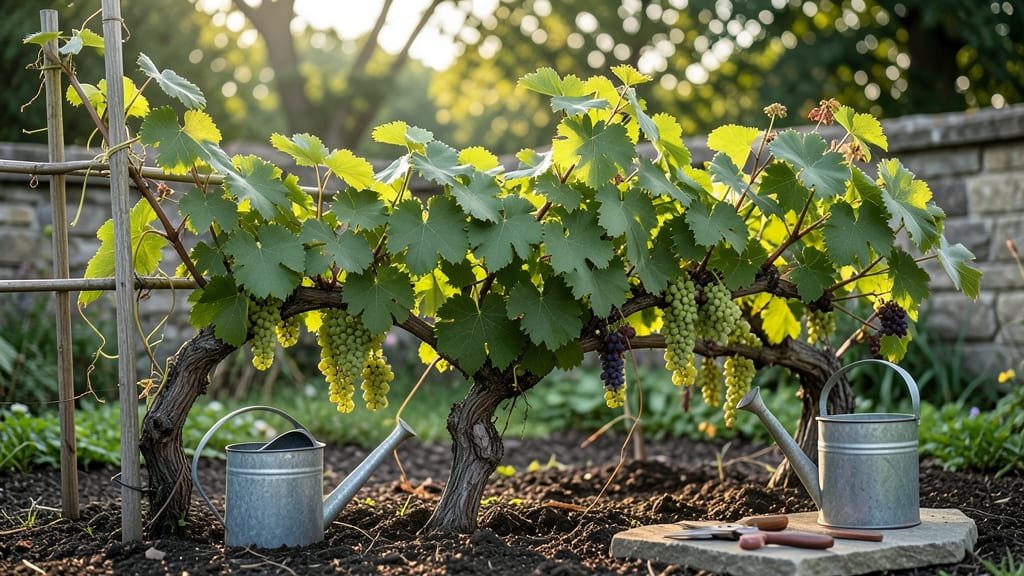
Grape trees look nothing like the shrubs you might expect—imagine a lush, sprawling vine with palmate leaves that could pass for a small maple tree if you didn’t know better. 🌿 The key giveaway?
Those five-lobed leaves with serrated edges and tendrils that curl like tiny question marks, clinging to anything nearby. My first grapevine fooled me until I spotted the grape clusters forming in summer, and suddenly, everything clicked.
Those thick, woody trunks develop over time, often gnarled and twisted, while younger vines stay flexible enough to weave through trellises or climb fences. The bark starts smooth but roughens with age, developing deep furrows that add character.
And don’t overlook the flowers: tiny greenish-yellow blooms in spring that smell faintly sweet—though they’re not the showstoppers like roses or lilacs.
Seasonal changes reveal even more secrets. In spring, you’ll see new growth bursting from buds, while summer brings those iconic grape clusters—some green, some purple, depending on the variety. By fall, leaves turn golden or reddish before dropping, and the vines go dormant, looking like tangled ropes until spring.
It’s like nature’s own living sculpture, shifting shapes with the seasons.
Confusing grape trees with other plants? They’re often mistaken for wild grapevines or even Virginia creeper, but grape leaves have that distinctive five-fingered shape and those clusters of fruit that give them away.
Whether you’re spotting one in your yard or picking out a new plant, these details make identification straightforward—and rewarding.
📚 In This Guide
- What you need
- Instructions
- Tips and common mistakes
- Wrapping up and next steps
What you need
- ● Basic Identification Kit: Magnifying glass (5x–10x magnification for close-up leaf/trunk inspection)
- ● Notebook + pen (to jot down observations like leaf shape, bark texture, or seasonal changes)
- ● Camera or smartphone (for capturing images of leaves, clusters, or bark details)
- ○ Field Tools (Optional but Helpful): Pruning shears (small, sharp pair for gently plucking leaves or tendrils)
- ● Ruler or measuring tape (to note leaf length/width or trunk diameter)
- ● Field guidebook or app (e.g., iNaturalist or PictureThis for plant ID)
- ● Knowledge of basic grapevine anatomy (e.g., lobed leaves, tendrils, or grape clusters) to compare with your findings.
- ● Access to a grapevine reference (online images, local nurseries, or botanical gardens for comparison).
- ● Patience! Grape trees change with the seasons—plan your visit during spring (leaf emergence), summer (fruit), or fall (color shifts).
Step-by-Step guide to identifying grape trees by visual traits
Master these key features to distinguish grape trees from lookalikes.
🌿 Step 1: Examine the Leaf Structure
Grapevine leaves are lobed but not deeply divided like oaks. Look for 3-5 rounded lobes with a shallow, wavy edge—they resemble a child’s mitten. The leaf underside often has fine hairs, especially on young growth. In summer, mature leaves measure 3-6 inches long and 2-4 inches wide, with a prominent central vein and secondary veins branching out like fingers.
Here's the thing—you’ll often find grape tendrils at leaf axils (where leaf meets stem). These spiral growths help the vine climb but also distinguish it from similar vines like Virginia creeper, which has toothed leaves and no tendrils. Run your fingers along the stem: if you feel tiny, curly tendrils, it’s likely a grapevine.
🪴 Step 2: Inspect the Trunk and Bark
Young grapevine trunks are smooth and greenish-brown, often with a glossy sheen. As they age, the bark develops deep furrows and rough, corky ridges, especially in older vines. Unlike maples or willows, grapevine bark doesn’t peel—it cracks and thickens over time. Look for lenticels (tiny raised pores) that appear as small white dots along the trunk.
Real talk: if you see thick, woody growths called "cane" branches, you’re on the right track. These 1-3 inch diameter stems grow from the main trunk and bear clusters of grapes. Compare it to a willow’s smooth, peeling bark or a maple’s ridged but non-furrowed trunk—grapevines are in their own league.
☀️ Step 3: Observe Seasonal Changes
Spring brings new growth with reddish-purple buds that swell before leaves emerge. These buds are oval and pointed, unlike the rounder buds of fruit trees. By late spring, you’ll see small clusters of green grapes forming at the tips of canes. In fall, leaves turn yellow or brown but often cling to the vine longer than oak or maple leaves.
Winter reveals grapevines’ true structure. Prune-resistant canes (those left after harvest) are woody and brown, while new growth from this year’s shoots is green and flexible. If you find a vine with no leaves but still shows these canes and buds, it’s definitely a grapevine—many deciduous trees lose all visible signs in winter.
✂️ Step 4: Check for Fruit and Growth Habits
Grape clusters grow in compact, cylindrical shapes with 10-100 berries, depending on the variety. Look for green, purple, or red grapes in summer—these are your best clue. Unlike blackberries or raspberries, grape clusters don’t detach easily from the vine; they stay attached until fully ripe or harvested.
Here’s the moment that matters: if you see both leaves and grapes on the same vine, you’ve found a grape tree. Many vines produce flowers first, but grapes develop directly from those flowers into clusters. Compare it to a bramble bush, which has separate berries and thorny canes—grapevines are thornless and their clusters are unmistakable.
Tips & tricks for identifying grape trees with confidence
These visual cues will help you distinguish grapevines from imposters like Virginia creeper or bramble bushes.
Leaf Comparison: In Step 1, when examining leaves, focus on the 3-5 rounded lobes with wavy edges—they should resemble a child's mitten. Hold a leaf up to light to see the prominent central vein and secondary veins. The underside's fine hairs are another telltale sign. I've seen grapevine leaves confused with oak leaves, but oaks have deeper divisions and jagged edges.
Trunk Texture: For Step 2, remember that grapevine bark doesn't peel like willow bark. Run your fingers along the trunk—you should feel deep furrows and rough ridges on mature vines. The lenticels (tiny white dots) are another key feature that distinguishes grapevines from other woody plants. I once misidentified a grapevine as a young maple because of its smooth trunk, but the lack of peeling bark gave it away.
Seasonal Clues: In Step 3, pay attention to the reddish-purple buds in spring—they're oval and pointed, not round like fruit tree buds. In summer, look for compact grape clusters (10-100 berries) that stay attached to the vine. This is your most reliable indicator. I've found that grape clusters often cling to vines well into fall, sometimes turning brown but remaining visible.
Growth Habit: In Step 4, notice that grapevines are thornless and their clusters grow in cylindrical shapes. Unlike bramble bushes, grape clusters don't detach easily from the vine. This persistent attachment is a key distinguishing feature. I've used this trick to identify wild grapevines in forests—just look for vines with both leaves and grapes still attached.
Pro Tips for What Do Grape Trees Look Like
- These visual cues will help you distinguish grapevines from imposters like Virginia creeper or bramble bushes.
- Leaf Comparison: In Step 1, when examining leaves, focus on the 3-5 rounded lobes with wavy edges—they should resemble a child's mitten.
- Trunk Texture: For Step 2, remember that grapevine bark doesn't peel like willow bark.
Frequently asked questions
Got questions about grape trees? You’re not alone! Here are some of the most common queries—plus quick, practical answers to help you spot, grow, or troubleshoot your vineyard dreams.
What do grapevine leaves look like, and how can I tell them apart from poison ivy?
Grapevine leaves are palmate (5-7 lobes shaped like fingers spreading from a single point), with jagged edges and a rough texture. Poison ivy leaves are compound (3 leaflets) and grow in clusters. Pro tip: Rub a leaf between your fingers—grapevine leaves are not itchy!
How long does it take for a grape tree to produce fruit after planting?
Patience is key! Most grapevines take 2–3 years to bear fruit, though some vigorous varieties (like Concord) may fruit in 1–2 years with ideal care. Young vines focus on root and trunk growth first—think of it as their "training wheels" phase.
Can grape trees grow in containers, or do they need a yard?
Dwarf grapevine varieties (like ‘Thompson Seedless’) thrive in 15–20 gallon containers with well-draining soil. Just ensure they get 6+ hours of sunlight and prune aggressively to control size. Containers are perfect for patios or small spaces—no yard required!
Why are my grapevine leaves turning yellow or curling?
Yellowing leaves often signal nutrient deficiencies (like iron or magnesium) or pests (aphids, spider mites). Curling could mean powdery mildew (a fungal disease) or heat stress. Check the undersides of leaves for pests, and treat with neem oil or fungicide if needed.
Do grape trees lose all their leaves in winter, and how cold can they handle?
Yes! Most grapevines are deciduous and shed leaves in fall. They’re surprisingly hardy—many varieties tolerate down to -15°F (-26°C), though young vines or tender types (like Muscadine) may need winter protection (mulch or row covers).
Wrapping up and next steps
Now that you’ve got the scoop on grape tree identification—from their lobed leaves and woody trunks to their stunning seasonal transformations—you’re ready to spot them like a pro! 🌿 Whether you’re a gardener, nature enthusiast, or just curious, recognizing these trees adds a fun new layer to your outdoor adventures.
Ready to take the next step? Visit a local vineyard or botanical garden to see grape trees in person, or grab a pair of binoculars for a backyard exploration! 👀 And if you’re feeling inspired, why not plant your own? Happy tree-hunting!