
Trees
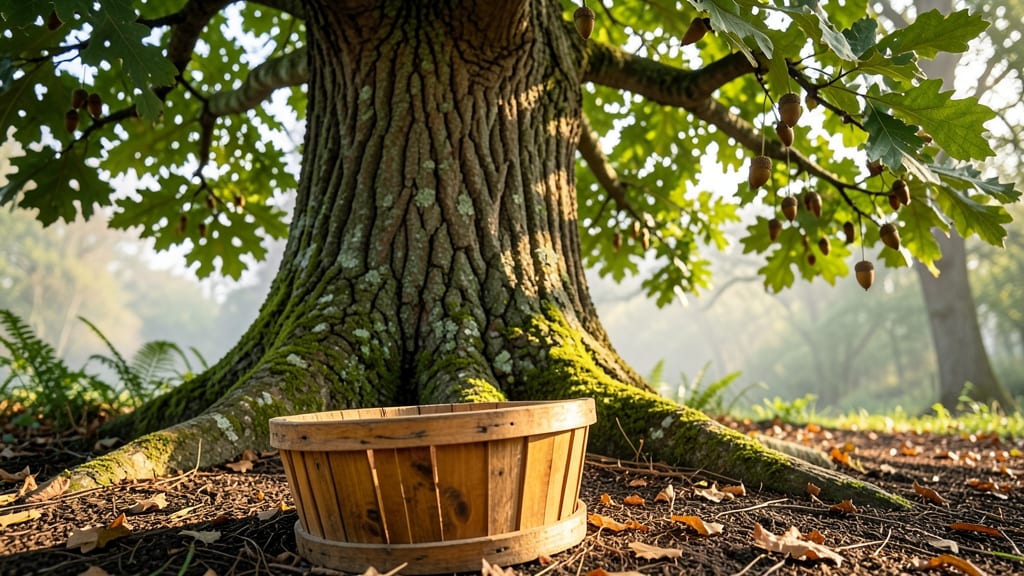
Oak trees produce acorns in a 3-year cycle, and timing depends more on the tree's age and species than the calendar. My white oak in the backyard dropped its first acorns when it was 20 years old—no matter how many squirrels begged for them before that.
Red oaks, on the other hand, often wait until they're 30+ years old before producing a reliable crop, and they release acorns in fall of odd-numbered years most consistently.
The real magic happens when you understand the species: white oaks release acorns in late fall to early winter, while red oaks wait until late winter, often lingering on the tree until spring.
Climate plays a role too—drought years can delay production entirely, but a wet spring followed by a warm summer sets the stage for a bumper crop. Younger trees (under 20 years) might produce a few acorns, but don’t expect wildlife feasts until they mature.
If you're planting oaks to attract wildlife, choose white oak for early acorn production and red oak for later-season food. Both species thrive in full sun and well-drained soil, but red oaks tolerate poorer conditions better.
By the time your tree hits 30 years, you’ll have a steady acorn supply—just don’t expect squirrels to thank you in advance.
Pro tip: Leave some acorns on the ground for wildlife, but collect a few to plant. Oak seedlings take 5-10 years to produce their first acorns, so patience is key.
The wait is worth it when you see deer browsing or jays caching them in your yard—nature’s way of saying "thank you" for the free snack bar.
📚 In This Guide
- What you need
- Instructions
- Tips and common mistakes
- Wrapping up and next steps
What you need
- ● Basic Observation Tools: Binoculars (8x42 magnification or higher for better visibility)
- ● Notebook + pen (for tracking acorn production cycles)
- ○ Camera (optional but helpful for documenting progress)
- ● Safety Gear (if harvesting): Gloves (heavy-duty, nitrile or leather for grip)
- ● Closed-toe shoes or sturdy boots (for uneven terrain)
- ● Harvesting Supplies: Ladder or sturdy step stool (if acorns are high up)
- ● Pruners or shears (bypass pruners for clean cuts)
- ● Large mesh bag or bucket (to collect acorns without crushing them)
- ● Tarp or drop cloth (to minimize acorn loss during harvest)
- ● Acorn identification guide or app (e.g., iNaturalist or LeafSnap)
- ● pH test kit (to check soil conditions for oak tree health)
- ● Labeling tags (if storing acorns for planting or study)
- ● Field guide to oak species (to distinguish between white oak vs. red oak acorns)
Understanding the oak tree acorn production timeline
Here's how to recognize and time oak tree acorn cycles for planning.
Identify Your Oak Species and Its Typical Cycle
Oak trees follow a 3-7 year acorn production cycle, but the exact timing depends on the species. White oaks (like bur oak or swamp white oak) produce acorns every 2-3 years, while red oaks (like northern red oak or black oak) follow a 3-5 year cycle. I always check the leaf shape and lobe pattern first—white oaks have rounded lobes with bristle tips, while red oaks have pointed lobes.
Real talk: Your local nursery or extension office can confirm the species if you're unsure. Knowing this helps you predict when to expect acorns. For example, if your tree produced a heavy crop last year, you can expect another 2-3 years before the next big drop. Keep a simple logbook with the year and acorn production level—light, moderate, or heavy—to track patterns.
Watch for Spring Flowering Cues
The acorn production cycle begins in late spring, when oak trees flower. Male flowers appear as yellow-green catkins (long, dangling clusters) that release pollen, while female flowers are tiny and less noticeable. I look for these catkins in April or May, depending on your climate zone. If you see heavy pollen production, that’s your first sign the tree is setting next year’s acorns.
Here’s the thing—pollination isn’t the only factor. Oak trees also need adequate rainfall during flowering and warm summer temperatures for acorn development. Drought or extreme heat can reduce acorn production, even if flowers appear. If you’re in a dry area, supplement with deep watering during flowering to support fruit set.
Monitor Acorn Development Through Summer and Fall
Acorns begin forming as small, hard capsules in June or July and grow gradually. By late summer, you’ll see tiny acorns—about the size of a pea—attached to the tree. These aren’t ready to harvest yet, but their presence confirms the tree is on track for a crop. I check for acorns in August, when they’re still green and firm.
By September or October, acorns turn brown and drop to the ground when mature. White oak acorns mature in one growing season, while red oak acorns take two years to fully develop. If you see acorns still attached in November, they’re likely red oak acorns that won’t be ready until next fall. Patience is key—harvesting too early ruins the flavor and viability.
Plan for Harvest and Storage Based on the Cycle
Once acorns hit the ground, they’re ready for harvest within 1-2 weeks. I wait until they’ve fallen naturally to avoid damaging the tree. Spread a tarp beneath the tree to collect them easily—this also helps prevent squirrels and other wildlife from getting to them first. A 50-square-foot tarp under a mature oak can yield 5-10 pounds of acorns in a good year.
After harvesting, soak acorns in water for 24-48 hours to remove tannins, which are bitter and toxic if not processed. Then, dry them thoroughly in a well-ventilated area for 3-5 days before storing in an airtight container. If you’re planning to plant them, cold-stratify (refrigerate) them for 60-90 days to break dormancy. This mimics winter conditions and ensures better germination.
Adjust Expectations for Off Years
Not every year will produce acorns—some trees skip a cycle entirely. If your oak tree doesn’t drop acorns one year, don’t panic. This is normal, especially for red oaks. I’ve seen trees go three years without acorns before producing a bumper crop the next season. Focus on tree health instead: prune dead branches, water during droughts, and fertilize lightly in early spring to support overall vigor.
Here’s the method I rely on: If acorn production is inconsistent, consider planting a companion tree like a hickory or walnut for more reliable yields. Oak trees are long-lived, and their cycles are unpredictable, but with patience, you’ll learn to anticipate their patterns. Keep observing, and you’ll start recognizing the subtle signs that predict a good acorn year.
Tips & tricks for perfect oak tree acorn harvesting
Here's what I've learned after years of watching oak trees—these tricks help you predict and maximize your acorn yield without the guesswork.
Species-Specific Timing: White oaks produce acorns every 2-3 years, while red oaks follow a 3-5 year cycle. I learned this the hard way—planting a white oak in my yard meant I could expect acorns every couple of years, but my neighbor's red oak took longer. The key is to identify your tree's species first by examining the leaf lobes. White oak leaves have rounded lobes with bristle tips, while red oak leaves have sharp, pointed lobes. This simple visual check saves you from years of waiting for acorns that might never come!
Spring Flowering Observation: The catkins that appear in April or May are your first clue about next year's acorn production. Heavy pollen production means the tree is setting acorns for the following season. In my experience, a year with abundant catkins often results in a good acorn crop, but only if followed by adequate rainfall and warm summer temperatures. I always keep an eye on the weather forecast during these months—drought conditions can drastically reduce acorn production despite heavy flowering.
Acorn Development Timeline: By August, you should see tiny pea-sized acorns forming on your tree. These aren't ready for harvest yet, but their presence confirms the tree is on track. The real test comes in September or October when acorns turn brown and drop. White oak acorns mature in one season, while red oak acorns take two years to fully develop. I've made the mistake of harvesting premature acorns—don't make my mistake! Wait until they've fallen naturally, usually within 1-2 weeks of turning brown.
Harvesting Strategy: Spread a 50-square-foot tarp under your tree when acorns begin falling. This simple setup collects 5-10 pounds of acorns in a good year and prevents wildlife from getting to them first. I've found that harvesting acorns within 1-2 weeks of them hitting the ground gives you the freshest, most viable acorns. After collecting, soak them in water for 24-48 hours to remove tannins, then dry thoroughly for 3-5 days before storing. This process makes them safe to eat and ready for planting.
Pro Tips for When Do Oak Trees Produce Acorns
- Here's what I've learned after years of watching oak trees—these tricks help you predict and maximize your acorn yield without the guesswork.
- Species-Specific Timing: White oaks produce acorns every 2-3 years, while red oaks follow a 3-5 year cycle.
- Spring Flowering Observation: The catkins that appear in April or May are your first clue about next year's acorn production.
Frequently asked questions
Got questions about oak trees and acorns? You’re not alone!
Here are some of the most common queries gardeners and nature lovers ask—plus straightforward answers to help you plan ahead.
When do oak trees usually produce acorns?
Most oak trees follow a 3-year cycle, but timing varies by species. White oaks (e.g., bur oak) produce acorns in fall of their 3rd year, while red oaks (e.g., pin oak) drop them in fall of their 2nd year. Climate and tree health can shift this schedule by a year or two.
Why don’t my oak trees produce acorns every year?
Oaks prioritize growth and health over reproduction. A drought, pest infestation, or poor soil can delay acorn production. Even healthy trees may skip years to conserve energy. Patience is key! If your tree is young (<10 years old), it might not be mature enough yet.
How can I tell if my oak tree is a white oak or red oak?
Quick ID tips:
- Leaves: White oak leaves have rounded lobes (like a smile ); red oak leaves have pointed tips.
- Acorns: White oak acorns have a flat cap covering 1/3 of the nut; red oak caps cover less than 1/4.
- Bark: White oak bark is scaly and lighter; red oak bark is blockier and darker.
Can I encourage my oak tree to produce more acorns?
While you can’t force it, you can optimize conditions:
- Water deeply during droughts (but avoid over-saturating soil).
- Fertilize in early spring with a balanced, slow-release fertilizer (avoid high-nitrogen blends).
- Prune in late winter to remove dead branches and improve airflow.
Are acorns from my yard safe to eat?
Most oak acorns are bitter and toxic raw due to tannins. To prepare them:
- Leach in water for 3–5 days, changing water daily.
- Boil for 10–20 minutes to remove tannins.
- Toast or bake until tender (they taste nutty, like hazelnuts!).
Wrapping up and next steps
Now that you understand when oak trees produce acorns—typically in a 3-year cycle—you’re well-equipped to nurture these resilient trees in your garden. Whether you’re planning for wildlife, future saplings, or simply admiring nature’s rhythm, patience and observation will be your best tools. 🌰
Ready to take the next step? Monitor your oak trees closely this fall, and consider marking the year of their first acorn drop to track their cycle. With a little care, you’ll soon be enjoying a thriving grove—and maybe even a few squirrel visitors! 🐿️