Planting
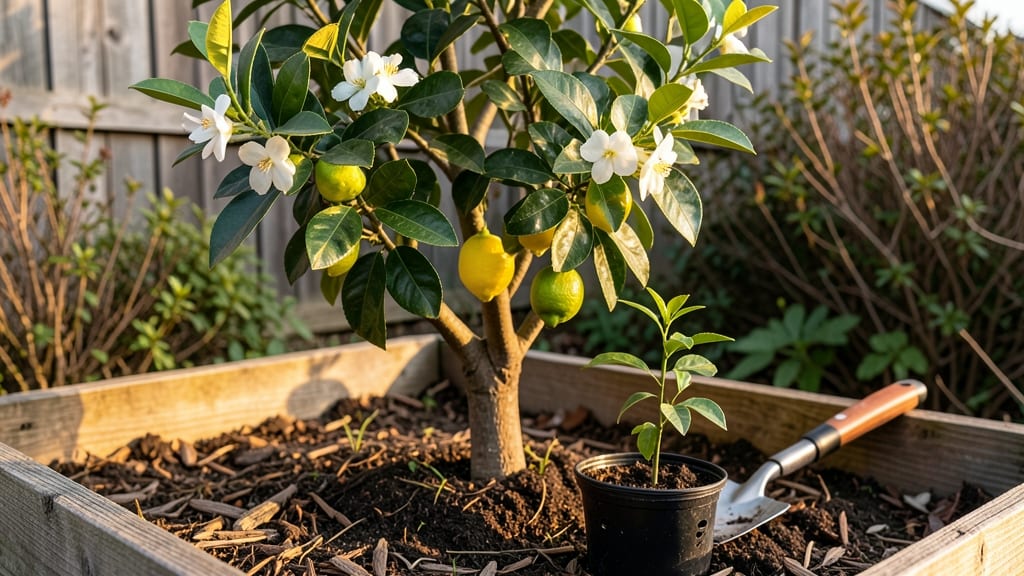
Planting a lemon tree in the wrong spot means stunted growth and no fruit—here’s where to put yours for maximum sunshine and sweet rewards. 🌞 I learned this the hard way when my first tree struggled in partial shade, leaving me with tiny, bitter lemons instead of juicy ones.
The secret? Full sun, shelter from cold drafts, and soil that drains like a dream.
Ideal spots get 6–8 hours of direct sunlight daily, with 60+°F temperatures year-round—think Mediterranean climates, California’s coastal zones, or Florida’s frost-free pockets. If you’re in colder areas, containers let you move the tree indoors before winter.
Well-draining soil (sandy loam with a touch of acidity) prevents root rot, while windbreaks keep delicate branches from snapping.
You’ll know you’ve nailed it when the tree bursts with glossy leaves and heavy fruit by late summer. The scent of blossoms in spring and the first tart-sweet lemon plucked in fall make every planning detail worth it. Just avoid low spots where frost lingers—lemons hate cold feet.
Container growers? Choose pots at least 24 inches wide with drainage holes and use a mix of potting soil and perlite. For in-ground plantings, test your soil’s pH (aim for 5.5–6.5) and amend with compost if needed. Now, let’s find that perfect sunny corner!
📚 In This Guide
- What you need
- Instructions
- Tips and common mistakes
- Wrapping up and next steps
What you need
- ● Lemon tree (Citrus limon) – Choose a dwarf variety (3–6 ft) for containers or a standard size (8–12 ft) for in-ground planting. Nursery-grown saplings (1–3 years old) work best.
- ● Well-draining potting mix – A blend of 60% peat or coconut coir, 20% perlite, and 20% compost (for containers). For in-ground planting, amend native soil with compost and coarse sand (1–2 inches per square foot).
- ● Pot (if container-growing) – Minimum 15–20 gallons for dwarf varieties (wider than tall). Ensure it has drainage holes and a saucer to catch excess water.
- ● Shovel or trowel – A garden shovel for in-ground planting or a small trowel for container prep.
- ● Pruning shears – Bypass pruners (sterilized with rubbing alcohol) for shaping and removing dead branches.
- ● Mulch – Organic mulch (e.g., straw, wood chips) to retain moisture and regulate soil temperature (apply 2–3 inches around the base, avoiding the trunk).
- ● Watering can or hose with a gentle nozzle – Avoid overwatering; aim for deep but infrequent watering (1–2 times per week, depending on climate).
- ● Fertilizer – Citrus-specific fertilizer (balanced NPK, e.g., 6-6-6 or 8-3-9) for spring and summer.
- ● Slow-release granules (e.g., Osmocote) for steady nutrition.
- ○ Support stake (optional but helpful) – A 3–4 ft bamboo or metal stake for young trees in windy areas.
- ● Soil pH test kit – Lemon trees thrive in slightly acidic soil (pH 6.0–7.0). Adjust with lime (to raise pH) or sulfur (to lower pH) if needed.
- ● Drip irrigation system – Automates watering and ensures consistent moisture (ideal for hot climates).
- ● Frost cloth or row cover – Protects young trees from temperatures below 25°F (-4°C).
- ● Epsom salt (magnesium sulfate) – 1 tbsp per gallon of water monthly to prevent yellowing leaves (magnesium deficiency).
- ● Citrus tree cage or trellis – Encourages upward growth for standard-sized trees in small spaces.
- ● Pest control (neem oil or insecticidal soap) – Preemptive measure against aphids, scale, or spider mites.
Step-by-Step guide to choosing the perfect lemon tree location
Here's how to pick a spot that turns your citrus tree into a fruit-bearing powerhouse.
☀️ Step 1: Find the Sunniest Spot in Your Yard
Lemon trees demand 6-8 hours of direct sunlight daily—no compromises. I always start by mapping my yard's sun exposure using a simple trick: Observe where sunlight hits from sunrise to sunset over a few days. Mark the areas that get full sun for the longest stretch. South-facing walls or fences can extend sunlight exposure by reflecting warmth onto the tree.
If your yard lacks full sun, consider a large container that can be moved to follow the sun's path. A patio or balcony with afternoon sun works better than morning-only exposure. The key is consistent warmth—lemon trees wilt when temperatures drop below 50°F at night. Watch for leaves curling or yellowing; that's your signal the light isn't sufficient.
🪴 Step 2: Test Soil Drainage and pH Before Planting
Lemon trees hate soggy roots, so drainage is non-negotiable. Dig a hole twice as wide as the root ball but only as deep. Fill it halfway with water and wait 30 minutes. If water remains, amend the soil with 1 part sand or perlite to 3 parts native soil. Well-draining soil should feel like a damp sponge—not muddy or powdery. I always test drainage first because poor soil is the #1 reason lemon trees fail.
Use a soil pH test kit to confirm the pH is between 6.0 and 7.0. Lemon trees prefer slightly acidic to neutral soil. If your soil tests higher, mix in 1 cup of sulfur per 100 square feet and retest in 2 months. The right pH ensures the tree can absorb nutrients efficiently, which directly impacts fruit production. You'll see healthier green leaves and fewer brown spots when the pH is just right.
💧 Step 3: Plan for Wind Protection and Microclimate Benefits
Lemon trees grow best in sheltered spots where wind doesn't strip moisture from leaves. I recommend planting near a building, fence, or hedge that breaks wind currents. Even gentle breezes can cause leaf scorch in hot afternoons. Look for areas where you notice other plants thriving—those microclimates usually offer the best protection.
Consider elevation too. Slightly raised spots (like a small berm or mound) warm up faster in spring and drain better after rain. If you're planting in a container, place it on a stand or elevated surface to improve airflow at the base. You'll know the spot is ideal when neighboring plants show vigorous growth without signs of stress like yellowing or stunted leaves.
⏰ Step 4: Time Your Planting for Optimal Establishment
Spring is the best time to plant lemon trees because warm soil and longer days encourage root growth. Aim for planting 4-6 weeks before your last frost date—this gives roots time to establish before summer heat arrives. If you're in a warm climate, fall planting works too, but avoid winter when temperatures dip below 40°F.
For container-grown trees, the root ball should be level with the surrounding soil. Press gently around the edges to eliminate air pockets but don't compact the soil. Water deeply immediately after planting to settle the roots. You'll see new growth within 4-6 weeks if conditions are right—watch for dark green leaves unfolding along the branches as your signal of success.
Tips & tricks for perfect lemon tree locations
Took me years of trial and error to learn these lemon tree secrets—here's what actually makes the difference.
Sunlight Strategy: The 6-8 hours of direct sunlight in Step 1 should be spread across morning AND afternoon. If your yard only gets morning sun, position the tree near a south-facing wall that reflects sunlight. I've seen lemon trees thrive in containers moved daily to follow the sun's arc—this works surprisingly well in urban spaces.
Soil Test Hack: For the 30-minute drainage test in Step 2, use a clear plastic bottle with holes poked in the bottom instead of digging a hole. Fill it with your native soil and pour water—if water drains completely in 30 minutes, your soil passes. This method saves time and keeps your yard looking neat while giving you accurate results.
Wind Protection Secret: In Step 3, look for spots where you notice other plants thriving—those microclimates usually offer the best protection. I've had success planting near evergreen hedges because they create windbreaks year-round, not just during summer. Even a simple wooden fence can make a difference in preventing leaf scorch.
Planting Timing Tip: The 4-6 week window before your last frost date in Step 4 is flexible—just make sure soil temperatures reach at least 60°F. I've planted successfully up to 2 weeks after the recommended window when soil was warm enough. Use a soil thermometer to check—it's more reliable than guessing based on air temperature.
Pro Tips for Where To Plant A Lemon Tree
- Took me years of trial and error to learn these lemon tree secrets—here's what actually makes the difference.
- Sunlight Strategy: The 6-8 hours of direct sunlight in Step 1 should be spread across morning AND afternoon. If your ...
- Soil Test Hack: For the 30-minute drainage test in Step 2, use a clear plastic bottle with holes poked in the bottom ...
Frequently asked questions
Got questions about planting your lemon tree? You’re not alone—here are some of the most common concerns, answered in a flash!
Can I plant a lemon tree in a pot instead of the ground?
Lemon trees thrive in containers if they’re large enough (at least 15–20 gallons) with drainage holes. Use well-draining potting mix and move the pot indoors when temps drop below 40°F (4°C). Just keep in mind: potted trees may produce fewer fruits than those in the ground.
What’s the best time of year to plant a lemon tree?
Spring or early fall is ideal—when soil is warm but not scorching, and rain is less intense. Avoid winter (frost risk) or summer (heat stress). If you’re in a mild climate (like Zone 10+), you can plant year-round, but spring still gives the best start for root establishment.
How much sun does a lemon tree really need?
Lemon trees are sun-worshippers! They need 6–8+ hours of direct sunlight daily. In hot climates, partial afternoon shade helps prevent leaf burn, but morning sun is non-negotiable. If your yard is shady, a south-facing window or grow lights will work for potted trees.
Why aren’t my lemon tree’s leaves turning yellow?
Yellow leaves usually mean overwatering, poor drainage, or nutrient deficiency. Check soil moisture (top inch should dry out between waterings) and ensure your tree isn’t sitting in soggy soil. Yellowing with brown edges? It’s likely salt buildup—flush the soil with water. For pale yellow leaves, add iron or citrus-specific fertilizer.
Will a lemon tree grow in my climate if it’s not “ideal”?
Lemon trees love USDA Zones 9–11, but with care, they can adapt! In colder zones (7–8), grow them in pots and overwinter indoors. Dwarf varieties (like ‘Meyer’ lemons) are hardier and better for containers. If you’re in Zone 5 or below, consider greenhouse growing or tropical houseplants like lemon verbena as a fragrant alternative.
Wrapping up and next steps
Planting a lemon tree is an exciting journey that rewards you with fragrant blooms and tangy fruit—as long as you choose the right spot! 🌞 Whether you’re in a warm climate or a container on a sunny patio, prioritize full sun exposure, well-draining soil, and protection from harsh winds.
With the perfect location, your lemon tree will thrive and even bear fruit in just a few years!
Ready to get started? Take the next step: Grab your gloves, pick a sunny corner, and dig in! Your future lemon harvest is waiting—one sunny spot at a time. 🍋✨