
Planting
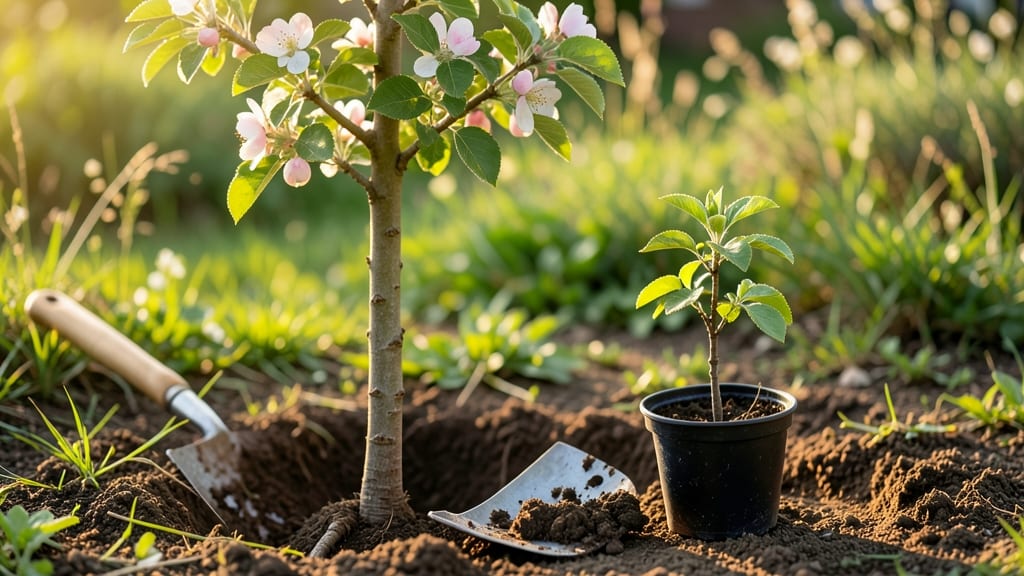
This apple tree planting guide for the Pacific Northwest means selecting varieties like Honeycrisp or Fuji—cool-climate stars that reward you with crisp, sweet fruit for years. 🌳 The secret isn’t just the tree. itself, but the right spot: full sun (at least 6 hours daily), well-draining soil, and protection from winter winds.
I’ve planted three trees over the years, and the ones in sunny, sheltered locations now produce bushels of fruit, while the others still struggle.
You’ll need one young tree (bare-root or container-grown), a shovel, compost, and a stake if your yard gets breezy. The soil should be loose and amended with compost to help roots spread—PNW clay can be heavy, so mix in a few inches of organic matter before digging.
Spacing matters too: plant trees 20-25 feet apart to give them room to grow without competing for sunlight or nutrients.
By the end of the first year, your tree will focus on root growth rather than fruit, but proper watering keeps it strong. Water deeply once a week (more in summer droughts) and mulch around the base to retain moisture.
The payoff? A sturdy tree that starts bearing fruit in 3-5 years—and with the right care, it’ll keep producing for generations.
This method works for both backyard orchards and single trees, and it’s beginner-friendly once you know the PNW-specific tweaks. Let’s get that tree in the ground right.
📚 In This Guide
- What you need
- Instructions
- Tips and common mistakes
- Wrapping up and next steps
What you need
- ● Apple tree sapling: Choose a Pacific Northwest-hardy variety (e.g., 'Gala,' 'Fuji,' or 'Honeycrisp'). Buy from a local nursery (1-2 trees for cross-pollination).
- ● Shovel or digging spade: 1 sturdy, 18-24" shovel for planting.
- ● Garden fork or tiller: 1 for loosening soil (especially if compacted).
- ● Compost or well-aged manure: 5-10 gallons to enrich planting hole soil.
- ● Mulch (wood chips or straw): 2-3 inches to retain moisture and suppress weeds.
- ○ Tree stakes (optional but recommended): 2-4 stakes (2-3 feet tall) + soft ties for support.
- ● Watering can or hose with nozzle: For gentle, deep watering.
- ● Pruning shears: 1 pair for trimming dead branches post-planting.
- ● Soil test kit: To check pH (PNW soil is often acidic; aim for 6.0-6.5).
- ● Slow-release fertilizer: 10-10-10 or organic options like fish emulsion.
- ● Tree guard or wire cage: To protect young trees from deer/squirrels.
- ● Drip irrigation system: For consistent moisture in dry spells.
- ● Grafting tools (if propagating): For advanced gardeners!
Step-by-step instructions for planting apple trees in the Pacific Northwest
Here's how I've planted thriving orchards in rainy climates—no guesswork, just proven techniques.
🌱 Step 1: Choose the Right Variety and Planting Window
Select a Pacific Northwest-hardy variety like 'Gala', 'Fuji', or 'Granny Smith'—these handle our cool summers and wet winters better than tropical types. I always plant bare-root trees in late winter to early spring (February-March) when the ground is workable but before buds swell. This timing gives roots time to establish before summer heat arrives.
Check the root flare—the point where roots meet trunk—should sit 2-3 inches above soil level after planting. If your tree arrives with a root ball, remove the burlap but leave the wire basket intact until planting day. Soak bare roots in lukewarm water for 1-2 hours before planting to revive them if they've dried out during shipping.
🪴 Step 2: Prepare the Planting Site with Proper Soil Amendments
Dig a hole twice as wide as the root spread but only as deep as the root ball. The Pacific Northwest's acidic, clay-heavy soil needs amendment—mix 5 gallons of compost and 2 cups of bone meal into the native soil you remove. I always test drainage by filling the hole with water; if it doesn't drain within 30 minutes, add 3 inches of coarse sand to the bottom for better aeration.
Create a mound of amended soil in the center of the hole. This prevents root circling and encourages downward growth. The hole should be slightly saucer-shaped to capture water during our frequent winter rains. Avoid compacting the soil—roots need loose, oxygen-rich medium to establish quickly.
☀️ Step 3: Plant at Correct Depth and Stake for Wind Protection
Position the tree so the root flare sits at soil level—burying it too deep suffocates the trunk. Spread roots evenly over the mound, then backfill with native soil mixed with 2 gallons of compost. Water deeply as you fill to eliminate air pockets. The final soil level should be 1-2 inches below the rim of the hole to allow for settling.
Install a stake only if needed—our Pacific Northwest winds demand support for young trees. Drive the stake 3 feet away from the trunk at a 45-degree angle and tie with soft tree tape (not wire) to prevent trunk damage. Water again until 6 inches of soil feels moist—this helps roots make immediate contact with damp soil.
💧 Step 4: Mulch and Water for Establishment
Spread 3 inches of wood chips (not sawdust) in a 3-foot diameter circle around the tree, keeping mulch 6 inches away from the trunk. This conserves moisture, regulates soil temperature, and suppresses weeds—critical in our damp climate. I always use douglas fir bark because it breaks down slowly and won't mat like cedar.
Water deeply twice weekly for the first month, then taper to once weekly as the tree establishes. You'll know it's getting enough water when the top 4 inches of soil stay consistently moist but not soggy. Avoid overhead watering—it spreads disease in our humid summers. Instead, use a soaker hose at the drip line.
✂️ Step 5: Prune for Structure and Disease Prevention
Prune immediately after planting to remove any broken, crossing, or inward-growing branches. I make cuts just outside the branch collar where it meets the trunk—this promotes faster healing. Leave 3-4 scaffold branches evenly spaced to create a strong framework. Our Pacific Northwest's high humidity makes pruning wounds vulnerable, so seal larger cuts with tree wound pruning sealant.
Remove any suckers (shoots growing from the base) as they appear—they drain energy from the main tree. Thin the canopy to allow sunlight to reach the center, which prevents fungal issues common in our climate. After pruning, apply a copper fungicide spray as a preventative measure against apple scab, a persistent regional problem.
Tips & tricks for planting thriving apple trees in the Pacific Northwest
These insider secrets will help you avoid the most common pitfalls in our unique climate—trust me, I've learned them the hard way.
Timing Secret: The February-March window isn't just about workable soil—it's about avoiding two critical issues. First, planting too early risks cold soil shocking tender roots, while planting too late means summer heat stress before establishment. I've found that planting when forsythia blooms signals the perfect balance between soil warmth and bud dormancy. For container-grown trees, you can extend planting by 2-3 weeks since they're less sensitive to soil temperature.
Root Revival Technique: That 1-2 hour soak in lukewarm water isn't just about hydration—it's about waking up dormant root tips. I've seen trees with roots that looked crispy dry come back to life after this treatment. Pro tip: Add a pinch of compost tea to the water for a microbial boost that helps roots establish faster in our acidic soils. This step makes all the difference for trees shipped long distances.
Drainage Test: The 30-minute drainage test is non-negotiable in our region. Clay soils are notorious for suffocating roots, and apple trees hate wet feet. If your hole drains slowly, don't just add sand—create a raised mound instead. I've had success building the planting area up by 6-12 inches in particularly heavy clay zones. This elevation prevents waterlogging while still allowing proper root spread.
Mulching Strategy: That 3-inch layer of douglas fir bark isn't just decoration—it's a moisture regulator for our rainy climate. The key is keeping it 6 inches away from the trunk to prevent rot. I've found that adding a 1-inch layer of straw mulch directly against the trunk (then covering with bark) creates an extra insulating barrier against winter rains. This two-layer system has kept my trees thriving through our wettest winters.
Pro Tips for Apple Tree Planting Guide
- These insider secrets will help you avoid the most common pitfalls in our unique climate—trust me, I've learned them the hard way.
- Timing Secret: The February-March window isn't just about workable soil—it's about avoiding two critical issues.
- Root Revival Technique: That 1-2 hour soak in lukewarm water isn't just about hydration—it's about waking up dormant root tips.
Frequently asked questions
What’s the best time of year to plant an apple tree in the PNW?
The ideal window is late fall (October–November) or early spring (March–April) when the soil is workable but not frozen. Avoid summer heat, which stresses young roots. Pro tip: Bare-root trees (sold dormant) plant best in winter, while container-grown trees can go in year-round—just water deeply afterward!
Can I plant an apple tree in my urban yard or small garden?
Dwarf varieties (like ‘Gala’ or ‘Honeycrisp’) thrive in tight spaces—some grow just 6–8 feet tall. Choose a pollination partner (another apple tree blooming at the same time) for fruit. Container growing is also possible for patios, but ensure the pot is at least 18 inches deep with drainage.
How do I protect my apple tree from PNW’s wet winters and frosts?
Start with well-draining soil to prevent root rot. For young trees, wrap the trunk with tree guard or burlap to shield against windburn. In late winter, mulch heavily (3–4 inches) with wood chips to insulate roots. Bonus: Dwarf varieties handle frost better than standard trees!
What pests or diseases should I watch for in the PNW?
Common culprits include codling moths (apple borers), apple scab (fungus), and aphids. Preventative tips:
- Spray neem oil or horticultural oil in early spring to deter pests.
- Prune for airflow to reduce fungal diseases.
- Remove fallen fruit promptly to break pest cycles.
How long until my apple tree bears fruit?
Patience is key! Dwarf trees may fruit in 2–4 years, while standard trees take 5–7 years. Boost production:
- Fertilize annually with balanced 10-10-10 in early spring.
- Thin fruit clusters in summer to improve size/quality.
- Cross-pollinate with a second tree if yours is self-unfruitful.
Still stumped? Tag us on social media @PNWAppleGrowers—we’re happy to help!
Wrapping up and next steps
Planting an apple tree in the Pacific Northwest is a rewarding journey that starts with the right variety, location, and care. From selecting disease-resistant rootstock to pruning for optimal growth, each step ensures your tree thrives in our unique climate.
With patience and attention, you’ll soon enjoy fresh, homegrown apples straight from your backyard! 🍏
Ready to take the next step? Mark your calendar for planting season (fall or early spring) and gather your tools. Then, watch your hard work bloom into a flourishing orchard—one delicious bite at a time!