
Trees
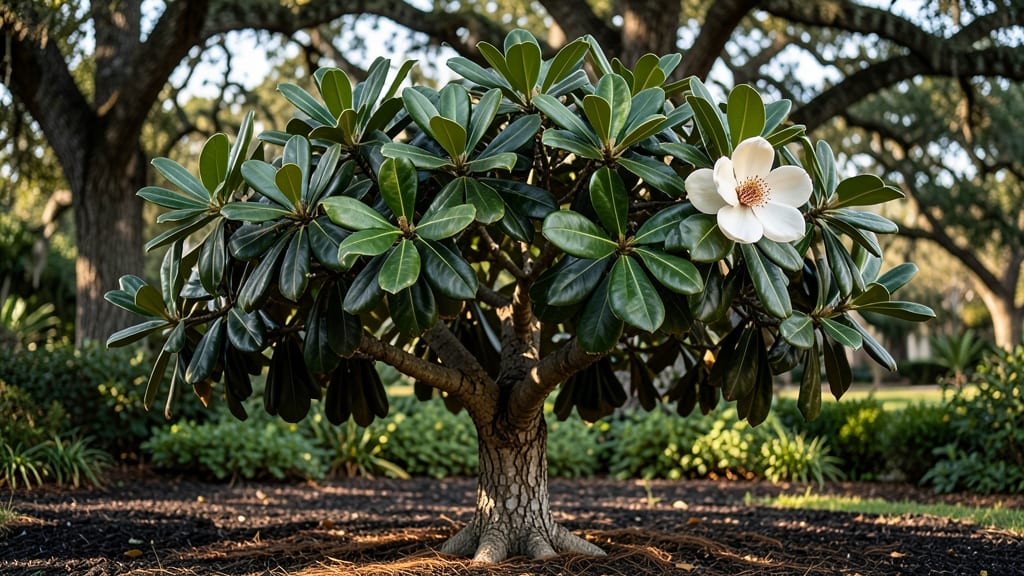
The Pacific Northwest's year-round pollinator magnet transforms any garden into a buzzing paradise. 🌸 I planted my first big flowering tree—a Pacific dogwood—after years of watching bees and butterflies flock to neighbors' yards.
That single tree became the centerpiece of my garden, drawing hummingbirds and bees even in chilly spring mornings.
These trees aren’t just pretty faces—they’re ecosystem workhorses. A well-placed magnolia or flowering cherry provides year-round interest: fragrant spring blooms, summer shade, and fiery fall foliage. They thrive in the PNW’s mild climate but need 6+ hours of sunlight and space to spread their branches.
The key is matching the tree to your yard’s light and soil—most do well in well-draining soil, though rhododendrons prefer acidity.
Imagine your garden in late spring, when hundreds of bees swarm the blossoms of a Japanese maple, or autumn evenings under a golden ginkgo’s canopy. These trees create focal points that anchor your landscape while supporting local wildlife.
They also age gracefully, their trunks and branches becoming natural art over decades.
Start small with a 15-foot specimen like a serviceberry, or go bold with a 40-foot giant like a Douglas fir’s flowering relative. Pair them with pollinator-friendly perennials—lavender, coneflowers, or salvias—to extend the season of interest. The right tree turns your yard into a living sanctuary that keeps giving back.
📚 In This Guide
- What you need
- Instructions
- Tips and common mistakes
- Wrapping up and next steps
What you need
- ● Big flowering tree saplings: Choose native or well-adapted species like Magnolia grandiflora, Washingtonia filifera, or Cercis canadensis. Quantity: 1–3 per planting site (spaced 15–30 ft apart).
- ● High-quality potting soil: 50 lbs (for planting holes) or 1 cubic yard (for large trees). Opt for a mix with compost or native soil amendments.
- ● Organic mulch: 2–3 cubic feet (e.g., wood chips or bark) to retain moisture and suppress weeds.
- ● Watering can or hose: With a gentle spray nozzle for delicate root zones.
- ○ Tree stakes & ties (optional but recommended): 2–4 stakes per tree (if planting in windy areas).
- ● Shovel or digging spade: 18–24" wide for planting holes (2x wider than the root ball).
- ● Garden gloves: Heavy-duty to protect hands from thorns or rough bark.
- ● Pruning shears: Bypass-style (for shaping and post-planting trimming).
- ● Measuring tape: To ensure proper spacing (15–30 ft between trees).
- ● Wheelbarrow: 2–3 cubic feet capacity for hauling soil/mulch.
- ● Slow-release fertilizer: 10–20 lbs (e.g., 10-10-10 or organic options like fish emulsion).
- ● Tree guards: Metal or plastic to protect young trunks from pests.
- ● Drip irrigation kit: For low-maintenance watering (especially in dry spells).
- ● Native plant companions: Perennials or shrubs (e.g., Symphoricarpos or Ceanothus) to boost pollinator appeal.
How to select and plant big flowering trees for PNW pollinators
Here’s the proven approach to choosing and establishing trees that keep bees buzzing year-round.
🌱 Step 1: Choose Native Species for Climate Resilience
Focus on Pacific Northwest natives like Pacific dogwood (Cornus nuttallii), Oregon ash (Fraxinus latifolia), or Western redbud (Cercis occidentalis). These trees thrive in the region’s mild winters and wet summers while providing four-season interest—spring blooms, summer shade, and autumn foliage.
I always check the USDA Plant Hardiness Zone (PNW falls mostly in Zones 7-9) and verify the tree’s mature size matches your space. A 30-foot canopy needs 20 feet of clearance from structures or sidewalks. Native species also support local pollinators—bees, butterflies, and hummingbirds—better than non-native varieties.
Skip fast-growing exotics like Bradford pear (Pyrus calleryana), which often succumb to pests and require heavy maintenance. Instead, prioritize low-maintenance, disease-resistant options. For example, Pacific dogwood handles wet soils and partial shade, while Oregon ash tolerates urban pollution.
☀️ Step 2: Plant at the Right Time and Location
Fall or early spring are the best times to plant—October through April in the PNW avoids summer heat stress. Dig a hole twice as wide as the root ball but no deeper, as burying the graft union (if applicable) or root flare can suffocate the tree.
Position the tree where it gets at least 6 hours of sunlight daily, though many PNW natives tolerate partial shade. Avoid planting near overhead power lines or where future construction might disturb roots. I always stake young trees only if necessary—wind is the biggest threat in coastal areas—using two vertical stakes and flexible ties to avoid girdling the trunk.
Amend the native soil with 2-3 inches of compost mixed into the backfill, but avoid heavy amendments like peat moss, which can compact. Water deeply after planting to eliminate air pockets, then mulch with 3 inches of wood chips (not bark) in a 3-foot diameter ring, keeping mulch 6 inches away from the trunk to prevent rot.
💧 Step 3: Water Deeply and Monitor Soil Moisture
Newly planted trees need 1-2 inches of water per week for the first two growing seasons, delivered deeply but infrequently to encourage root growth. I use a soaker hose or drip irrigation to water at the drip line (edge of the canopy), not just the base. Overhead watering wastes moisture and spreads disease.
Check soil moisture by pushing a finger 2-3 inches deep—if it feels dry, water again. Wilting leaves or yellowing foliage are late signs of stress. In the PNW’s rainy climate, drought stress is rare but can occur in summer heatwaves (especially in urban areas). If the ground feels bone-dry, water twice weekly until rains return.
Mulch helps retain moisture, but replenish it annually—wood chips break down over time. Avoid "volcano mulching," where mulch piles up against the trunk; this traps moisture and invites pests. Instead, rake mulch back to 6 inches from the trunk every spring.
✂️ Step 4: Prune for Structure and Health
Prune only in late winter or early spring (before buds swell) to remove dead, diseased, or crossing branches. Use clean, sharp tools—dull shears tear bark, inviting infections. I start with structural pruning in the first year to open the canopy for sunlight and airflow, reducing fungal risks.
Never remove more than 25% of the canopy in one season. For example, if a branch is thicker than your wrist, make three cuts: the first 6-12 inches out from the trunk, the second just outside the branch collar, and the third to drop the branch. This prevents tearing the bark.
Watch for sucker growth (vigorous shoots at the base) or water sprouts (vertical shoots from the trunk). These compete with the main structure for nutrients. Remove them at the base with clean pruners in early spring. If a branch breaks during a storm, sterilize tools with rubbing alcohol before cutting to prevent spreading disease.
🪴 Step 5: Protect and Maintain Long-Term
Young trees are vulnerable to deer browsing and rodent girdling. I use tree guards (not wire cages, which can trap animals) made of hardware cloth for the first 3-5 years. For coastal areas, add windbreaks like bamboo screens or native shrubs on the windward side.
Fertilize only if needed—PNW soils are often rich enough. If leaves are yellowing between veins (a sign of nitrogen deficiency), apply a slow-release, organic fertilizer like fish emulsion in early spring. Over-fertilizing leads to weak growth and pest attraction. Test soil every 2-3 years to monitor pH and nutrient levels.
Finally, monitor for pests like aphids, scale, or borers. Native trees are resistant, but stress from poor planting or drought weakens defenses. Spray neem oil (diluted per label) for soft-bodied insects or horticultural oil in dormant season for overwintering pests. Always target the pest, not the tree—native species rely on their own ecosystems for balance.
Tips & tricks for perfect big flowering trees
Planting the right trees for pollinators requires attention to detail—here’s how to ensure your PNW garden thrives year-round.
Species Selection Matters: When choosing between Pacific dogwood, Oregon ash, or Western redbud, prioritize the tree’s mature size and your site conditions. For example, Pacific dogwood thrives in wet soils and partial shade, while Oregon ash handles urban pollution better. I always cross-reference the USDA Plant Hardiness Zone map (Zones 7-9 for PNW) to confirm suitability—this prevents costly mistakes later. Confession: I skipped this step once and planted a Bradford pear, which struggled with pests within two years.
Timing Secret: The October through April planting window isn’t just arbitrary—it avoids summer heat stress, which can shock young roots. In coastal areas, I plant in late fall to take advantage of winter rains, while inland gardeners might prefer early spring to get a head start. Pro tip: If you’re planting in late winter, do it at least 6 weeks before the last frost date to allow roots to establish before active growth begins.
Watering Wisdom: Those 1-2 inches of water per week for the first two growing seasons are critical, but how you deliver it matters just as much. I use a soaker hose at the drip line (edge of the canopy) rather than watering at the base—this encourages deep root growth. In summer heatwaves, I switch to twice-weekly watering until rains return, checking soil moisture by pushing my finger 2-3 inches deep. Overhead watering spreads disease, so avoid it entirely.
Pruning Precision: When pruning in late winter or early spring, remember the 25% rule: never remove more than a quarter of the canopy in one season. For branches thicker than your wrist, make three cuts—first 6-12 inches out from the trunk, then just outside the branch collar, and finally to drop the branch. This technique prevents tearing the bark, which invites infections. I sterilize my tools with rubbing alcohol between cuts to prevent spreading disease from storm-damaged branches.
Pro Tips for Big Flowering Trees
- Planting the right trees for pollinators requires attention to detail—here’s how to ensure your PNW garden thrives year-round.
- Species Selection Matters: When choosing between Pacific dogwood, Oregon ash, or Western redbud, prioritize the tree’s mature size and your site conditions.
- Timing Secret: The October through April planting window isn’t just arbitrary—it avoids summer heat stress, which can shock young roots.
Frequently asked questions
Got questions about big flowering trees in the Pacific Northwest?
You’re not alone! Here are some of the most common queries—and their answers—to help you plant with confidence.
What are the best big flowering trees for attracting pollinators year-round?
The Pacific Northwest’s mild climate supports Magnolia grandiflora (Southern magnolia), Cornus florida (flowering dogwood), and Prunus serrulata (Japanese cherry). These trees bloom early, offer nectar, and provide late-season berries or seeds. Pro tip: Pair them with native shrubs like Ceanothus (California lilac) for a pollinator buffet!
How long does it take for a big flowering tree to mature and bloom?
Most large flowering trees take 3–7 years to reach maturity and bloom, depending on the species. Fast growers like Paulownia tomentosa (empress tree) may flower in 3–5 years, while slower growers like Magnolia can take up to a decade. Patience pays off: Healthy soil, consistent watering, and winter protection speed up the process!
Can I plant a big flowering tree in a small urban yard?
Opt for smaller varieties like Malus ‘Evereste’ (ornamental crabapple) or Cercis canadensis ‘Forest Pansy’ (dwarf redbud). Use container planting for the first few years, then transplant. Space-saving hack: Choose columnar or multi-stemmed trees to fit tight spaces without sacrificing beauty!
What’s the best time to plant a big flowering tree in the PNW?
Plant in early spring (March–April) or early fall (September–October) to avoid extreme heat or frost. Avoid winter planting—roots can freeze. Prep tip: Amend soil with compost and mulch heavily to retain moisture during the first critical year!
Why isn’t my big flowering tree blooming after a few years?
Common culprits include poor soil (test for pH/nutrients), over-pruning (blooms form on old wood), or stress (drought, pests, or disease). Troubleshoot: Fertilize with acid-loving plant food (for magnolias), prune after blooming, and inspect for aphids or scale. Patience is key: Some trees need 5+ years to establish!
Wrapping up and next steps
Big flowering trees in the Pacific Northwest aren’t just stunning—they’re lifelines for pollinators, transforming your yard into a thriving ecosystem year-round. From the bold blooms of dogwoods to the delicate charm of magnolias, these giants offer color, beauty, and purpose while supporting bees, butterflies, and birds.
Whether you’re a seasoned gardener or just starting, planting one is a simple yet powerful way to make a difference.
Ready to take the next step? Research your local climate, pick a pollinator-friendly species, and get planting! Your garden—and the pollinators—will thank you. 🌸🐝