
Pruning
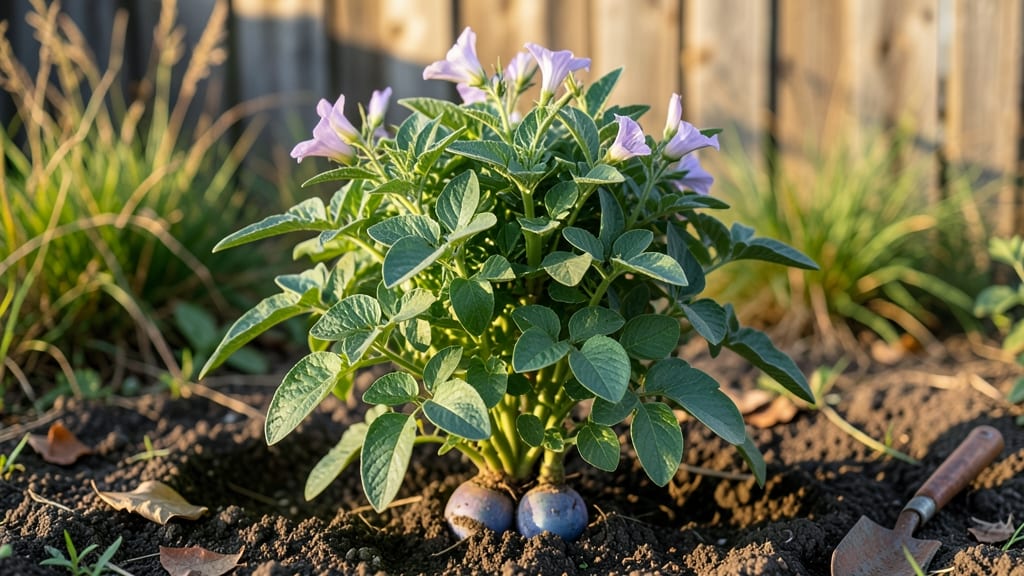
Growing a blue potato bush tree (Solanum rantonnetii) in the Pacific Northwest means you get a frost-hardy, velvety-blue shrub that thrives where many tropical plants fail.
I’ve learned the hard way that pruning in late winter—not fall—is the secret to keeping these striking plants bushy and healthy through our damp, chilly seasons.
The key to success starts with 6 hours of sunlight daily and well-draining soil that mimics their native South American forests. Water deeply once a week, letting the top inch dry between soakings—overwatering is the fastest way to kill these plants.
Once established, they’re surprisingly drought-tolerant, but young plants need consistent moisture to root properly.
What makes this shrub special is that pruning in late February (after the worst frosts) encourages dense, vibrant foliage while preventing the leggy growth that plagues many ornamental plants.
With the right cuts, you’ll see new blue-purple leaves pushing out by spring, creating a striking contrast against evergreens and spring blooms.
Even in Zone 7’s wet winters, these plants reward gardeners with year-round interest—their glossy leaves stay lush, and they rarely suffer from pests. The only real challenge? Keeping them from outgrowing their space, which is why strategic pruning in early spring is non-negotiable. Let’s get those shears sharp!
📚 In This Guide
- What you need
- Instructions
- Tips and common mistakes
- Wrapping up and next steps
What you need
- ● Blue Potato Bush Tree (Solanum rantonnetii) – 1 healthy, 1-2 gallon potted plant (ensure it’s labeled frost-resistant for PNW climates).
- ● Well-draining soil mix – 50% native PNW soil + 50% perlite or pumice (avoid heavy clay).
- ● Organic compost – 2-3 cups per planting hole to boost nutrients.
- ● Slow-release fertilizer – 10-10-10 NPK blend (1 tbsp per plant).
- ● Mulch (cedar chips or straw) – 2-3 inches to retain moisture and protect roots.
- ● Garden trowel or shovel – For digging planting holes (6-8 inches deep).
- ● Pruning shears – Sharp, sterilized shears (for shaping and frost prep).
- ● Gloves – Heavy-duty work gloves (to protect from thorns and soil).
- ● Watering can or hose with nozzle – For gentle watering (avoid soaking).
- ● Measuring tape or ruler – To space plants 3-4 feet apart.
- ● Frost cloth or row covers – Lightweight fabric (for early/late frosts; 4x6 ft per plant).
- ● Sunlight assessment – Full sun (6+ hours/day) or partial shade (morning sun + afternoon shade).
- ● Drainage test – Ensure planting area isn’t soggy (PNW’s wet winters matter!).
- ● Epsom salt – 1 tbsp dissolved in water monthly for magnesium boost.
- ● Stakes or trellis – If training as a small tree (height support).
- ● Soil pH tester – Ideal range: 6.0–7.0 (adjust with lime if needed).
- ● Companion plants – Drought-tolerant PNW natives (e.g., lavender, sedum).
Step-by-step guide to cultivating frost-resistant blue potato bush trees
Here’s how to establish hardy blue potato bush trees that thrive in the Pacific Northwest’s chilly climate.
Select and Prepare the Planting Site
Choose a location with full sun exposure—at least 6 hours of direct sunlight daily. Blue potato bush trees tolerate partial shade but produce fewer vibrant blue berries in low-light conditions. In the Pacific Northwest, where summers are mild and winters damp, select a spot with good air circulation to prevent fungal diseases.
Test the soil’s drainage by digging a 12-inch hole. If water pools after 30 minutes, amend the soil with 2–3 inches of compost to improve aeration. These trees prefer well-draining, slightly acidic soil with a pH between 5.5 and 6.5. A simple soil test kit from your local garden center will confirm your soil’s pH before planting.
Plant and Establish the Tree
Dig a hole twice as wide as the root ball but no deeper. Gently remove the tree from its container and loosen any circling roots with your fingers. Place the tree in the hole so the top of the root ball sits 1 inch above ground level—this prevents waterlogging during heavy Pacific Northwest rains.
Backfill the hole with native soil, tamping lightly to eliminate air pockets. Water deeply to settle the soil around the roots, providing 1–2 gallons of water depending on the tree’s size. Mulch the base with 2–3 inches of organic mulch, keeping it 6 inches away from the trunk to prevent rot. This mulch layer insulates roots during winter frosts while retaining moisture in dry summer spells.
Prune for Frost Resistance and Structure
Prune in early spring, just as new growth begins, to encourage sturdy branches that withstand winter freezes. Remove any dead, damaged, or crossing branches first—these are weak points where frost damage concentrates. Cut back one-third of the oldest branches to the ground to rejuvenate the tree and promote new, frost-hardy growth.
Shape the tree by thinning out crowded branches to improve air flow, which is critical in the Pacific Northwest’s humid climate. Avoid heavy pruning in late summer or fall, as new growth won’t harden off before winter. Instead, focus on light shaping to maintain an open canopy that allows sunlight to reach the center of the tree, preventing fungal issues.
Water and Fertilize for Winter Hardiness
Water deeply once a week during the first growing season, providing 1–2 gallons per tree depending on soil conditions. In the Pacific Northwest, where summers can be dry, monitor the top 2 inches of soil—water when it feels dry to the touch. Overwatering in winter can suffocate roots, so reduce watering in fall and avoid wetting the foliage to prevent fungal spores from taking hold.
Apply a balanced, slow-release fertilizer in early spring, following package instructions. Blue potato bush trees benefit from a light feeding of 10-10-10 fertilizer to support vibrant foliage and berry production. In late fall, add a 2-inch layer of compost around the base to boost organic matter and improve soil structure for the following year.
Protect from Late Frosts and Winter Chill
In the Pacific Northwest, late spring frosts can damage new growth. If a frost warning is issued after buds swell, cover the tree with a frost cloth secured loosely to allow airflow. Remove the cover as soon as temperatures rise to avoid overheating. In winter, the tree’s natural hardiness handles most frosts, but heavy snow loads can break branches—gently shake off excess snow to prevent structural damage.
Mulch heavily in late fall with 4–6 inches of straw or wood chips, extending the mulch ring 12 inches wider than the previous year. This extra insulation protects roots from temperature fluctuations and keeps the soil consistently cold, which is essential for the tree’s dormancy period. Remove the mulch in early spring to allow the soil to warm gradually.
Tips & tricks for cultivating frost-resistant blue potato bush trees
These practical insights will help you nurture a thriving blue potato bush tree that thrives in the Pacific Northwest's challenging climate.
Site Selection Wisdom: When choosing your planting location, prioritize areas with morning sun exposure—this reduces afternoon heat stress while still providing the required 6 hours of sunlight. I’ve found that southern-facing slopes in my garden yield the most vibrant blue berries, as they benefit from gentle morning warmth without the intense afternoon sun that can scorch leaves during our dry summers.
Root Ball Preparation: Before planting, soak the root ball in water for 10-15 minutes to ensure it’s thoroughly hydrated. This step is crucial, especially in our region’s often dry summers, as it helps establish a strong root system immediately. After planting, maintain that 1-inch elevation above ground level—this subtle adjustment prevents waterlogging that can occur during our heavy winter rains.
Pruning Precision: During your early spring pruning (Step 3), focus on removing branches that grow inward toward the center of the tree—these are prime spots for fungal growth in our humid climate. I’ve noticed that making clean cuts just above outward-facing buds encourages stronger growth patterns. Remember, those one-third oldest branches you’re removing? They’re making room for new, frost-hardy growth that will better withstand our winter chill.
Seasonal Care Strategy: In late fall, when you’re applying that 4-6 inch mulch layer, consider adding a thin layer of pine needles or cedar chips beneath the mulch. These natural materials release beneficial acids as they decompose, helping maintain that ideal 5.5-6.5 pH range we want. This subtle adjustment has helped my trees maintain better winter hardiness through multiple seasons in our region.
Pro Tips for Blue Potato Bush Tree
- These practical insights will help you nurture a thriving blue potato bush tree that thrives in the Pacific Northwest's challenging climate.
- Site Selection Wisdom: When choosing your planting location, prioritize areas with morning sun exposure—this reduces afternoon heat stress while still providing the required 6 hours of sunlight.
- Root Ball Preparation: Before planting, soak the root ball in water for 10-15 minutes to ensure it’s thoroughly hydrated.
Frequently asked questions
When is the best time to prune my blue potato bush tree?
Prune in early spring (March–April) before new growth starts or late winter after frost threats pass. Avoid heavy pruning in fall—it can stimulate tender new shoots vulnerable to winter cold. For PNW gardeners, February is ideal if you’re in milder zones (Zone 8+).
How cold-hardy is the blue potato bush tree, and how do I protect it from frost?
Most varieties tolerate down to 15°F (-9°C), but young plants or newly planted bushes need extra care. Mulch heavily (4–6 inches) with straw or wood chips in late fall, and wrap the base with burlap if temps drop below 20°F (-7°C). Prune back 1/3 of the plant in early spring to encourage sturdy regrowth.
Can I prune my blue potato bush tree too much? What are the signs?
Yes! Over-pruning (cutting back more than 1/3 of the foliage) can stress the plant, leading to fewer flowers, sparse berries, or stunted growth. Signs of over-pruning include leggy stems, yellowing leaves, or no new buds. If this happens, reduce pruning next year and focus on shaping rather than heavy cuts.
What can I do if my blue potato bush tree isn’t blooming?
Lack of blooms often stems from poor pruning, insufficient sunlight (6+ hours/day), or over-fertilizing with nitrogen. Try these fixes:
- Prune in early spring to encourage air flow and sunlight penetration.
- Move to a sunnier spot if possible (PNW shade can be tricky!).
- Use a balanced fertilizer (10-10-10) in early spring to boost flowering.
- Check for pests (aphids, spider mites)—they can stress the plant.
Are there frost-resistant alternatives to the blue potato bush tree?
If you’re after similar vibes (vibrant foliage, berries, or drought tolerance), consider these PNW-friendly swaps:
Plant
Why It’s Great
Cold Hardiness
Oregon Grape (Mahonia aquifolium)
Evergreen, yellow flowers, edible berries, deer-resistant.
Zone 5–9
Cascade Huckleberry (Solanum scoparium)
Native, blue berries, drought-tolerant, low-maintenance.
Zone 6–9
Dart’s Golden Currant (Ribes aureum)
Golden foliage, edible fruit, attracts pollinators.
Zone 4–8
Pro Tip: Label your cuts!
If you’re experimenting with pruning techniques (e.g., renewal pruning), use colored plant ties or flags to mark branches you’ve trimmed. This helps track progress and avoid over-pruning next season. PNW winters are unpredictable—documenting your pruning schedule pays off!
Wrapping up and next steps
The blue potato bush tree is a stunning, low-maintenance addition to your Pacific Northwest garden—especially when you master its frost-resistant pruning techniques! 🌿 With the right tools, timing, and care, you’ll keep it thriving year after year while showcasing its vibrant foliage and unique blooms.
Ready to take the next step? Start small: pick one pruning hack from this guide to test this season, then expand your skills as you grow more confident. Happy pruning—your garden (and future neighbors!) will thank you! 🌟