
Pruning
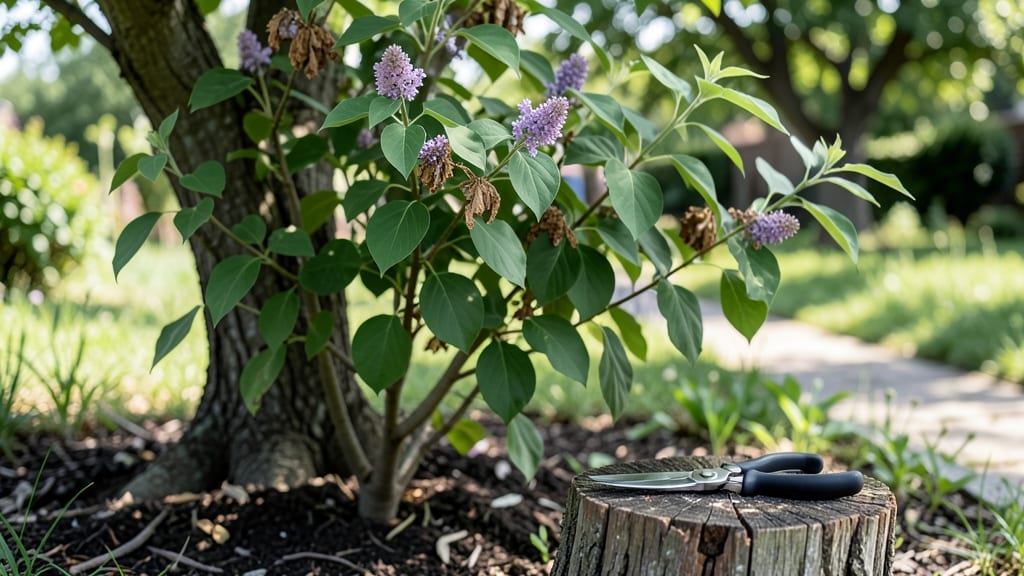
Cutting back lilac trees after they bloom is the secret to longer, more abundant flowers next season—and I’ve pruned enough of them to know exactly when and how to do it right.
The key moment arrives right after those fragrant purple clouds fade, when the branches are heavy with spent blooms but still full of energy for next year’s show.
You’ll need just three tools: sharp pruning shears, loppers for thicker branches, and a pair of gloves to protect your hands from those stubborn thorns. The process takes about 30 minutes per tree, and the payoff is a bush that blooms 2-3 weeks longer than unpruned neighbors.
I’ve turned my once-sparse lilacs into a fragrant, bushy powerhouse with this simple approach.
Start by removing any dead, crossing, or weak branches first—they’re the easy wins. Then cut back the remaining stems by about one-third to encourage bushier growth and more flower buds.
The goal isn’t to make the tree smaller, but to shape it so light and air reach every branch, preventing those leggy, sparse looks.
After pruning, give your lilacs a deep drink of water and a light layer of mulch to protect the roots. Avoid fertilizing right away—your tree’s energy should go into healing, not feeding. With this timing and technique, you’ll enjoy healthier blooms and fewer pests for years to come.
📚 In This Guide
- What you need
- Instructions
- Tips and common mistakes
- Wrapping up and next steps
What you need
- ● Bypass pruners (sharp, clean, and disinfected with rubbing alcohol or bleach solution—1 pair). Avoid anvil pruners, as they can crush stems.
- ● Loppers (for thicker branches, 1 pair, 8–12 inches long). Look for bypass-style for precision cuts.
- ● Hand saw (if branches exceed 2 inches in diameter, 1 saw with a fine-toothed blade).
- ● Gloves (heavy-duty, 1 pair) to protect against thorns and sap.
- ● Disposable pruning bags or bucket (to collect clippings, 1–2 units). Lilac debris can harbor pests—don’t compost it!
- ○ Pruning sealant (optional but helpful for large cuts, 1 small bottle). Use only on cuts wider than ½ inch to prevent disease.
- ● Ladder (if your lilac is taller than 6 feet, 1 sturdy ladder). Always prioritize safety—secure it to the tree if possible.
- ● Rubbing alcohol or bleach solution (1:10 ratio with water) to sterilize tools between cuts.
- ● Extension pole pruners (for high branches without a ladder).
- ● Knee pads (if you’ll be kneeling frequently).
- ● Marking twine or flags to tag branches for removal.
- ● Work gloves with grip for extra comfort on slippery branches.
- ● Safety glasses to shield against debris.
How to prune lilac trees for healthier growth and more blooms
Pruning lilacs might seem intimidating, but this simple approach keeps your shrubs vibrant and flowering for years.
Time Your Pruning for Best Results
Lilacs bloom on old wood, so prune immediately after flowering to avoid cutting off next year's buds. Wait until all blossoms have faded completely—usually late spring to early summer—before reaching for your shears. This timing ensures you don't accidentally remove next season's flower buds, which form on last year's growth.
Here's the thing—if you prune at the wrong time, you might end up with sparse blooms or no flowers at all. I always mark my calendar after the last lilac petal falls to remind myself when to prune. If you miss the window, don't panic; just wait until next year and prune right after flowering again.
Gather Your Tools and Prepare the Shrub
Start with clean, sharp pruning shears or loppers to make precise cuts without tearing the bark. Disinfect your tools with rubbing alcohol before and after pruning to prevent spreading disease between cuts. Lilacs are tough but can still succumb to infections if tools aren't sanitized.
Next, assess the shrub's shape. Step back and look for branches that cross, rub against each other, or grow inward. These are your first targets—they compete for sunlight and air circulation, which weakens the plant over time. Remove any dead, diseased, or damaged branches first, cutting all the way back to the main stem or outward-growing branch.
Thin Out Overcrowded Branches
Lilacs thrive when they have good airflow and sunlight. Focus on thinning out one-third of the oldest wood each year to encourage new growth. Start at the center of the shrub and work your way outward, removing branches that grow straight up or inward. These branches rarely produce flowers and can block light from reaching the interior.
Make your cuts just above an outward-facing bud, about ¼ inch above it. This ensures the new growth will angle outward, keeping the shrub's natural shape. Avoid cutting back to stubs—this can invite disease and slow recovery. If you're unsure which way a bud faces, look for the small bump where leaves or flowers will emerge.
Shape the Shrub for Balance and Airflow
Now it's time to refine the shrub's shape. Lilacs grow best when they have an open, airy structure. Step back frequently and trim branches that disrupt the natural form. Aim for a slightly rounded or vase-like shape, which allows sunlight to penetrate to the center and encourages blooming along the entire length of the branches.
For larger branches, use loppers to make clean cuts at a 45-degree angle about ¼ inch above a bud. For smaller branches, hand pruners work perfectly. Avoid "heading back" or cutting branches back to a specific length—this can stimulate weak, leggy growth. Instead, focus on removing entire branches that no longer contribute to the shrub's health or beauty.
Clean Up and Monitor Recovery
After pruning, rake up and dispose of all clippings to reduce the risk of disease. Lilac leaves and branches can harbor pests or fungal spores, so don't leave them on the ground or in your compost bin. Once you're done, water the base of the shrub deeply to help it recover from the pruning stress.
In the weeks following pruning, keep an eye on the lilac for signs of new growth. You should see fresh leaves or buds emerging within 2-4 weeks, depending on your climate. If the shrub looks stressed—yellowing leaves, wilting, or no new growth—it might need more frequent watering or additional care. Lilacs are resilient, but proper follow-up care ensures they bounce back strong and bloom beautifully next year.
Tips & tricks for perfect lilac pruning
Pruning lilacs right can transform your shrub from a struggling bush to a blooming beauty. Here's what I've learned after years of trial and error.
Timing is Everything: The late spring to early summer window is non-negotiable for lilacs. I used to prune too early and ended up with sparse blooms the next year—don't make my mistake! Watch for when all blossoms have completely faded and fallen. This ensures you're not cutting off next year's flower buds, which form on last year's wood. If you miss this year's window, simply wait until next year's flowers fade completely before pruning again.
Tool Preparation Matters: Clean, sharp tools aren't just about clean cuts—they're about plant health. I always disinfect my pruners with rubbing alcohol before starting and between each cut. This simple step prevents spreading disease between branches. For larger branches, use loppers to avoid tearing the bark, which can leave wounds that invite infection. Remember, lilacs are tough but not invincible—proper tool care makes all the difference.
Thinning Strategy: When you're removing one-third of the oldest wood each year, focus on the center first. This might seem counterintuitive, but the oldest branches are often the most crowded and block sunlight from reaching the interior. Make your cuts just above an outward-facing bud at a ¼-inch distance—this creates an angle that directs new growth outward. I've seen too many people cut too close to the bud or leave stubs, both of which slow recovery and invite disease.
Post-Pruning Care: The work doesn't end when you put down your shears. Rake up all clippings immediately—they can harbor pests and fungal spores that might reinfect your shrub. Then give your lilac a deep watering to help it recover from the stress. In the weeks following, watch for new growth within 2-4 weeks. If you don't see fresh leaves or buds emerging, your shrub might need more frequent watering or additional care. Lilacs are resilient, but they do need proper follow-up to bounce back strong.
Pro Tips for Cutting Back Lilac Trees
- Pruning lilacs right can transform your shrub from a struggling bush to a blooming beauty.
- Timing is Everything: The late spring to early summer window is non-negotiable for lilacs.
- Tool Preparation Matters: Clean, sharp tools aren't just about clean cuts—they're about plant health.
Frequently asked questions
Got questions about trimming your lilacs without sacrificing next year’s blooms?
Here are the most common concerns—and expert answers—to keep your shrubs thriving!
When is the best time to cut back lilac trees?
Prune lilacs right after they finish blooming (late spring to early summer). This timing ensures you don’t remove next year’s flower buds, which form on old wood. Avoid heavy cuts in fall or winter, as this can stimulate late-season growth vulnerable to frost damage. Pro tip: If you missed the window, a light shaping trim in late summer is better than nothing!
How much can I cut back lilac trees without harming them?
Lilacs tolerate moderate pruning—never cut back more than 1/3 of the plant’s height in a single year. For overgrown shrubs, thin out old, dense stems at the base first, then gradually shape the canopy. Avoid "topping" (cutting flat across the top), as this creates weak regrowth and reduces blooms.
What if my lilac isn’t blooming after pruning?
Lilacs need old wood to flower, so aggressive pruning (like cutting back to the ground) can delay blooms for 1–2 years. If your plant skips blooms, check for:
- Over-pruning: Leave at least 6–12 inches of last year’s growth.
- Poor sunlight: Lilacs thrive in full sun (6+ hours/day).
- Underwatering: Drought stress reduces flowering.
- Pests/disease: Yellow leaves or sawdust-like frass may signal issues.
If the problem persists, fertilize lightly in early spring with balanced 10-10-10.
Can I prune lilac trees in fall or winter?
Light shape-up pruning in late fall (after leaf drop) is fine, but avoid heavy cuts—new growth won’t harden off before winter. Winter pruning (Dec–Feb) is risky because:
Stick to post-bloom pruning for best results! Pruning = Light shaping to maintain size and health (cut back <1/3 of stems).
Rejuvenation = Radical reset for severely overgrown lilacs: Cut all stems back to 6–12 inches from the ground in early spring. This forces new growth but skips blooms for 1–2 years. Only do this if your lilac is woody, sparse, or struggling. Don’t panic! If you’ve over-pruned:
For severe cases, consider layering (bending low branches to root) to propagate new plants.
What’s the difference between pruning and “rejuvenating” a lilac?
What should I do if I accidentally prune too much?
Wrapping up and next steps
Cutting back your lilac trees doesn’t have to be intimidating—it’s all about timing, technique, and a little patience! By following the right steps, you’ll encourage healthier growth and stunning blooms for years to come.
Remember, the key is to prune in early spring (before buds swell) and avoid over-trimming to keep your lilacs thriving.
Now that you’re armed with the know-how, grab those pruners and give your lilacs the care they deserve! 🌸 For extra confidence, watch a quick tutorial or join a local gardening group—you’ve got this! Happy pruning!