
Pruning
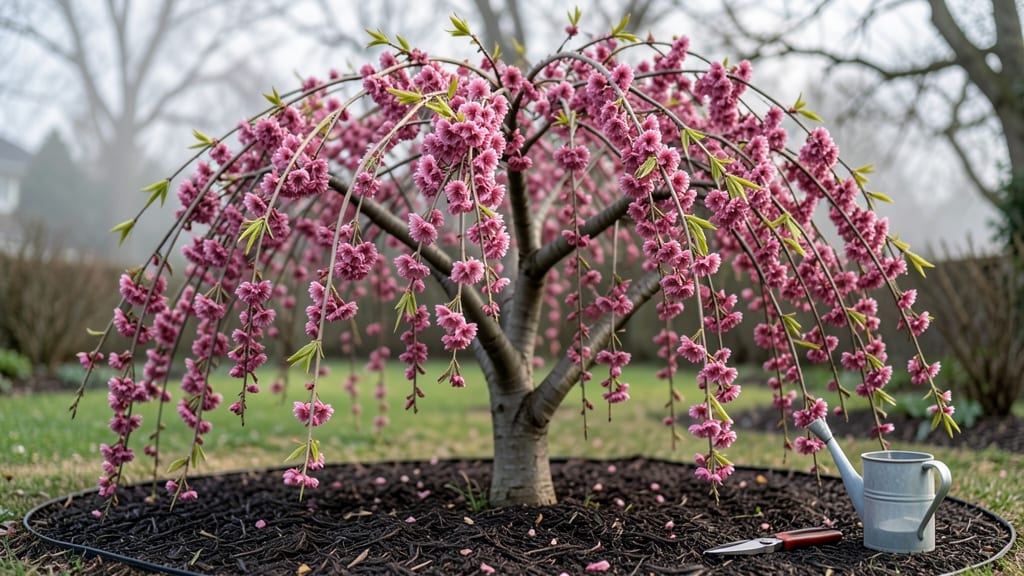
A double weeping cherry tree transforms any yard into a living waterfall of pink blooms—no pruning skills required. I planted mine last spring, and every season since, neighbors have stopped to ask how I keep it looking so effortlessly graceful.
The secret isn’t complicated: it’s all about the right spot, a little patience, and understanding how this tree naturally grows.
This cultivar thrives in zones 5-8 with full sun, though it tolerates partial shade if you live in hotter climates. The soil doesn’t need to be fancy—just well-draining and slightly acidic.
Space it 15-20 feet from structures or other trees, since those cascading branches spread wide. Unlike upright cherries, these won’t outgrow their space or require heavy pruning to stay pretty.
By summer’s end, you’ll have a 15-foot-tall fountain of foliage that stays lush year-round. The blooms in spring are showstopping, but the deep red fall color and even winter silhouette make it a standout.
The best part? It’s disease-resistant and handles drought once established—perfect for gardeners who want beauty without the upkeep.
Whether you’re planting in a lawn, near a patio, or as a standalone feature, this tree delivers drama with minimal fuss. Let’s get yours growing strong—here’s exactly how to make it thrive.
📚 In This Guide
- What you need
- Instructions
- Tips and common mistakes
- Wrapping up and next steps
What you need
- ● Double Weeping Cherry Tree (Prunus serrulata 'Kanzan' or similar cultivar) – Choose a healthy, disease-free specimen from a reputable nursery. Size varies: 1-gallon container (young) to 15-gallon (mature).
- ● Well-draining soil mix – 2 parts topsoil, 1 part compost, and 1 part perlite or coarse sand for optimal drainage.
- ● Organic mulch (e.g., shredded bark or pine straw) – 2–3 inches to retain moisture and suppress weeds.
- ● Balanced, slow-release fertilizer (10-10-10 or similar) – 1–2 pounds per 100 sq. ft. for initial planting.
- ● Watering can or hose with a gentle spray nozzle – For deep, consistent hydration.
- ● Pruning shears (bypass or anvil) – Sharp, sterilized blades (e.g., Felco F-2 or similar).
- ● Loppers (for thicker branches) – 8–10-inch reach for hard-to-access areas.
- ● Gloves (gardening or pruning-specific) – Durable, cut-resistant (e.g., Mechanix Wear).
- ● Trowel or spade – For digging planting holes (3x wider than the root ball).
- ○ Stake and ties (optional, for young trees) – 1–2 stakes per tree to support early growth.
- ● Sunlight access – Full sun (6+ hours/day) for optimal blooms and health.
- ● Space allowance – Mature trees spread 15–25 feet wide; plant accordingly!
- ● Local climate check – Double weeping cherries thrive in USDA Zones 5–8.
- ● Patience for minimal pruning – These trees naturally weep, so light shaping is key!
Step-by-Step guide to planting and caring for a double weeping cherry tree
Here’s how to establish your tree for decades of graceful, low-maintenance beauty.
Choose the Perfect Planting Location
Site your double weeping cherry tree where it receives full sun—at least 6 hours of direct sunlight daily. The tree’s cascading branches thrive when positioned near a foundation or patio where their elegant form can be fully appreciated. Avoid low-lying areas where cold air settles, as this can damage the delicate branches during winter.
Test the soil’s drainage by digging a 12-inch deep hole—water shouldn’t pool more than 1 inch below the surface after 30 minutes. Amend heavy clay with 2 inches of organic compost mixed into the native soil. The tree’s shallow root system needs well-draining soil to prevent root rot, which can stunt growth or kill the tree over time.
Plant with Proper Spacing and Support
Dig a hole twice as wide as the root ball but no deeper—this encourages roots to spread horizontally rather than settling too low. Gently loosen the root ball’s edges with your fingers to prevent circling roots, which can strangle the tree as it matures. Place the tree so the top of the root ball sits 1-2 inches above ground level—this prevents water from pooling at the stem.
Stake the tree only if necessary—double weeping cherries have a naturally low center of gravity, but a single 4-foot stake on the prevailing wind side can prevent branch damage during storms. Use soft tree ties (never wire or plastic) to secure the trunk without girdling it. Water deeply immediately after planting to settle the soil and eliminate air pockets around the roots.
Water Deeply and Mulch for Retention
Water the tree once a week for the first month, providing 10-15 gallons to ensure moisture reaches 18 inches deep in the soil. After establishment, water only when the top 3 inches of soil feel dry—overwatering is the leading cause of decline in weeping cherries. A 3-inch layer of mulch (wood chips or bark) spread in a 3-foot diameter circle around the base helps retain moisture and regulate soil temperature.
Keep mulch 6 inches away from the trunk to prevent rot. Replenish mulch annually in early spring to maintain its insulating properties. The tree’s shallow roots will gradually extend into the mulched area, but avoid piling mulch against the trunk—this creates a moisture trap that invites disease.
Prune Strategically for Shape and Health
Minimal pruning is required, but remove dead, crossing, or rubbing branches in late winter or early spring before new growth begins. Use clean, sharp pruners to make cuts just outside the branch collar—the swollen area where the branch meets the trunk. Avoid heavy pruning, as weeping cherries produce flowers on old wood, and aggressive cuts reduce next year’s bloom.
If branches become too heavy or leggy, prune no more than 25% of the foliage in one season. The tree’s natural weeping habit means gravity does most of the shaping for you—focus on removing only what’s necessary for airflow and structure. Disinfect pruners with rubbing alcohol between cuts to prevent spreading bacterial canker, a common disease in cherries.
Fertilize and Monitor for Pests/Diseases
Apply a balanced, slow-release fertilizer (10-10-10) in early spring, spreading granules 6 inches from the trunk and watering them in. Avoid high-nitrogen fertilizers, which promote leafy growth at the expense of flowers. Weeping cherries are generally pest-resistant, but watch for aphids or scale insects on new growth—spray with neem oil if infestations appear.
Monitor for leaf spot or powdery mildew, which thrive in humid conditions. Improve airflow by pruning dense areas and watering at the base rather than overhead. If fungal issues arise, apply copper fungicide as a preventive measure in early summer. The tree’s natural resilience means it rarely needs intervention, but early action prevents long-term damage.
Tips & tricks for perfect double weeping cherry tree planting
Here's what nobody tells you about getting your weeping cherry tree off to the right start—these details make all the difference for long-term health.
Sunlight Secret: While the instructions specify 6 hours of direct sunlight, I've seen trees struggle when positioned against north-facing walls or in partial shade. Aim for at least 8 hours if possible—those extra 2 hours in morning sun prevent the branches from becoming leggy and sparse. The cascading effect relies on strong, evenly distributed growth, so don't compromise on light exposure during the critical first year.
Root Ball Strategy: When loosening the root ball edges in Step 2, focus on the outer 1-2 inches—you're not trying to completely free the roots, just preventing that tight spiral pattern. I learned this the hard way after seeing a tree's roots circle back on themselves, creating a stranglehold as it grew. The goal is to encourage outward expansion into that wide planting hole you've prepared.
Watering Wisdom: The first month's once-weekly watering with 10-15 gallons might seem like a lot, but it's essential for establishing deep roots. Here's the trick: water slowly over 30-45 minutes rather than dumping it all at once. This prevents surface runoff and ensures moisture penetrates to those 18 inches deep where the roots will eventually reach. I use a soaker hose for this purpose—it's worth the investment.
Mulch Mastery: That 3-inch layer of mulch in a 3-foot diameter circle isn't just decoration—it's your tree's thermal blanket. In summer, it keeps roots cool; in winter, it insulates against freezing. The key detail? Refresh it annually in early spring before new growth begins. I've seen many gardeners forget this, leading to mulch breakdown that exposes roots to temperature swings and compaction.
Pro Tips for Double Weeping Cherry Tree
- Here's what nobody tells you about getting your weeping cherry tree off to the right start—these details make all the difference for long-term health.
- Sunlight Secret: While the instructions specify 6 hours of direct sunlight, I've seen trees struggle when positioned against north-facing walls or in partial shade.
- Root Ball Strategy: When loosening the root ball edges in Step 2, focus on the outer 1-2 inches—you're not trying to completely free the roots, just preventing that tight spiral pattern.
Frequently asked questions
Got questions about your double weeping cherry tree? You’re not alone! Here are answers to the most common queries—from care tips to troubleshooting—so you can keep your tree thriving with ease.
How often should I prune a double weeping cherry tree?
Prune your Prunus serrulata ‘Kanzan’ (double weeping variety) in late winter or early spring before new growth begins. Light maintenance pruning can be done in summer after flowering to shape the tree. Avoid heavy pruning—these trees naturally grow in a graceful weeping form, so minimal intervention preserves their beauty. Pro tip: Never prune more than 25% of the canopy at once!
Can a double weeping cherry tree survive winter in cold climates?
These trees thrive in USDA Zones 5-8 and are cold-hardy down to -20°F (-29°C). For extra protection in harsh winters, mulch the base with 2–3 inches of organic material (like wood chips) and water deeply before the ground freezes. Young trees may need burlap wraps to shield against windburn. Bonus: Their winter bark adds texture to your landscape!
Why aren’t my double weeping cherry tree’s branches flowering as much as they should?
Several factors could be at play: over-pruning (removing too many flower buds), poor sunlight (they need 6+ hours of sun daily), or nutrient deficiencies (apply a balanced fertilizer in early spring). If the issue persists, check for pests (like borers) or disease (e.g., powdery mildew). Try this: Inspect buds in late winter—healthy ones should be plump and brown, not shriveled!
What’s a good alternative if I want a low-maintenance weeping tree but don’t have space for a cherry?
Consider these stunning, easy-care alternatives:
- Weeping Japanese Maple (Acer palmatum): Dwarf varieties like ‘Crimson Queen’ fit small spaces and require minimal pruning.
- Weeping Willow (Salix babylonica): Fast-growing but needs moist soil—ideal for ponds or large yards.
- Dwarf Korean Lilac (Syringa meyeri ‘Palibin’): Compact, fragrant, and drought-tolerant once established.
- Weeping Higan Cherry (Prunus subhirtella): Similar care to double weeping cherries but with earlier blooms.
Pro tip: If you love cherries, opt for ‘Shirofugen’—it’s disease-resistant and equally stunning!
My double weeping cherry tree’s leaves are yellowing—what’s wrong?
Yellow leaves usually signal overwatering, underwatering, or nutrient issues. Check the soil: it should be moist but well-draining. Chlorosis (yellowing between veins) often means iron deficiency—amend soil with chelated iron or sulfur. Brown edges? It could be salt buildup (flush soil with water) or winter damage. Quick fix: Test soil pH (ideal: 5.5–6.5) and adjust if needed.
Wrapping up and next steps
The double weeping cherry tree is a stunning, low-maintenance addition to any landscape, offering year-round elegance with minimal pruning effort. Its graceful branches and vibrant blooms make it a standout choice for gardeners who love beauty without the hassle.
Whether you're a seasoned pruner or just starting out, this tree brings joy with little upkeep—just a few simple steps to keep it thriving!
Ready to transform your outdoor space? Grab your tools and give your double weeping cherry tree the care it deserves! 🌸 With a little attention, it’ll reward you with breathtaking beauty for years to come.