
Planting
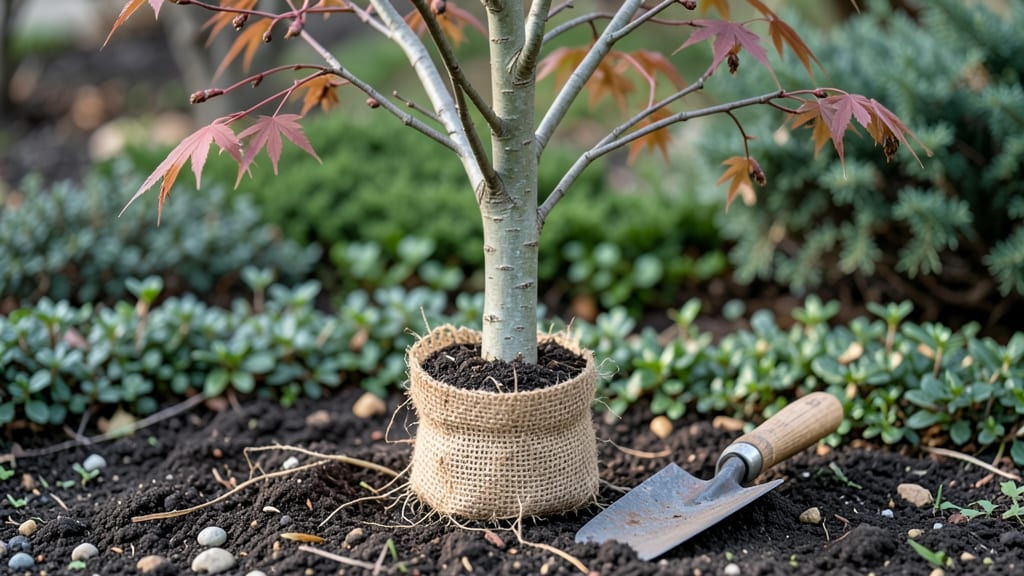
Where do you plant a Japanese maple tree? The perfect spot starts with morning sun and afternoon shade—this delicate beauty thrives where light dances across its leaves without scorching them.
I planted mine under a mature oak's dappled canopy, and the result? Velvety foliage that shifts from spring's chartreuse to fiery autumn reds without a single leaf burn. The key isn't just sunlight—it's the balance between warmth and shelter that keeps those iconic branches from snapping in storms.
Soil needs to be moist but well-draining, like a sponge that holds water without drowning roots—a mix of garden loam and compost works best.
In tight spaces, a 15-gallon container with drainage holes lets you move it to shade during heatwaves, while in-ground plantings need 6-8 feet of clearance from walls or other trees to prevent root competition.
My urban yard's compact maple now sits in a raised bed with gravel at the bottom, solving both drainage and space issues.
You'll know you've nailed it when those first spring leaves unfurl smooth and glossy, not curled from stress. Pair it with hostas for shade-loving companions or boxwoods for structured contrast—the right neighbors make the difference between a pretty tree and a showstopper.
For small gardens, a dwarf variety like 'Bloodgood' stays under 10 feet tall, while standard types need full ground space to develop their signature graceful shape.
Climate matters too: maples hate windburn, so shelter them with a fence or larger plants if your yard is exposed. In hot zones, mulch heavily to keep roots cool—this tree's roots run shallow, and consistent moisture is non-negotiable.
The payoff? A tree that becomes the heart of your garden, year after year, with minimal fuss once you get the location right.
📚 In This Guide
- What you need
- Instructions
- Tips and common mistakes
- Wrapping up and next steps
What you need
- ● Japanese Maple Tree: Choose a healthy, container-grown sapling (3–5 gallons) or a bare-root tree if planting in early spring.
- ● Shovel or Trench Digger: A sharp-edged spade or digging bar for precise hole creation.
- ● Garden Gloves: Heavy-duty, waterproof gloves to protect your hands from thorns and soil.
- ● Compost or Well-Aged Manure: 5–10 gallons, blended into the planting hole for nutrient-rich soil.
- ● Mulch (Organic): 2–3 inches of shredded bark, pine straw, or wood chips (keep 6 inches away from the trunk).
- ● Watering Can or Hose with Soaker Nozzle: For gentle, deep watering (1–2 gallons per watering session).
- ○ Staking Kit (Optional but Recommended): 2–3 stakes + soft tree ties if your tree is tall or top-heavy.
- ● Soil pH Test Kit: Ensure your soil’s pH is slightly acidic (5.0–6.5).
- ● Slow-Release Fertilizer: Balanced 10-10-10 or organic options like fish emulsion.
- ● Root Stimulator: A mycorrhizal fungus or liquid rooting hormone for faster establishment.
- ● Tree Guard or Protective Barrier: To shield young trunks from lawnmowers or pets.
- ● Pruning Shears: For trimming dead branches post-planting.
How to choose the perfect spot for a Japanese maple tree
Here's the method I've used for years to keep these trees thriving and stunning.
Select the Right Sunlight Exposure
Japanese maples do best with dappled sunlight—think bright morning sun with afternoon shade. A location that receives 4-6 hours of gentle sunlight daily is ideal. Too much harsh afternoon sun can scorch delicate leaves, while too little light weakens growth and reduces vibrant foliage colors.
I always scout the planting site at different times of day. Notice how sunlight moves across the area—look for spots where branches of taller trees already cast natural shade in the afternoon. This mimics their native forest understory conditions. If your yard has no natural shade, consider planting near a north-facing wall or under a deciduous tree that will provide summer shade.
Test and Prepare the Soil
Japanese maples prefer well-draining, slightly acidic soil with a pH between 5.0 and 6.5. Before planting, I dig a hole twice as wide as the root ball but only as deep. This encourages roots to spread horizontally rather than settling too deeply, which can lead to poor stability.
Work in 2-3 inches of organic matter like compost or leaf mold into the native soil. This improves drainage while maintaining moisture retention. Avoid heavy clay soils unless you've amended them significantly—Japanese maples hate "wet feet" and will develop root rot if their roots sit in soggy conditions. A simple soil test kit will tell you if your soil needs adjustment before planting.
Choose the Optimal Location Based on Mature Size
Consider the tree's mature height and spread when selecting a spot. Most Japanese maples reach 15-25 feet tall with a 10-15 foot spread, though dwarf varieties stay much smaller. Plant at least 10 feet away from buildings, sidewalks, and other trees to allow proper air circulation and prevent root competition.
I always measure the space twice—once for the current planting hole and again considering future growth. A good rule of thumb is to leave at least 3 feet of clearance from hardscapes like driveways or patios. This prevents root damage from construction equipment and gives the tree room to develop its natural shape without becoming root-bound.
Consider Microclimate Factors
Japanese maples are sensitive to strong winds and temperature fluctuations. I look for spots with some wind protection—near a fence, building, or group of shrubs—but still with good air circulation to prevent fungal diseases. In colder climates, avoid planting in low-lying areas where cold air settles.
Urban areas often have heat islands where pavement radiates heat. If planting in a city, choose a spot with reflective surfaces nearby like light-colored walls or gravel to help moderate temperatures. Mulching with 2-3 inches of organic mulch (like shredded bark) helps regulate soil temperature and retain moisture while protecting roots from extreme heat or cold.
Tips & tricks for perfect Japanese maple tree planting
Between us, these small details make all the difference in whether your Japanese maple thrives or struggles. I've planted dozens and learned the hard way about what really matters.
Sunlight Timing: The 4-6 hours of sunlight should be spread across morning hours. I always check the site at noon to see where harsh afternoon sun hits—those spots will scorch even with shade. A good test is to place a white sheet on the ground at different times and mark where shadows fall. The ideal spot will have morning sun but stay in shade by early afternoon.
Soil Depth Secret: That hole twice as wide but only as deep as the root ball? Don't skip this. I once planted one too deep and the tree struggled for years. The roots need room to spread horizontally, not settle vertically. If your soil is heavy clay, mix in 2-3 inches of sand or perlite to improve drainage—this prevents the dreaded "wet feet" that cause root rot.
Mature Size Reality Check: The 10-foot spacing from buildings and sidewalks is non-negotiable for most varieties. I measured a spot near my patio that looked perfect until I realized the mature spread would block my outdoor seating. Always visualize the tree at full size—use a string or stakes to outline its eventual shape before planting.
Microclimate Protection: Wind protection doesn't mean planting in a dead zone. I've seen trees planted too close to fences where airflow gets completely cut off, leading to fungal issues. The key is partial protection—look for spots where wind gets diffused rather than blocked completely. In cities, position your tree where it gets morning sun but afternoon shade from nearby buildings.
Pro Tips for Where Do You Plant A Japanese Maple Tree
- Between us, these small details make all the difference in whether your Japanese maple thrives or struggles.
- Sunlight Timing: The 4-6 hours of sunlight should be spread across morning hours.
- Soil Depth Secret: That hole twice as wide but only as deep as the root ball?
Frequently asked questions
Got questions about planting your Japanese maple tree?
You’re not alone! Here are answers to the most common concerns—from sunlight struggles to soil secrets—to help you grow a showstopper.
Can a Japanese maple tree grow in full sun?
Most Japanese maples thrive in partial shade (4–6 hours of sun), but varieties like ‘Bloodgood’ or ‘Emperor I’ tolerate full sun if soil stays moist. Avoid harsh afternoon sun in hot climates—it can scorch delicate leaves. Pro tip: Use shade cloth (30–50%) if planting in full sun!
What’s the best time of year to plant a Japanese maple?
Plant in early spring or fall (4–6 weeks before first frost) for best root establishment. Avoid summer heat or winter freezes, which stress young trees. Bare-root trees need immediate planting; container-grown trees can wait until soil is workable.
How often should I water a newly planted Japanese maple?
Water deeply 2–3 times per week for the first year, keeping soil consistently moist (but not soggy). Mulch 2–3 inches around the base to retain moisture. Mature trees need less water but appreciate drought protection during dry spells. Watch for: Wilting leaves = thirsty tree!
Can I plant a Japanese maple under an existing tree?
Yes, but choose a tree with non-invasive roots (like oaks or maples) and plant your Japanese maple at least 10–15 feet away. Avoid competitors with aggressive roots (e.g., willows or pines). Monitor for root competition—if leaves yellow, the roots may be battling for space!
Why are my Japanese maple leaves turning yellow?
Yellow leaves often signal overwatering, poor drainage, or nutrient deficiency. Check soil moisture (soggy = root rot risk) and amend with compost. Yellowing in spring? Likely normal as new leaves emerge. Act fast: Adjust care and fertilize lightly if needed.
Still stumped? Drop your question below—we’re happy to help your Japanese maple thrive!
Wrapping up and next steps
Planting a Japanese maple tree is a rewarding journey—one that combines artistry with nature! 🌿 The key to its stunning growth lies in finding the perfect balance of sunlight, soil, and space.
Whether you choose a bright, dappled spot or a sheltered nook, your tree will thrive with the right care and attention.
Now that you’re armed with the secrets to success, it’s time to roll up your sleeves! Start by marking your ideal spot, testing the soil, and preparing the area. Ready to watch your Japanese maple flourish? Grab your tools and get planting—your garden’s masterpiece awaits! 🌸