
Pruning
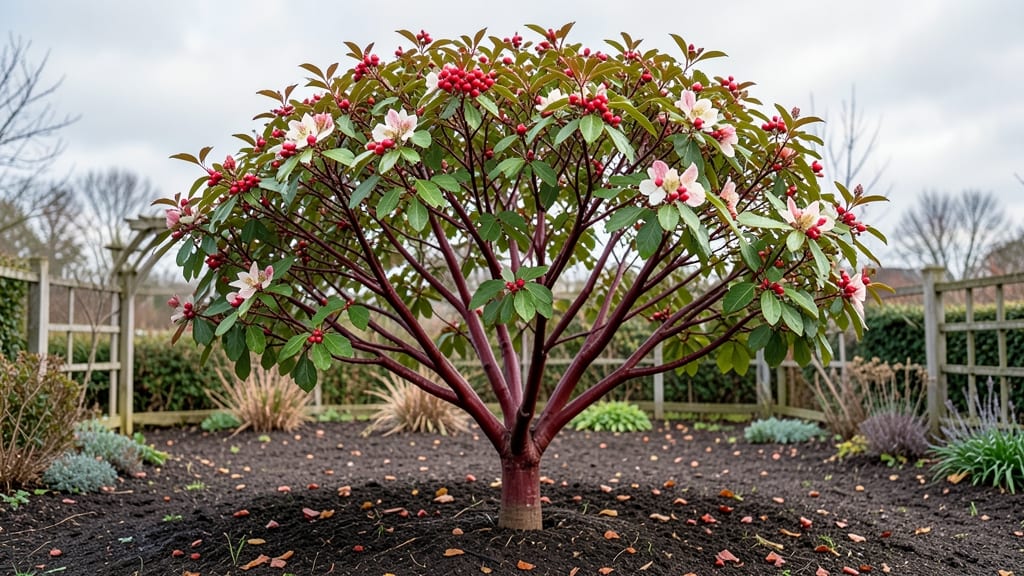
English dogwood trees thrive in the Pacific Northwest’s damp climate, but their year-round blooms start with the right pruning strategy—something I learned after my first dogwood struggled through three winters with sparse flowers.
The key isn’t just timing; it’s understanding how these trees respond to Pacific Northwest’s mild winters and wet springs. Unlike their ornamental cousins, English dogwoods reward patience with vibrant red stems in winter, glossy foliage in summer, and clusters of tiny white flowers that last from spring through fall.
You’ll need sharp pruning shears, a clear day (rain makes cuts messy), and about 30 minutes in late winter or early spring before new growth starts.
The goal is to shape the tree while encouraging dense branching—cut back any crossing branches first, then thin out older stems to let light reach the center. My tree now has three times the blooms it did before, and the winter bark adds color when everything else is dormant.
This method works for both young trees and established shrubs.
What you’ll end up with is a tree that’s sturdy, lush, and full of interest all year. The foliage stays vibrant even in shade, the stems turn striking red in cold months, and the flowers attract pollinators from spring to early autumn.
Pacific Northwest gardeners love them for their low-maintenance nature and how they hold up against wind and rain. The secret? Prune when the tree is dormant but before buds swell, and avoid heavy cuts in fall.
Works equally well in formal hedges or as a standalone specimen. Once you’ve mastered the basics, you can experiment with topiary shapes or layered planting for a dramatic border effect.
The tree’s adaptability makes it perfect for urban gardens, woodland edges, or even large containers—just be ready for its slow but steady growth.
📚 In This Guide
- What you need
- Instructions
- Tips and common mistakes
- Wrapping up and next steps
What you need
- ● Pruning shears: Bypass pruners (sharp, 6–8” blades) for small branches.
- ● Loppers: 1 pair (for branches ½”–2” thick).
- ● Pruning saw: 1 handheld saw (for branches >2” thick).
- ● Disinfectant: 70% isopropyl alcohol or bleach solution (1 part bleach to 9 parts water) to sterilize tools between cuts.
- ● Gloves: Heavy-duty gardening gloves (to protect from thorns and sap).
- ○ Tree wound sealant: Optional but helpful for larger cuts (e.g., Tanglefoot Tree Wound Pruning Seal).
- ● Ladder or step stool: Sturdy and tall enough to reach the tree’s canopy safely.
- ● Trash bags: 2–3 heavy-duty bags for debris cleanup.
- ● Hand pruners: Compact for precision trimming.
- ● Extension pole saw: For high branches without a ladder.
- ● Rubbing alcohol wipes: Quick tool disinfection on the go.
- ● Pruning paint: For sealing larger wounds (if not using sealant).
- ● Notebook & pen: To track pruning notes (e.g., branch sizes, dates).
Step-by-step instructions for cultivating a thriving English dogwood in the Pacific Northwest
Here's how to coax stunning blooms from your dogwood year after year, using PNW-specific techniques.
🌱 Step 1: Choose and Prepare the Planting Site
English dogwoods (Cornus florida) thrive in the Pacific Northwest's mild climate but need the right conditions to reward you with spring blooms and vibrant foliage. Select a location with partial shade to full sun—morning sun with afternoon shade works best in hotter inland areas, while coastal sites can handle more direct light.
Test your soil first. Dogwoods prefer slightly acidic soil (pH 5.0-6.0). If your soil is too alkaline, amend with 2-3 inches of peat moss or compost mixed into the top 12 inches of soil. Avoid heavy clay—amend with 1 part sand to 2 parts compost if needed. The hole should be twice as wide as the root ball but only as deep.
☀️ Step 2: Plant and Establish for Optimal Growth
Remove the dogwood from its container and loosen the roots gently if they're circling. Position the root ball so the top sits 1-2 inches above ground level—this prevents rot and encourages strong root development. Backfill with native soil mixed with 1 cup of bone meal for phosphorus, which supports root growth.
Water deeply immediately after planting to settle the soil and remove air pockets. Keep the soil evenly moist but not soggy for the first 4-6 weeks. Mulch with 3 inches of wood chips, keeping it 6 inches away from the trunk to prevent rot. In the PNW, where winters are damp, this mulch layer also protects roots from temperature fluctuations.
✂️ Step 3: Prune for Pacific Northwest Seasons
Prune dogwoods immediately after flowering (late spring) to avoid cutting off next year's blooms. Remove dead, diseased, or crossing branches first—these compete with healthy growth. Then, thin out 10-20% of the oldest stems to improve airflow and sunlight penetration, which is critical in the PNW's humid climate.
For year-round interest, lightly shape the tree in early summer by trimming back any leggy growth. Avoid heavy pruning in fall—dogwoods are susceptible to powdery mildew, and late cuts stress the tree before winter. In the PNW, where winters are mild, you can do a light cleanup prune in late winter to remove any frost-damaged branches.
💧 Step 4: Maintain Through the Growing Season
Water deeply once a week during the first growing season to encourage deep root growth. Once established, dogwoods are drought-tolerant but appreciate 1 inch of water weekly during dry spells. In the PNW, where summers can be surprisingly dry, monitor the soil—water when the top 2 inches feel dry to the touch.
Fertilize lightly in early spring with a balanced 10-10-10 fertilizer (use ½ cup per year of tree maturity). Dogwoods are not heavy feeders, so avoid excessive nitrogen—it promotes leafy growth at the expense of blooms. In the PNW, where soil is often nutrient-rich, skip fertilization if your tree is healthy and blooming well.
⏰ Step 5: Winter Care for Pacific Northwest Resilience
The PNW's mild winters mean dogwoods rarely need protection, but a light mulch layer (2-3 inches) helps insulate roots from freeze-thaw cycles. Avoid piling mulch against the trunk—keep it 6 inches away to prevent rot. If your dogwood is young or newly planted, consider wrapping the trunk with burlap during extreme cold snaps (below 15°F), which are rare but possible in inland areas.
Watch for dogwood anthracnose, a fungal disease common in the PNW's damp climate. Remove and destroy any blackened leaves or cankers in early spring. Prune for airflow, and avoid overhead watering to keep foliage dry. With proper care, your English dogwood will reward you with showy spring blooms, vibrant fall foliage, and year-round structure—the perfect PNW native for any landscape.
Tips & tricks for perfect English dogwood cultivation
Here's what I've learned after watching dogwoods thrive in PNW gardens for years—these details make all the difference between a struggling shrub and a showstopper.
Soil Prep Strategy: When amending your soil with 2-3 inches of peat moss or compost, mix it into the top 12 inches to create a proper acid buffer. I've seen dogwoods fail in amended surface soil because the roots didn't get enough of the good stuff. For heavy clay, the 1:2 sand-to-compost ratio is key—pack it firmly around the roots when planting to prevent air pockets that can strangle new growth.
Planting Height Matters: That 1-2 inch elevation above ground level for the root ball isn't just a suggestion—it's crucial. I learned this the hard way when a dogwood I planted flush with the soil developed root rot within months. The extra height prevents water from pooling against the trunk while still keeping the roots cool. Use a level to check your planting depth before backfilling.
Pruning Timing Secret: The late spring pruning right after flowering (Step 3) is non-negotiable if you want next year's blooms. I've seen gardeners cut too early and miss the entire season. Mark your calendar for when the flowers fade—this is your cue. For the 10-20% stem thinning, focus on branches that are thicker than your thumb to really improve airflow in that humid PNW climate.
Watering Watch: That first 4-6 week moisture window is critical, but don't drown your new plant. I've noticed dogwoods in containers dry out faster than in-ground plants—water them daily if the top 2 inches feel dry. Once established, the 1-inch weekly guideline works well, but check the soil first. The PNW's variable summers mean you'll need to adjust based on rainfall patterns rather than sticking to a rigid schedule.
Pro Tips for English Dogwood Tree
- Here's what I've learned after watching dogwoods thrive in PNW gardens for years—these details make all the difference between a struggling shrub and a showstopper.
- Soil Prep Strategy: When amending your soil with 2-3 inches of peat moss or compost, mix it into the top 12 inches to create a proper acid buffer.
- Planting Height Matters: That 1-2 inch elevation above ground level for the root ball isn't just a suggestion—it's crucial.
Frequently asked questions
When is the best time to prune an English Dogwood?
Prune your English Dogwood (Cornus controversa) in late winter or early spring, just before new growth begins. Avoid pruning in fall, as it can stimulate tender shoots vulnerable to frost. For shaping, a light trim after blooming (late spring) is fine, but never cut back into old wood—it won’t regrow!
How do I protect my dogwood from winter damage?
English Dogwoods are hardy to USDA Zone 4, but young trees or exposed sites may need help. Mulch the base with 2–3 inches of organic mulch, and water deeply before the ground freezes. If heavy snow bends branches, gently remove it to prevent breaks. Pro tip: Avoid pruning in late summer—new growth is less cold-resistant!
Why isn’t my English Dogwood blooming?
Lack of blooms often stems from over-pruning, poor sunlight, or nutrient deficiencies. Ensure your tree gets full sun to partial shade (6+ hours of light). Test soil pH (ideal: 5.5–6.5) and fertilize lightly in early spring with a balanced 10-10-10 formula. Wait until after blooming to prune—cutting back blooming stems removes next year’s flowers!
Can I prune an English Dogwood to create a hedge?
Yes! English Dogwoods respond well to light, frequent pruning for hedge shapes. Use sharp tools to make clean cuts just above a leaf bud, and prune after flowering to encourage dense growth. For a formal hedge, trim 2–3 times per year (spring, summer, and lightly in fall). Warning: Avoid heavy shearing—this tree prefers natural form!
What pests or diseases should I watch for in PNW dogwoods?
Common issues include dogwood borers, powdery mildew, and anthracnose fungus. Monitor for exit holes or sawdust-like frass (borers) and treat with neem oil if needed. Improve airflow by thinning dense branches, and water at the base (not overhead) to prevent fungal spores. Pro tip: Remove and destroy infected leaves promptly to stop spread!
Are there alternatives to English Dogwood for PNW gardens?
If you love dogwoods but want variety, consider:
- Kousa Dogwood (Cornus kousa) – More disease-resistant, with larger blooms.
- Pacific Dogwood (Cornus nuttallii) – Native PNW stunner with bold white bracts.
- Red Twig Dogwood (Cornus sericea) – Stunning winter stems, great for wildlife.
- Serviceberry (Amelanchier) – Edible berries + spring flowers.
All thrive in similar conditions but offer unique textures and colors!
Wrapping up and next steps
The English Dogwood (Cornus florida) is a stunning addition to the Pacific Northwest’s gardens, offering vibrant blooms and year-round interest with the right care. By mastering pruning techniques—like thinning in late winter and shaping in early spring—you’ll ensure healthy growth and breathtaking flowers.
With patience and attention to detail, your dogwood will thrive for decades, becoming a cherished landscape centerpiece. 🌸
Ready to transform your garden? Start today! Grab your pruners, review your notes, and give your English Dogwood the love it deserves. Your future blooms will thank you!