Pruning
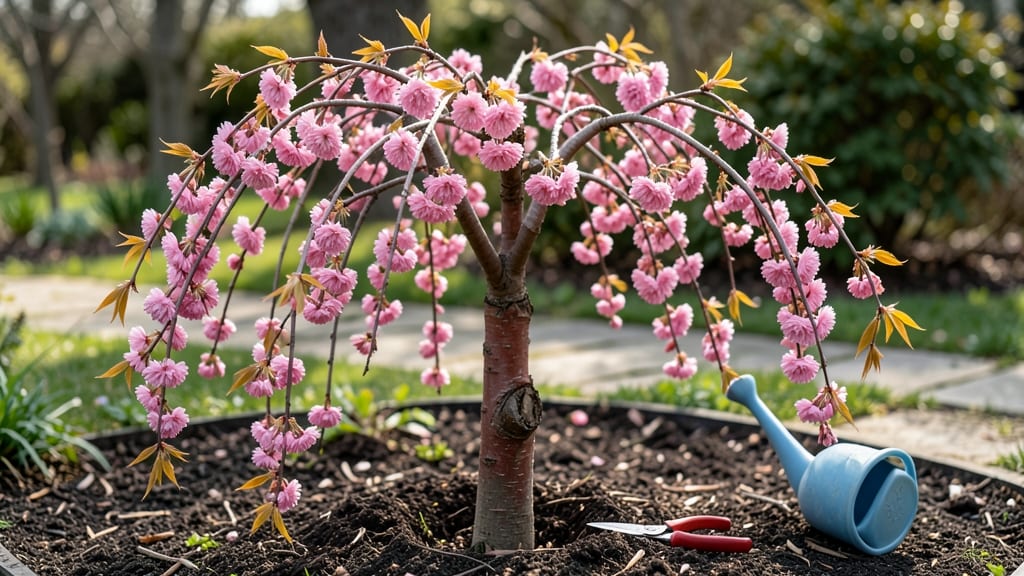
A grafted weeping cherry tree transforms any yard into a living waterfall of blossoms—if you prune it right. 🌸 I learned the hard way that skipping this step turns a stunning focal point into a tangled mess.
The key isn't just cutting branches, but shaping the graft union and encouraging that graceful weeping habit year after year.
Most people assume pruning weeping cherries is the same as regular cherries, but the grafted union needs special attention. You'll need sharp bypass pruners, a sturdy ladder (those branches get heavy!), and a clear plan for thinning out dense growth while preserving the tree's signature cascading form.
The best time to prune is late winter, when the tree is dormant but before buds swell.
What you end up with is a tree that blooms more abundantly each season, with branches that gracefully sweep toward the ground. The flowers arrive earlier, last longer, and the structure stays open enough for sunlight to reach all the way down.
Even in winter, the silhouette is striking against bare branches.
This method works for both young trees and mature specimens—just adjust the intensity. For experienced gardeners, we'll cover how to revive overgrown trees, while beginners get step-by-step instructions for maintaining that perfect weeping silhouette. Let's get those branches in shape!
📚 In This Guide
- What you need
- Instructions
- Tips and common mistakes
- Wrapping up and next steps
What you need
- ● Pruning shears: Bypass pruners (sharp, 6–8 inch blades) for clean cuts on small branches.
- ● Loppers: Bypass or anvil type (18–24 inch handles) for thicker branches (½–2 inches in diameter).
- ● Hand saw: Pruning saw with a fine-tooth blade for branches over 2 inches thick.
- ● Gloves: Garden gloves (cut-resistant, like leather or heavy-duty nitrile) to protect your hands.
- ● Disinfectant: 70% isopropyl alcohol or rubbing alcohol to sterilize tools between cuts (prevents disease spread).
- ○ Sealant: Pruning sealant (optional but recommended for large cuts to prevent sap loss).
- ● Ladder: Sturdy extension ladder (if your tree is over 6 feet tall).
- ● Bucket or tarp: For collecting debris and fallen branches.
- ● Pole pruner: For high branches without a ladder.
- ● Marking twine or paint: To tag branches for removal (great for planning ahead!).
- ● Mulch: Organic mulch (wood chips or straw) to protect the root zone post-pruning.
- ● Safety glasses: To shield your eyes from debris.
- ● Notebook & pen: To jot down notes on your pruning strategy.
Step-by-step pruning blueprint for your weeping cherry tree
Here’s how to shape and maintain your grafted weeping cherry for stunning, year-round blooms.
🌿 Step 1: Understand Your Tree’s Structure and Timing
First, identify the graft union—usually a noticeable bump or swollen area on the trunk where the weeping branch was attached. This is critical because weeping cherries are grafted onto upright rootstock, and pruning too aggressively above the graft can weaken the tree.
Prune at the right time: late winter to early spring (just before buds swell) for major shaping, and lightly after blooming to encourage next year’s flowers. Avoid heavy pruning in fall—it stimulates new growth that won’t harden off before winter. Here’s the thing—weeping cherries bloom on last year’s wood, so prune with patience.
✂️ Step 2: Remove Dead, Diseased, or Crossing Branches
Start by cutting out any dead, broken, or diseased branches—these are easy to spot because they’re brown, brittle, or oozing sap. Use clean, sharp pruning shears to make cuts at a 45-degree angle just outside the branch collar (the swollen area where the branch meets the trunk).
Next, remove branches that cross or rub against each other. These wounds invite disease and weaken the tree. Focus on the lower third of the tree first, since weeping cherries naturally grow downward. You’ll see the canopy open up as you work—this lets light and air circulate, which is key for healthy blooms.
🌱 Step 3: Shape the Weeping Branches for Balance
Weeping cherries need gentle guidance to maintain their graceful form. Start by thinning out overly dense growth—look for branches that grow straight up or inward. Cut these back to a side bud or outward-facing branch to encourage a more open, cascading shape.
For longer branches, you can shorten them by one-third to control size and promote bushier growth. Avoid cutting back to stubs—always leave a small bud or branch stub to prevent dieback. Here’s the moment that matters: step back frequently to check the tree’s silhouette. The goal is a balanced, layered look with no bare spots.
💧 Step 4: Encourage New Growth and Flower Buds
After major pruning, apply a balanced fertilizer (like 10-10-10) around the tree’s drip line to support new growth. Water deeply—1-2 inches per week—to help the tree recover. Avoid overwatering, though; soggy soil can rot fresh cuts.
Lightly prune again 6-8 weeks after blooming to remove any spent flowers and encourage next year’s buds. Focus on outer branches to keep the tree’s shape open. You’ll notice new shoots forming along the weeping branches—that’s your signal the tree is responding well. Real talk: if you see too many vertical shoots, prune them back early to maintain the weeping habit.
☀️ Step 5: Maintain Year-Round with Seasonal Checks
Every 3-4 months, do a quick inspection for suckers (shoots growing from the rootstock below the graft) or water sprouts (fast-growing vertical shoots). Cut these out immediately—they drain energy from your weeping branches. Use a pair of hand pruners for small cuts and loppers for thicker branches.
In late summer, give the tree a light trim to remove any leggy growth or branches that spoil the shape. This keeps the tree looking tidy and encourages a fresh flush of blooms next spring. Here’s where it gets fun—watch how the branches sway in the breeze after pruning. That’s the hallmark of a well-maintained weeping cherry.
Tips & tricks for perfect weeping cherry pruning
Took me years to figure out these little details that make all the difference with grafted weeping cherries—here’s what nobody tells you.
Graft Union Protection: Never cut above the graft union, even if the branch looks ugly. That’s where the weeping branch connects to the upright rootstock, and damaging it can kill your tree. I’ve seen people accidentally cut through it, and the tree just… stopped growing. Mark the graft union with a bit of paint if you’re unsure where it is.
Timing Secret: The late winter to early spring window is critical because that’s when the tree is dormant but about to wake up. If you prune too early, you risk damaging buds that haven’t opened yet. I always check for swollen buds—if they’re still tight, it’s safe to prune. After blooming, wait at least 6 weeks before touching the tree again, or you’ll cut off next year’s flowers.
Tool Technique: Use clean, sharp pruners every time—dull blades crush branches instead of making clean cuts. I sterilize my tools with rubbing alcohol between cuts to prevent spreading disease. For thicker branches, switch to loppers, but don’t use them on small branches—they can tear the bark. And here’s the thing: always cut just outside the branch collar at a 45-degree angle. That little detail makes all the difference for proper healing.
Seasonal Maintenance: Those 3-4 month inspections are non-negotiable if you want that perfect weeping shape. I set a reminder for every March, June, September, and December to check for suckers and water sprouts. The key is consistency—if you let those vertical shoots grow, they’ll steal energy from your beautiful cascading branches. A quick 10-minute check keeps your tree looking like a professional landscaper did it.
Pro Tips for Grafted Weeping Cherry Tree
- Took me years to figure out these little details that make all the difference with grafted weeping cherries—here’s wh...
- Graft Union Protection: Never cut above the graft union, even if the branch looks ugly. That’s where the weeping bran...
- Timing Secret: The late winter to early spring window is critical because that’s when the tree is dormant but about t...
Frequently asked questions
Got questions about keeping your grafted weeping cherry tree thriving with stunning blooms? Here are answers to the most common queries—so you can prune with confidence!
When is the best time to prune a grafted weeping cherry tree?
The ideal window is late winter or early spring (before buds swell), but you can also do light pruning in summer to shape growth. Avoid pruning in fall—it risks inviting pests or disease before dormancy. For grafted varieties, never cut below the graft union to preserve the tree’s identity!
How do I encourage more blooms on my weeping cherry?
Blooms thrive on open airflow and sunlight. Prune to remove:
- Dead or crossing branches
- Overly dense growth that blocks light
- Suckers (shoots below the graft)
Can I prune a weeping cherry tree in summer?
Yes! Light summer pruning (after blooming) helps control size and shape. Focus on:
- Trimming only the current season’s growth
- Avoiding heavy cuts (stick to 10–15%)
- Using sterilized tools to prevent bacterial infections
What if my weeping cherry isn’t blooming?
Common culprits:
- Over-pruning (too aggressive cuts remove flowering wood)
- Poor sunlight (6+ hours of sun is key)
- Age (young trees may take 3–5 years to bloom)
- Nutrient deficiency (test soil for phosphorus/potassium)
Are there dwarf alternatives to weeping cherry trees?
If space is tight, consider these compact bloomers:
Variety
Height
Bloom Time
‘Amanogawa’ (Dwarf Weeping Cherry)
10–15 ft
Spring
‘Snow Fountain’ (Dwarf Weeping Cherry)
6–8 ft
Spring
‘Kanzan’ (Upright but compact)
15–20 ft
Spring
Wrapping up and next steps
Transforming your grafted weeping cherry tree into a year-round blooming masterpiece is well within reach—with the right tools, timing, and technique! 🌸 By mastering seasonal pruning, you’ll encourage vibrant flowers, maintain its graceful weeping shape, and keep pests at bay.
The key is consistency: trim in late winter or early spring, shape gently after blooms fade, and stay vigilant for signs of stress or disease.
Ready to see your tree thrive? Start small—pick one pruning session this season, and build confidence with each cut. Before you know it, your garden will be the talk of the neighborhood, adorned with cascading cherry blossoms! 🌱 Next, grab your shears and get pruning!