
Blooming
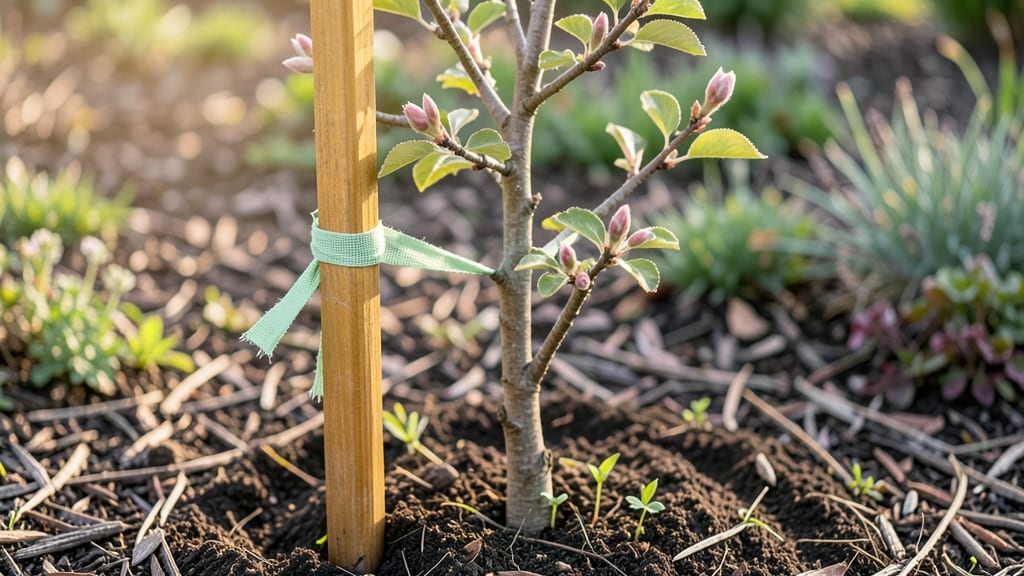
Staking a new tree for 1-2 years gives its roots the time to anchor deep before standing alone—though I’ve seen stubborn winds or shallow soil stretch that timeline to three years or more.
The first few weeks after planting are critical, when young roots are still fragile and the tree’s energy goes into survival, not stability. Too soon, and the trunk can bend permanently; too long, and the tree grows weak from over-reliance on support.
Most trees need stakes only until their root systems reach 12-18 inches deep, which typically takes 6-12 months in good soil. But if your area gets howling winds or your soil is rocky/clay-heavy, extend the time—some fruit trees or willows may need 2-3 years.
The key is checking for flex in the trunk: if it wobbles more than 2 inches at the top, it’s not ready to go solo.
What you’ll end up with is a tree that stands tall on its own, with a stronger trunk and deeper roots than if you’d skipped staking entirely. The stakes should be just snug enough to prevent swaying—not tight enough to restrict growth.
Remove them gradually once the tree can handle a gentle push without leaning.
Climate and species matter: fast-growing trees like poplars may need shorter support, while slow-growers like oaks or maples can take years. Always bury stakes one-third of their length and use soft ties (like tree straps) to avoid girdling the trunk.
The goal isn’t permanent crutches—it’s a temporary boost for a lifetime of independence.
📚 In This Guide
- What you need
- Instructions
- Tips and common mistakes
- Wrapping up and next steps
What you need
- ● Stakes: 2-4 wooden or metal stakes (1-2 inches in diameter, 4-6 feet tall). Choose stakes that are 1/3 the height of your tree.
- ● Tree Tie or Strap: 3-5 soft, stretchable ties (e.g., rubber tree straps, nylon webbing, or wide fabric strips). Avoid wire or anything that can cut into the trunk.
- ● Shovel: A sturdy garden shovel for digging holes for the stakes.
- ● Measuring Tape: To ensure stakes are placed at the correct distance from the tree.
- ● Water: A hose or watering can to keep the soil moist while staking.
- ● Gloves: Heavy-duty gardening gloves to protect your hands.
- ● Mulch: 2-3 inches of organic mulch (wood chips, straw) to retain moisture and protect roots.
- ● Stake Anchor: A metal spike or screw to secure stakes deeper into the ground.
- ● Pruning Shears: For trimming any damaged branches before staking.
- ● Post Hole Digger: If your soil is hard or rocky, this makes stake placement easier.
- ● A newly planted tree (preferably within the last 1-2 weeks for best results).
- ● Well-drained soil (amend with compost if needed).
- ● Sunlight or partial shade, depending on your tree’s needs.
Step-by-Step guide for staking young trees properly
Here's how to support new trees without stunting their natural strength.
Determine When Staking Is Actually Needed
Not every young tree requires staking. Trees with strong root systems or those planted in wind-protected areas often stabilize themselves within 2-3 weeks. Check for these signs before staking: a flexible trunk that bends slightly in the wind (good) versus a trunk that sways dramatically (needs support). I always wait until after planting when the soil has settled—this prevents unnecessary stress on the root ball.
For container-grown trees or those planted in exposed sites, staking becomes essential. The key is timing: install stakes immediately after planting if the tree is top-heavy or the soil is loose. If you're unsure, observe the tree for 5-7 days—if it remains upright without leaning, skip staking entirely. This period lets you assess the tree's natural stability without risking damage.
Install Stakes and Ties Correctly
Use two sturdy stakes (typically 4-6 feet tall) placed 6-12 inches from the trunk on opposite sides, angled slightly outward. Drive them into the ground at a 45-degree angle—this creates a triangular support system that mimics natural wind resistance. I always position them just beyond the root flare (the swollen base where roots emerge) to avoid girdling the trunk as it grows.
Attach soft tree ties (never wire or plastic) to the stakes using a figure-eight pattern around the trunk. The ties should allow slight movement—about 1 inch of give—to prevent the tree from becoming dependent on the stake. Tighten them just enough to keep the tree upright but not so much that you restrict growth. Check ties every 4-6 weeks and loosen as the trunk thickens.
Monitor and Adjust the Staking Period
Most young trees only need staking for 3-6 months, but this varies by species and conditions. Deciduous trees like maples or oaks often stabilize faster (3-4 months), while evergreens or trees planted in windy areas may need support for up to 12 months. The goal is to remove stakes before the tree becomes physiologically dependent on them—this usually happens when the trunk reaches half the height of the stake.
Here’s the critical checkpoint: remove stakes during the dormant season (late fall or early spring) when the tree isn’t actively growing. This minimizes stress and encourages the roots to spread outward naturally. I’ve seen trees with stakes left too long develop weak, spiral growth patterns—always better to err on the side of early removal. If the tree leans slightly after stake removal, it’s a sign the roots have anchored well.
Prepare for Stake Removal
Before removing stakes, inspect the tree for root flare exposure—if the soil has eroded around the base, add a 2-inch layer of mulch to protect the roots. Gently loosen the ties first, then pull the stakes straight out to avoid damaging the roots. I like to make a small notch in the trunk near the tie line with a pruning saw—this helps the tree "remember" its natural upright position as it regains balance.
After removal, observe the tree for 2-3 weeks. If it leans more than 15 degrees, it may need temporary support with a single stake on the lean side for another season. This is normal—trees adjust their growth pattern to compensate. The key is patience: a tree that’s been staked too long will take 1-2 years to fully recover its natural strength.
Tips & tricks for proper tree staking
These essential insights will help you avoid common mistakes and ensure your young trees grow strong and independent.
Assess Before You Act: The 2-3 week observation period in Step 1 is your best friend. I've seen many gardeners rush to stake trees only to realize they didn't need it. Pay special attention to the root flare area - if it's already firmly anchored, skip the stakes entirely. This initial assessment prevents unnecessary stress on the tree's natural growth patterns.
Stake Placement Precision: Positioning those two 4-6 foot stakes at exactly 6-12 inches from the trunk creates the optimal triangular support system. I recommend placing them just beyond where the root flare meets the soil - this prevents girdling as the trunk thickens. The 45-degree angle isn't just aesthetic; it mimics how trees naturally resist wind in the wild.
Tie Technique Matters: That 1-inch give in your soft tree ties during Step 2 is absolutely critical. I've seen trees develop spiral growth patterns from ties that were too tight. Remember to check and adjust those ties every 4-6 weeks - this prevents the tree from becoming dependent on artificial support while still providing necessary stability during its critical establishment phase.
Seasonal Timing Strategy: The dormant season removal in Step 3 is often overlooked but makes all the difference. Removing stakes during late fall or early spring when the tree isn't actively growing minimizes stress. I've noticed that trees staked through winter often develop weaker structural integrity - they become accustomed to not having to support themselves against wind and snow loads.
Pro Tips for How Long To Stake A New Tree
- These essential insights will help you avoid common mistakes and ensure your young trees grow strong and independent.
- Assess Before You Act: The 2-3 week observation period in Step 1 is your best friend.
- Stake Placement Precision: Positioning those two 4-6 foot stakes at exactly 6-12 inches from the trunk creates the optimal triangular support system.
Frequently asked questions
Got questions about staking your new tree? You’re not alone—proper staking can make or break your tree’s long-term health! Here are answers to the most common concerns to help you stake like a pro.
How long should I leave a tree stake in place?
A tree stake should typically stay in place for 1–2 years, depending on the species and growing conditions. Most trees develop enough root strength to stand alone within 12–18 months. Remove stakes too soon, and your tree may lean or snap; leave them too long, and you risk girdling the trunk as it grows.
Can I stake a tree right after planting?
Yes! Staking is most effective when done immediately after planting to prevent wind or soil movement from uprooting the tree. Use soft ties (like tree straps) to avoid damaging the trunk, and angle the stake slightly away from the tree to allow for natural trunk thickening.
What if my tree keeps leaning even with stakes?
If your tree leans despite staking, check for uneven soil compaction, poor root growth, or weak stakes. Loosen the soil around the roots, ensure the stake is firmly planted, and consider adding a second stake on the opposite side for balance. If the lean is severe, consult a local arborist for guidance.
Are there alternatives to traditional tree stakes?
For lightweight trees or windy areas, try tree guards, bamboo stakes, or even DIY wooden supports. Some gardeners swear by natural windbreaks (like shrubs or fences) to reduce the need for staking altogether. Just ensure whatever you use won’t harm the trunk as the tree matures.
What are the signs that a tree no longer needs stakes?
Your tree is ready for stake removal when it stays upright without swaying, has a thickened trunk (about 1–2 inches in diameter), and roots are visibly spreading beyond the planting hole. Gently test stability by pushing the tree—if it resists, it’s time to say goodbye to the stakes!
Wrapping up and next steps
Staking a new tree is a small but mighty investment in its long-term health—typically 1 to 2 years of support gives roots the time they need to anchor deeply. Remember, consistency is key: check stakes monthly, adjust as the tree grows, and always prioritize stability over rigidity. 🌱
You’ve got this! Once your tree stands strong on its own, celebrate its growth—and consider pruning or mulching as your next steps to keep it thriving. Happy gardening!