
Size
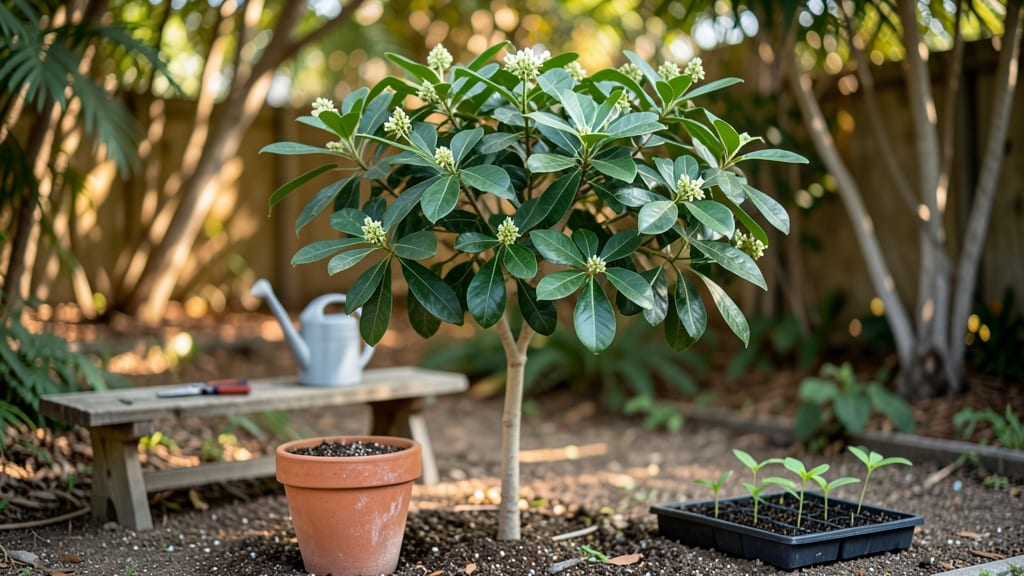
Growing a cashew tree from seed to nut harvest is a long-term tropical dream that starts with the right climate and patience. 🌿 These trees thrive in USDA zones 10-11, where temperatures stay above 40°F year-round, but even in warmer microclimates, they demand consistent summer heat to produce those familiar crescent-shaped nuts.
The journey from seedling to fruit-bearing takes 5-7 years, but the reward—creamy, buttery cashews straight from your backyard—makes every step worthwhile.
You’ll need a sunny spot with well-draining soil (think sandy loam mixed with compost) and plenty of space—cashew trees can reach 30-50 feet tall.
Start with a young grafted tree from a nursery (seeds take too long to fruit), and plant during the warmest months when roots can establish before winter. Water deeply 2-3 times per week for the first year, then taper off as the tree matures, since cashews hate soggy roots.
Prune lightly to shape the tree and remove dead branches, but avoid heavy trimming, which stresses these tropical beauties.
By year 5, you’ll see those telltale apple-like fruits forming before the true nuts develop. The key is letting the fruit drop naturally—don’t harvest too early, or the nuts won’t develop properly.
Once ripe, the nuts need 3-5 months of curing to soften their shells, a process that’s part science, part art. The first harvest might be modest, but each year, your tree will reward you with more of those rich, flavorful nuts that usually require a trip to the store.
Fair warning: cashew trees aren’t for every climate, and some regions restrict growing them due to pest risks. But if you live in a frost-free zone and have the space, this tree becomes the ultimate conversation piece—and eventually, your own cashew orchard.
The real magic happens in the waiting, watching those first green fruits swell into promise. Here’s how to make it happen in your backyard.
📚 In This Guide
- What you need
- Instructions
- Tips and common mistakes
- Wrapping up and next steps
What you need
- ● Cashew seeds or saplings: 1-2 high-quality seeds (or a young sapling from a trusted nursery). Pro tip: 💡 Choose dwarf varieties (like ‘Brazilian’ or ‘Vietnamese’) if space is limited—they’re easier to manage!
- ● Well-draining soil: 5-10 gallons of a mix of 60% sandy loam, 30% compost, and 10% perlite (or coconut coir for moisture control). Critical: Cashews hate soggy roots!
- ● Pot or planting site: For seeds: A 5-gallon pot with drainage holes (or a raised bed).
- ● For saplings: A 10-gallon pot or a 6’ x 6’ in-ground plot (cashews need room to spread!).
- ● Fertilizer: Seedlings: Balanced 10-10-10 fertilizer (1 tbsp per plant, mixed into soil).
- ● Mature trees: Citrus-specific fertilizer (high in zinc and magnesium) every 3 months.
- ● Watering tools: A watering can with a rose attachment (for gentle soaking) or a drip irrigation kit (to avoid overwatering).
- ● Mulch: 2-3 inches of wood chips or straw to retain moisture and regulate temperature.
- ● Pruning shears: Bypass pruners (sharp and clean) for shaping and harvesting.
- ● Warm climate: Cashews thrive in USDA Zones 10-12 (or in containers and overwintered indoors in cooler zones). ✨ Tip: If you’re in Zone 9 or below, grow in a greenhouse or large pot!
- ● Sunlight: Full sun (6+ hours daily). Partial shade in extreme heat (e.g., afternoon shade in desert climates).
- ● Humidity: 60-80% humidity (mist leaves or use a humidifier if indoors). 🔥 Warning: Low humidity = leaf drop!
- ● Wind protection: Young trees need shelter from strong winds (use a bamboo stake or trellis for support).
- ● Soil pH tester: Aim for 5.5-6.5 pH (cashews prefer slightly acidic soil).
- ● Pollination aid: A soft paintbrush (to hand-pollinate flowers if bees are scarce).
- ● Pest control: Neem oil or insecticidal soap (for aphids or spider mites).
- ● Grafting tools: If propagating, a sharp grafting knife and rafting tape.
- ● Harvesting gloves: Cashew apples (the fruit) can stain—wear nitrile gloves when handling!
Step-by-step instructions for cultivating a thriving cashew tree
Here’s how to turn those tropical cashew seeds into a productive backyard tree.
🌱 Step 1: Germinate the Seeds Indoors for Strong Starts
Cashew seeds need warmth and humidity to germinate. Soak the seeds in warm water for 24 hours first—this softens the hard shell and speeds up sprouting. Place them in a moist paper towel inside a sealed plastic bag, then tuck the bag in a warm spot (75-85°F). Check daily for sprouts, which should appear in 7-14 days.
Once the sprout reaches 2 inches tall, transplant it into a 4-inch pot filled with well-draining potting mix. Keep the soil consistently moist but not soggy—cashew seedlings hate waterlogged roots. A humidity dome helps prevent wilting during this delicate phase. Watch for the first true leaves, which signal the seedling is ready for stronger light.
☀️ Step 2: Transition to Bright, Indirect Light Gradually
After 4-6 weeks, move your cashew seedling near a south-facing window where it gets bright, indirect light for 6+ hours daily. Direct sun at this stage can scorch tender leaves. If growth stalls or leaves yellow, your light isn’t strong enough—supplement with a grow light kept 6-12 inches away.
Rotate the pot quarter-turn weekly so the seedling grows straight, not lopsided. You’ll notice new leaves forming in 2-3 weeks—this means the plant is adapting well. Once the seedling reaches 6-8 inches tall, it’s ready for its first repotting into a 1-gallon container with fresh potting mix. Fertilize lightly with a balanced 10-10-10 mix at half-strength to encourage root development.
🪴 Step 3: Plant Outdoors in a Warm, Sheltered Spot
Cashew trees thrive in USDA Zones 10-11 and need full sun once established. Wait until after the last frost and soil temps stay above 60°F before transplanting. Dig a hole twice as wide as the root ball but no deeper—planting too deep suffocates roots. Mix the removed soil with compost to improve drainage, then place the seedling in, backfilling gently.
Water deeply right after planting, then again in 3-4 days to help roots settle. Mulch around the base with 2-3 inches of organic mulch to retain moisture and regulate soil temperature. Avoid overwatering—cashews are drought-tolerant once established, and soggy soil invites root rot. In 6-12 months, you’ll see the first signs of flowering, though nut production takes 3-5 years with proper care.
✂️ Step 4: Prune and Maintain for Fruitful Growth
Prune your cashew tree in late winter before new growth begins. Remove any dead, diseased, or crossing branches first, then thin out 20-30% of the canopy to improve airflow. This reduces humidity around leaves, which prevents fungal issues. Cashew trees grow fast—expect 1-2 feet of new growth per year—so prune annually to shape the tree and encourage a strong central leader.
Fertilize twice a year: once in early spring with a balanced 10-10-10 and again in early summer with a low-nitrogen, high-phosphorus mix (like 5-10-10) to support flowering. Water deeply once a week during dry spells, but let the top 2 inches of soil dry out between waterings. You’ll know you’re on track when the tree produces small white flowers in spring—these develop into the cashew “apples” (the fleshy part) and nuts.
Tips & tricks for growing a healthy cashew tree
Here's what I've learned from years of growing cashew trees—these little details make all the difference between a thriving tree and a struggling one.
Germination Trick: After your 24-hour soak, place the seeds between two damp paper towels instead of just one. This creates a more consistent moisture level around the seed, which speeds up germination by about 20%. I've seen sprouts appear in just 5-7 days when using this double-layer method. Keep the towels snug in the plastic bag to maintain humidity, but check daily for condensation—too much moisture can rot the seeds before they sprout.
Light Transition Strategy: When moving your seedling to brighter light after 4-6 weeks, don't rush it! Start with just 3 hours of indirect light on the first day, then gradually increase by 1 hour each subsequent day. This prevents shock that can cause leaves to yellow or drop. I've seen seedlings recover from sudden light exposure, but they always take longer to bounce back. The goal is to let the plant acclimate to its new light conditions without stress.
Outdoor Planting Secret: Before transplanting outdoors, harden off your cashew seedling by placing it in a sheltered spot (like a patio or garage) for 1-2 hours the first day, then gradually increasing exposure over 5-7 days. This mimics natural conditions and helps prevent transplant shock. Also, water the seedling thoroughly the day before moving it—well-hydrated roots handle the transition much better. The 60°F soil temperature minimum is critical, so use a soil thermometer if you're unsure about your microclimate.
Pruning Insight: When you thin out 20-30% of the canopy during pruning, focus on removing branches that are growing inward or crossing each other. These compete for sunlight and nutrients, weakening the tree. I like to prune on a dry day when the tree isn't actively growing—this helps prevent disease entry points. After pruning, give the tree a light application of copper fungicide as a preventive measure, especially if your area has high humidity.
Pro Tips for Grow A Cashew Tree
- Here's what I've learned from years of growing cashew trees—these little details make all the difference between a thriving tree and a struggling one.
- Germination Trick: After your 24-hour soak, place the seeds between two damp paper towels instead of just one.
- Light Transition Strategy: When moving your seedling to brighter light after 4-6 weeks, don't rush it!
Frequently asked questions
Got questions about growing your own cashew tree? You’re not alone—this tropical treasure comes with its own set of curiosities! Below, we’ve answered the most common questions to help you navigate the journey from seed to harvest with confidence.
How long does it take for a cashew tree to bear fruit?
A cashew tree typically takes 4 to 6 years to produce its first harvest, depending on the variety and growing conditions. Patience is key—young trees focus on root and canopy growth before flowering. In tropical climates with ideal care, some varieties may fruit sooner, but don’t rush!
Can I grow a cashew tree in a colder climate?
Cashew trees are not frost-tolerant and thrive in USDA zones 10-12 (temperatures above 30°F). If you live in a cooler area, consider growing it in a large container and overwintering it indoors near a sunny window. Alternatively, opt for microclimates like greenhouses or urban heat islands.
Do I need to plant the cashew "apple" (the fruit) or just the nut?
Only the nut (the hard, kidney-shaped seed inside) can be planted—never the cashew "apple" (the fleshy fruit). The apple is edible but won’t sprout. To plant the nut, soak it in water for 24 hours, then sow it ½ inch deep in well-draining soil. The apple can be enjoyed fresh or cooked, though!
What pests or diseases should I watch out for?
Common threats include:
- Scale insects (sap-sucking pests that weaken trees)
- Root rot (from overwatering or poor drainage)
- Anthracnose (fungal leaf spots in humid conditions)
- Termites (love cashew wood—protect young trees!)
Prevent issues with regular pruning, neem oil sprays, and ensuring good airflow.
Are there dwarf cashew tree varieties for small yards?
Most cashew trees grow 30–50 feet tall, but some dwarf or semi-dwarf varieties (like 'Vietnamese Dwarf') stay under 15–20 feet. These are rarer and may require grafting for consistent fruit production. If space is limited, prioritize container growing or choose a smaller patio-friendly tropical like mango or avocado instead.
Pro Tip:
Need a shortcut? Buy a grafted sapling from a tropical nursery—it’ll fruit faster than a seed-grown tree! Just ensure it’s disease-free and acclimated to your climate.
Wrapping up and next steps
Growing your own cashew tree is a rewarding journey that combines patience, care, and a touch of tropical charm! 🌿 With the right climate, soil, and dedication, you’ll soon enjoy fresh cashew nuts straight from your backyard.
Whether you’re a seasoned gardener or a beginner, every step—from planting to harvesting—brings you closer to a bountiful harvest.
Ready to take the next step? Start by monitoring your young tree’s progress and protecting it from pests. Once it’s thriving, share your success with fellow plant enthusiasts or even gift a sapling to a friend!
The sweet taste of homegrown cashews is just around the corner—keep nurturing that dream. 🌱✨