
Pruning
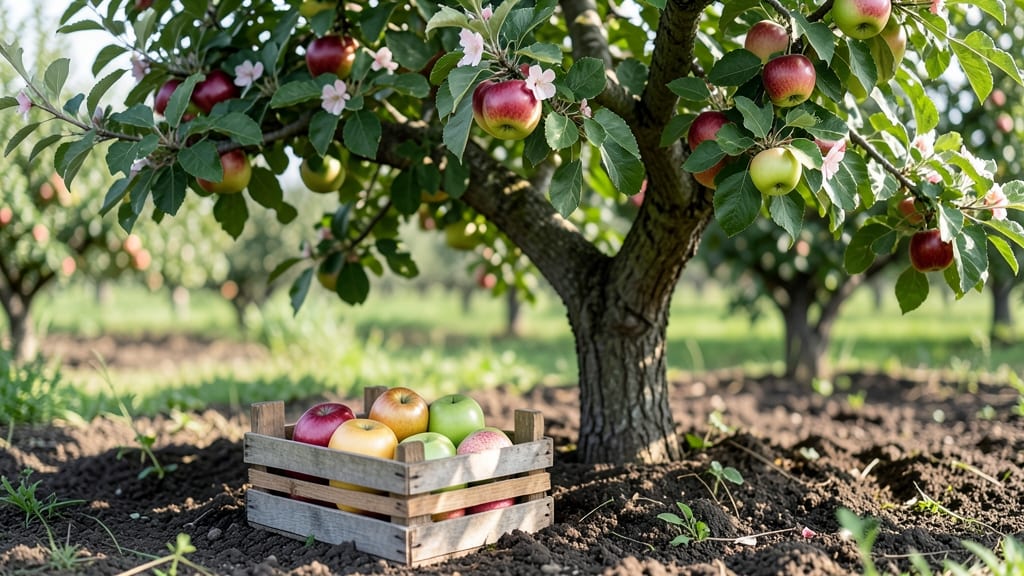
Learn how to tell what type of apple tree you have—your yard might hide a rare goldmine (or just a lovely shade tree). 🌳 I’ve spent years trying to identify my own unknown apple varieties, and the clues are right in front of you: leaf shape, fruit. size, and even bark texture all reveal secrets about your tree’s heritage.
The easiest way to start is by comparing your tree’s leaves to known varieties—Granny Smith leaves are narrow and serrated, while Honeycrisp leaves are broader with a slightly wavy edge.
Then look at the fruit: color, shape, and skin texture narrow it down further. I keep a notebook with photos of my tree’s growth stages to track changes over seasons.
By late summer, you’ll spot the fruit’s final color and size, which often confirms the variety. A mature Granny Smith stays bright green, while Fuji turns golden-yellow with red blush.
Cross-reference these clues with local orchard databases or ask experts at nurseries—they’ve seen hundreds of trees and can often guess within a few varieties.
If you’re still stumped, timing matters: observe flowering patterns in spring and fruit development in fall. Some trees bloom early, others late, and that’s another clue. With patience, you’ll crack the code—and maybe even find a rare heirloom hiding in your backyard.
📚 In This Guide
- What you need
- Instructions
- Tips and common mistakes
- Wrapping up and next steps
What you need
- ● Digital camera or smartphone – For high-quality photos of leaves, fruit, and bark (at least 5-10MP for clarity).
- ● Ruler or measuring tape – A 12-inch (30cm) metal or plastic ruler to measure leaf length/width and fruit diameter.
- ● Hand lens (magnifying glass) – A 10x magnification for inspecting fine details like leaf texture or fruit lenticels.
- ● Notebook or field journal – To jot down observations (or use a notes app on your phone).
- ● Pruning shears (sterilized) – Small, sharp shears for carefully snipping a few leaves or a small fruit sample (if needed).
- ● Apple variety identification guidebook – A regional guide (e.g., “Apple Trees of the World”) or a digital app like PictureThis or PlantNet.
- ○ Gloves (optional but recommended) – Nitrile or latex gloves to protect hands from sap or thorns.
- ● Field guide to apple tree diseases – To rule out pests/diseases that might mimic variety traits.
- ● Small plastic bags – For collecting fallen leaves or fruit samples (if comparing to a database).
- ● Portable scale – A 0.1 oz (3g) precision scale to weigh fruit for size comparisons.
- ● Flashlight or headlamp – For inspecting bark or undersides of leaves in low light.
- ● Local orchard or extension office contact – For expert verification if you’re stumped!
Step-by-Step guide to identifying your apple tree variety
Here's how I've learned to decode apple trees using just a few simple clues.
🌿 Step 1: Examine the Leaf Shape and Arrangement
Start by collecting 3-5 healthy leaves from different parts of the tree. Apple leaves vary dramatically between varieties—some are narrow and pointed, others broad and rounded. Hold them up to natural light to see the veins clearly. Most apple leaves have serrated edges and prominent midribs, but the exact shape differs: Gala leaves are oval with fine teeth, while Granny Smith leaves are more elongated with wavy edges.
Check how the leaves attach to the stem. Some varieties like Honeycrisp have leaves that cup slightly at the base, while others like Fuji have nearly flat attachments. I always compare my samples to reference photos—your phone camera works great for this. Note whether the leaves have any distinctive markings like rust spots or fuzzy undersides, which can hint at disease-resistant varieties.
🍎 Step 2: Study the Fruit Characteristics
Look at the apples themselves—size, shape, and skin texture are your best clues. A McIntosh apple is small, round, and often red-striped, while a Jonagold is larger with a yellow base and red blush. Pay attention to the stem end: some varieties like Pink Lady have a deep indentation, while others like Golden Delicious have a shallow, rounded shape.
Examine the skin closely. Is it smooth and glossy like a Gala, or does it have a rough, waxy texture like a Granny Smith? Some apples develop russeting (brown speckling) naturally—this is common in Braeburn and Cortland varieties. Take note of any distinctive markings like lenticels (tiny white dots) or a pronounced ribbing pattern down the sides.
☀️ Step 3: Observe the Tree's Growth Habits
Apple trees have unique growth patterns that vary by variety. Notice how the branches grow—some like Honeycrisp develop upright, vase-shaped canopies, while others like McIntosh grow more horizontally. The bark texture also differs: younger trees of Granny Smith have smooth, gray bark, while older Fuji trees develop rough, scaly bark.
Check the flower clusters. Apple blossoms appear in spring, and their shape can be telling. Pink Lady flowers are smaller and more densely packed, while Golden Delicious flowers are larger with longer stems. If you have photos from last spring, they're incredibly helpful—just search "apple blossoms variety name" to compare. The timing of blooming also matters: early bloomers like McIntosh open weeks before late varieties like Jonagold.
📝 Step 4: Cross-Reference with Local Resources
Now that you've gathered your observations, it's time to compare them with reliable sources. Start with your local agricultural extension office—they often have regional apple variety databases. Many states also have orchard tours where you can bring samples to experts for identification. I've had great success with the National Apple Collection in Washington State, which maintains photos and descriptions of thousands of varieties.
Online tools like the University of Minnesota's Apple Identification Guide or the Pomona's Variety database let you input your observations for matches. Don't forget to check with nearby orchards or farmers markets—many growers will recognize local varieties by sight. If you're still unsure, consider sending a leaf sample to a plant identification service like the Cornell Plant Disease Clinic.
Tips & tricks for perfect apple tree identification
These simple strategies will help you narrow down your apple tree variety with confidence.
Leaf Comparison Tip: When collecting leaves for Step 1, grab samples from different parts of the tree—sunny spots, shady spots, and mid-canopy. I've found that leaves from the lower branches often have slightly different textures than those higher up, which can provide extra clues. Take photos of each leaf sample from both sides before you start comparing them to reference images. This visual record becomes invaluable if you need to revisit your notes later.
Fruit Observation Strategy: In Step 2, don't just look at the apples—pick one up and feel its weight. Some varieties like Granny Smith feel noticeably heavier for their size due to their dense flesh, while Honeycrisp apples often feel lighter with a crisp snap when bitten. I always test at least three apples from different parts of the tree to account for size variations within the same variety.
Growth Pattern Insight: For Step 3, pay special attention to how the branches angle. Trees with more horizontal branches (like McIntosh) often produce fruit that ripens slightly earlier in the season than upright varieties (like Honeycrisp). I've noticed this pattern helps distinguish between similar-looking apples when other characteristics are ambiguous. Sketch a quick diagram of your tree's shape—it's surprising how much this simple step can clarify your identification process.
Pro Tips for Tell What Type Of Apple Tree You Have
- These simple strategies will help you narrow down your apple tree variety with confidence.
- Leaf Comparison Tip: When collecting leaves for Step 1, grab samples from different parts of the tree—sunny spots, shady spots, and mid-canopy.
- Fruit Observation Strategy: In Step 2, don't just look at the apples—pick one up and feel its weight.
Frequently asked questions
Got more questions about identifying your apple tree? Here are some common ones—and their answers—to help you figure out what’s growing in your backyard!
How can I tell if my apple tree is a standard variety or a wild crabapple?
Wild crabapples usually have smaller, tart fruit (often <1 inch wide) and thorny branches. Standard apple varieties produce larger, sweeter fruit (2+ inches) with fewer thorns. Leaf shape can also differ—crabapples often have pointier, serrated edges.
When is the best time of year to identify my apple tree?
The ideal time is late summer to early fall, when fruit is fully ripe and leaves are mature. You can also check in spring when flowers bloom (color and shape vary by variety) or winter by examining bark texture and bud patterns.
What if my tree’s leaves don’t match any common apple varieties?
If your tree’s leaves are lobed, fuzzy, or unusually shaped, it might be a hybrid or heirloom variety. Compare with local orchard databases or consult a master gardener in your area. Photos of leaves, fruit, and bark can help experts narrow it down!
Can I identify an apple tree just by looking at its fruit?
Yes! Check the size, color, skin texture (smooth/rough), and flesh color. For example, Granny Smith apples are green with crisp flesh, while Honeycrisp are blush-red with juicy, sweet meat. Cross-reference with leaf shape for accuracy.
What if my tree has no fruit but I still want to ID it?
Focus on leaf shape, bark texture, and branch structure. Young trees may not bear fruit for 3–5 years. Take photos of buds (spring), leaves (summer), and bark (winter) and compare them to online guides like the USDA Plant Database.
Wrapping up and next steps
Now that you’ve mastered the art of identifying your apple tree—whether by its leaf shape, bark texture, or fruit characteristics—you’re well on your way to becoming a backyard orchard expert! 🌳 With the right clues, you can confidently name your tree and even predict the delicious harvests to come.
Ready to take the next step? Prune with purpose or share your findings with fellow gardeners! Whether you’re growing heirlooms or just love the thrill of discovery, your apple tree’s story is just beginning.