Pruning
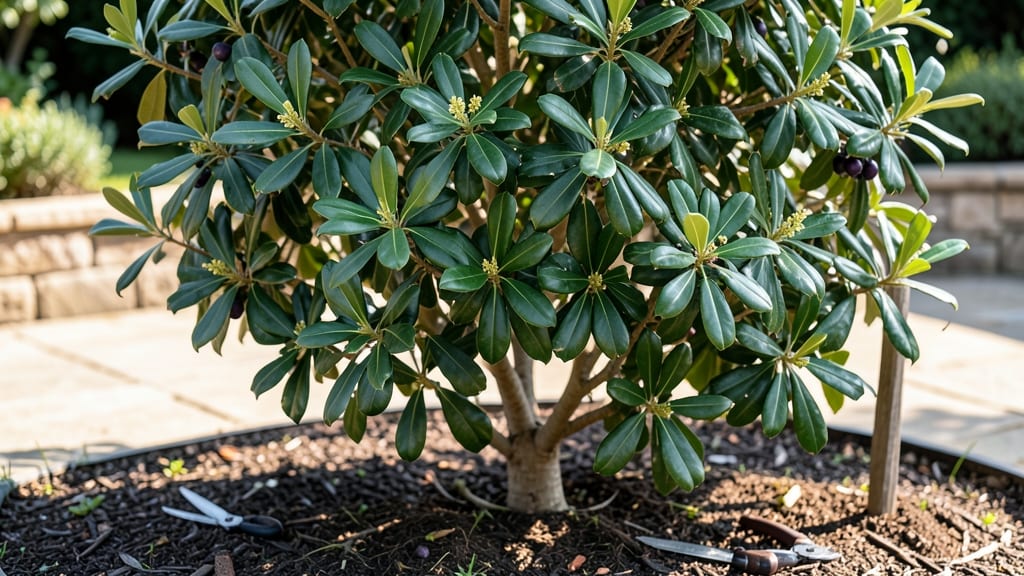
Your laurus nobilis bay leaf tree thrives when pruned like a sculptor shaping a living masterpiece—every cut reveals denser foliage and stronger branches. 🌿 I learned this the hard way after over-pruning mine and watching it struggle to recover.
The secret isn’t aggressive trimming but strategic shaping that balances form and health.
Start with clean, sharp pruners and focus on removing dead wood, crossing branches, or growth that spoils the tree’s natural pyramid shape. Prune after flowering (late spring) to encourage new growth before winter dormancy.
Even a small adjustment—like trimming back just 10% of the outer branches—transforms how full and vibrant the tree looks by summer.
You’ll end up with a glossy, evergreen tree that stays lush year-round, its aromatic leaves perfect for both culinary use and garden beauty. The key is patience: prune lightly each season, and you’ll avoid the shock that comes from drastic cuts.
This method works for both container-grown trees and those planted in the ground.
For ornamental varieties, shape it into a standard tree with a single trunk and broad canopy. For culinary use, harvest leaves regularly but avoid over-pruning—the tree’s health depends on balanced growth. The results? A tree that rewards your care with fragrant leaves and striking form.
📚 In This Guide
- What you need
- Instructions
- Tips and common mistakes
- Wrapping up and next steps
What you need
- ● Pruning shears: Sharp, bypass-style shears (for clean cuts on small branches). Recommended: Felco F-2 or equivalent (5–7 inches).
- ● Loppers: For thicker branches (½–1½ inches). Recommended: Corona or Fiskars (20–24 inches).
- ○ Hand pruners (pruning saw): For stubborn, woody stems (optional but helpful for mature trees). Recommended: Fiskars or Bahco.
- ● Disinfectant: 70% isopropyl alcohol or a pruning wound sealant (to prevent disease).
- ● Gloves: Heavy-duty gardening gloves (for protection against thorns and sap).
- ● Bucket or trash bag: For collecting pruned branches (1–2 gallon size).
- ○ Ladder (optional): Extendable or step ladder (if tree exceeds 6 feet). Safety tip: Use a stable, non-slip model.
- ● Marking spray: Fluorescent paint or tape (to outline cuts before pruning).
- ● Hose or water spray: To clean tools between cuts and rinse sap off hands.
- ● Compost bin: For repurposing pruned branches as mulch or compost.
- ● Safety glasses: If working near eyes or in dusty conditions.
- ● Weather: Prune on a dry, overcast day (avoid extreme heat or frost).
- ● Timing: Best done in late winter/early spring (just before new growth).
- ● Health check: Inspect the tree for pests or disease before pruning.
- ● Plan ahead: Sketch a rough outline of cuts (or take photos for reference).
How to prune a Laurus nobilis bay leaf tree for healthy growth
Here's the simple, effective way to keep your bay leaf tree thriving all year.
🌿 Step 1: Understand the Best Pruning Seasons
Bay leaf trees handle pruning year-round, but timing matters for best results. I always prune lightly in late winter or early spring—just before new growth begins—when the tree is still dormant but ready to wake up. This gives it time to recover before summer heat stress.
For heavier shaping, wait until after flowering in late spring or early summer. Never prune in fall or winter when the tree is already stressed from seasonal changes. The key is to work with the tree's natural growth cycle rather than against it.
✂️ Step 2: Remove Dead, Diseased, or Crossing Branches First
Start by inspecting the tree carefully. Look for branches that are completely bare, brown, or brittle—these are dead and need removal. Use clean, sharp pruning shears to cut these back to healthy wood, making cuts just above a leaf node or outward-facing bud.
Next, remove any branches that are rubbing against each other or growing inward. These create wounds that invite disease. I always cut at a 45-degree angle just outside the branch collar—the swollen area where the branch meets the trunk—to promote faster healing.
🌿 Step 3: Shape the Tree for Airflow and Light Penetration
Bay leaf trees respond well to gentle shaping. I focus on opening up the center of the tree first—this improves airflow and sunlight penetration, which prevents fungal issues. Start by thinning out the densest areas, removing about one-third of the oldest growth to encourage new, vigorous branches.
For a more formal shape, I make my cuts just above a set of healthy leaves or buds. Never cut back to bare wood—always leave some foliage to feed the branch. Step back frequently to check your progress; you want to see light filtering through the canopy evenly.
🌱 Step 4: Encourage New Growth with Strategic Cuts
To keep your bay leaf tree lush, I always make a few strategic cuts to stimulate new growth. Select a few sturdy branches and cut them back by about one-third of their length. This signals the tree to produce fresh, vibrant shoots from the base of the cut.
For larger trees, I might prune back some of the oldest branches completely to the ground. This might sound drastic, but it rejuvenates the tree and encourages younger, more productive growth. Just be sure to do this gradually over a few years rather than all at once.
💧 Step 5: Clean Up and Monitor Recovery
After pruning, remove all fallen branches and debris from the area. This prevents pests and diseases from taking hold. I also sterilize my pruning tools with rubbing alcohol to avoid spreading any potential infections between cuts.
Watch the tree closely for the first few weeks after pruning. You'll see new growth emerge within a few weeks—that's your signal everything is working. Water the tree deeply after pruning to help it recover, especially if you've made significant cuts. Avoid fertilizing immediately, as the tree needs time to heal before putting energy into new leaves.
Tips & tricks for perfect bay leaf tree pruning
Here's what nobody tells you about keeping your bay leaf tree thriving after pruning.
Timing is Everything: The late winter or early spring timing in Step 1 is critical because that's when your tree naturally prepares for new growth. I've seen trees stressed beyond recovery when pruned in fall or winter—they're already conserving energy for survival. For container-grown bay leaf trees, you can prune anytime except extreme cold snaps, but always prioritize the same seasonal timing for best results.
Tool Prep Matters: Before you even start cutting in Step 2, sterilize your pruning shears with rubbing alcohol. I learned this the hard way after transferring bacterial infections between cuts. Keep your tools sharp too—dull blades crush stems, creating larger wounds that heal poorly. A clean, sharp cut at a 45-degree angle (as mentioned in Step 2) is the single most important factor for preventing disease entry points.
Visual Cues for Healthy Cuts: When making your cuts in Step 3, look for the branch collar—the swollen area where the branch meets the trunk. This is your guidepost for where to cut. The collar contains protective cells that help the wound heal. I always make my cuts just outside this area, about 1/8 inch from the trunk. You'll notice the bark texture changes slightly at this point—don't cut into the collar itself.
Gradual Rejuvenation Strategy: For larger trees where you're considering removing older branches completely (Step 4), I recommend spacing these cuts out over three years. Remove one-third of the oldest branches each year, rotating positions. This gives the tree time to adjust its energy distribution. The first year you might see some shock, but by year three, you'll have a completely revitalized tree with fresh, vigorous growth.
Pro Tips for Laurus Nobilis Bay Leaf Tree
- Here's what nobody tells you about keeping your bay leaf tree thriving after pruning.
- Timing is Everything: The late winter or early spring timing in Step 1 is critical because that's when your tree naturally prepares for new growth.
- Tool Prep Matters: Before you even start cutting in Step 2, sterilize your pruning shears with rubbing alcohol.
Frequently asked questions
Got questions about keeping your Laurus nobilis (bay leaf tree) thriving with the perfect prune? Here are some of the most common queries—and their answers—to help you grow a lush, healthy tree year-round.
When is the best time to prune my bay leaf tree?
The ideal time to prune is late winter or early spring (before new growth starts) to avoid disturbing winter dormancy. Light trimming can also happen in summer to shape the tree, but avoid heavy cuts then—it stresses the plant. Never prune in fall; it encourages tender new growth that may frost damage.
How much can I trim back my bay leaf tree?
You can safely remove up to one-third of the tree’s foliage in a single session without harming it. For mature trees, prioritize dead, diseased, or crossing branches first. Over-pruning weakens the tree, so aim for gradual shaping. If you’re unsure, start with 10-15% of the canopy and monitor its recovery.
What should I do if my bay leaf tree isn’t growing after pruning?
If your tree seems sluggish post-prune, check for these issues:
- Over-pruning: Too many cuts can shock the tree. Next time, trim less aggressively.
- Poor soil/drainage: Bay trees thrive in well-draining, slightly acidic soil. Amend heavy clay with compost.
- Pests/disease: Yellowing leaves or spots? Inspect for aphids, scale, or fungal issues. Treat with neem oil or fungicide if needed.
- Underwatering: These trees love consistent moisture. Water deeply when the top inch of soil feels dry.
Can I propagate bay leaves from cuttings?
Take 4-6 inch semi-hardwood cuttings in late spring or summer, strip the lower leaves, and dip in rooting hormone. Plant in a mix of perlite and peat moss, keep humid (use a plastic bag), and place in bright, indirect light. Roots should form in 6-8 weeks.
Are there alternatives to bay leaf trees for cooking?
If you’re growing Laurus nobilis for culinary use, here are a few substitutes:
- California bay (Umbellularia californica): Stronger, spicier flavor—great for marinades.
- Sweet bay (Pimenta racemosa): Mild, berry-like taste; used in Caribbean dishes.
- Dried bay leaves (store-bought): Convenient, but fresh leaves from your tree are far superior!
- Thyme or oregano: Earthy but different; best for savory dishes.
Wrapping up and next steps
From mastering the art of pruning to understanding the best times and tools for your Laurus Nobilis, you’re now equipped to keep your bay leaf tree thriving year-round! 🌿 With patience and care, you’ll enjoy lush foliage, vibrant growth, and even fresh bay leaves for your favorite dishes.
Ready to put your new skills to work? Grab your pruners and schedule that first trim—your bay leaf tree will thank you!