
Container Gardens
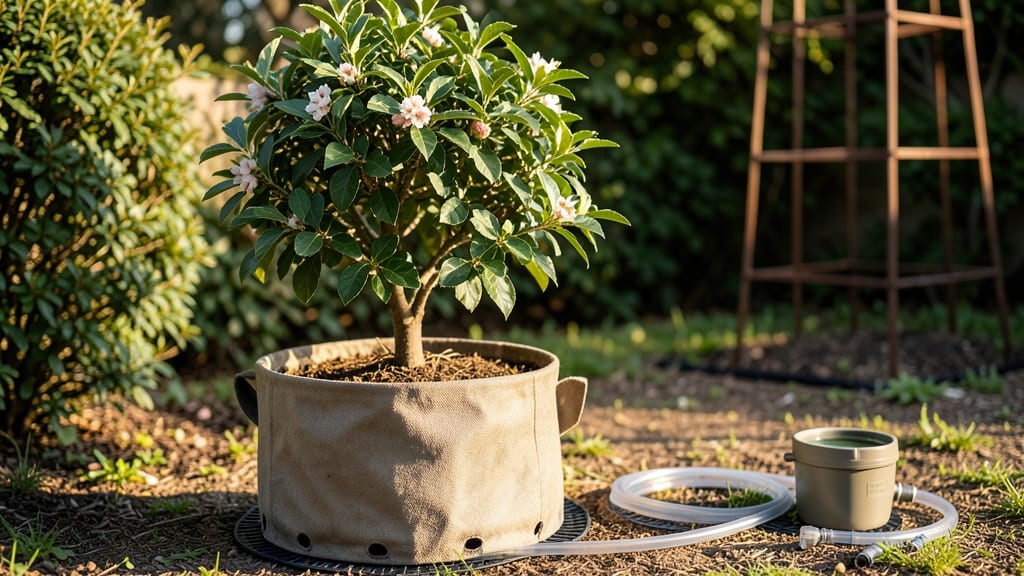
Choosing the right peach tree container size—like my 20-gallon fabric pot—transforms tiny balconies into sweet fruit havens. The key isn’t just the container size, but how you balance root space, drainage, and sunlight to keep the tree happy for years.
You’ll need a minimum 15-gallon container for dwarf varieties, but 20-30 gallons gives roots room to spread without crowding. Fabric pots or high-quality plastic with drainage holes prevent root binding, while terracotta works too—just water more often.
Place your container where it gets 6-8 hours of sun daily, and expect your tree to grow half the size of its in-ground cousin.
What you’ll end up with is a productive, manageable tree that bears fruit in just 2-3 years instead of 5-7. The peaches might be smaller, but the flavor? Often sweeter than store-bought.
Plus, you avoid gophers and soil-borne diseases that plague ground-planted trees. With the right setup, your container peach tree could outperform half the neighborhood’s in-ground efforts.
Ready for the best part? When your tree outgrows its pot—or you’re ready for a permanent home—transitioning it to the ground is simpler than you’d think. Just dig a hole twice as wide as the container, loosen the roots, and plant it deep enough to bury the graft union.
Here’s how to do it without shocking the tree.
📚 In This Guide
- What you need
- Instructions
- Tips and common mistakes
- Wrapping up and next steps
What you need
- ● Container: A minimum 24-inch diameter (or larger) pot with drainage holes (5+ gallons for dwarf varieties, 15+ gallons for semi-dwarf). Pro tip: Wider pots = better stability! 🌡️
- ● High-quality potting mix: A well-draining blend (e.g., 60% potting soil, 30% perlite, 10% compost). Skip garden soil! ❌
- ● Peach tree: Choose a dwarf or semi-dwarf variety (e.g., ‘Bonanza’, ‘Redhaven’, or ‘Elberta’). Size matters: Bare-root or 1-gallon container seedlings work best! 🌱
- ● Fertilizer: A balanced, slow-release fertilizer (10-10-10 ratio) or organic options like composted manure or fish emulsion.
- ● Mulch: Organic mulch (e.g., straw or wood chips) to retain moisture and regulate soil temp.
- ● Self-watering system (e.g., drip irrigation or a moisture meter) for consistent hydration. 💧
- ● Container saucer or tray to catch runoff and prevent messes.
- ● Support stake or trellis (for semi-dwarf varieties) to prevent tipping as the tree grows.
- ● Peach tree spray (e.g., neem oil or copper fungicide) to deter pests and diseases.
- ● Wheelbarrow or large bucket for mixing soil and fertilizers.
- ● A sunny spot (6+ hours of direct sunlight daily). Peaches are sun-worshippers! ☀️
- ● Access to water (containers dry out faster than in-ground plants).
- ● Patience! Peach trees take 2–4 years to bear fruit in containers. 🍑⏳
Step-by-Step guide for selecting and using peach tree container size
Here’s how to choose the right container dimensions and care for peaches in limited space.
Determine the Minimum Container Size for Your Peach Variety
Dwarf peach trees thrive in 5-gallon containers—the smallest reliable size—but semi-dwarf varieties need at least 15 gallons to support root growth and fruit production. Standard peach trees require 25+ gallons or larger, as their roots spread aggressively. Always opt for at least 12 inches deep to accommodate root development and drainage.
Check your tree’s label or ask the nursery for the mature height and spread. Dwarf trees (under 8 feet) fit in 18-inch diameter containers, while semi-dwarfs (up to 12 feet) need 24-inch pots. Measure your container’s diameter at the widest point—roots need room to branch outward without circling.
Prepare the Container for Planting
Fill the bottom 2 inches of the container with clean gravel or broken pottery shards to prevent soil compaction and improve drainage. This layer ensures excess water drains away from roots, preventing rot—a common issue in heavy clay pots. Next, add 3 inches of high-quality potting mix (not garden soil) to create a loose, aerated base.
Peach trees are heavy feeders, so mix in 1 cup of slow-release fertilizer (10-10-10 ratio) into the bottom layer. Avoid over-fertilizing at planting—too much salt can burn roots. Tap the container gently to settle the mix, then add another 3 inches of potting mix to reach the root ball’s depth.
Plant and Stabilize the Tree
Remove the tree from its nursery pot and loosen the roots if they’re circling. Place it in the container so the root flare (where roots meet the trunk) sits 1 inch above the soil line—this prevents suffocation. Fill gaps with moistened potting mix, pressing lightly to eliminate air pockets but avoiding compaction.
Stake the tree if it’s top-heavy or in a windy spot. Use a soft tree tie (not wire) to secure the trunk to a 6-foot bamboo stake, leaving room for trunk expansion. Water deeply until 1 inch of runoff exits the drainage holes—this settles the soil and removes air gaps.
Adjust Care for Container-Specific Needs
Peach trees in containers dry out twice as fast as in-ground trees. Water every 2–3 days in summer, checking that the top 2 inches of soil feel dry before rewatering. Overwatering leads to root rot, while underwatering causes leaf drop. Use a moisture meter for accuracy, especially in hot climates.
Fertilize monthly during growing season (spring to fall) with a balanced liquid fertilizer, halving the recommended dose. Peach trees need full sun (6+ hours daily)—place containers on a south-facing patio or balcony or use a grow light for 12+ hours if indoors. Rotate the pot quarter-turn weekly to prevent lopsided growth.
Prune and Winter-Proof for Long-Term Success
Prune in late winter (before buds swell) to remove dead, crossing, or inward-growing branches, opening the center for airflow. Use sterilized pruners to make clean cuts at a 45-degree angle just above a bud. Avoid heavy pruning—peach trees fruit on second-year wood, and aggressive cuts reduce yields.
In fall, reduce watering as temperatures drop, but keep soil slightly moist. Move containers to a protected, unheated garage or shed if temperatures dip below 20°F, or wrap the pot in burlap for insulation. Mulch the top 1 inch of soil with straw to retain moisture and insulate roots.
Tips & tricks for perfect peach tree container growth
Between us, container gardening peach trees takes some finesse—but these tricks will help you avoid the most common pitfalls while maximizing fruit production in limited space.
Container Depth Matters: The 12-inch minimum depth in Step 1 isn't just arbitrary—it's about root development. Shallow containers force roots to circle, which strangles growth. If you're working with a slightly shallower pot, add a layer of 3 inches of expanded clay pebbles (instead of gravel) at the bottom to create more vertical space for roots to grow downward. This mimics natural soil conditions and prevents the "root-bound" look that stunts dwarf varieties.
Drainage Layer Upgrade: While the instructions recommend 2 inches of gravel, I've found that using broken terracotta pots (the shards, not whole pots) creates even better drainage because they self-regulate moisture. The porous clay absorbs excess water during heavy rains and releases it slowly—critical for preventing root rot in summer. Plus, they're reusable if you ever repurpose the container.
Root Flare Placement: That 1-inch above soil line in Step 3 is non-negotiable, but here's what nobody tells you—if your container has side drainage holes, you might need to elevate the root ball slightly to prevent soil from washing away. Use a small platform of landscape fabric cut to fit the bottom, then mound your planting mix on top. This keeps the root flare properly positioned while maintaining proper drainage.
Winter Protection Hack: For the 20°F threshold in Step 5, I've had success with an alternative method when moving containers isn't possible. Wrap the entire pot (including the drainage holes) in bubble wrap before adding the burlap layer. The bubble wrap creates an insulating air pocket that can raise the temperature around the roots by 5-10°F, giving you an extra buffer against cold snaps. Just make sure to remove it in spring before new growth starts.
Pro Tips for Peach Tree Container Size
- Between us, container gardening peach trees takes some finesse—but these tricks will help you avoid the most common pitfalls while maximizing fruit production in limited space.
- Container Depth Matters: The 12-inch minimum depth in Step 1 isn't just arbitrary—it's about root development.
- Drainage Layer Upgrade: While the instructions recommend 2 inches of gravel, I've found that using broken terracotta pots (the shards, not whole pots) creates even better drainage because they self-regulate moisture.
Frequently asked questions
Got questions about growing peach trees in containers? You’re not alone! Here are answers to the most common concerns—whether you’re a first-timer or a seasoned gardener looking to optimize space.
What’s the ideal container size for a peach tree?
A minimum 18- to 24-inch diameter pot with 12-15 inches of depth is best for dwarf varieties. Standard-sized trees need 30+ inches in diameter and 24+ inches deep to thrive long-term. Larger containers = more stability and root room for fruit production!
Can I grow a peach tree in a 5-gallon bucket?
While possible, a 5-gallon bucket is too small for peach trees—even dwarf varieties. Roots will become root-bound quickly, stunting growth and reducing fruit yield. Opt for at least a 15-gallon container (or larger) to avoid stressing the tree.
How often should I repot a peach tree in containers?
Repot every 2-3 years or when roots circle the pot’s bottom. Spring is the best time to upgrade to a 2-4 inch larger container. Use well-draining soil mixed with compost to support healthy growth.
Do peach trees need full sun in containers?
Yes! Peach trees require 6-8 hours of direct sunlight daily
—even in containers. South-facing spots or containers on wheels (for seasonal adjustments) work best. Partial shade may reduce fruit quality or yield.
Why is my container-grown peach tree dropping leaves?
Leaf drop often signals overwatering, underwatering, or root stress. Check soil moisture (top 1-2 inches should be dry), ensure proper drainage, and avoid extreme temperature swings. Yellow leaves? Could be nutrient deficiency—fertilize with citrus-specific blend in spring.
Can I grow peaches in fabric pots instead of plastic?
Fabric pots prevent root circling and improve airflow, but they dry out faster. Water more frequently and choose breathable, sturdy fabric (like 500D polyester). Line with landscape fabric if needed for extra support.
Wrapping up and next steps
Choosing the right peach tree container size for your small space isn’t just possible—it’s a rewarding way to enjoy fresh, homegrown fruit! With the right pot, drainage, and care, your dwarf or semi-dwarf peach tree can thrive even on a balcony or patio. 🌱
Now that you’re armed with the best practices, why not take the next step? Pick your container, prep your soil, and plant with confidence! Happy growing, and may your peach tree flourish—because nothing beats the taste of a fruit you nurtured yourself. 🍑✨