
Pruning
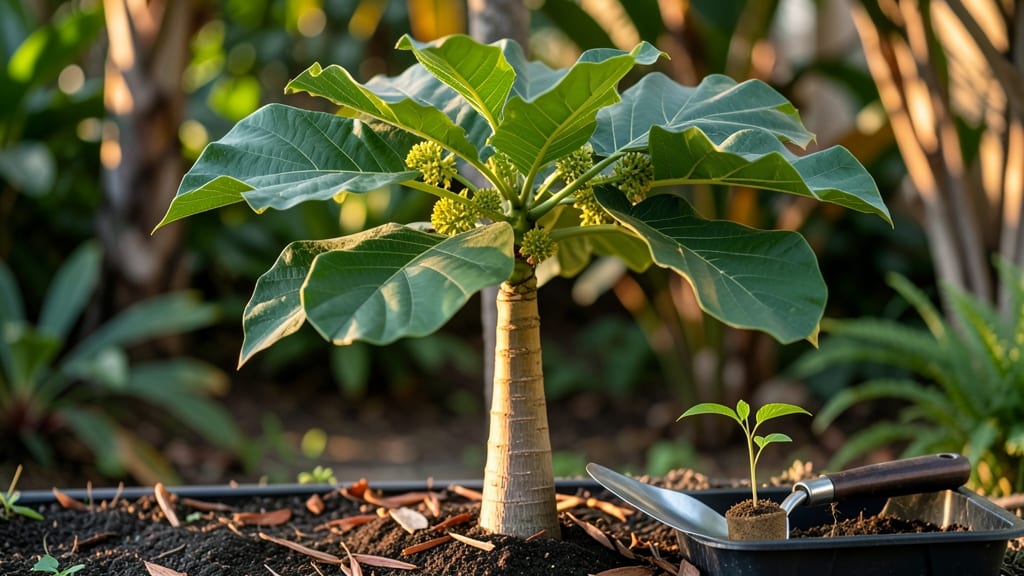
Planting a jackfruit tree means bringing a tropical giant into your landscape—its massive, glossy leaves and fragrant flowers will be the talk of the neighborhood. 🌿 I’ve grown jackfruit in Florida’s heat and seen it thrive in California’s coastal warmth, proving it’s not just for the tropics.
The key is mimicking its natural habitat with well-draining soil, plenty of sunlight, and protection from cold snaps.
You’ll need a 6-foot-deep planting hole (jackfruit roots run deep), a mix of native soil and compost, and a spot with full sun exposure—at least 6 hours daily.
Young trees are frost-sensitive, so if you’re in Zone 8 or colder, plant near a wall or use frost cloth in winter. The tree’s rapid growth means it’ll need space: 20 feet wide and 30 feet tall at maturity.
After planting, water deeply twice a week for the first month to help roots establish, then taper to once a week once leaves appear. Mulch heavily to retain moisture and keep roots cool.
Within 2-3 years, you’ll see those iconic, hand-shaped leaves unfurling—and eventually, the sweet, custard-like fruit if you’re in the right climate.
Here’s the secret: jackfruit trees reward patience. They grow slowly at first but explode in height once established. With the right care, yours could be producing fruit in 5-7 years—and providing shade for generations. Let’s get that tree in the ground!
📚 In This Guide
- What you need
- Instructions
- Tips and common mistakes
- Wrapping up and next steps
What you need
- ● Jackfruit seeds: 3–5 fresh, plump seeds (harvested from ripe fruit) or a young sapling (if available).
- ● Well-draining potting mix: 5–10 gallons (for containers) or native soil amended with compost (for in-ground planting). Mix: 60% topsoil, 20% coconut coir, 10% perlite, 10% compost.
- ● Pot or planting hole: For containers: 15–20 gallon pot with drainage holes (minimum 18" diameter).
- ● For in-ground planting: Hole twice as wide as the root ball (12" deep).
- ● Pruning shears: Sharp, sterilized shears (for trimming saplings or removing dead growth).
- ● Watering can or hose with gentle nozzle: For consistent moisture without soil erosion.
- ● Mulch: 2–3 inches of organic mulch (straw, wood chips, or leaves) to retain moisture.
- ● Fertilizer: Balanced fertilizer (10-10-10 or 20-20-20) for young trees.
- ○ Citrus-specific fertilizer (optional but helpful for micronutrients).
- ● Soil moisture meter: To monitor watering needs (jackfruit hates soggy roots!).
- ● Trellis or support stakes: For young trees in windy areas (2–3 stakes, 6 ft tall).
- ● Shade cloth (30–50%): Temporary cover for seedlings in hot climates.
- ● Epsom salt: 1 tbsp/month (for magnesium boost, especially in clay soils).
- ● Pest control: Neem oil spray (for aphids or scale).
- ● Sticky traps (to monitor fruit flies).
- ● Climate check: Jackfruit thrives in USDA Zones 10–11 (or as a container plant in cooler zones).
- ● Sunlight access: Full sun (6+ hours daily) or partial shade in extreme heat.
- ● Water source: Regular access to water (jackfruit needs 1–2 inches/week during growth).
- ● Patience!: Trees take 3–5 years to bear fruit (but the wait is worth it!).
How to plant a jackfruit tree for year-round tropical beauty
Here’s my foolproof method for establishing a jackfruit tree that thrives through all four seasons.
🌱 Step 1: Choose the Right Location and Prepare the Soil
The jackfruit tree demands warmth and space—think of it as a tropical canopy that needs full sun exposure (6+ hours daily) and protection from harsh winds. I always scout the site first, looking for a spot where the ground stays warm well into autumn, as jackfruit roots are sensitive to cold snaps. If your climate dips below 40°F, plant near a heat-retaining wall or in a large container that can be moved indoors during winter.
Jackfruit trees prefer well-draining, slightly acidic soil with a pH between 5.5 and 7.0. Before planting, amend the soil with 3 inches of compost and 2 inches of coarse sand to improve drainage—jackfruit roots rot quickly in waterlogged conditions. Test your soil’s pH with a kit; if it’s too alkaline, mix in 1 pound of sulfur per 100 square feet a month before planting to adjust it gradually.
🪴 Step 2: Plant at the Correct Depth and Stake for Stability
Dig a hole twice as wide as the root ball but only as deep as the container’s root base. The top of the root ball should sit 1 inch above ground level—this prevents water from pooling around the stem and causing rot. Gently remove the tree from its container and loosen any circling roots with your fingers (they’ll strangle the plant if left intact). Place the tree in the hole and backfill with native soil mixed with 1 cup of bone meal for phosphorus, which encourages strong root development.
Jackfruit trees grow 50-100 feet tall in ideal conditions, so staking is critical for the first 12 months. Use two 6-foot stakes driven into the ground at a 45-degree angle, 18 inches from the trunk. Secure the tree with soft tree ties (never wire, which cuts into bark) and adjust as the trunk thickens. Water deeply after planting to settle the soil around the roots—you’ll know it’s right when moisture reaches 6 inches down without pooling.
☀️ Step 3: Water Deeply and Protect Young Leaves
Newly planted jackfruit trees need 1-2 inches of water weekly, applied directly to the root zone (never overhead, which promotes fungal diseases). I use a soaker hose for 30 minutes every 5 days to ensure even moisture without wetting the foliage. Mulch the base with 3 inches of wood chips, keeping it 6 inches away from the trunk to prevent rot. This mulch layer retains moisture, regulates soil temperature, and suppresses weeds—critical for a tree that thrives in competitive environments.
Watch for sunburn on young leaves during the first growing season. If you notice crispy edges or yellowing, provide partial shade with a 50% shade cloth for the first 4-6 weeks until the tree acclimates. Jackfruit trees are tropical powerhouses, but their leaves aren’t yet hardened to intense sunlight. Once new growth appears 3 inches long, you can gradually remove the shade cloth over 10 days to harden the foliage.
⏰ Step 4: Fertilize and Monitor for Seasonal Adjustments
Feed the tree every 3 months with a balanced 10-10-10 fertilizer during the growing season (spring through fall). Start with ½ pound of fertilizer per year of the tree’s age (e.g., a 2-year-old tree gets 1 pound total, split into three applications). In winter, switch to a low-nitrogen, high-potassium fertilizer (like 5-5-10) to strengthen roots and prepare for the next growing season. Always water the tree 24 hours before and after fertilizing to prevent root burn.
Here’s the thing—jackfruit trees grow fast, but they’re sensitive to sudden temperature drops. If your winters dip below 50°F, move potted trees indoors near a south-facing window or wrap the trunk with burlap to insulate it. For in-ground trees, apply a 4-inch layer of mulch in late fall to protect roots. You’ll know the tree is struggling if leaves yellow or drop prematurely—this is your signal to adjust care immediately.
Tips & tricks for perfect jackfruit tree planting
Took me years to figure these out—here's how to avoid the mistakes I made while establishing my first jackfruit tree.
Soil Preparation Secret: When amending soil with the 3 inches of compost and 2 inches of coarse sand, mix them thoroughly with the native soil. I learned this the hard way after seeing water pool around the roots—jackfruit trees need that perfect drainage right from the start. Use a garden fork to aerate the soil before adding amendments for even better root penetration. The goal is to create a sponge-like texture that holds moisture without becoming soggy.
Staking Strategy: The 12-month staking period is non-negotiable for these fast-growing giants. I recommend installing the two 6-foot stakes immediately after planting, even if the tree seems stable. Jackfruit trees develop top-heavy canopies quickly—waiting until you see leaning is too late. Use soft tree ties that can be adjusted as the trunk grows, and check them monthly to prevent bark damage. The stakes should be angled outward to create a natural support triangle.
Watering Wisdom: The 30-minute soaker hose routine every 5 days is your best friend during the first year. I've seen many gardeners overwater by using sprinklers, which can lead to fungal issues. The key is to water only the root zone—place the soaker hose at the drip line of the tree's canopy. After watering, dig down 6 inches to check moisture; it should feel damp but not wet. This method mimics natural rainfall patterns and prevents shallow root development.
Seasonal Transition Tip: When transitioning from the 10-10-10 fertilizer to the low-nitrogen 5-5-10 blend in winter, make this change in late fall—about 6 weeks before your first frost. This gives the tree time to adjust its metabolic processes. I've found that trees that get this gradual shift handle winter dormancy much better. Also, reduce winter watering to every 10-14 days unless you're in a particularly dry climate, as overwatering can stress the roots during cold months.
Pro Tips for Planting Jackfruit Tree
- Took me years to figure these out—here's how to avoid the mistakes I made while establishing my first jackfruit tree.
- Soil Preparation Secret: When amending soil with the 3 inches of compost and 2 inches of coarse sand, mix them thoroughly with the native soil.
- Staking Strategy: The 12-month staking period is non-negotiable for these fast-growing giants.
Frequently asked questions
Got questions about growing your own jackfruit tree?
Here are answers to the most common ones—from timing to troubleshooting—so you can plant with confidence!
What’s the best time of year to plant a jackfruit tree?
Plant your jackfruit tree during the early rainy season (spring/summer) or late summer for optimal growth. Avoid frost-prone areas—jackfruit thrives in warm climates (USDA zones 10-11). If you’re in a cooler region, start seeds indoors 6+ months before the last frost and transplant when soil is consistently warm (70°F+).
How long does it take for a jackfruit tree to bear fruit?
Patience is key! Jackfruit trees typically take 3–5 years to produce fruit from seed, though grafted trees may fruit in 1–2 years. Young trees focus on root/foliage growth first—ensure they get full sun (6+ hours/day), rich soil, and regular watering to speed up fruiting.
Can I grow jackfruit from a store-bought fruit?
Yes! Save the seeds from a ripe jackfruit, rinse them, and plant them 1 inch deep in well-draining soil. However, seed-grown trees may take longer to fruit and could produce smaller or less sweet fruit than grafted varieties. For faster results, opt for nursery-grown saplings labeled as ‘Golden’ or ‘Kulu’ cultivars.
Why are my jackfruit tree leaves turning yellow or dropping?
Yellowing leaves (chlorosis) often signal overwatering, nutrient deficiency (like iron/magnesium), or root rot. Check soil moisture—jackfruit trees prefer well-draining soil and hate soggy roots. If leaves curl or drop, also inspect for pests (aphids, mites) or fungal issues. Adjust watering, amend soil with compost, and prune affected branches to encourage recovery.
Do jackfruit trees need pruning, and how often?
Prune your jackfruit tree 2–3 times a year to remove dead/diseased branches, thin dense foliage for airflow, and shape the canopy. Focus on open-center growth to maximize sunlight exposure. Avoid heavy pruning in fruiting season—save major cuts for late winter/early spring. Use sterilized tools to prevent infections!
Wrapping up and next steps
Planting a jackfruit tree is a rewarding journey that brings tropical beauty, sustainable food, and long-term shade to your space. With the right location, soil prep, and seasonal care, you’ll nurture a thriving tree that flourishes year-round—whether you’re in a warm climate or extending its growth with smart techniques. 🌱
Ready to take the next step? Start by marking your spot—or share your progress with fellow gardeners! Whether you’re a first-timer or a seasoned grower, every seedling planted today is a future harvest waiting to happen.