
Pruning
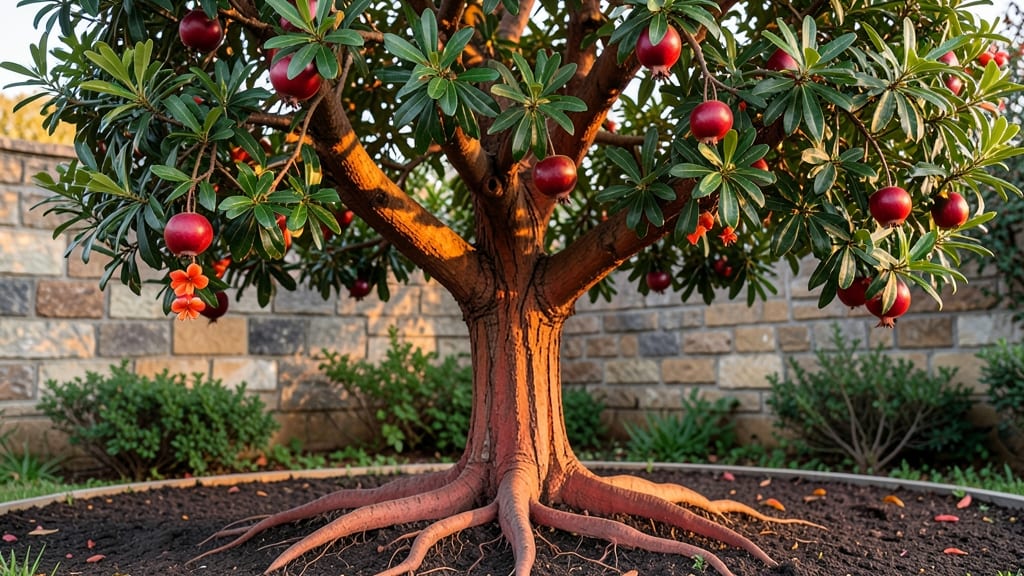
Pomegranate tree roots are the hidden foundation of your harvest—neglect them, and you’ll struggle with weak growth and poor fruit. 🌱 I learned this the hard way when my first tree produced tiny, bitter fruits because its roots were tangled and shallow.
The right care transforms that into a sturdy, productive plant.
Start with proper planting depth—roots should sit just below soil level, never buried too deep. Loosen the soil around them and water deeply to encourage spread. Mulch with 2-3 inches of organic matter to retain moisture and prevent temperature swings that stress roots.
You’ll know you’re doing it right when new shoots appear within 4-6 weeks and the trunk thickens noticeably. Prune roots only when necessary—overzealous cutting weakens the tree. Focus instead on keeping the soil aerated and well-draining.
Common mistakes like overwatering or compacted soil lead to rot or stunted growth. Watch for yellowing leaves or wilting—early signs roots need help. With the right care, your pomegranate’s root system will support bold, sweet fruit for years.
📚 In This Guide
- What you need
- Instructions
- Tips and common mistakes
- Wrapping up and next steps
What you need
- ● Pruning shears or loppers: Sharp, clean tools with bypass blades (avoid anvil-type shears to prevent crushing roots). Choose 6- to 8-inch loppers for thicker roots or hand pruners for finer work.
- ● Gloves: Heavy-duty, cut-resistant gloves (e.g., leather or Kevlar) to protect your hands from sharp roots and debris.
- ● Disinfectant (70% isopropyl alcohol or bleach solution): 1 part bleach to 9 parts water to sterilize tools between cuts and prevent disease spread.
- ● Shovel or root pruning knife: A d-mattock or bow spade (for larger roots) or a folding root saw (for precision cuts in tight spaces).
- ○ Mulch (optional but recommended): 2-3 inches of organic mulch (e.g., wood chips, straw, or compost) to retain moisture and protect exposed roots post-pruning.
- ● Watering can or hose: To hydrate the tree before and after pruning (aim for 1-2 gallons per foot of tree height).
- ○ Root stimulator (optional): A mycorrhizal fungus powder or seaweed extract to promote root regrowth after pruning.
- ● Timing: Prune roots in late winter or early spring (before new growth begins) or early fall (6-8 weeks before frost). Avoid pruning during drought or extreme heat.
- ● Tree health check: Ensure the tree is healthy and well-watered before pruning. Avoid pruning if the tree is stressed or diseased.
- ● Weather: Choose a cloudy or overcast day to minimize stress on the tree. If pruning in direct sun, do so early in the morning or late afternoon.
- ● Safety gear: Safety glasses (to protect from debris) and closed-toe shoes (to avoid stepping on sharp roots).
Step-by-step guide for pruning pomegranate tree roots
Healthy roots mean bigger fruit—here's how to prune them right.
🌱 Step 1: Identify the Root Zone and Prepare Tools
Pomegranate trees have shallow, fibrous roots that spread outward rather than deep. Start by mapping the root zone—it typically extends 2-3 feet beyond the tree's drip line. Clear away surface mulch in a 12-inch wide band around the trunk to expose the roots without damaging them.
Use sterilized pruning shears (clean with rubbing alcohol) and sharp grafting knives for thicker roots. I always wear gloves—pomegranate root hairs are delicate and can tear easily. Avoid using dull tools; they crush roots instead of making clean cuts.
💧 Step 2: Prune Surface Roots and Encourage Airflow
Remove any girdling roots (roots circling the trunk) first—they strangle the tree over time. Cut them 1/4 inch from the trunk, making the cut at a 45-degree angle to prevent water pooling. For surface roots growing toward the trunk, trim them back 6 inches to redirect growth outward.
Thin out overly dense roots in the top 6 inches of soil to improve airflow and water penetration. You'll notice healthier soil after pruning—it should look less compacted and allow water to soak in faster. Never remove more than 20% of the root mass in one session.
✂️ Step 3: Stimulate New Growth With Strategic Cuts
Focus on lateral roots (side roots) rather than the main taproot. Cut back any thick, woody roots that show signs of decay (dark, mushy texture) or disease (black spots). Healthy roots should be light tan or white with a slightly fibrous texture.
After pruning, apply a 2-inch layer of compost over the exposed area to encourage regrowth. Water deeply but gently—1 gallon per square foot—to help roots recover without shocking the tree. You'll see new root hairs emerge within 4-6 weeks if conditions are right.
☀️ Step 4: Monitor and Maintain Root Health Post-Pruning
Keep the pruned area moist but not soggy for the first 2 weeks. Check soil moisture by pressing your finger 1 inch deep—it should feel damp but not wet. Avoid heavy foot traffic over the root zone for 3 months to prevent compaction.
Watch for signs of stress: yellowing leaves or sudden wilting mean you pruned too aggressively. If this happens, reduce future cuts by half. Healthy roots will support stronger branches and heavier fruit within a season—patience is key.
Tips & tricks for pruning pomegranate tree roots
Pruning pomegranate roots isn't just about cutting—it's about strategic renewal. Here's how to do it right without harming your tree.
Timing is Everything: The best time to prune pomegranate roots is during late winter or early spring, just before new growth begins. This gives roots 4-6 weeks to recover before the tree enters its active growing season. Avoid pruning in summer when the tree is already stressed by heat and fruit production.
Tool Precision Matters: Never use dull tools on delicate pomegranate roots—they tear instead of cleanly cutting. Sterilize your pruning shears between cuts with rubbing alcohol to prevent disease transmission. For thicker roots, use a sharp grafting knife at a 45-degree angle to create clean wounds that heal faster.
Root Health Check: Before pruning, examine roots for signs of decay (dark, mushy texture) or disease (black spots). Healthy roots should be light tan or white with a fibrous texture. If you find diseased roots, cut them back to healthy tissue and dispose of infected material immediately to prevent spread.
Post-Pruning Care: After trimming, apply a 2-inch layer of compost over the exposed area to encourage regrowth. Water deeply but gently—1 gallon per square foot—to help roots recover without shocking the tree. Monitor soil moisture by pressing your finger 1 inch deep; it should feel damp but not wet during the first 2 weeks of recovery.
Pro Tips for Pomegranate Tree Roots
- Pruning pomegranate roots isn't just about cutting—it's about strategic renewal.
- Timing is Everything: The best time to prune pomegranate roots is during late winter or early spring, just before new growth begins.
- Tool Precision Matters: Never use dull tools on delicate pomegranate roots—they tear instead of cleanly cutting.
Frequently asked questions
Got questions about pomegranate tree roots? You’re not alone! Here are some of the most common concerns—plus clear answers to help you nurture a thriving tree.
How deep do pomegranate tree roots actually grow?
Pomegranate roots typically spread 3–5 feet deep and 4–6 feet wide, but they’re most active in the top 12–18 inches of soil. Their shallow lateral roots make them sensitive to drought and heavy foot traffic. Mulch lightly (2–3 inches) to protect them without smothering.
When is the best time to prune pomegranate roots?
Prune roots in late winter or early spring (before new growth starts) or after harvest in fall. Avoid pruning in summer—it stresses the tree. If you must trim roots mid-season (e.g., for construction), do it on a cool, cloudy day to minimize shock.
What happens if I accidentally cut too many roots?
Removing more than 20–30% of the root system at once can stunt growth or reduce fruit production. If you’ve over-pruned, focus on watering deeply 2–3 times weekly and fertilizing with low-nitrogen, high-phosphorus (like 5-10-10) to encourage recovery. Roots regenerate slowly—be patient!
Can I grow a pomegranate tree in a pot? How do roots handle container life?
Yes! Dwarf varieties (like ‘Wonderful’) thrive in 15–20 gallon pots with drainage holes. Roots need frequent watering and annual repotting (spring) to prevent circling. Use a fast-draining mix (60% potting soil, 30% perlite, 10% compost) and prune roots gently if they spiral.
How do I know if my pomegranate tree’s roots are diseased?
Watch for black, mushy roots (root rot), yellowing leaves, or stunted growth. Fungal issues thrive in waterlogged soil. Treat with copper fungicide or baking soda spray (1 tbsp per gallon of water). For severe cases, sterilize tools and repot in fresh, dry soil.
Wrapping up and next steps
Understanding and caring for your pomegranate tree roots is the foundation of a thriving, fruit-bearing tree! 🌱 From proper pruning techniques to soil health and seasonal timing, each step plays a vital role in unlocking your tree’s full potential.
With patience and the right approach, you’ll soon enjoy a bountiful harvest and a lush, resilient pomegranate tree.
Ready to take the next step? Start by scheduling a root check this season—gently inspect the soil around your tree’s base and adjust your care routine based on what you observe. Happy growing! 🍇✨