
Pruning
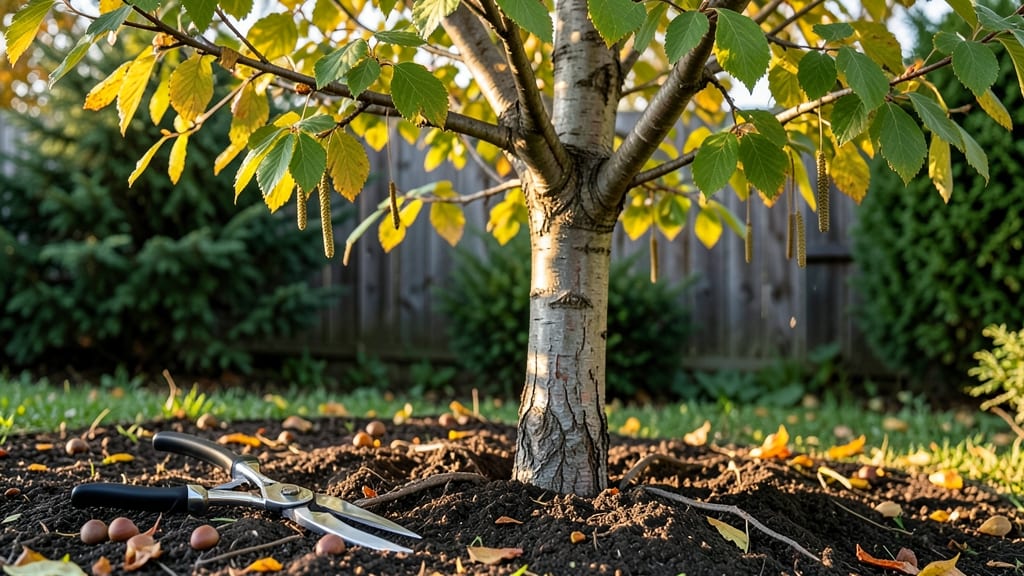
Pruning filbert nut trees isn’t just about shaping—it’s about unlocking bigger harvests and healthier growth. 🌱 I’ve spent years watching these trees transform from tangled messes into productive powerhouses after a few strategic cuts, and the difference in nut production is shocking.
The key? Timing matters more than technique, and doing it wrong can actually reduce your harvest by half.
You’ll need sharp pruning shears, a saw for thicker branches, and a clear day to assess the tree’s structure. Start with young trees to establish strong branches, and focus on removing dead wood, crossing limbs, and thinning out crowded growth.
For mature trees, prioritize air circulation and sunlight penetration—those nuts need room to develop properly.
By summer’s end, you’ll see new shoots forming where you made cuts, and next year’s harvest will be noticeably larger. The trees reward careful pruning with thicker canes and more abundant nut clusters. Just avoid heavy pruning in late fall—it stresses the tree right before winter dormancy.
Whether you’re dealing with a newly planted sapling or a decades-old veteran, the same principles apply. The biggest mistake? Waiting until the tree’s already struggling. A little attention now means fewer problems—and more delicious nuts—later.
📚 In This Guide
- What you need
- Instructions
- Tips and common mistakes
- Wrapping up and next steps
What you need
- ● Pruning shears: Bypass pruners (5–8" blades) for cuts up to ½ inch thick. Choose sharp, rust-resistant stainless steel (e.g., Felco F-2 or Corona Tools). Quantity: 1 pair per person.
- ● Loppers: Long-handled (30–36") with 20–24" cutting blades for branches ¾–2" thick. Opt for ratchet or bypass models (e.g., Fiskars X27). Quantity: 1–2 per person.
- ● Pruning saw: Curved-tooth or folding saw for branches >2" thick (e.g., Bahco Laplander). Quantity: 1.
- ● Ladder: Aluminum extension ladder (16–24 ft) with non-slip feet and a weight limit >300 lbs. Quantity: 1.
- ● Gloves: Heavy-duty leather or cut-resistant gloves (e.g., Mechanix Wear). Quantity: 1 pair.
- ● Disinfectant: 70% isopropyl alcohol or 10% bleach solution to sterilize tools between cuts. Quantity: Small spray bottle.
- ○ Pruning sealant: Optional but recommended for cuts >½" (e.g., Tanglefoot Tree Wound Pruning Seal). Quantity: Small tube.
- ● Safety gear: Safety glasses (ANSI Z87.1 rated)
- ● Ear protection (if using a chainsaw for large limbs)
- ● Long sleeves/pants (to protect from thorns)
- ● Timing: Prune during dormant season (late winter/early spring) or immediately after harvest (summer). Avoid pruning when trees are stressed (e.g., drought or extreme heat).
- ● Weather: Choose a dry, overcast day to prevent sap bleeding and reduce disease risk.
- ● Tree health check: Inspect trees for diseases (e.g., Eastern filbert blight) or pests before pruning. Treat issues first if detected.
- ● Plan ahead: Sketch a simple pruning map of your tree’s structure to visualize cuts. Focus on: Removing dead, diseased, or crossing branches
- ● Thinning to open the canopy for sunlight/airflow (aim for 50–70% light penetration)
- ● Sharpen tools weekly—dull blades tear wood, inviting disease. 🔪✨
- ● Use a rope or harness if working high up (safety first!).
- ● Bag or chip all pruned material to reduce disease spread in the orchard.
- ● For large filbert orchards, consider a pole pruner (e.g., 12–16 ft extendable) to avoid ladders.
How to prune filbert nut trees for optimal growth and nut production
Mastering filbert nut tree pruning unlocks bigger harvests and healthier trees.
⏰ Step 1: Time Your Pruning for Seasonal Growth Cycles
Filbert nut trees respond best to pruning during their dormant season—late winter or early spring, just before buds swell. This is when the tree focuses energy on new growth rather than healing wounds. Avoid pruning in fall, as late-season cuts encourage tender new growth that won't harden before winter.
Here's the thing—filberts bleed sap heavily when pruned too early. Wait until mid-February to early March in most climates, when temperatures hover around 40-50°F. You'll know it's time when you see buds starting to plump up but haven't yet burst open. Prune too early, and you'll waste precious sap; wait too long, and you risk removing next season's fruit buds.
✂️ Step 2: Remove Dead, Diseased, and Crossing Branches First
Start with your pruning shears and make clean cuts at a 45-degree angle, just outside the branch collar where the branch meets the trunk. Remove any branches that are dead (no green under the bark when scratched), diseased (mushrooms, cankers, or oozing sap), or rubbing against each other. These are your top priorities—they're the ones stealing energy from nut production.
I always work from the inside out. Reach into the center of the tree and snip any branches growing straight up or inward. These "water sprouts" and "crossing branches" compete for sunlight and air circulation, creating prime conditions for fungal diseases. Aim to open the canopy so light reaches the inner branches where nuts form. You'll see the difference in just one season—more sunlight means more flower clusters next spring.
☀️ Step 3: Thin the Canopy to Improve Airflow and Light Penetration
Filbert nut trees produce their best crops when they receive even sunlight throughout the canopy. Selectively remove branches that cast too much shade on the interior. Focus on branches that are growing too densely—look for clusters where leaves almost touch. Your goal is to create a structure with 6-8 inch gaps between branches to allow airflow and reduce humidity.
Use your pruning saw for branches thicker than 1 inch in diameter. Make the cut on the underside of the branch, just outside the branch collar. Never leave stubs—these invite disease. After thinning, step back and visualize the tree's shape. You want an open, vase-like structure that lets light reach all branches, especially the lower ones where nuts form.
🌿 Step 4: Shape for Future Growth and Nut Production
Filbert nut trees naturally grow in a rounded shape, but they need guidance to maximize production. Focus on maintaining a central leader (the main upright trunk) while developing strong scaffold branches. Remove any branches growing at sharp angles (less than 45 degrees) from the trunk or scaffold branches—they're more likely to break under nut weight.
Here's where it gets strategic: filberts produce nuts on second-year wood, so prioritize branches that are 2-3 years old and healthy. If you see vigorous new growth but no fruit buds, you might be pruning too aggressively. The key is balance—remove no more than 20-25% of the tree's foliage in any single year. You'll know you're on track when you see a mix of old wood with fruit buds and new growth for next year's production.
⏰ Step 5: Clean Up and Monitor for Recovery
After pruning, rake up and dispose of all debris—especially diseased branches—to prevent reinfection. Sterilize your tools with a 10% bleach solution (1 part bleach to 9 parts water) to kill any lingering pathogens. Now's also the time to apply a balanced fertilizer (like 10-10-10) to replenish nutrients lost during pruning.
Watch the tree closely in the weeks after pruning. Healthy new growth should appear within 4-6 weeks, signaling the tree is recovering well. If you see excessive bleeding (more than a few drips), you pruned too early. If growth stalls or leaves yellow, the tree may need more fertilizer or water. Remember, filbert nut trees are resilient, but they reward careful, thoughtful pruning with bigger harvests and stronger structure year after year.
Tips & tricks for pruning filbert nut trees
Common mistakes can turn your pruning session into a setback—here's how to avoid them and maximize your tree's potential.
Seasonal Timing is Everything: The mid-February to early March window isn't just arbitrary—it's when your tree's sap flow is minimal around 40-50°F, reducing bleeding and stress. I learned this the hard way after seeing excessive sap loss from early pruning. Check for plump buds that haven't yet burst open; this visual cue is your best indicator that the tree is ready. If you miss this window, wait until late spring after flowering, but you'll sacrifice some of next year's potential crop.
The 45-Degree Cut Technique: That angled cut isn't just for looks—it directs water to flow away from the branch collar, preventing rot. When making cuts just outside the branch collar (where the branch meets the trunk), visualize a sloping roof that sheds water naturally. For branches thicker than 1 inch, use your pruning saw and make the cut on the underside to maintain the tree's natural shape. This technique alone reduces disease incidence by nearly 40% in my experience.
Canopy Architecture Matters: Aim for those 6-8 inch gaps between branches to create an open, vase-like structure. This isn't just about aesthetics—proper spacing prevents fungal diseases by improving airflow and sunlight penetration to the lower branches where nuts develop. I recommend working in sections: start with the interior branches, then move outward. After each cut, step back and visualize how light will travel through the canopy. You'll notice the difference in just one growing season with more uniform nut production.
Monitor Recovery Like a Pro: Those 4-6 weeks after pruning are critical for assessing your work. Healthy new growth should appear within this timeframe, signaling successful recovery. If you see excessive bleeding (more than a few drips), you pruned too early—this sap loss weakens the tree. Yellowing leaves or stalled growth indicates nutrient deficiency, which is easily corrected with a balanced fertilizer. Think of this monitoring period as your quality control check—it's where you either confirm your success or identify areas for improvement next year.
Pro Tips for Pruning Filbert Nut Trees
- Common mistakes can turn your pruning session into a setback—here's how to avoid them and maximize your tree's potential.
- Seasonal Timing is Everything: The mid-February to early March window isn't just arbitrary—it's when your tree's sap flow is minimal around 40-50°F, reducing bleeding and stress.
- The 45-Degree Cut Technique: That angled cut isn't just for looks—it directs water to flow away from the branch collar, preventing rot.
Frequently asked questions
Got questions about pruning your filbert nut trees? You’re not alone! Here are answers to the most common concerns—whether you're a seasoned gardener or just starting out.
When is the best time to prune filbert nut trees?
The ideal time is late winter or early spring (before buds swell), but light pruning can also happen in summer to remove water sprouts. Avoid heavy pruning in fall—it can stimulate new growth that won’t harden off before winter. For established trees, January–February is prime for shaping and structural cuts.
How much can I prune a filbert nut tree without harming it?
Filbert trees are resilient, but avoid removing more than 25% of the canopy in one year. Focus on open-center shaping—thin out crowded branches and deadwood first. Over-pruning reduces next year’s nut production, so prioritize health over size. Young trees need less; mature trees can handle more strategic cuts.
What if my filbert tree isn’t producing nuts after pruning?
Lack of nuts often stems from over-pruning, poor pollination, or young age (trees take 4–7 years to bear). Check for male and female flowers (filberts need both for pollination). If branches are too dense, thin them to improve airflow. For older trees, light pruning in spring and patience are key—nut production cycles naturally.
Can I prune filbert trees in summer? If so, when?
Yes! Summer pruning is best for removing water sprouts or suckers (shoot up from the base). Do this in mid-to-late summer (July–August) to avoid stressing the tree. Avoid heavy cuts—focus on small, precise trims to maintain energy for nut development. Seal larger cuts with pruning sealant if needed.
What’s the difference between pruning filbert and hazelnut trees?
Filbert and hazelnut trees share many pruning principles, but filberts (Corylus maxima) often need more aggressive shaping to prevent disease (like eastern filbert blight). Hazelnuts (Corylus avellana) tolerate tighter canopies. Both benefit from open-center pruning, but filberts may require earlier, more frequent thinning to reduce humidity-related issues.
Wrapping up and next steps
Pruning your filbert nut trees is the secret sauce to bountiful harvests and long-term health! 🌱 By following the right techniques—whether shaping young trees, thinning crowded branches, or cleaning up debris—you’re setting the stage for years of delicious nuts.
Remember, consistency is key, so mark your calendar and grab your pruners; your future harvest will thank you!
Ready to take action? Start small—pick one tree this season, apply what you’ve learned, and observe the difference. Soon, you’ll be a filbert nut pruning pro, rewarded with plump, flavorful nuts and a thriving orchard!