
Trees
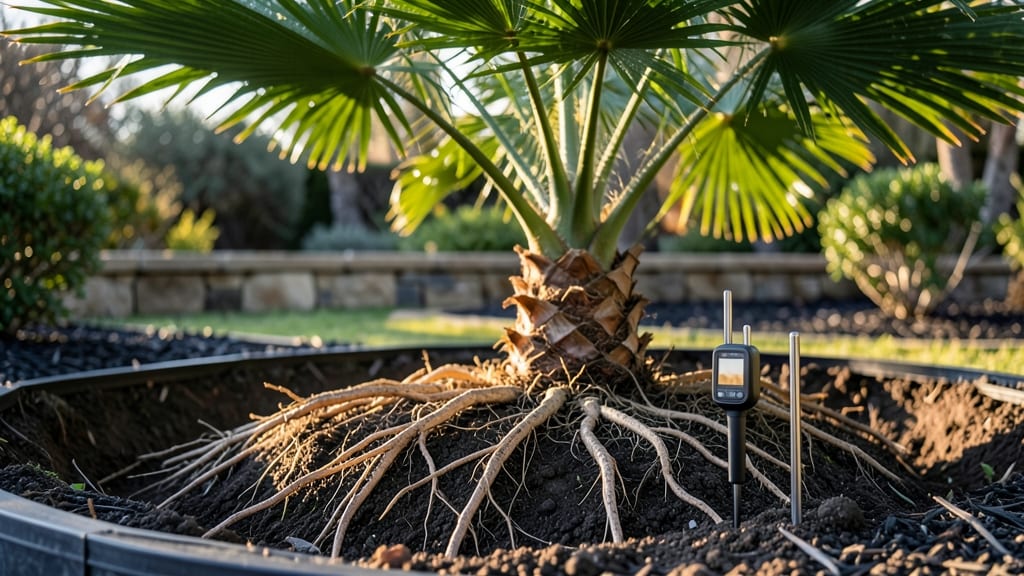
The root system on palm trees isn’t just dirt and twigs—it’s the hidden powerhouse that determines whether your palm thrives or struggles. I’ve watched slow-growing palms transform into towering beauties once I understood how their roots really work, and the secrets are simpler than you’d think.
Most gardeners focus on the fronds, but the magic happens below ground where water and nutrients are absorbed.
Palm roots spread wide and shallow, forming a dense network that stabilizes the tree and soaks up moisture efficiently. Unlike trees with deep taproots, palms rely on a fibrous system that spreads outward—sometimes up to twice the width of the canopy.
This makes them adaptable to sandy soils or rocky terrain, but also vulnerable to compaction or poor drainage. The key? Loose, well-draining soil with occasional aeration to keep those roots breathing.
When planted correctly, you’ll see faster establishment and fewer signs of stress—no more yellowing fronds or wobbly trunks. A palm’s roots need room to stretch out, so avoid planting too deep or burying the trunk.
Instead, dig a hole just deep enough to sit the root ball level with the surrounding soil. With the right conditions, you’ll have a stronger, healthier palm that stands up to storms and droughts like a pro.
This works for both young palms and mature ones needing a refresh. The same principles apply whether you’re planting a tiny pygmy date palm or a massive canary island palm. Let’s get those roots working for you instead of against you.
📚 In This Guide
- What you need
- Instructions
- Tips and common mistakes
- Wrapping up and next steps
What you need
- ● Garden trowel or small shovel – For gently digging around roots without damage (6–8" blade ideal).
- ● Pruners or sharp shears – Sterilized, for trimming dead or overgrown roots (bypass blades recommended).
- ● Root stimulator powder/gel – Mycorrhizal fungi or rooting hormone (e.g., Clonex or Dyna-Gro) to boost growth.
- ● Well-draining potting mix – 50% coconut coir, 30% perlite, and 20% compost (avoid clay-heavy soil!).
- ● 5-gallon nursery pots or containers – With drainage holes (3–4" diameter for young palms).
- ● pH testing kit – To ensure soil is 5.5–7.0 (palms thrive in slightly acidic to neutral soil).
- ● Watering can with a rose attachment – For deep, gentle irrigation (1–2 gallons per watering).
- ● Root viewer box – Clear acrylic container to observe root development (great for learning!).
- ● Slow-release fertilizer – Balanced 10-10-10 or palm-specific (e.g., Espoma Palm Tone).
- ● Mulch (bark or pine straw) – 2–3" layer to retain moisture and regulate temperature.
- ● Root barrier fabric – If planting near sidewalks to prevent invasive roots.
- ● Digital caliper – To measure root thickness/growth over time (for data-tracking enthusiasts!).
How to understand and support a palm tree's root system
Healthy palms start below ground—here's how their roots work and what you can do to help.
Recognize the Two Main Root Types
Palm trees develop two distinct root systems: prop roots and fibrous roots. Prop roots grow upward from the trunk and stabilize the tree in sandy or loose soil. Fibrous roots spread horizontally to absorb water and nutrients. Both types work together to anchor the palm and prevent toppling during storms.
You'll notice prop roots more in species like the bismarck palm or coconut palm, where they emerge above ground near the base. These roots help distribute weight and prevent the tree from leaning. In contrast, palms like the sago palm rely more on deep fibrous roots that spread widely underground.
Assess Soil Conditions for Root Health
Palm trees thrive in well-draining soil with a slightly acidic to neutral pH (around 5.5 to 7.0). Compacted or waterlogged soil restricts root growth, leading to weak stems and poor nutrient uptake. Test your soil by pressing your finger 2-3 inches deep—if it feels hard or stays clumped, the roots can't expand properly.
Amend heavy clay soil with organic matter like compost or coconut coir to improve aeration. Sandy soil, common in coastal areas, drains too quickly—mix in peat moss or aged manure to retain moisture. Remember, palm roots need both oxygen and water to function well; striking the right balance is key.
Provide Proper Watering for Root Development
Newly planted palms need deep watering twice weekly for the first 6-8 weeks to encourage root establishment. Water until 6-8 inches of soil feels moist (check with your finger). Overwatering suffocates roots, while underwatering stresses them into a shallow growth pattern that makes the tree unstable.
Mature palms are drought-tolerant but still require 1-2 inches of water per week, either from rainfall or irrigation. Look for yellowing fronds as a sign of underwatering, while mushy brown fronds indicate overwatering. Adjust your schedule based on seasonal rainfall—palms in containers dry out faster than those in the ground.
Protect Roots During Transplanting
When moving a palm, dig a hole twice as wide as the root ball but no deeper. Gently loosen the roots with your hands if they're circling the pot—never pull or force them straight, as this can damage the root tips. The goal is to preserve as much of the natural root structure as possible.
Backfill with the original soil mix (don't use fresh soil) and water thoroughly to settle everything. Mulch around the base with 2-3 inches of organic mulch, keeping it 6 inches away from the trunk to prevent rot. This mimics the natural forest floor where palm roots thrive in shaded, moist conditions.
Monitor for Root-Related Problems
Watch for leaning trunks or wilted fronds—these often signal root issues. Leaning usually means the roots aren't anchoring properly, while wilting can indicate root rot from overwatering or root damage from construction activity. If you suspect root rot, let the soil dry out completely before watering again.
For container-grown palms, check the roots annually by gently removing the top 2 inches of soil. Healthy roots should be white or tan and firm to the touch. Dark, mushy roots mean the plant is waterlogged, while dry, brittle roots indicate underwatering. Adjust your care routine immediately if you spot these signs.
Tips & tricks for healthy palm tree roots
Understanding what your palm tree needs below ground makes all the difference in its long-term health. Here's how to give those roots the best possible support.
Root System Diversity: Not all palms grow the same way—bismarck palms and coconut palms develop visible prop roots that act like stilts, while sago palms rely on hidden fibrous roots. When selecting a palm species, consider your soil type: prop-rooted palms thrive in loose, sandy soil where their above-ground roots can anchor, while fibrous-rooted palms do better in heavier soils where they can spread horizontally. This natural adaptation means you can match palm species to your landscape conditions for better stability.
Soil Test Shortcut: You don't need a lab to check your soil's drainage. After watering, press your finger 2-3 inches deep—if water pools on the surface or the soil feels like clay bricks, you've got drainage issues. For quick amendments, mix in 2-3 inches of coconut coir or compost into the top 6 inches of soil. This mimics the organic forest floor where palm roots naturally thrive, improving both aeration and moisture retention without altering the soil's natural pH balance.
Watering Wisdom: The first 6-8 weeks after planting are critical for root establishment. Instead of light daily watering, give your palm a thorough soaking twice weekly until water runs out of the drainage holes. This encourages roots to grow deeper rather than spreading shallowly. For mature palms, focus on the soil's surface—if the top 2 inches feel dry, it's time to water. The key is maintaining consistent moisture without creating waterlogged conditions that suffocate roots.
Transplanting Technique: When moving a palm, the root ball is your most valuable asset. Dig a hole twice as wide as the root ball but no deeper—this prevents root damage from being buried too deep. If you notice roots circling the pot, gently separate them with your fingers rather than cutting them. This preserves the natural root structure that helps the tree establish quickly. After planting, water thoroughly to help settle the soil and encourage new root growth into the surrounding earth.
Pro Tips for Root System On Palm Trees
- Understanding what your palm tree needs below ground makes all the difference in its long-term health.
- Root System Diversity: Not all palms grow the same way—bismarck palms and coconut palms develop visible prop roots that act like stilts, while sago palms rely on hidden fibrous roots.
- Soil Test Shortcut: You don't need a lab to check your soil's drainage.
Frequently asked questions
Got questions about palm tree roots? You’re not alone!
Here are some of the most common queries—plus quick, actionable answers to keep your palms thriving.
How deep do palm tree roots actually grow?
Most palm roots spread horizontally (not deep) within the top 12–24 inches of soil. However, some species—like the Washingtonia—send deeper "taproots" (up to 5 feet!) for stability. Shallow roots mean they’re sensitive to compaction or poor drainage. Pro tip: Test soil depth before planting to avoid root stress!
Can palm tree roots damage sidewalks or foundations?
Absolutely—especially aggressive growers like Cocos nucifera (coconut palms). Roots seek moisture and can lift concrete or invade pipes over time. Prevention: Plant at least 10–15 feet from structures, use root barriers, or choose smaller species like Dypsis lutescens (Areca palm) for urban areas.
How long does it take for palm tree roots to establish?
Root establishment varies by species and conditions:
- Fast growers (e.g., Phoenix canariensis): 6–12 months for basic stability.
- Slow growers (e.g., Chamaedorea elegans): 2–3 years for full anchorage.
Young palms may lean in storms—stake them temporarily until roots grip the soil. Water deeply (but avoid soggy soil) to speed up growth.
What if my palm’s roots are exposed or circling?
Exposed or girdling roots (wrapping around the trunk) strangle growth and invite pests. Fix it:
- Gently loosen soil around the base (don’t cut—it can harm the tree).
- Add 2–3 inches of mulch (wood chips, not rocks) to encourage outward spread.
- For severe cases, consult an arborist to prune roots safely.
Warning: Never pile mulch against the trunk—it causes rot!
Are there palm tree species with non-invasive roots?
Yes! Opt for these low-spread varieties if space is limited:
- Dypsis decaryi ("Golden Cane Palm"): Clumping habit, minimal lateral roots.
- Raphis excelsa ("Lady Palm"): Slow-growing, ideal for containers.
- Trachycarpus fortunei ("Windmill Palm"): Cold-hardy and root-friendly.
Container palms (like Chamaedorea) are great for patios—their roots stay contained!
How do I fertilize palm roots for stronger growth?
Palms need balanced nutrients but hate excess salt. Use a slow-release palm fertilizer (10-10-10 or 8-2-12) every 3–4 months during growing seasons (spring–fall). Deep-watering (soak 1–2 feet down) helps roots absorb nutrients. Avoid high-nitrogen lawn fertilizers—they burn roots!
Wrapping up and next steps
Understanding the root system of palm trees is like unlocking the secret to their resilience and beauty! 🌱 From fibrous networks to deep taproots, these underground powerhouses anchor palms in even the harshest conditions.
Whether you're a gardener, landscaper, or simply curious, knowing how roots function helps you nurture healthier, more vibrant palms.
Ready to put this knowledge to work? Start by observing your own palm trees—notice how they adapt to their environment. For deeper insights, explore local gardening resources or consult an arborist to tailor care to your specific palm species. Your green thumb (and your palms!) will thank you! 🌿✨