Blooming
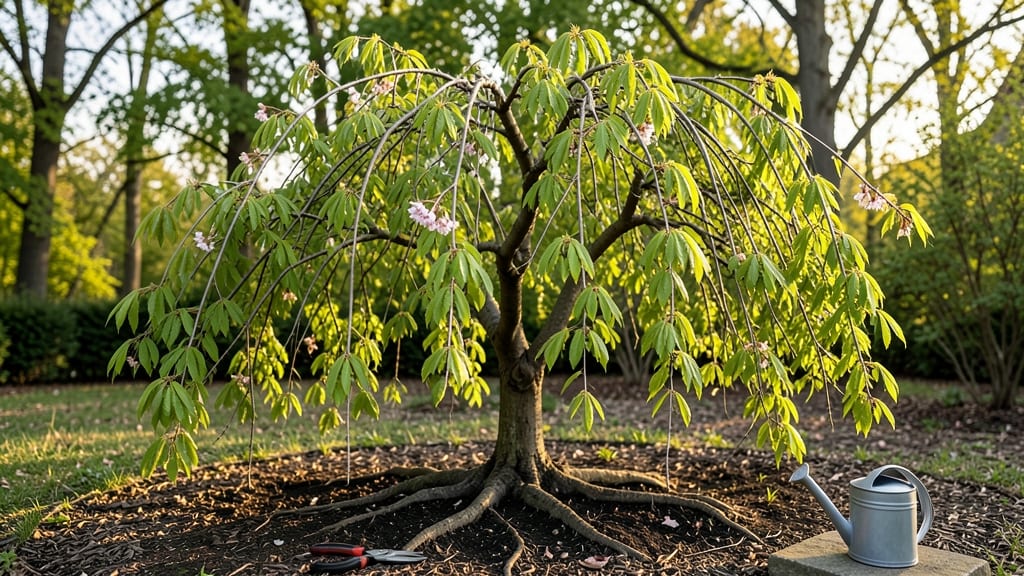
After those breathtaking pink clouds of spring blooms fade, your weeping cherry tree’s real work begins. 🌸 The secret to keeping its graceful branches lush and its canopy intact isn’t just about trimming—it’s about understanding when to prune, how to feed its roots, and protecting it from pests that love stressed trees.
I’ve learned the hard way that skipping aftercare turns a showstopper into a sad, scraggly shadow by summer.
Start with light pruning right after blooming to shape the tree and remove any dead or crossing branches. Use sterilized shears and cut just above a bud or branch collar to avoid damage.
Feed it with a balanced 10-10-10 fertilizer in early spring and again in midsummer, but avoid heavy nitrogen—it’ll push leaves over flowers. Water deeply once a week unless rain does the job, keeping the soil 2-3 inches moist but never soggy.
What you’ll end up with is a tree that stays vibrant green all season, not just in spring. The canopy stays dense, branches hold their elegant weeping shape, and next year’s blooms will be even more dramatic.
The key is consistent but gentle care—no harsh cuts, no drought stress, and no ignoring those pesky aphids hiding under the leaves.
This routine works for both Prunus subhirtella and other weeping cherries, whether you’re in a mild climate or a colder zone. The only real mistake? Waiting until the tree’s already struggling to start. Let’s get it thriving now before next spring’s parade of petals.
📚 In This Guide
- What you need
- Instructions
- Tips and common mistakes
- Wrapping up and next steps
What you need
- ● Pruning shears – Sharp, bypass-style (2-3 pairs, 6-8" blades for precision)
- ● Gloves – Heavy-duty, nitrile-coated (2 pairs for safety)
- ● Mulch – Organic (2-3 cubic yards, e.g., shredded bark or pine needles)
- ● Slow-release fertilizer – Balanced (10-10-10) or cherry-tree-specific (5-10 lbs)
- ● Watering can or hose – Adjustable nozzle (for deep root hydration)
- ● Disease-resistant fungicide – Copper-based or neem oil (1 quart)
- ● Tree support stakes – 3-4 stakes (2-3" diameter) (if young or top-heavy)
- ● Ladder – Extension (12-16 ft) (for high branches)
- ● Soil pH test kit – To check acidity (6.0-6.5 ideal for cherries)
- ● Tree wrap – Protective burlap (for winter damage prevention)
- ● Leaf blower – For cleanup (spring/fall)
- ● Compost – Well-aged (1-2 bags for nutrient boost)
How to care for a weeping cherry tree after its spectacular bloom
Once those show-stopping blossoms fade, proper aftercare keeps your weeping cherry thriving for decades.
🌿 Step 1: Prune for Shape and Health After Flowering
Prune your weeping cherry 4-6 weeks after blooming—this timing ensures you remove spent flowers while new growth is still soft and responsive. I always use clean, sharp pruning shears to make cuts just above a bud or branch collar, never leaving stubs. This prevents disease entry and encourages stronger regrowth.
Focus on removing any dead, crossing, or inward-growing branches first. Then thin out about 20-30% of the canopy to improve airflow and light penetration. Weeping cherries naturally grow in a graceful arch, so avoid heavy pruning that could disrupt that shape. Watch for the first signs of new leaf buds—these indicate where the tree wants to grow next.
☀️ Step 2: Provide Consistent Moisture and Mulch Protection
Weeping cherries have shallow roots that dry out quickly. Water deeply once a week during the first growing season, then taper to every 10-14 days once established—always until 6-8 inches of soil feels moist. I check by inserting a finger into the soil; if it's dry at that depth, it's time to water. Overwatering is worse than underwatering for these trees.
Spread a 2-3 inch layer of organic mulch (like wood chips) around the base, keeping it 6 inches away from the trunk. This conserves moisture, regulates soil temperature, and suppresses weeds. Replenish mulch annually as it breaks down. The key is to keep the root zone cool and even—never let soil crust over or dry out completely.
✂️ Step 3: Fertilize Strategically for Strong Fall Growth
Apply a balanced, slow-release fertilizer (10-10-10 ratio) in early summer, about 6-8 weeks after blooming. This timing gives roots time to establish before winter. I scatter granules evenly under the canopy and water them in thoroughly. Avoid high-nitrogen fertilizers—they promote leafy growth at the expense of next year's blossoms.
Look for dark green, vigorous new leaves by midsummer as your signal that fertilization worked. If leaves yellow or drop prematurely, you've overdone it. Weeping cherries are light feeders—more isn't better. In fall, stop fertilizing entirely to let the tree harden off for winter. The goal is steady, not explosive, growth.
🪴 Step 4: Prepare for Winter Dormancy and Pest Prevention
Start winter prep in late fall by removing any fallen leaves or debris from under the tree—this prevents fungal diseases from overwintering. I also inspect the canopy for signs of pests like scale or borers. If you spot any, treat with horticultural oil in early winter before eggs hatch. Healthy trees rarely have major issues, but prevention is key.
Young trees (under 5 years old) benefit from a light burlap wrap around the trunk to protect from winter sun scald. Mature trees usually handle cold well, but extreme temperature swings can stress them. Water trees deeply one last time before ground freezes—this moisture reserve helps them survive winter drought.
Tips & tricks for perfect weeping cherry tree aftercare
After that breathtaking spring bloom, these little details keep your weeping cherry looking its best year after year.
Pruning Precision: When you're pruning those 4-6 weeks after blooming, focus on making clean cuts just above a bud or branch collar—this is where the tree's natural healing begins. I've seen too many people leave stubs that invite disease. Also, that 20-30% canopy thinning isn't just a number—it's about creating space for light to reach all branches evenly. Think of it like giving your tree a spa treatment for better airflow and future blossoms.
Watering Wisdom: The "finger test" for that 6-8 inch moisture check is your best friend. I've learned the hard way that weeping cherries hate soggy roots—water only when the soil feels dry at that depth. And that weekly watering in the first year? It's non-negotiable. Their shallow roots can't reach deep moisture yet, so consistent hydration is key to establishing a strong root system for years to come.
Fertilizer Strategy: That 6-8 week timing for fertilizer application isn't arbitrary—it gives your tree time to recover from blooming before pushing new growth. I always look for those dark green, vigorous leaves by midsummer as my signal that the fertilization worked. And remember, weeping cherries are light feeders. More fertilizer won't make them grow faster—it'll just stress them out before winter.
Winter Protection: For those young trees under 5 years old, that burlap wrap around the trunk is your secret weapon against winter sun scald. I've seen beautiful weeping cherries develop ugly cracks from temperature swings. And that final deep watering before freeze-up? It's like giving your tree a drink before bedtime—it helps maintain moisture through the cold months when roots can't access water.
Pro Tips for Weeping Cherry Tree After Blooming
- After that breathtaking spring bloom, these little details keep your weeping cherry looking its best year after year.
- Pruning Precision: When you're pruning those 4-6 weeks after blooming, focus on making clean cuts just above a bud or branch collar—this is where the tree's natural healing begins.
- Watering Wisdom: The "finger test" for that 6-8 inch moisture check is your best friend.
Frequently asked questions
Got questions about keeping your weeping cherry tree thriving after its breathtaking spring bloom? Here are some of the most common concerns—plus expert tips to keep those cascading branches lush all year long!
Why does my weeping cherry tree lose leaves so quickly after blooming?
Weeping cherry trees are deciduous, meaning they naturally shed leaves after blooming to conserve energy for winter. This isn’t a problem—it’s their growth cycle! Focus on watering deeply (1–2 inches per week) and mulching to support root health during this transition.
When is the best time to prune a weeping cherry tree after blooming?
Prune right after blooming (late spring) to shape the tree and remove dead/diseased branches. Avoid heavy pruning in fall or winter, as it can stimulate weak growth vulnerable to frost. Use clean, sharp tools and sterilize cuts with pruning sealant to prevent infections.
How do I prevent my weeping cherry tree from getting brown, crispy leaves?
Brown, crispy leaves often signal underwatering or fungal issues (like powdery mildew). Water at the base (not overhead) and ensure soil drains well—cherry trees hate soggy roots! For fungal spots, apply neem oil or copper fungicide. Pro tip: Avoid wetting leaves in late afternoon to reduce disease risk.
Can I grow a weeping cherry tree in a container, or does it need ground planting?
Weeping cherry trees can thrive in containers if you choose dwarf varieties (like ‘Kanzan’ or ‘Shirotae’) and upgrade pots every 2–3 years. Use well-draining soil and a pot at least 24 inches wide/deep. Warning: Container trees need more frequent watering and may bloom less vigorously than in-ground plants.
What should I do if my weeping cherry tree gets black spots or mold after blooming?
Black spots or mold are likely anthracnose or powdery mildew, common in humid climates. Remove affected leaves immediately and apply a fungicide (like copper-based or sulfur spray). Improve airflow by thinning dense branches and avoid overhead watering. Prevent future outbreaks by cleaning up fallen petals/debris.
Are there alternatives to weeping cherry trees with similar cascading beauty?
If weeping cherries aren’t ideal for your climate (they prefer USDA Zones 5–8), try:
- Japanese maple (‘Bloodgood’ or ‘Shishigashira’): Dwarf varieties with stunning fall color.
- Crabapple (‘Adams’ or ‘Royal Raindrops’): Compact, disease-resistant blooms.
- Smokebush (‘Grey Owl’): Silvery foliage and winter interest.
Wrapping up and next steps
The weeping cherry tree’s beauty doesn’t end with its spring blooms—with the right care, it can remain a breathtaking focal point all year. From pruning for structure to seasonal adjustments, these steps ensure your tree thrives, offering shade, elegance, and even subtle seasonal interest. 🌿
Now that you’re armed with knowledge, take the next step: schedule a quick inspection of your tree’s health—check for pests, assess sunlight exposure, and give it the love it deserves. Your dedication will reward you with a lush, vibrant canopy that keeps stealing hearts for decades to come!